


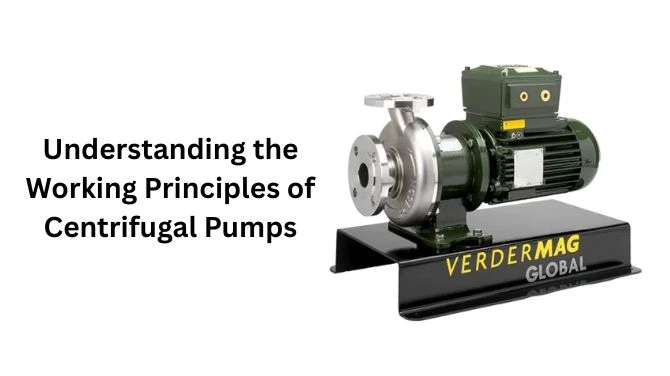
Centrifugal pumps are mechanical devices that use centrifugal force to transfer fluids. In various sectors across Ireland — including agriculture, manufacturing, wastewater treatment, and food processing — they are an essential part of daily operations. Their popularity is largely due to their simplicity, adaptability, and reliable performance in moving liquids at a constant flow rate.
Centrifugal pumps work by transferring kinetic energy from a rotating impeller to the fluid, as opposed to positive displacement pumps, which trap a certain volume of liquid and push it through the system. This makes them especially suitable for applications that require a continuous, steady flow.
How Do Centrifugal Pumps Work?
The operation of centrifugal pumps is based on straightforward physical principles. When the pump is activated, a motor drives the impeller inside the pump casing. The impeller rotates quickly and has a disc-like form with curved blades. The suction intake, which is situated in the middle or "eye" of the impeller, allows fluid to enter the pump. As the impeller spins, it throws the fluid outward toward the edge of the casing through centrifugal force.
This movement causes an increase in fluid velocity. The pump casing, often designed in a spiral shape (known as a volute), then slows the fluid down, converting the velocity into pressure. The liquid is then pushed out through the discharge outlet with enough pressure to move it through pipes or hoses to its intended location.
This mechanism is continuous, making centrifugal pumps ideal for systems where a constant, non-pulsating flow is required.
Key Components
Understanding the basic parts of a centrifugal pump helps explain its function more clearly:
- Impeller: The rotating component that moves fluid by centrifugal force.
- Casing: The outer shell that contains the fluid and directs flow.
- Suction and Discharge Ports: Openings where the fluid enters and exits.
- Shaft and Bearings: Connect the impeller to the motor and allow smooth rotation.
- Mechanical Seal or Gland Packing: Prevents fluid from leaking where the shaft passes through the casing.
- Motor: Provides the power to rotate the impeller, typically electric or diesel-powered.
Each of these parts plays a critical role in the safe and consistent operation of centrifugal pumps.
Common Uses in Ireland
In Ireland, centrifugal pumps are a standard feature in many industrial and commercial processes. They are appropriate for a variety of industries due to their capacity to handle a variety of liquids, such as water, chemicals, and slurries. Some common uses include:
1. Water Supply and Wastewater Management
Local councils and water authorities in counties such as Galway and Meath rely on centrifugal pumps to transport both clean water and sewage. Their consistent flow rate helps maintain pressure in water mains and assists in the movement of wastewater through treatment facilities.
2. Agricultural Irrigation
Farms across Ireland, particularly in regions like Wexford and Louth, use centrifugal pumps to deliver water to fields during dry months. Their ease of use and low maintenance needs make them ideal for this type of operation.
3. Food and Beverage Industry
Centrifugal pumps are commonly used in dairy and brewing to handle milk, wort, and cleaning solutions. Made from stainless steel, they help maintain hygiene and product quality.
4. Chemical Processing
Chemical plants often use centrifugal pumps with corrosion-resistant linings to handle aggressive fluids. For more demanding conditions, such as high pressure or hazardous materials, process pumps may also be used to ensure safety and durability.
Why Are Centrifugal Pumps So Widely Used?
There are several reasons why centrifugal pumps are often the first choice in both public and private sectors:
- Straightforward design reduces the number of components that can fail.
- Continuous flow is ideal for systems that must run without interruption.
- Wide range of sizes allows them to be used in everything from small workshops to large-scale industrial plants.
- Easy maintenance means fewer delays during repairs or inspections.
- Cost-effective in both initial purchase and long-term operation.
In an Irish context, these benefits translate to lower operating costs, simpler maintenance schedules, and greater reliability — all important in industries where downtime can be costly.
Key Considerations When Choosing a Pump
Before selecting a centrifugal pump, several factors should be reviewed:
- Flow rate required by the system.
- Head (the height the fluid needs to be lifted).
- Type of liquid being pumped (viscosity, corrosiveness, temperature).
- Required pressure at the outlet.
- Energy source available (electric, diesel, etc.).
Working with a professional supplier or engineer can help ensure that the chosen pump suits the intended application without overloading or underperforming.
Conclusion
Centrifugal pumps are a practical solution for many fluid-handling needs in Ireland. Their simple operating principle, wide adaptability, and suitability for continuous flow make them the preferred choice in sectors such as water management, agriculture, food processing, and manufacturing.
By understanding how this pump function and where it is best applied, engineers, facility managers, and technicians across Ireland can make informed decisions that support reliable and efficient operations — whatever the scale or sector.