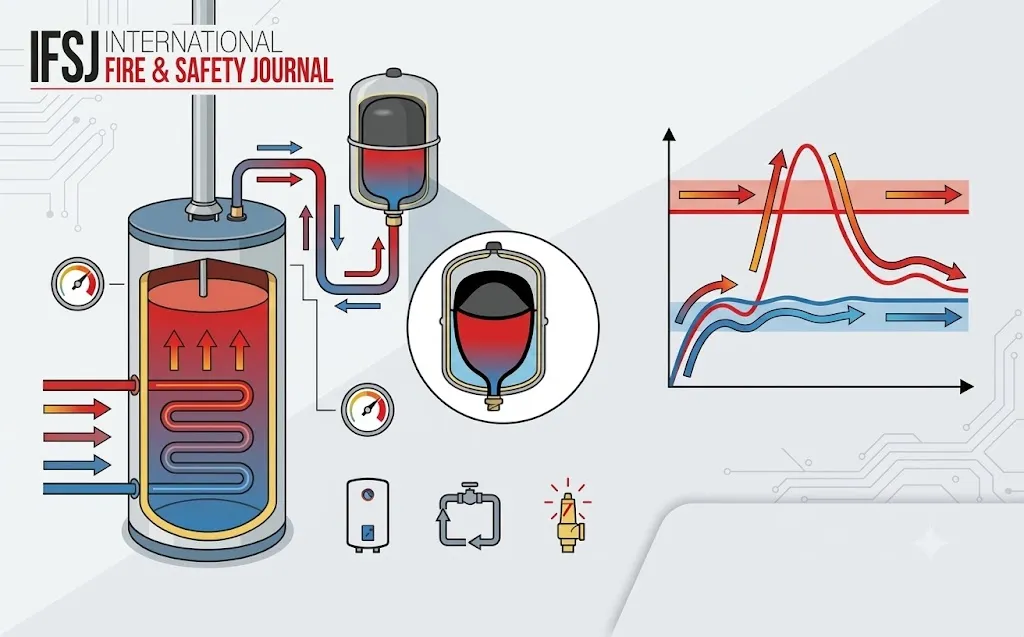


Modern buildings depend on reliable water systems for domestic use, heating, cooling and, in some cases, industrial processes. While piping, pumps, valves and heaters usually receive most of the attention, pressure management is equally important. One component that helps manage pressure caused by temperature changes is the thermal expansion tank.
Water is often described as incompressible, but its volume still changes as its temperature rises and falls. In an open system, that change can sometimes be absorbed by the connection to the larger water supply. In a closed system, however, there may be nowhere for the additional volume to go. This can cause pressure to increase.
Why Water Expands When Heated
When water is heated, its molecules become more energetic and the water occupies slightly more volume. The increase may appear small, but even a modest temperature change can create noticeable pressure in a closed piping network.
This is particularly important in storage water heater installations. A check valve, pressure-reducing valve or backflow preventer can prevent expanded water from moving back toward the supply. The International Plumbing Code addresses this condition and requires a method of controlling thermal expansion in applicable systems.
Without adequate pressure control, repeated heating cycles can place unnecessary stress on pipes, fittings, valves and water-heating equipment. A thermal expansion tank provides a controlled space for the additional water volume.
How an Expansion Tank Works
A typical tank contains a compressible gas section separated from the system water by a diaphragm or bladder. When water expands, some of the increased volume enters the tank and compresses the gas. This allows the pressure increase to be controlled rather than transferred entirely to the piping network.
ASHRAE describes expansion chambers as serving both thermal and hydraulic functions in closed hydronic systems. The tank provides space for fluid expansion and creates a reference point for system pressure.
The principle is straightforward, but correct installation is important. Tank capacity, operating pressure, temperature range, system volume and connection location all influence performance.
Where These Tanks Are Commonly Used
Domestic hot-water systems are one of the most familiar applications. When water inside a storage heater is heated and the system is effectively closed, expansion pressure needs to be controlled.
Hydronic heating systems are another major application. Boilers circulate heated water through radiators, underfloor heating circuits or other heat emitters. As the water temperature changes, the system volume changes as well. ASHRAE guidance specifically addresses expansion chambers in hydronic heating and cooling systems.
A thermal expansion tank may also be found in certain industrial heat-transfer arrangements. In those applications, the fluid, operating temperature, tank construction and pressure controls can be substantially different from domestic plumbing.
Choosing the Correct Tank
Tank selection should never be based simply on pipe diameter or the physical size of the water heater. The designer needs to consider the amount of fluid in the system, temperature range, initial pressure, maximum allowable pressure and characteristics of the fluid.
For domestic water installations, applicable plumbing requirements state that expansion tanks should be sized according to the manufacturer's instructions and arranged so that system pressure remains within the permitted range.
For hydronic systems, calculations can be more involved because the system may contain large quantities of water and operate across a wide temperature range. ASHRAE provides calculation approaches that consider system volume, pressure and temperature.
Installation Matters as Much as Selection
Even a correctly sized thermal expansion tank can perform poorly if installed incorrectly. The connection point must be selected according to the system design and manufacturer's instructions.
The tank should also be properly supported. Some plumbing codes specifically state that expansion tanks should not be supported by the connecting piping.
Installers should also avoid creating an arrangement where the tank can accidentally be isolated from the system while the system continues operating. In hydronic systems, ASHRAE notes that a heated section isolated from the expansion chamber can require separate overpressure protection.
Signs of Pressure-Control Problems
A system experiencing thermal expansion problems may show several warning signs. Pressure gauges may fluctuate significantly between cold and hot operating conditions. Relief valves may discharge intermittently, and water may appear around fittings or connections.
In domestic water systems, repeated discharge from a relief valve should not simply be treated as a nuisance. The cause should be investigated by a qualified professional. The relief valve is a safety device and should not be relied upon as the normal method of controlling thermal expansion. The IPC specifically states that the water-heater relief valve is not to be used as a means of controlling thermal expansion.
Maintenance and Inspection
A thermal expansion tank should form part of the wider inspection program rather than being treated as a component that can be installed and forgotten.
Inspection may include checking for corrosion, leakage, damaged connections, incorrect support and unusual pressure behavior. Where the design includes a diaphragm or bladder, the condition and pressure of the gas side should be evaluated according to the manufacturer's procedures.
Maintenance intervals vary according to the tank design and system application. Industrial installations may require more extensive inspection and testing because of higher temperatures, pressures or hazardous fluids.
Fire and Safety Considerations
Although expansion tanks are important in many water and heating systems, they should not automatically be considered a replacement for pressure-relief provisions in fire-protection systems. Fire sprinkler systems have their own design and inspection requirements under applicable standards.
NFPA 13 is the principal standard for the design and installation of automatic sprinkler systems, while NFPA 25 addresses inspection, testing and maintenance of water-based fire-protection systems.
Where liquid can become trapped and experience thermal expansion, appropriate pressure-relief measures may be required by the applicable system standard and design.
Building Better Pressure Management
Understanding thermal expansion is important for engineers, installers and facility managers because pressure problems can develop gradually. A system may appear to operate normally for years before changes in equipment, water pressure, temperature or isolation arrangements reveal weaknesses.
For International Fire & Safety Journal, Smith Matthew highlights the importance of treating pressure management as part of the overall safety design rather than as an isolated plumbing issue.
A properly selected thermal expansion tank can help accommodate fluid expansion, reduce unnecessary pressure fluctuations and protect connected equipment. However, the tank must be correctly sized, installed, supported and maintained as part of a complete engineered system.
The most effective approach is to evaluate the entire system, identify where thermal expansion can occur, confirm the applicable codes and standards, and ensure that every pressure-control component is suitable for the actual operating conditions.


























Sign in to leave a comment.