

Gurgaon’s residential market continues to expand toward new growth corridors, and DLF remains an important developer to watch when studying this change. For buyers and investors, however, the value of Upcoming DLF Projects in Gurgaon cannot be understood simply by looking at the developer's name. Location, connectivity, development stage, surrounding infrastructure, apartment configuration, pricing, and future supply all need to be considered together.
DLF has a long development history in Gurugram and continues to maintain a substantial residential and commercial presence in the city. Its current portfolio includes established communities as well as projects and phases that are still under construction or being developed.
For anyone researching a new property, the more useful question is not simply, "Which DLF project should I buy?" It is, "What should I check before committing to a new DLF property?"
Why DLF Projects Continue to Attract Attention in Gurgaon
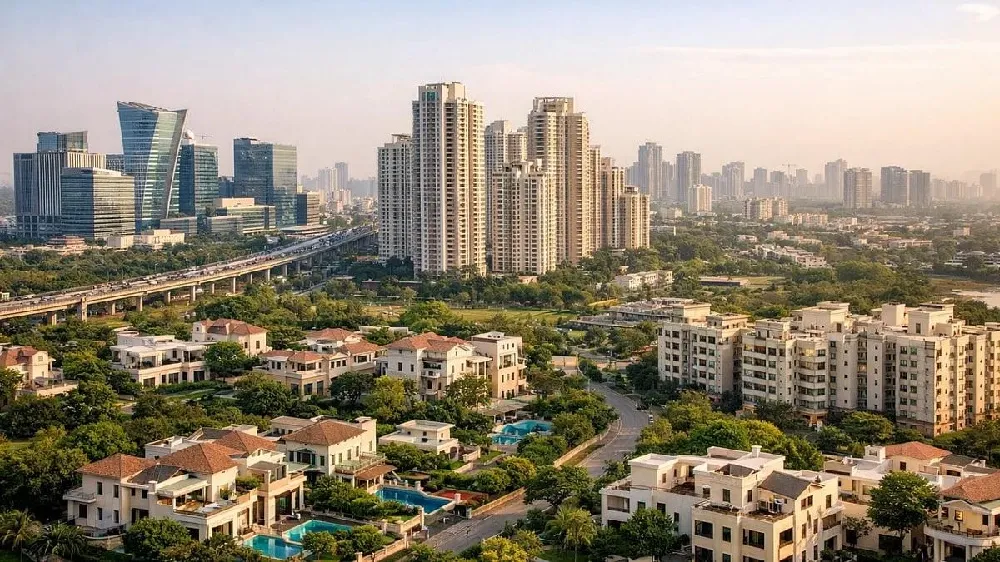
Gurgaon has developed from a satellite city into one of India's major corporate and residential markets. The presence of multinational companies, technology firms, financial services companies, retail districts, and expanding infrastructure has supported demand for housing across several parts of the city.
DLF has played a significant role in Gurgaon’s urban development. Its portfolio includes residential communities in DLF City, Golf Course Road, New Gurgaon and other important locations.
The company's official residential portfolio currently includes projects in areas such as Sector 76–77 and several DLF City locations.
This matters because a new residential project should not be evaluated in isolation. The surrounding neighbourhood often determines how useful the property will be several years after possession.

Location Should Come Before Amenities
One of the most common mistakes made by new-property buyers is focusing heavily on amenities before understanding the location.
A swimming pool, clubhouse, landscaped area or sports facility may improve the living experience. But these features do not compensate for poor connectivity or an unsuitable neighbourhood.
When evaluating Upcoming DLF Projects in Gurgaon, buyers should examine:
- Distance from major employment centres
- Access to major roads and highways
- Public transportation availability
- Nearby schools and hospitals
- Existing retail and daily-use facilities
- Planned infrastructure
- Traffic conditions during peak hours
- Development activity around the project
- Distance from established residential communities
For example, the wider DLF Privana development in Sectors 76 and 77 is positioned within an expanding part of Gurugram. DLF's own project material describes the area as having access to major Gurgaon and Delhi destinations, while also being surrounded by emerging commercial and residential development.
That illustrates an important principle: the surrounding ecosystem can be as important as the apartment itself.
Understand the Difference Between an Announcement and a Launch
Property buyers often treat every online reference to an upcoming project as confirmation that a project is ready for booking.
That can create unnecessary confusion.
A project may pass through several stages, including land acquisition, planning, approvals, regulatory processes, marketing preparation, launch, construction and eventual possession.
Therefore, before making a financial commitment, buyers should verify the project's current status through reliable sources and applicable regulatory records.
Do not rely only on social media posts, unofficial brochures, WhatsApp messages or advertisements.
The official DLF website provides information about its residential portfolio and project updates, while project-specific regulatory information should also be checked before making a purchase decision.
DLF Privana Shows Why Project Phasing Matters
The DLF Privana development is a useful example of how a large residential community can be delivered in phases.
DLF Privana covers a large development area across Sectors 76 and 77. Earlier phases included Privana South and Privana West, while Privana North was subsequently introduced.
DLF stated that Privana North covers approximately 17.7 acres and includes six towers with 1,152 four-bedroom residences and 12 penthouses. The company describes the development as part of the wider Privana master plan.
For buyers, phased development creates an important research question:
What will the neighbourhood look like when my property is actually ready for occupation?
The answer can be different from what a buyer sees on the day of booking.
Roads, commercial areas, schools, retail facilities and neighbouring developments may all change during the construction period.
Study the Apartment Configuration Carefully
A premium project may offer fewer but larger apartments, while another development may provide a larger number of units with different configurations.
Neither model is automatically suitable for every buyer.
A family looking for long-term self-use may have different requirements from an investor considering rental demand.
Before booking, examine:
- Carpet area
- Number of bedrooms
- Balcony space
- Floor plan efficiency
- Natural light and ventilation
- Service areas
- Number of apartments per floor
- Lift-to-apartment ratio
- Parking arrangements
- Views from different towers
- Orientation of the apartment
A larger super built-up area does not necessarily mean a proportionally larger usable living area.
Connectivity Is More Than Distance on a Map
A property can appear close to an important road while still taking considerable time to reach it during working hours.
This is why buyers should physically visit the location.
Check the route during both normal and peak traffic periods. Look at entry and exit roads rather than simply measuring straight-line distance.
For Gurgaon properties, buyers may also examine access to major employment corridors, metro connectivity, expressways and important arterial roads.
The city's continuing development means that connectivity can change over time, but planned infrastructure should not automatically be treated as completed infrastructure.
Consider the Future Supply Around the Project
Future residential supply can influence a locality's character and market dynamics.
A growing area can benefit from new schools, retail, offices, roads and services. At the same time, a large pipeline of new apartments can create competition when owners eventually try to rent or resell their properties.
Therefore, investors should research:
- Existing housing stock.
- Under-construction projects.
- Announced developments.
- Commercial development.
- Rental demand.
- Resale inventory.
- Employment growth nearby.
This approach gives a broader picture than looking at the appreciation of one project alone.
What Makes New Gurgaon Important for Property Research?
Several parts of Gurgaon have been undergoing significant development, particularly along newer residential and commercial corridors.
DLF's presence in newer sectors is one reason buyers researching the company's upcoming developments should look beyond established DLF City locations.
At the same time, established areas have a different advantage: mature infrastructure and existing social amenities.
This creates an important distinction between buying into an established neighbourhood and buying into a developing neighbourhood.
The first may offer greater certainty about the surrounding environment. The second may provide exposure to an area that is still changing.
Neither should be assessed without considering the buyer's time horizon.
A Practical Checklist Before Booking
Before paying a booking amount for any upcoming DLF development, review the following:
- Verify the exact project and developer entity.
- Check the project's regulatory registration where applicable.
- Confirm the current construction or launch status.
- Review the sanctioned plan and unit layout.
- Calculate the complete acquisition cost.
- Understand the payment schedule.
- Read the agreement carefully.
- Check possession-related terms.
- Visit the site personally.
- Study existing and planned infrastructure.
- Compare competing projects in the same micro-market.
- Estimate realistic rental demand if buying for investment.
- Consider the holding period before making a decision.
For broader research on Gurgaon’s changing residential market, readers can also refer to Upcoming Projects in Gurgaon: How Gurgaon’s Residential Market Is Changing.
Final Thoughts
The market for Upcoming DLF Projects in Gurgaon should be studied through a combination of project-level and locality-level research.
A well-known developer can reduce some forms of uncertainty, but it does not remove the need for due diligence. Buyers still need to understand the location, project status, total cost, floor plan, construction timeline, surrounding supply and long-term suitability.
Gurgaon is changing quickly, and today's developing corridor can look very different after five or ten years. That is why a property decision should be based not only on what is being offered today, but also on how the surrounding neighbourhood is expected to develop.
For homebuyers, the right research process begins before the booking form is signed.
























Sign in to leave a comment.