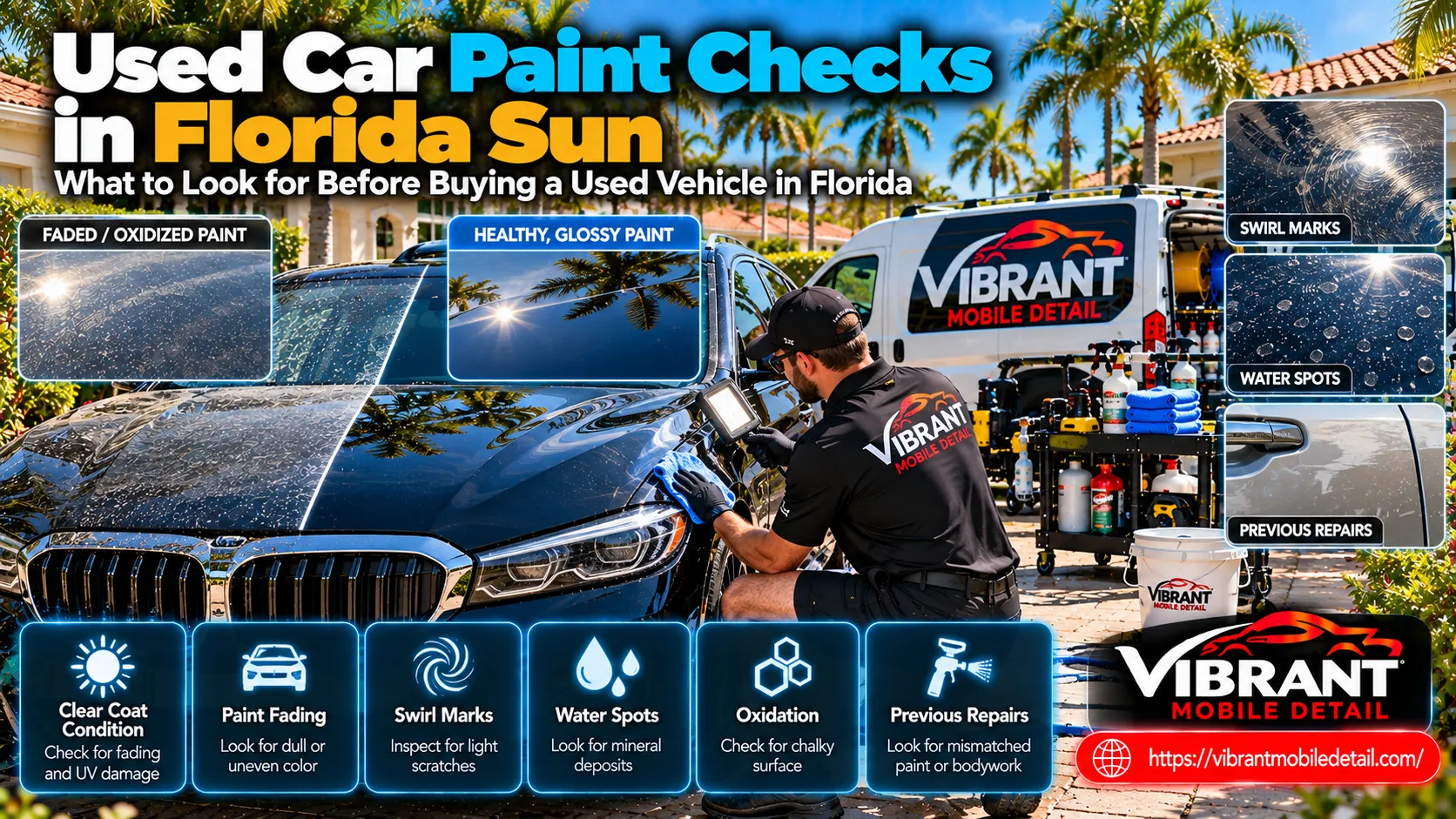

Buying a used car in Fort Myers, Cape Coral, Estero, or Naples is different from buying one that lived in a northern garage. Ultraviolet light, salt air, irrigation minerals, and beach grit all leave marks that look mild under a dealership canopy and obvious on a driveway at 3 p.m. Used car paint checks in Florida should happen on a clean, dry panel in hard afternoon light, because that is when haze, water-spot etch, insect pits, and the first lift at a hood edge stop hiding. A wet car in shade can look a decade younger than the same car will look after a week of Southwest Florida sun.
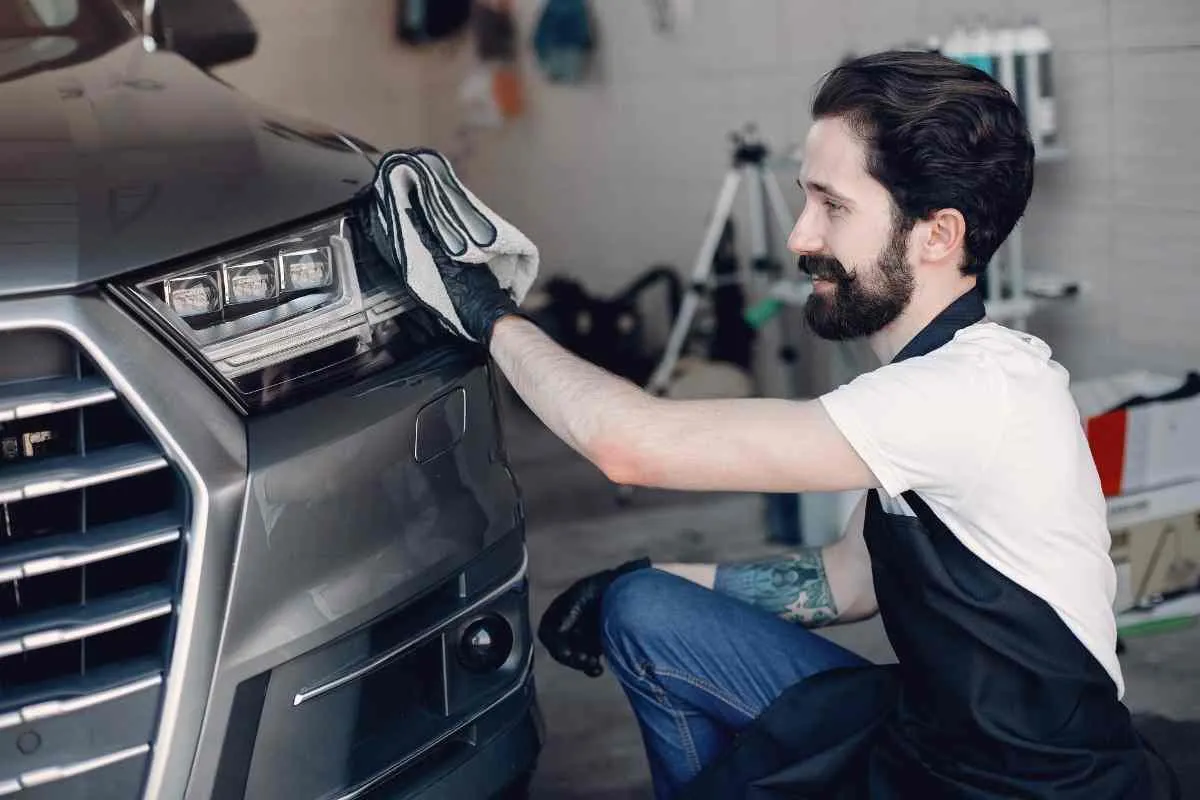
If you are comparing cars this month, treat the paint inspection as its own appointment rather than a two-minute glance while you negotiate. The mobile car detailing Fort Myers process of washing, drying, and looking in sun is the same sequence a careful buyer should run before money changes hands. You are not asking a seller for a show finish. You are asking whether the clear coat is still a continuous film or already a refinish project wearing a wax shine.
Why Florida listings lie in kind light
Photographers and sellers prefer dusk, overcast mornings, and wet paint because those conditions flatten defects. Haze on a horizontal panel disappears when the surface is glossy with water. Mineral rings hide when the camera is six feet away. A black hood that has been through weekly tunnel brushes can look liquid under LED canopy lights and then show a web of fine scratches the first time you park it outside a Cape Coral grocery store.
Southwest Florida adds three extra disguises. Reclaimed irrigation leaves a chalky band on lower doors that looks like ordinary dust until you wash it and find etched rings. Love bugs and other insects leave juice that looks like dirt until you clean the fascia and see tiny dull craters. Salt film from Fort Myers Beach lots and bridge crossings can make a car look uniformly dull, which fools people into thinking a single wash will restore gloss when the dullness is actually oxidized clear coat.
None of that means you should refuse every used car in Lee or Collier County. It means you should refuse to judge paint in the conditions that hide the climate.
Wash the car before you decide what the paint is
Dirt, pollen, and mineral dust mimic failure. You cannot tell bonded haze from loose film until the panel is clean. Ask the seller to wash the car, or pay for an independent wash before you commit. If a private seller refuses any wash and only wants a night meeting, that is information about how they want the car seen.
Do not dry-wipe a dusty hood with a shirt in the lot. Grit on dry paint is sandpaper. Buyers do that “to get a better look” and then spend the first year blaming the previous owner for swirls they added in the parking aisle.
A useful wash for inspection is not a perfume detail. You need the hood, roof, trunk, doors, and fascia clean enough to feel with a clean fingertip. Wheels can wait. The interior can wait until after you know whether the film is intact, unless the cabin is so filthy that you cannot sit for a glass check.
After the wash, dry the car and let it sit out of the shade. Inspection starts when the water is gone. Wet paint is a greeting, not evidence.
How to read a hood and roof in afternoon sun
Stand at the front corner and look across the hood, then move to the other corner and look again. Horizontal panels take the most ultraviolet light in this climate, so they fail first. What you want to see is even color and even gloss. What you do not want to see are cloudy islands that remain after soap, a milky cast that shifts when you change angle, or a texture that feels like fine grit after the panel is clean.
Run a clean fingertip lightly over the surface. A healthy, clean clear coat generally glides. Oxidized or contaminated film drags. Drag after a wash is a warning, not a death sentence by itself, because bonded minerals can create texture that a professional decontamination can improve. Drag plus visible dull patches is a stronger warning. Drag plus flakes at an edge is no longer a detailing conversation.
The roof tells the same story and often tells it earlier on SUVs and trucks that sleep outside. Many buyers never look at the roof because they cannot see it from the sidewalk. If you can get a safe step or a photo from above, use it. A roof that is chalky while the doors still look decent is a common Florida pattern: horizontals cooked, verticals merely neglected.
Lower doors, fascias, and the stories they tell
Lower doors in landscaped communities collect irrigation overspray. In Cape Coral and many Fort Myers neighborhoods, timers run at night and print a repeating band on the same door. After a wash, two outcomes are possible. The band disappears, which means you were looking at mineral dust. The band remains as dull rings or pits, which means the minerals etched the film. Etch is not a wax problem. It may still be livable. It should be priced as condition, not hidden as “it just needs a good coat.”
Front fascias collect insects. After a summer week on I-75, juice looks like dirt. After a wash, remaining dull specks are often pits in the clear coat. A few pits on a commuter car are normal here. A fascia that looks sandblasted after soap is a refinish or replacement conversation, especially on darker colors.
Jambs and door edges tell you whether “we just detailed it” meant a hose on the roof or actual work. Open a rear door. If the outer panel is glossy and the jamb is caked, the listing photos were selective. That does not automatically kill the deal, but it tells you the seller’s standard.
Lifting film is where you stop shopping for polish
Clear coat that is lifting at a hood edge, mirror cap, or trunk lip is not tired. It is finished in that area. Thin, transparent flakes that move under a fingernail will not be glued down by wax, sealant, or ceramic coating. Product on lifting film makes the next painter’s job harder and gives you a few weeks of false confidence.
If you see lift, you have three honest paths. Walk away. Price the car as a paint job. Or accept the defect and never pretend a detailer will reverse it. What you should not do is buy a coating package as makeup the same week you take delivery.
Color change you can see from the driveway, especially a cloudy gray-white cast on a dark hood, can be heavy oxidation or failing film. Wash first. If the cloud remains and the edge is brittle, get a painter’s opinion before you get a polisher’s opinion.
Glass, tracks, and the night-drive cost
Paint is not the only Florida bill. Inner windshield film from sunscreen, cabin plastics, and humidity causes night glare on Summerlin, McGregor, and the Cape Coral bridges. Sit in the driver’s seat after the wash and look through the glass at a bright sign or the sky. If the pane blooms, budget glass work whether or not you love the hood.
Seat tracks and rear sills collect beach sand even when the seller vacuumed the carpets. Crunch under a shoe is a labor type, not a personality flaw in the car. A vehicle that lived at Fort Myers Beach or on a canal lot will carry grit in places a quick “detail before sale” never reaches. Check the hatch sill and the third-row rails on SUVs. Those surfaces tell the truth about family use.
If you only inspect paint and skip the cabin, you can buy a pretty hood and a miserable commute. Used car paint checks in Florida are really vehicle-condition checks that start with paint because paint is what the climate attacks first.
What an independent look can and cannot promise
A local detailer can wash the car, feel the film, point out haze versus dirt, and tell you whether a correction conversation is even sane. They cannot certify paint thickness without a meter and a method. They cannot honestly promise that a one-step polish will make a tunnel-abused black sedan look unlived-in. They cannot hide lift.
Use that look as information for the price conversation, not as a warranty. If you want a show finish after purchase, budget it as a separate project with time, shade or shop space, and an honest assessment of the film. Do not bake a fantasy correction into the handshake.
Bring a calm second person if you can. Excited buyers shop. Calm buyers look at edges. Edges are where Florida cars talk.
A practical hour you can run on a Sunday
Give the first fifteen minutes to washing or to a thorough rinse and dry if a full wash is refused. Give the next fifteen minutes to the hood, roof, and fascia in sun. Spend ten minutes on doors, lower bands, and jambs. Spend ten minutes sitting in the seat, checking inner glass, and feeling tracks. Use the last ten minutes to write what you saw before you talk money. Memory gets polite when a seller is standing there.
Write defects in plain language: “hood haze after wash,” “door band remains after wash,” “fascia pits,” “flakes at right hood edge,” “inner glass filmed,” “tracks sandy.” Those notes travel better than “paint is okay-ish.”
If the seller will only meet after dark, you can still like the car, but you should not finish the paint decision until you have seen it dry in afternoon light. Coming back is cheaper than a year of telling friends the hood “just looks like that here.” Here is not one look. Here is a set of looks you can separate with soap and sun.
After you buy, do not undo the inspection
New owners often celebrate with a dirty tunnel and a dry towel. That combination reprints swirls on the film you just spent an hour judging. Rinse after the first beach trip. Move the car out of the worst irrigation arc if your new house has one. Give week one a reset look if the car sat through summer while you were still in another state. Sitting in spray is not indoor storage.
If you plan to add protection later, wait until you understand the stall, the timer, and whether the film is intact. Coatings belong on prepared, healthy paint with a dry overnight window. They do not belong on a mystery hood the afternoon you pick up keys.
Used car paint checks in Florida sun are a refusal to shop in the dark. Wash the car, stand where the light is unkind, feel the panel, sit for glass, and then talk about money. The climate will keep writing on whatever you buy. Your job is to read the writing before you sign.
Frequently asked questions
Can I trust listing photos taken at dusk?
Treat them as mood, not as condition. Ask for afternoon photos of the hood and roof after a wash, shot dry, from more than one angle. If the seller only has night photos and refuses a daytime meeting, assume the paint has something to hide or that they simply do not understand this market.
Should I coat the car the day I pick it up?
Not before you know the film is intact and you have a place the car can stay dry overnight. Coatings on lifting or heavily etched paint become a problem for the next shop. A thorough wash and an honest look are the first-week jobs. Protection is a later decision.
What if the car is wrapped?
Look at paint beside the vinyl and at wrap edges. Vinyl can hide fade and, in some cases, lift. A wrapped hood that looks perfect can still have tired film at the fender. Say that it is wrapped when you ask for an inspection so nobody treats the vinyl like factory clear coat.
Is a dark car a bad idea in this climate?
Dark colors show swirls, minerals, and haze sooner. That visibility is useful if you inspect in sun and keep a rinse habit. It is unkind if you rely on garage light and tunnel washes. The climate does not spare white cars either. White reports dust and bug stains early and hides some scratches. Choose the color whose reports you are willing to answer.





















Sign in to leave a comment.