
Planning a print-led collection from a screen is a bit like designing a room from paint chips shown on someone else's monitor. The colour looks right, the pattern looks sharp, and then the actual fabric arrives looking nothing like what was expected. Print especially suffers from this gap, since colour accuracy, scale, and how a pattern sits on the base cloth are all things a photograph struggles to represent honestly. For designers building an entire collection around print, that gap isn't a minor inconvenience — it's a real production risk.
This is exactly the kind of problem a physical sample resource is built to solve, and it becomes even more useful when print is the focus of a collection rather than an afterthought.
Why Print Is Harder to Judge Online Than Plain Cloth
A solid, unprinted fabric is relatively forgiving to evaluate from a photo — colour shifts a little depending on lighting, but the overall impression usually holds. Print doesn't behave the same way. Digital prints depend on sharp detailing and vibrant colour that can shift noticeably between screens, eco and botanical prints carry subtle natural variation that never photographs consistently, and foil prints rely on a reflective finish that a flat image simply cannot capture. Add in the base fabric's own weight and texture, and a designer working purely from thumbnails is making several judgment calls at once with very little reliable information behind any of them.
This is precisely why print-focused collections benefit more than most from handling actual fabric before committing to bulk.
What a Physical Swatch Resource Actually Provides
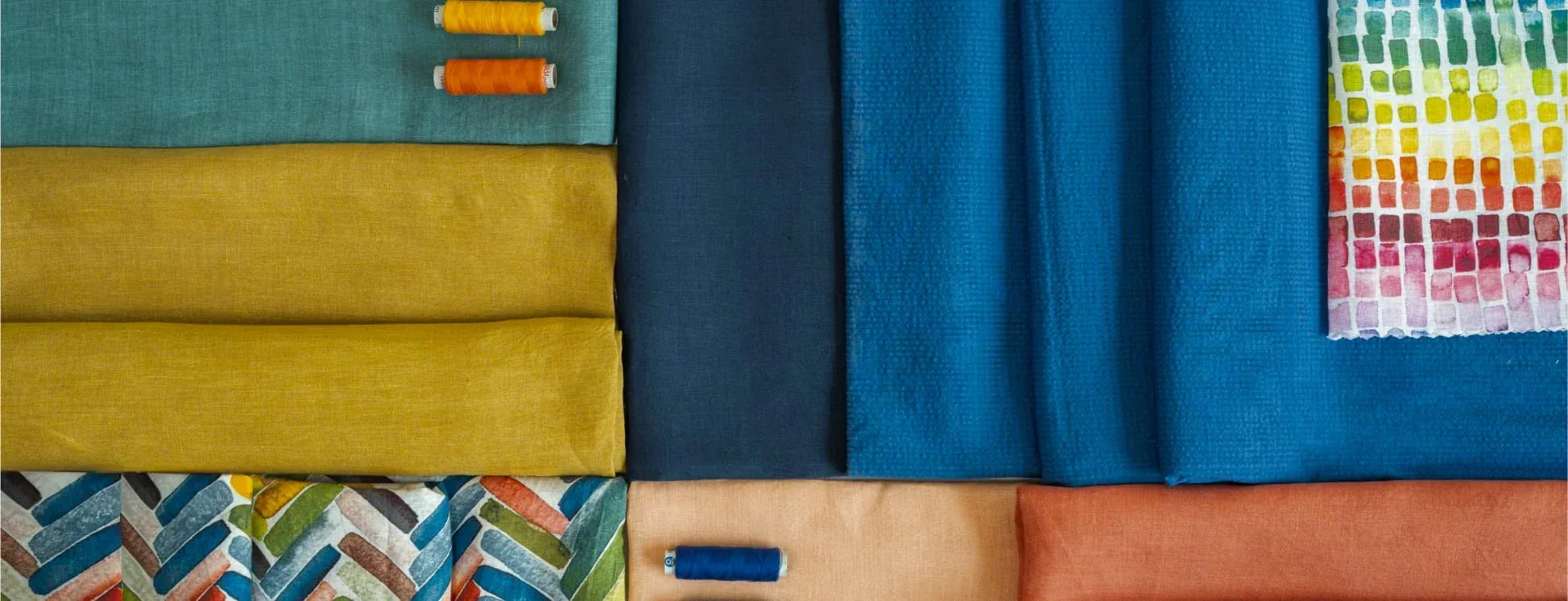
A well-organised sample collection solves this by putting real, labelled fabric directly into a designer's hands. Each sample is typically A4-sized, large enough to properly judge colour, drape, and thickness rather than guessing from a small clipping, and carries a label noting GSM, weave, fibre content, and finish. That means print quality and base fabric specifications are available the moment a question comes up, without hunting through separate product pages. Samples are usually grouped by fabric family and technique, which makes comparing several print styles in one sitting far easier than ordering individual trial lengths and waiting for each to arrive separately.
Because such a collection is refreshed as new fabrics and prints are added to a range, working through it also gives a current view of what's actually available, rather than a fixed selection that goes out of date.
Using a Sample Book to Plan a Print Collection Specifically
When print is the focus, a sample book earns its place in the workflow in a few concrete ways. Checking a swatch under different lighting reveals how a digital print's colour actually reads compared to how it appeared on screen, which matters more than most designers expect before a bulk order is placed. Handling an eco or botanical print in person shows the natural variation between motifs, helping decide whether that subtlety suits the collection's tone. Foil prints in particular need to be seen in hand, since their reflective quality is one of the hardest details to judge from a photograph. Laying several printed swatches side by side also makes it simple to compare print scale, base fabric weight, and finish before locking in a direction for the line.
For anyone building a collection around pattern specifically, it's worth spending time with the full printed fabric range in physical form to see how digital, eco, and foil techniques actually sit on different base cloths before finalising design choices.
Reducing Risk Before a Bulk Order
Ordering printed fabric in bulk based on a screen alone carries a real risk of mismatched colour, an unexpected print scale, or a base cloth that feels heavier or lighter than anticipated. Working from a physical reference removes much of that uncertainty, since the actual material is being checked rather than a photograph that shifts with lighting or screen calibration. It also saves meaningful time during sourcing — instead of ordering multiple small trial lengths across different print styles and waiting separately for each, several options can be compared in a single sitting, with a confident order placed only for what has already been handled and approved.
Bringing a Sample Book Into the Planning Process
Designers building a new print-led line, testing a handful of pattern directions, or simply exploring what different print techniques feel like on natural cloth tend to get the most value from working through a fabric swatch book early, well before any cutting table decisions are locked in. Keeping the labelled specifications close at hand during client meetings or team discussions also means questions about GSM, fibre content, or print type can be answered on the spot.
Final Thoughts
Print adds a layer of visual complexity that's genuinely difficult to plan for on screen alone, given how much colour accuracy and pattern scale depend on seeing the actual cloth. A labelled sample collection removes that guesswork, turning a print-led collection from a series of educated guesses into a set of decisions grounded in fabric that's already been seen, touched, and approved before a single bulk order is placed.























Sign in to leave a comment.