
Gangnam is the part of Seoul most visitors picture when they think of neon towers, shopping streets and late dinners. It is also one of the busiest transport hubs in South Korea, and using buses and trains in Gangnam is easier than the crowds suggest once you know how the pieces fit together.
This guide covers the lines and buses you will actually use, the cards that make paying painless, the slips that catch first-timers, and a few habits that keep you on schedule. Fares, routes and pass rules change, so check the operators' official sites before you travel.
Main transport options
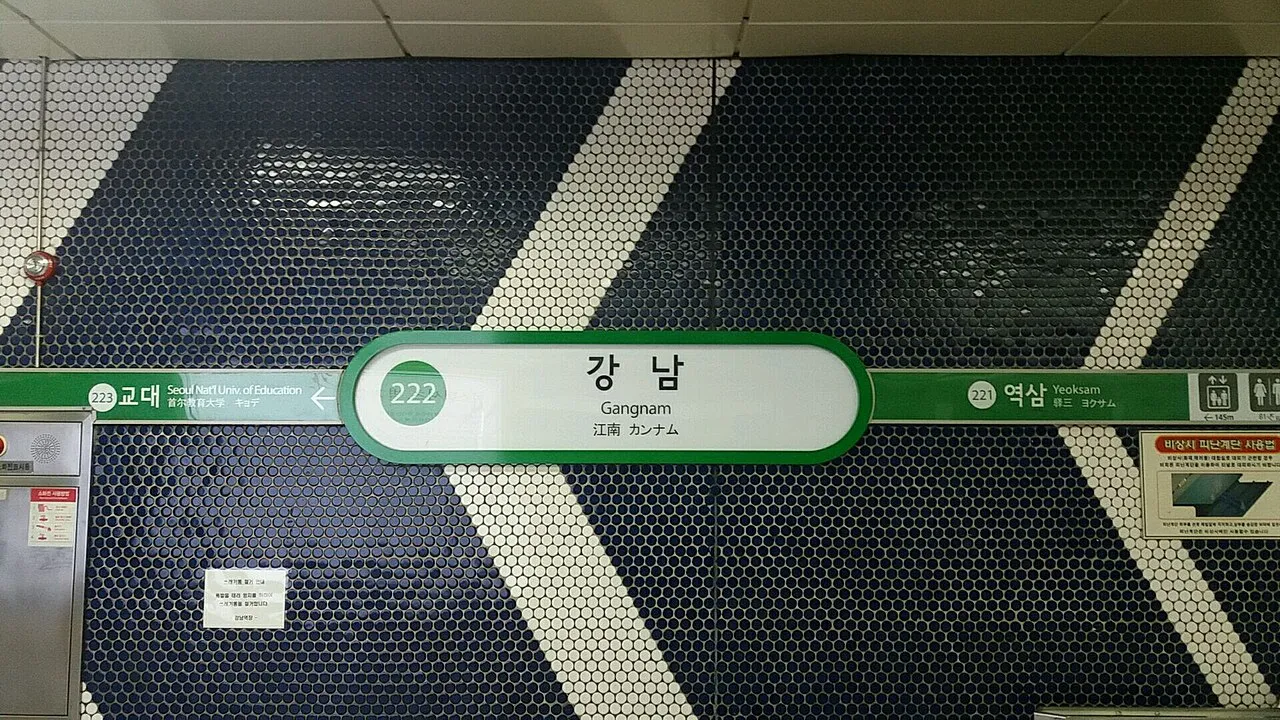
Gangnam Station sits on Seoul Metro Line 2, the green circle line that loops around central Seoul. That single fact solves a lot of trips. Line 2 links Gangnam with Jamsil to the east, Hongdae and Sinchon to the west, and Seongsu on the way around. The loop runs in both directions, so if you take the wrong direction you will still get there, just slowly.
The Shinbundang Line also stops at Gangnam. It is a faster, more modern line that runs south toward Yangjae, Pangyo and beyond. Line 9 serves nearby stations such as Sinnonhyeon and Express Bus Terminal, and it runs both local and express trains. The express trains skip stations, so check the sign on the platform before you board.
Buses fill in everything the trains do not reach. Seoul color-codes them. Blue buses run long trunk routes along the main roads, green buses feed shorter local loops, red buses head out to the suburbs and satellite cities, and yellow buses circle within a small area. In Gangnam, Teheran-ro and Gangnam-daero are the two main avenues, and both carry frequent blue and red services.
Taxis are cheap by international standards and useful late at night, but they do not beat the metro at rush hour. Traffic on Gangnam-daero can crawl for long stretches in the evening.
Tickets and passes
You do not need to buy a ticket for each ride. A rechargeable transport card such as T-money works on Seoul's metro and buses, and it also works on many buses and metros in other Korean cities. You can buy one at convenience stores and station machines, then top it up with cash. Many phones can also hold a digital transit card, which is handy if you would rather skip the queue. Whether a given phone or foreign card works varies, so test it before your first busy morning.
Fares in Seoul depend on distance, and transfers between metro and bus are usually discounted when you tap in and tap out properly. That last point matters. On buses you tap when you board and again when you get off, and the transfer discount only works if you complete both taps.
Tourist-oriented passes exist, and some bundle transport with attraction discounts. Do the math before buying one. If your days in Gangnam are mostly shopping, food and a few sights, a rechargeable card and pay-as-you-go rides will usually cost less than an unlimited pass.
Common mistakes
Forgetting to tap off the bus. Seoul buses charge by distance on many routes, so leaving without tapping can cost you the transfer discount and confuse the next fare.
Choosing the wrong exit. Gangnam Station has numerous exits, and the walk from one to another above ground can take longer than the train ride you just made. Look at the exit map on the platform, pick the number closest to your destination, and follow the signs.
Riding at the worst times. Weekday mornings and evenings are packed, and Gangnam is one of the busiest stations in the city. If you carry luggage, avoid Line 2 during those windows.
Missing the last train. Metro service ends around midnight or shortly after, depending on the line. Night owl buses run after that, but they follow their own routes and stop at set stops, so plan your way back before dinner turns into a long evening.
Blocking priority seats. Seats marked for older passengers, pregnant riders and people with disabilities are meant to stay free. Stand if the train is full, and keep your voice low on calls.
Navigation tips
Local apps beat global ones in South Korea. Naver Map and KakaoMap are widely used in Seoul, and they show accurate bus arrival times, the best train car for your transfer, and which exit to use. Google Maps can help with basic transit directions, but many visitors find the local apps more precise, especially for walking routes.
Check the color of the line and the number of the station. Station names appear in Korean and English, and every station has a number that helps when you cannot read the script. Learn the color of Line 2 and the direction labels, which tell you the final stop rather than compass points.
Allow extra time for transfers at Gangnam Station. The passage between lines can be long, and the crowd slows everyone down. Ten minutes is a safer estimate than five.
Connectivity tip for live routes
Buses in Gangnam depend on live arrival data. You can see a bus is three stops away, decide whether to wait, and switch to the metro if traffic looks bad. That only works with a working connection, and underground platforms are where public Wi-Fi is least dependable.
Many travelers set up a travel eSIM for South Korea before they leave home. An eSIM installs from a QR code, so there is no SIM swap at the airport. If your trip runs longer than a week or two, look for a plan with custom unlimited durations from 1 to 365 days, so you pay for the days you need rather than a fixed bundle. Check that your phone supports eSIM and is carrier-unlocked, and note that many travel plans are data-only.
Ride it like a local
Learn Line 2 first, carry a rechargeable card, tap in and out every time, and treat the local map apps as your default. Gangnam looks intimidating from the street, but the system underneath it is orderly. Give yourself a little buffer, and the district becomes one of the easiest places in Seoul to move around.























Sign in to leave a comment.