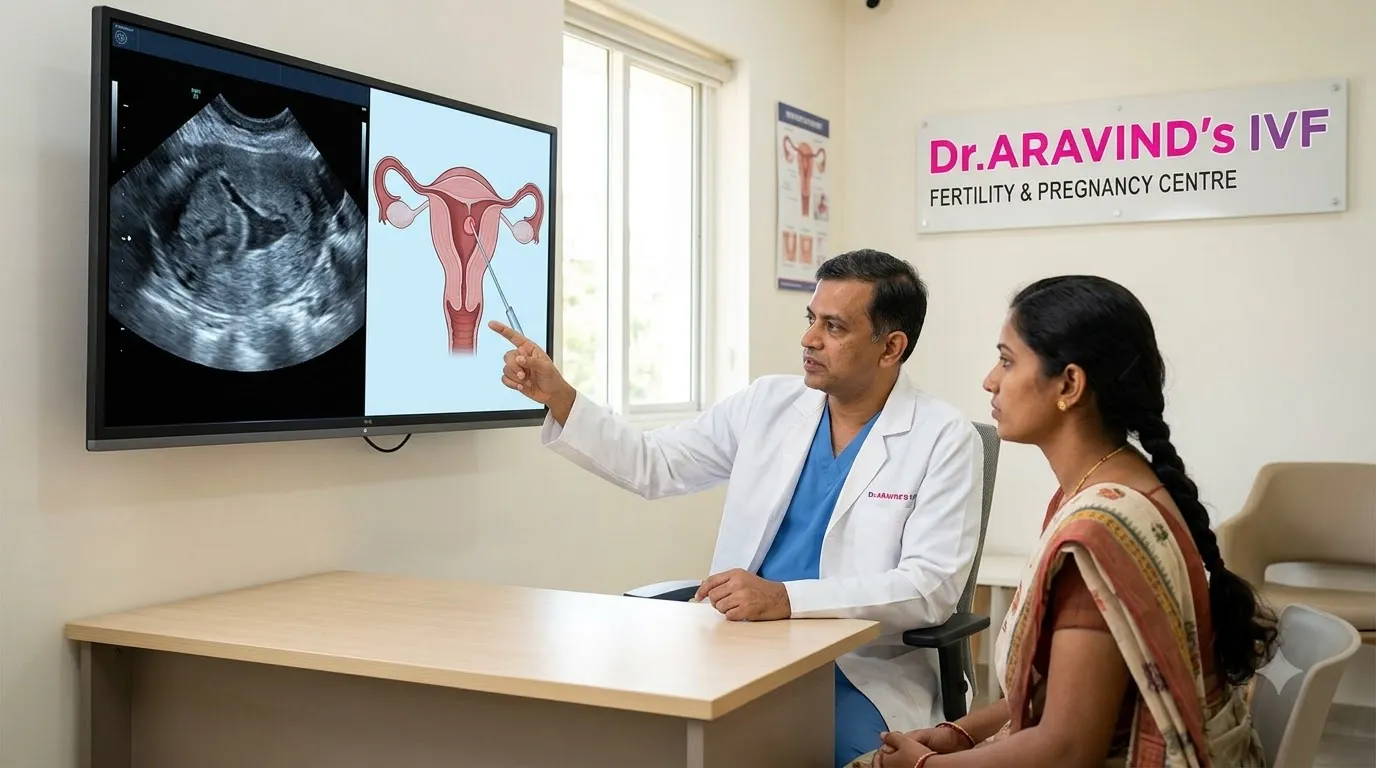


Uterine polyps are one of those conditions that often go unnoticed until something prompts a closer look - irregular bleeding, failed IVF cycles, or a routine scan that picks up something unexpected. If you are currently investigating fertility issues and looking for guidance from a trusted IVF Centre in Electronic City, understanding what uterine polyps are, how they affect implantation, and when removal is genuinely necessary can save you a lot of confusion.
This guide walks through everything you need to know - from diagnosis to recovery - in plain, honest terms.
What Are Uterine Polyps?
Uterine polyps are soft, finger-like growths that develop from the inner lining of the uterus, called the endometrium. They are attached to the uterine wall either by a thin stalk or a broad base and can range in size from a few millimetres to several centimetres.
Most polyps are benign - meaning they are not cancerous. However, their presence inside the uterine cavity can interfere with how the endometrium functions, which is why they matter so much in a fertility context.
They are more common than many people realise and can occur at any reproductive age, though they are seen more frequently in women in their late thirties and forties.
How Do Polyps Affect Fertility?
The uterine lining plays a central role in embryo implantation. For a fertilised egg to successfully attach and grow, the endometrium needs to be receptive, well-prepared, and structurally clear.
A polyp sitting inside the uterine cavity can disrupt this in several ways:
- Physical obstruction: A polyp near the fallopian tube opening can block sperm from reaching the egg or prevent an embryo from reaching its intended implantation site.
- Altered uterine environment: Polyps can trigger localised inflammation, which changes the biochemical signals the endometrium sends - signals that are essential for a receptive implantation window.
- Mechanical interference: Even a small polyp positioned at the site where an embryo would naturally implant can physically prevent attachment.
This is why many fertility specialists recommend evaluating the uterine cavity before beginning any IVF cycle - not after a failed one.
How Are Polyps Diagnosed?
Polyps are not always visible on a routine transvaginal ultrasound, particularly when they are small. More reliable diagnostic methods include:
- Saline Infusion Sonography (SIS): Sterile saline is gently introduced into the uterine cavity during an ultrasound, which helps outline any irregularities on the inner wall with greater clarity.
- Hysteroscopy: A thin camera is passed through the cervix into the uterus, allowing the doctor to directly visualise the cavity. This is the most accurate diagnostic method - and the same instrument can be used to remove the polyp in the same sitting.
- 3D Ultrasound: Provides a more detailed view of uterine architecture than a standard scan and can help differentiate polyps from other structural issues like fibroids or a septum.
When Should a Polyp Be Removed?
Not every polyp requires immediate removal. Small polyps in women with no fertility concerns sometimes resolve on their own. However, in a fertility context, the threshold for removal is lower - because the stakes are higher.
Removal is generally recommended when:
- The polyp is larger than 1 cm
- There are multiple polyps present
- The polyp is located near the tubal openings or at a likely implantation site
- There is a history of unexplained implantation failure or recurrent miscarriage
- The patient is about to begin an IVF cycle
The decision should always be individualised - based on polyp size, location, your reproductive history, and your doctor's clinical assessment.
The Removal Procedure: What Actually Happens
Polypectomy - the surgical removal of a uterine polyp - is almost always performed hysteroscopically. This means no abdominal cuts, no general anaesthesia in most cases, and no overnight hospital stay.
Here is how it typically works at the Best fertility specialist in Electronic City:
- A thin hysteroscope is passed through the cervix under direct vision
- The polyp is identified and removed using small instruments passed through the scope
- The base of the polyp is treated to reduce the chance of regrowth
- The removed tissue is sent for histopathological analysis to confirm it is benign
The entire procedure usually takes 20 to 30 minutes. Most women experience light spotting and mild cramping for a day or two afterwards - nothing that requires significant downtime.
Recovery and Timing Before IVF
After polypectomy, the uterine lining needs time to heal before an embryo transfer is planned. Most clinics recommend waiting at least one to two full menstrual cycles before proceeding with IVF - this allows the endometrium to regenerate properly.
A follow-up scan or repeat hysteroscopy is sometimes done before the IVF cycle begins to confirm the cavity is clear and the lining looks healthy.
Rushing this recovery period is counterproductive. A clinic that builds in appropriate healing time before the embryo transfer is one that is genuinely focused on your outcome.
Conclusion
Uterine polyps are a treatable and well-understood condition. When identified and removed at the right time - before or between IVF cycles - they no longer need to stand between you and a successful pregnancy.
The most important step is getting a proper uterine evaluation done before treatment begins, not troubleshooting after a cycle has already failed.
Schedule an appointment with a fertility specialist today - a single hysteroscopy can give you a clear picture of your uterine cavity and, if needed, fix the problem in the same visit.
Frequently Asked Questions (FAQs)
1. Can uterine polyps cause miscarriage?
Yes, in some cases. Polyps located near an implantation site can interfere with how the embryo attaches to the uterine lining. This can lead to either failed implantation or early pregnancy loss. Women with recurrent miscarriage are often recommended for a hysteroscopic evaluation specifically to rule out polyps and other structural issues before further treatment.
2. Will the polyp grow back after removal?
Regrowth is possible but not inevitable. Studies suggest that polyps recur in roughly 15 to 20 percent of cases over time. The base of the polyp is typically treated during removal to reduce this risk. Regular follow-up scans after polypectomy allow early detection if a new polyp begins to form.
3. Is hysteroscopic polypectomy safe?
Yes. Hysteroscopic polypectomy is considered a very safe and well-established procedure. Serious complications are uncommon. The most frequently reported side effects are mild cramping and light spotting for a day or two after the procedure. It is performed routinely in fertility clinics worldwide and does not require general anaesthesia in most cases.
4. How soon after polypectomy can I start an IVF cycle?
Most fertility specialists recommend waiting one to two full menstrual cycles after polypectomy before beginning an IVF cycle. This gives the uterine lining adequate time to heal and regenerate. A scan or follow-up hysteroscopy may be scheduled before the cycle starts to confirm the cavity looks clear and the endometrium is healthy.
5. Are all uterine polyps the same?
No. Polyps vary in size, number, and location - all of which influence whether and how urgently treatment is needed. A small, single polyp in a low-risk location may be monitored rather than immediately removed. Multiple polyps, larger growths, or those near the tubal openings or implantation zones are more likely to need intervention. Your doctor's recommendation will depend on these specific characteristics alongside your fertility history.






















Sign in to leave a comment.