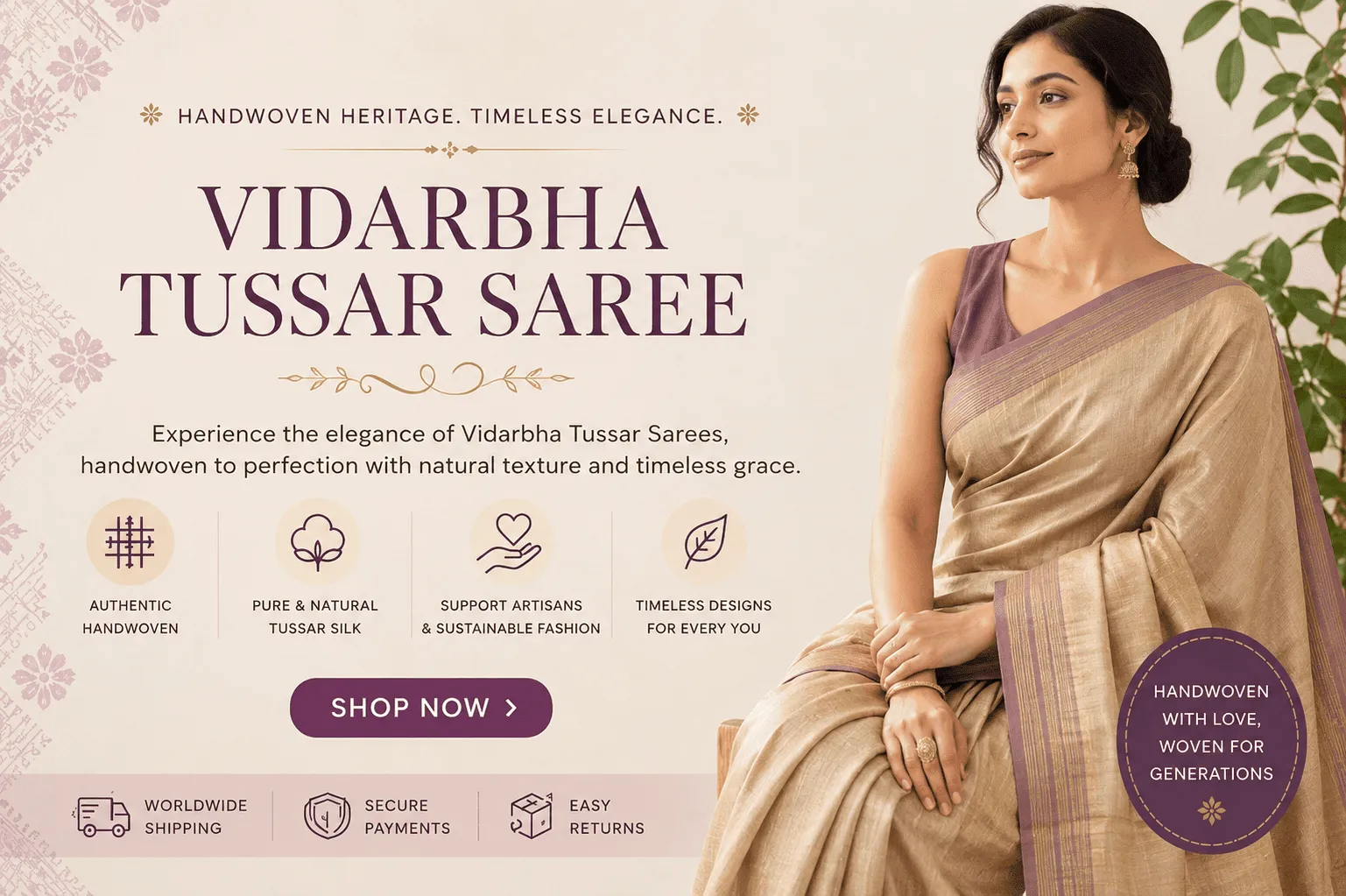

The texture of a Vidarbha Silk Saree comes down to one raw material and one weaving quirk: hand-reeled tussar silk that carries a natural, slightly grainy feel, combined with a saw-tooth "Karvati" border woven using a three-shuttle tapestry technique. That combination — a soft, textured silk body set against a crisp, patterned cotton-and-silk border — is what gives this Vidarbha region weave its recognizable look and feel, distinct from smoother mulberry-silk sarees woven elsewhere in India.
What Gives the Vidarbha Silk Saree Its Distinct Texture?
Tussar (Tasar) Silk as the Core Fabric
Unlike mulberry silk, tussar (locally "tasar") silk is a wild silk obtained from cocoons found in forest areas of the Bhandara district, part of Maharashtra's Vidarbha region. This wild-silk origin gives the yarn a naturally coarser, grainier texture and a warm yellowish-brown tone rather than the smooth, glossy finish typical of cultivated mulberry silk sarees.
The Karvati (Saw-Tooth) Border Technique
The saree's signature "Karvati" or "Karvat Kathi" border gets its name from the Marathi word for saw, referencing the jagged, saw-tooth pattern created where the border and body threads interlock during weaving. This border, usually in red, maroon, or deep contrast tones, is woven separately from the plain-toned body and adds textural contrast rather than being a printed or embroidered addition.
How Is a Vidarbha Silk Saree Traditionally Woven?
The Three-Shuttle Tapestry Weaving Method
Weavers use a three-shuttle tapestry-style technique to create solid-colored borders and body sections within the same saree, a method that allows the saw-tooth pattern and temple-style motifs to form directly during weaving rather than as a later addition. This is typically done on a pit loom fitted with a wooden lattice dobby positioned above the weaver's seat.
Role of Bhandara's Tribal Cocoon Collectors
Much of the raw tussar silk used in Vidarbha sarees is sourced from cocoons collected in forest areas by local tribal communities, who traditionally protect the cocoons on trees until they're ready for harvesting. This dependence on wild, forest-based silk rather than farmed cocoons is part of why genuine Vidarbha tussar is harder to standardize at scale compared to mulberry silk production.
What Makes the Texture of a Vidarbha Saree Different From Other Silk Sarees?
Natural Beige Tone and Grainy Feel
A Vidarbha Saree body is typically left in its natural, undyed beige-to-brown tone, letting the tussar silk's inherent texture and sheen show through rather than being overdyed into bright, uniform colors. This gives the saree a raw, earthy visual quality that's noticeably different from the smoother, richly dyed look of many other Indian silk weaves.
Mercerized Cotton Border vs Silk Body
While the body uses hand-reeled tussar silk in both warp and weft, the border typically switches to 2/80s mercerized cotton yarn, creating a deliberate contrast in sheen and texture between the two sections. This mixed-yarn approach is part of what makes the border stand out sharply against the softer, muted body of the saree.
How Do You Choose the Right Vidarbha Silk Saree for an Occasion?
Festive and Party Wear
For festive occasions or parties, a Vidarbha saree with a bold maroon, red, or green Karvati border against a natural or off-white body works well, since the saw-tooth pattern and temple motifs stand out clearly under both daylight and indoor event lighting. These pieces tend to photograph distinctly due to their textured, non-glossy finish.
Everyday and Semi-Formal Wear
For semi-formal or everyday wear, sarees with narrower borders and softer color contrasts offer a more understated look while retaining the texture that defines the weave. Tussar's breathable, cotton-like feel despite being silk also makes it practical for longer wear compared to heavier, more formal silk types.
What Should You Check Before You Buy Vidarbha Saree Online?
Fabric and Border Composition Details
Before you buy Vidarbha saree online, check whether the listing specifies pure tussar (tasar) silk for the body and mercerized cotton for the border separately, since this yarn mix is central to the saree's authenticity and texture. A listing that simply says "silk saree" without this breakdown is worth clarifying with the seller directly.
Seller Credibility and Return Policy
Because tussar's texture and natural color tone can appear differently under various lighting conditions, checking reviews that specifically mention texture, drape, and color accuracy is more useful than relying on photos alone. Confirming a clear return or exchange window matters especially for silk sarees, where fabric feel is hard to judge until the piece arrives.
How Can You Verify an Authentic, GI-Registered Vidarbha Silk Saree?
Checking the GI Registration
Karvath Kati sarees from the Vidarbha region were registered as a Geographical Indication (GI) in 2017, with the Maharashtra State Handlooms Corporation Limited listed as the applicant. Registration and certificate details are publicly available through the Geographical Indications Registry under ipindia.gov.in, which confirms the craft's protected origin tied specifically to Maharashtra's Vidarbha region.
Comparing New Collections and Brand Listings
When browsing newer collections online, checking whether a brand's listing explicitly names tussar silk, the Karvati border technique, or the Vidarbha/Bhandara origin gives a clearer picture of authenticity than general marketing terms. Brands such as Indeloom include Vidarbha-style silk sarees within their broader saree collections, and reviewing each specific listing's fabric and border details remains the most reliable way to confirm exactly what a piece includes before purchasing.
FAQs
What silk is used in a Vidarbha silk saree?
Vidarbha silk sarees are traditionally woven using tussar (tasar) silk, a wild silk sourced from forest-based cocoons in Maharashtra's Bhandara district, part of the Vidarbha region.
Why is the border of a Vidarbha saree different from its body?
The border uses mercerized cotton yarn woven in a saw-tooth "Karvati" pattern, while the body is woven separately using pure tussar silk, creating a deliberate contrast in texture and sheen.
Is Vidarbha silk saree GI-certified?
Yes, Karvath Kati sarees from the Vidarbha region were registered as a Geographical Indication in 2017, confirming their protected origin and traditional weaving technique.
Can a Vidarbha silk saree be worn for everyday use?
Yes, tussar silk's breathable, cotton-like texture makes lighter Vidarbha sarees with simpler borders suitable for semi-formal or regular wear, while bolder bordered pieces suit festive occasions better.
Final Thoughts
The appeal of a Vidarbha Silk Saree lies almost entirely in its texture — the raw, grainy feel of hand-reeled tussar silk set against a crisp, saw-tooth Karvati border woven in contrasting cotton. Whether you're drawn to a bold festive piece or a lighter everyday Vidarbha Saree, checking fabric composition, GI-linked authenticity, and seller details before you buy Vidarbha saree online is the most practical way to bring home a piece that reflects this region's genuine weaving tradition.


























Sign in to leave a comment.