
What Is a Visitor Management System for Modern Businesses?
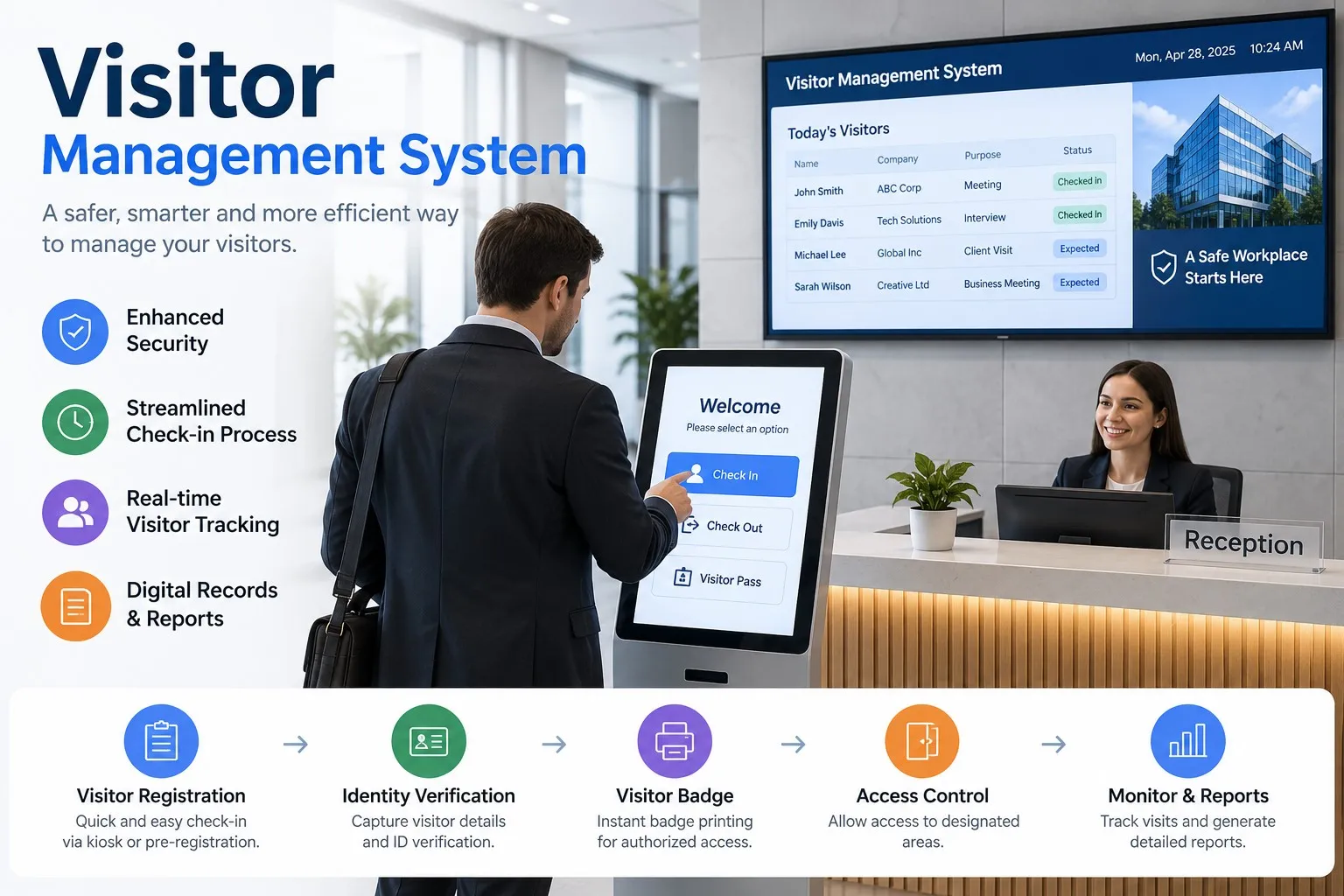
At its core, a visitor management platform digitizes every step of a guest's journey — from pre-registration and identity verification to badge issuance, host notification, and checkout. For a Visitor Management System for Modern Businesses, the goal is not just convenience; it is building an auditable record of who entered a facility, when, and why, so that security teams, HR departments, and compliance officers can answer that question instantly rather than digging through handwritten logs.

Modern platforms replace the clipboard with a touchscreen kiosk or tablet, capture a photo and ID scan in seconds, and route a notification directly to the host's phone or inbox. The result is a front-of-house experience that reflects the same professionalism as the rest of a well-run UAE enterprise — first impressions matter, and a digital welcome sets the tone for every visitor, contractor, and interview candidate who walks through the door.
The Growing Need for Visitor Management in the UAE
The UAE's economy is defined by dense, multi-tenant environments — from the towers of the Dubai International Financial Centre (DIFC) to the free zones surrounding Abu Dhabi and the logistics corridors linking Jebel Ali to the rest of the Gulf. In these settings, Visitor Management is no longer a back-office convenience; it is a frontline security and compliance control. Facilities operators, landlords, and government entities increasingly require tenants to demonstrate that they can identify every non-employee on site at any given moment — a requirement that a paper register simply cannot satisfy.
This shift has been accelerated by the UAE's broader data-protection and smart-governance agenda, including obligations under the UAE's Personal Data Protection Law (PDPL), which pushes organizations toward systems that can prove exactly how personal data is captured, stored, and retained. A properly configured visitor platform gives compliance teams a defensible, timestamped record rather than a stack of sign-in sheets sitting in a drawer.
Core Components of a Modern Visitor Management Solution
Every serious deployment across the Emirates is built from a handful of interlocking components. Understanding each one helps facilities and security teams evaluate vendors on substance rather than marketing claims.
Visitor Registration Software: Digitizing the Front Desk
Visitor Registration Software is the engine behind pre-registration links, walk-in forms, and self-service kiosks. Hosts can invite guests in advance, visitors complete their details before arrival, and repeat visitors are recognized automatically — cutting lobby wait times and reducing the manual data-entry burden on reception staff.
Visitor Check In System: Speed and Security at the Door
A well-designed Visitor Check in System combines Emirates ID or passport scanning, instant photo capture, and automated watchlist screening into a process that takes under thirty seconds. This matters most during peak arrival windows — conferences, shift changes, and multi-tenant office lobbies — where a slow check-in creates queues, frustration, and, in regulated environments, genuine security exposure.
Visitor Tracking System: Real-Time Visibility Across the Site
Once a guest is on-site, a Visitor Tracking System maintains a live picture of who is in the building, which zones they are authorized to access, and how long they have been on-site. This is essential for emergency evacuation headcounts, contractor time-on-site verification, and incident investigations, and it turns a static sign-in sheet into a genuinely operational safety tool.
Visitor Management Device: The Hardware Layer
Software is only half the story. A capable Visitor Management Device — whether a lobby kiosk, tablet-based reception unit, or turnstile-integrated scanner — needs to withstand continuous daily use, integrate with badge printers, and connect reliably to the access-control backbone so that a printed badge actually opens the doors it is meant to open.
Key Benefits for UAE Businesses
Regulatory Compliance and Data Protection
Digitized visitor records make it straightforward to demonstrate compliance during audits, whether the requirement comes from a free-zone authority, a landlord's building policy, or the UAE's PDPL data-handling obligations. Retention periods, access permissions, and data-deletion schedules can all be configured centrally instead of relying on individual staff discipline.
Enhanced Workplace Security
Automated ID verification and watchlist screening catch issues a busy receptionist might miss, while host notifications ensure no visitor wanders a facility unescorted. For organizations operating alongside critical infrastructure — data centers, financial institutions, and utilities providers such as those supporting Dubai's power and water networks — this layer of screening is often a baseline expectation from insurers and regulators alike.
Operational Efficiency and a Professional First Impression
Reception staff spend less time on repetitive data entry and more time actually hosting guests. Pre-registered visitors glide through in seconds, badges print automatically, and hosts are notified the moment their guest arrives — a small operational detail that consistently ranks among the top drivers of visitor satisfaction in UAE workplace surveys.
Beyond the Basics: The Features That Separate Leading Platforms
Once the core registration, check-in, tracking, and device layers are in place, the details of a deployment start to matter just as much as the core feature set. UAE facilities managers evaluating multiple vendors consistently come back to the same shortlist of differentiators.
- Contactless, QR-code check-in: Pre-registered guests scan a code sent by email or WhatsApp and skip the front desk queue entirely.
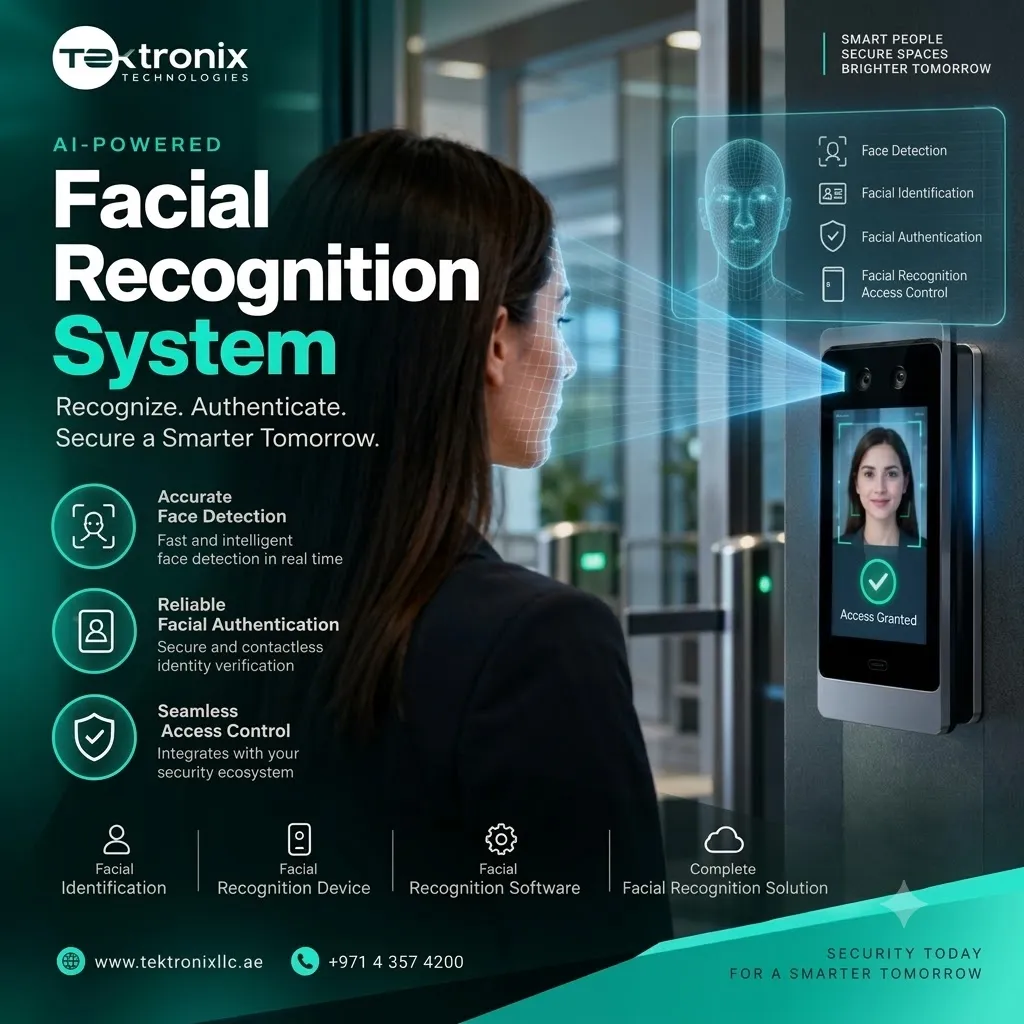
- Facial-recognition verification: Matches an arriving visitor to their pre-registration photo, reducing badge-sharing and identity fraud.
- Pre-registration portals: Hosts submit guest details in advance so security teams can run watchlist checks before anyone arrives on-site.
- Instant badge printing: Time-stamped, zone-coded badges that expire automatically at the end of a visit.
- Host notification workflows: SMS, email, or app alerts the moment a guest checks in, cutting lobby wait times dramatically.
- Cloud-based analytics dashboards: Live and historical reporting on visitor volume, dwell time, and peak arrival windows across every site.
- Blacklist and security screening: Automatic cross-checks against internal watchlists before a badge is ever issued.
None of these features exist in isolation — a facility that combines contactless check-in with host notifications and a live analytics dashboard creates a front-desk experience that is simultaneously faster, safer, and more measurable than anything a manual process could deliver.
A Day in the Life: Digital Visitor Management in Practice
Consider a mid-sized logistics company operating out of a Jebel Ali free-zone warehouse. Before adopting a digital platform, every delivery driver, auditor, and client visit meant a paper form, a phone call to locate the right employee, and a badge that was frequently forgotten at the gate on the way out. Security had no reliable way to answer a simple question during a fire drill: exactly how many external visitors were on-site.
After deployment, drivers now pre-register through a link shared by dispatch, arrive to a kiosk that scans their Emirates ID or passport in seconds, and receive a printed badge that automatically expires at day's end. The warehouse manager receives an instant notification the moment a visitor checks in, and the live dashboard gives the site's safety officer a real-time headcount at any moment — including during the emergency drills that used to rely on a clipboard and a guess.
This scenario repeats, with variations, across UAE offices, hospitals, and government buildings: the specific workflow changes, but the underlying gain — replacing guesswork with an auditable, real-time record — stays constant.
Industries Across the UAE Benefiting from Digital Visitor Systems
- Corporate offices and business towers — multi-tenant buildings across Dubai and Abu Dhabi CBDs, including DIFC-based financial firms managing high visitor volumes.
- Free zones and industrial parks — logistics and manufacturing hubs requiring contractor and vendor tracking across large, multi-gate sites.
- Healthcare facilities — hospitals and clinics that must screen visitors, manage ward-level access, and produce accurate emergency headcounts.
- Government and semi-government entities — public-sector offices where identity verification and audit trails are a compliance requirement, not an option.
- Data centers and technology campuses — environments modelled on the security posture of hyperscale operators such as G42, where every entry must be logged and justified.
- Transport and infrastructure operators — facilities aligned with the standards set by RTA Dubai for contractor and visitor access to operational sites.
How to Choose the Right Visitor Management Platform
Not every product marketed as Visitor Management Software is built for the density, climate, and regulatory environment of the Gulf. When evaluating vendors, UAE facilities teams should look past the feature checklist and ask harder questions about fit and support.
- Local compliance alignment: Does the platform support PDPL-aligned data retention and export controls out of the box?
- Arabic and English interfaces: Can guests and staff use the system comfortably in either language?
- Integration depth: Does it connect natively to existing access-control, HR, and badge-printing infrastructure, or does it require costly middleware?
- On-ground support: Is there a regionally based implementation and support team that understands UAE building operations, or is support routed through an overseas call center?
- Scalability: Can the same platform serve a single reception desk today and a multi-site, multi-emirate rollout tomorrow?
This is precisely the gap that Tektronix's UAE visitor management platform was built to close — combining locally supported hardware, Arabic-English kiosks, and integrations tuned for the region's most common access-control and HR systems.
Common Mistakes UAE Businesses Make When Rolling Out a VMS
Even with the right platform, poor rollout planning can undermine the entire investment. The most frequent missteps seen across UAE deployments include:
- Treating it as an IT-only project: Reception, HR, security, and compliance all need a seat at the table before go-live, not after.
- Skipping a pilot phase: Rolling out to every building at once magnifies configuration mistakes instead of catching them early.
- Ignoring Arabic-language needs: A kiosk that only works in English alienates a meaningful share of visitors and delivery personnel.
- Underestimating network reliability: Kiosks and badge printers need stable connectivity — a poorly planned network turns a thirty-second check-in into a five-minute delay.
- Never revisiting retention settings: Default data-retention periods rarely match an organization's actual PDPL obligations and should be reviewed at go-live, not left on factory defaults.
Why Tektronix's Visitor Management System UAE Stands Out
Tektronix has spent years deploying front-desk and access technology across the UAE's most demanding environments, from DIFC financial towers to industrial parks and facilities aligned with EXPO 2020's legacy security standards. That field experience shapes every element of the Visitor Management System UAE platform — from kiosk hardware chosen for durability in Gulf conditions to workflows designed around the way regional reception teams actually operate.
The platform is backed by ISO 27001-aligned data-handling practices, a locally based support team, and integration expertise built from real deployments alongside access-control and building-management systems used across Dubai and Abu Dhabi. For teams that want a demonstration tailored to their own building or campus, scheduling a walkthrough of the system is the fastest way to see how it fits an existing security stack.
A Note on Experience and Trust
This guide draws on field observations from live deployments across UAE office towers, free-zone facilities, and campuses supporting the kind of infrastructure operators and financial institutions clustered around DIFC and Abu Dhabi's business districts. Recommendations here reflect what has actually worked — and what has caused friction — during real installations, rather than generic product-marketing claims. Facilities teams evaluating a new system are encouraged to request references from comparable UAE sites before committing to a rollout.
Implementation Best Practices
- Audit current visitor flow: Map every entry point and existing manual process before selecting hardware.
- Pilot at a single site: Roll out at one reception desk or gate before scaling to a full portfolio.
- Train reception and security staff: Even the best kiosk needs a confident human backup during the first weeks.
- Set data-retention rules early: Configure PDPL-aligned retention and deletion schedules before go-live, not after an audit request.
- Review analytics quarterly: Use visitor-volume and dwell-time data to refine staffing and space planning.
Measuring Return on Investment
Facilities leaders often ask how a visitor platform pays for itself. In practice, the return shows up in several measurable places: reduced reception staffing hours per visitor processed, fewer security incidents tied to unescorted or unidentified guests, faster audit preparation when a landlord or regulator requests visitor logs, and a measurable drop in average lobby wait times during peak periods. Several UAE deployments have reported reception teams reclaiming several hours a week previously spent on manual data entry — time redirected toward actually hosting guests rather than processing paperwork.
For multi-building portfolios, the ROI compounds further: a single dashboard covering every site replaces a patchwork of local sign-in books, giving portfolio managers a consistent, comparable view of visitor activity across Dubai, Abu Dhabi, and satellite locations in one place.
What's Next: The Future of Visitor Management in the UAE
As the UAE continues investing in smart-city infrastructure, visitor platforms are moving toward deeper integration with national identity systems, tighter facial-recognition accuracy, and AI-assisted anomaly detection that flags unusual visitor patterns automatically rather than relying on a human reviewing logs after the fact. Expect tighter alignment with mobile wallets for digital badges, broader Arabic-first design, and closer integration between visitor platforms and building-management systems so that access, climate control, and even parking allocation respond automatically to a confirmed visitor arrival.
Businesses that adopt a flexible, well-integrated platform today are better positioned to adopt these capabilities as they mature, rather than replacing an entire system a few years down the line.
Conclusion
A modern Visitor Management System is no longer optional for organizations operating in the UAE's fast-moving, highly regulated business environment. From Visitor Registration Software and a fast Visitor Check in System to a reliable Visitor Tracking System and durable Visitor Management Device hardware, every component works together to protect people, satisfy compliance, and elevate the guest experience. Businesses evaluating Visitor Management Software should prioritize regional fit, and Tektronix's Visitor Management System UAE offers exactly that combination of local expertise and enterprise-grade security. The right platform pays for itself in safety, compliance, and time saved at the front desk.
Frequently Asked Questions
1. What does a visitor management system actually replace?
It replaces the paper sign-in book and manual badge process with digital registration, ID capture, and automated host notifications, giving facilities a searchable, auditable record of every guest.
2. Is this technology required for compliance in the UAE?
While not universally mandated by law, many landlords, free-zone authorities, and regulated industries expect digital visitor records to demonstrate alignment with the UAE's data-protection and building-security expectations.
3. Can it integrate with existing access-control and HR systems?
Yes — a well-built platform connects to turnstiles, door controllers, and HR directories so that badges, permissions, and offboarding stay synchronized automatically rather than being managed twice.
4. How long does a typical deployment take?
A single-reception pilot can usually go live within one to two weeks, including staff training, with a multi-site rollout phased over subsequent months based on building complexity.
5. What should a business look for in a vendor?
Look for regionally based support, Arabic-English interfaces, PDPL-aligned data handling, and proven integration experience with the access-control systems already installed on site.



























Sign in to leave a comment.