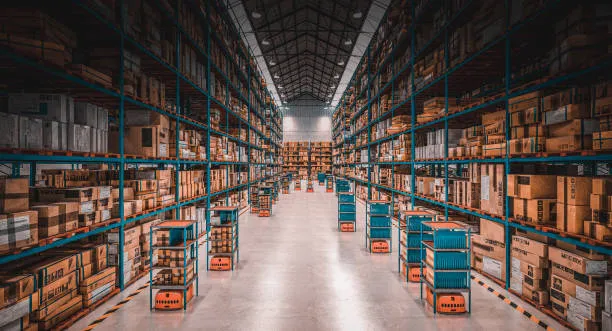

Australian businesses are facing increasingly complex warehousing requirements as inventory volumes expand, customer expectations accelerate, and storage expenses place greater pressure on operational budgets. For many organisations, warehouse management is no longer simply about finding enough floor space to hold products. Businesses must also consider inventory movement, order frequency, fulfilment speed, labour availability, transportation coordination, and the ability to accommodate unpredictable demand. These pressures are encouraging businesses to reconsider how and where they store their products, with 3pl Warehouse in Australia becoming an increasingly relevant logistics model.
Why Warehouse Capacity Is Becoming a Major Business Concern
Warehouse capacity can become restrictive surprisingly quickly. A business may begin with a facility that comfortably accommodates its initial inventory, only to discover that growing sales, new product lines, seasonal stock, or larger purchasing volumes gradually consume available space. Once storage becomes congested, everyday warehouse activities can become more complicated.
Products may be placed in temporary locations, aisles can become increasingly difficult to navigate, and warehouse teams may spend additional time locating stock. These seemingly minor inefficiencies can accumulate into slower picking, packing, replenishment, and dispatch processes. Instead of functioning as a streamlined operational hub, the warehouse can become a bottleneck affecting multiple parts of the business.
Rising Storage Costs Are Changing Logistics Decisions
The cost of maintaining warehouse space can extend well beyond monthly rent. Businesses may also need to account for utilities, insurance, equipment, maintenance, security, warehouse technology, staffing, shelving, material-handling equipment, and ongoing facility management.
When warehouse utilisation is inconsistent, businesses can end up paying for capacity they do not continuously need. On the other hand, insufficient space can force companies into expensive short-term arrangements or inefficient stock placement. Finding the right balance between available capacity and actual inventory requirements is therefore an important part of effective supply chain management.
For growing businesses, outsourcing warehousing can provide an alternative to immediately investing in larger premises. A third-party logistics model can allow businesses to access professional storage infrastructure without taking on every responsibility associated with operating a dedicated facility.
Inventory Congestion Can Reduce Operational Efficiency
Warehouse congestion is not simply a space problem. It can directly influence productivity. When inventory is not organised according to movement patterns, warehouse staff may need to travel further to retrieve frequently ordered products. Slow-moving items may occupy premium locations while high-demand products are stored in less accessible areas.
A well-designed warehouse operation considers factors such as product dimensions, order frequency, replenishment requirements, storage conditions, and dispatch patterns. By aligning physical inventory placement with actual purchasing behaviour, businesses can reduce unnecessary movement and make better use of available storage capacity.
This is one area where an experienced logistics partner can provide operational insight. Rather than simply placing stock wherever space is available, structured warehousing processes can create a more deliberate relationship between storage and fulfilment.
E-Commerce Is Increasing Pressure on Warehouse Operations
The expansion of online retail has fundamentally changed warehouse requirements. Customers increasingly expect fast order processing, reliable stock availability, accurate tracking, and predictable delivery windows. Businesses therefore need warehouses capable of handling not only storage but also rapid order fulfilment.
E-commerce can also create more fragmented order patterns. Instead of processing a smaller number of large wholesale shipments, a business may need to handle hundreds or thousands of individual orders containing different combinations of products.
This creates additional pressure on picking and packing operations. Warehouse layouts, inventory systems, order processing technology, and workforce allocation all need to accommodate these changing patterns.
Seasonal Demand Can Create Sudden Capacity Shortages
Warehouse requirements are rarely constant throughout the year. Retailers and online businesses may experience substantial fluctuations during holiday periods, promotional campaigns, product launches, and seasonal buying cycles.
A facility that has sufficient capacity during quieter months may become severely constrained during peak periods. Businesses that underestimate these fluctuations can encounter stock congestion precisely when customer demand is highest.
Flexible warehousing arrangements can provide businesses with additional adaptability. Instead of permanently maintaining a large facility designed for maximum seasonal demand, companies can explore logistics models capable of accommodating changing inventory volumes.
Poor Inventory Visibility Can Make Space Problems Worse
Warehouse capacity is also influenced by how accurately a business understands its inventory. Products that are incorrectly recorded, misplaced, duplicated within the system, or retained longer than necessary can consume valuable storage capacity.
Accurate inventory records can help businesses identify which products are moving quickly, which items require replenishment, and which stock has remained dormant. This information can support better purchasing decisions and prevent unnecessary accumulation.
Modern inventory management systems can improve visibility by connecting warehouse activity with digital records. Barcode scanning, stock tracking, automated updates, and warehouse management platforms can help create a clearer picture of inventory movements.
Labour Pressures Add to the Warehouse Challenge
Warehousing depends heavily on reliable human operations. Receiving deliveries, unloading stock, checking quantities, storing products, picking orders, packing shipments, and preparing dispatches all require coordinated effort.
When labour availability becomes constrained, businesses may experience slower processing times even when adequate physical space is available. Congested warehouses can make the situation more difficult because employees need to spend additional time navigating storage areas and locating products.
A professionally structured third-party logistics operation can help businesses access established warehouse processes and operational resources without having to build every capability independently.
Technology Is Becoming Central to Smarter Warehousing
Modern warehouses increasingly rely on technology to manage complex inventory environments. Warehouse management systems can help businesses monitor stock locations, track movements, coordinate picking activities, and generate useful operational information.
Technology can also contribute to better space utilisation. By understanding product velocity and storage requirements, businesses can make more informed decisions about where inventory should be positioned and how frequently locations should be replenished.
The objective is not technology for its own sake. The real benefit comes from connecting information with practical warehouse decisions. Better visibility can help reduce avoidable searching, improve stock accuracy, and support more consistent fulfilment.
Why Businesses Are Exploring Third-Party Warehousing
Building or expanding an internal warehouse can require significant investment. Businesses may need to secure additional property, purchase equipment, recruit staff, implement technology, and establish new operating procedures. These commitments can be challenging for organisations that want to preserve capital for product development, marketing, sales, or expansion.
A third-party warehousing model can shift some of these responsibilities to a specialist provider. Businesses can access storage and fulfilment infrastructure while maintaining greater flexibility around inventory volumes.
The 3pl Warehouse in Australia model can be particularly relevant for companies experiencing growth but uncertain about how much warehouse capacity they will require over the next several years.
Choosing a Suitable Warehousing Partner
Not every warehouse provider offers the same operational capabilities. Businesses should examine how a potential partner manages inventory, fulfilment, technology, communication, scalability, and dispatch coordination.
Storage capacity is only one part of the equation. A warehouse may have substantial available space but still fail to deliver the operational responsiveness a business requires. Companies should therefore consider how efficiently products can move through receiving, storage, picking, packing, and dispatch.
Express Fulfillment provides businesses with a structured approach to warehousing and fulfilment, helping organisations manage inventory requirements without relying entirely on their own warehouse infrastructure. The right logistics partnership should complement the broader supply chain rather than operate as an isolated storage arrangement.
Building a More Adaptable Warehousing Strategy
The Australian warehousing environment is evolving alongside changes in retail, e-commerce, customer expectations, labour availability, property costs, and distribution requirements. Businesses that continue relying on inflexible storage arrangements may find it increasingly difficult to accommodate changing inventory patterns.
A more adaptable strategy can combine accurate inventory information, efficient warehouse processes, scalable storage, technology-enabled visibility, and responsive fulfilment. This approach allows businesses to think beyond the question of how much space they currently have and instead consider how effectively that space supports the movement of products.
For organisations experiencing storage pressure, the 3pl Warehouse in Australia model offers a way to reconsider warehousing without immediately committing to substantial internal infrastructure. With the right provider, businesses can create a logistics environment that accommodates growth, manages inventory more effectively, and responds more readily to fluctuations in demand.
As storage costs continue to influence business decisions, warehousing should be viewed as an integral part of the supply chain rather than simply a place where products are kept. A well-coordinated operation can turn warehouse capacity from a persistent constraint into a flexible resource that supports fulfilment, customer service, and long-term commercial expansion.






















Sign in to leave a comment.