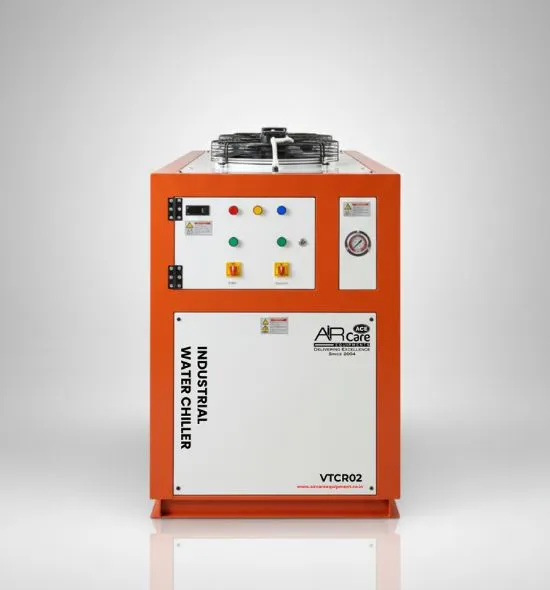
Industrial processes often generate heat that must be controlled for equipment to work properly. Industrial water chillers provide a reliable way to remove heat and maintain the required temperature of machines, processes, and production systems.
Choosing the right chiller depends on several factors, including cooling capacity, operating temperature, application, installation space, energy use, and maintenance requirements.
This guide explains the types, working principle, uses, benefits, and selection factors for industrial water chillers.
Quick Answer: What Is an Industrial Water Chiller?
An industrial water chiller is a cooling system that removes heat from water or another circulating fluid. The cooled water is then circulated through industrial equipment or processes that require temperature control.
Industrial water chillers are commonly used in manufacturing, plastics, pharmaceuticals, food processing, chemicals, HVAC systems, and other industries.
The correct chiller should be selected according to the required cooling capacity, temperature range, operating conditions, and application.
How Does an Industrial Water Chiller Work?
An industrial water chiller generally works through a refrigeration cycle.
1. Warm Water Enters the Chiller
Water absorbs heat from the industrial process or equipment and returns to the chiller at a higher temperature.
2. Heat Transfer Takes Place
Inside the evaporator, heat from the process water is transferred to the refrigerant.
3. Refrigerant Is Compressed
The compressor increases the pressure and temperature of the refrigerant.
4. Heat Is Rejected
The heated refrigerant moves through the condenser, where the absorbed heat is released.
5. Refrigerant Temperature Drops
The refrigerant passes through an expansion device. Its pressure and temperature decrease before it returns to the evaporator.
6. Chilled Water Circulates Again
The cooled water is sent back to the industrial process, and the cycle continues.
This continuous process helps maintain a stable temperature during production.
Types of Industrial Water Chillers
Different industrial applications require different chiller designs.
Air-Cooled Water Chillers
Air-cooled chillers use surrounding air to remove heat from the refrigerant.
They are often suitable where water availability is limited or where a cooling tower is not practical. Installation can also be simpler because a separate condenser-water system is generally not required.
Water-Cooled Water Chillers
Water-cooled chillers use cooling water to remove heat from the refrigerant.
They are commonly used in larger industrial installations where a suitable cooling-water system is available.
Scroll Compressor Chillers
Scroll compressors are commonly used in smaller and medium-capacity cooling systems. They offer a compact design and can be suitable for several commercial and industrial applications.
Screw Compressor Chillers
Screw compressor technology is used in many higher-capacity industrial cooling applications.
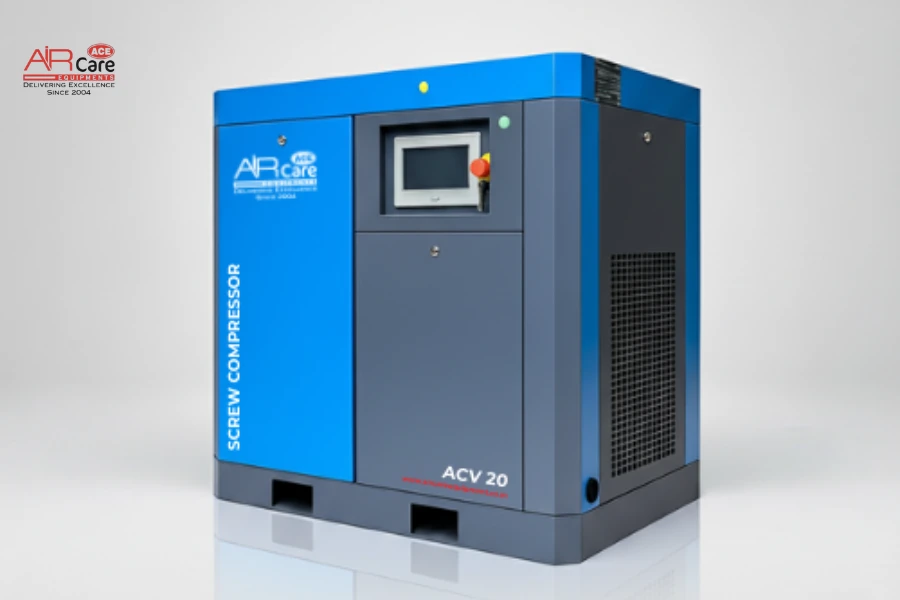
A screw type air compressor is different from a screw compressor used in a water chiller, although both use screw-compression technology. The correct equipment depends on whether the requirement is compressed air or process cooling.
Main Components of an Industrial Water Chiller
An industrial chiller contains several components that work together.
Common components include:
- Compressor
- Evaporator
- Condenser
- Expansion valve
- Refrigerant circuit
- Water pump
- Temperature sensors
- Control panel
- Safety controls
- Water-side piping and connections
The exact configuration depends on the chiller's capacity, design, and application.
Industrial Water Chiller Uses
Industrial water chillers are used wherever controlled cooling is required.
Plastic Manufacturing
Plastic injection moulding and other plastic-processing equipment can generate significant heat. Chilled water can help control mould and process temperatures.
Pharmaceutical Manufacturing
Temperature control can be important in pharmaceutical production and related processes. Chillers can provide cooling for equipment and process systems.
Food and Beverage
Industrial cooling systems can support temperature control in food and beverage processing, storage, and production equipment.
Chemical Processing
Many chemical processes require controlled temperatures. Chillers can provide cooling for process equipment and circulating fluids.
HVAC Systems
Large commercial and industrial buildings may use chilled-water systems for air conditioning and temperature control.
Manufacturing Plants
Chillers can be used to cool machinery, hydraulic systems, production equipment, and other heat-generating processes.
Benefits of Industrial Water Chillers
A properly selected industrial water chiller can provide several operational benefits.
Consistent Temperature Control
Chillers help maintain a controlled temperature for processes and equipment.
Better Equipment Performance
Stable cooling can help machinery operate within its required temperature range.
Improved Process Control
Many manufacturing processes depend on consistent temperatures. Chillers can support more stable operating conditions.
Reduced Heat-Related Problems
Removing excess heat can help reduce the risk of overheating in equipment and production processes.
Flexible Applications
Industrial chillers are available in different capacities and configurations for different cooling requirements.
Potential Energy Savings
A correctly sized and properly maintained chiller can help avoid unnecessary energy consumption caused by an unsuitable or oversized system.
Industrial Water Chillers and Compressed Air Systems
Industrial plants often use both cooling and compressed air systems.
A screw type air compressor produces compressed air for pneumatic equipment, automation, manufacturing machinery, and other applications. A water chiller, on the other hand, provides cooling for processes and equipment.
These systems perform different functions but may operate within the same production facility.
A compressed air system can also include an air receiver tank, air dryer, filters, valves, and distribution pipelines.
Role of an Air Receiver Tank
An air receiver tank stores compressed air and helps manage changes in air demand.
A properly sized receiver can help:
- Store compressed air
- Handle short-term peak demand
- Reduce pressure fluctuations
- Support stable system pressure
- Reduce unnecessary compressor cycling
An air receiver tank is a pressure vessel, so it should be designed, installed, inspected, and maintained according to applicable requirements.
Pressure Vessels in Industrial Applications
An air receiver tank is one example of pressure equipment used in industry.
A Pressure Vessel Manufacturer in India can provide pressure vessels for different applications based on required capacity, pressure, dimensions, material, and operating conditions.
When selecting pressure equipment, businesses should consider the intended application, operating pressure, temperature, material compatibility, inspection requirements, and safety provisions.
Air Compressor Uses in Industrial Plants
Compressed air is used in many industries.
Common air compressor uses include:
- Pneumatic tools
- Automation systems
- Packaging machinery
- Spray painting
- Material handling
- Manufacturing equipment
- Textile machinery
- Automotive applications
- Instrumentation
- Cleaning applications
The compressor should be selected according to actual air demand and operating pressure.
Air Compressor Parts and Their Role
Understanding the main air compressor parts is useful for maintenance and troubleshooting.
Common components include:
- Air intake filter
- Compressor air end
- Electric motor
- Oil filter
- Oil separator
- Air cooler
- Oil cooler
- Pressure valves
- Control panel
- Safety devices
The exact components depend on the compressor type and model.
Air Compressor Maintenance and Chiller Maintenance
Regular air compressor maintenance helps maintain reliable compressed air production.
Important maintenance activities can include checking filters, inspecting oil levels, cleaning coolers, checking connections, inspecting valves, and following the recommended service schedule.
Industrial water chillers also require regular maintenance. Depending on the design, maintenance can include:
- Checking refrigerant-related parameters
- Inspecting water circulation
- Cleaning heat-transfer surfaces
- Checking pumps
- Inspecting filters
- Checking electrical connections
- Monitoring operating temperatures
- Inspecting safety controls
Maintenance schedules should follow the equipment manufacturer's recommendations and actual operating conditions.
How to Select the Right Industrial Water Chiller
Selecting the correct chiller is important for both performance and operating costs.
1. Calculate Cooling Capacity
Determine how much heat needs to be removed from the process. Choosing a chiller without calculating the actual cooling load can result in poor performance or unnecessary energy consumption.
2. Check Required Temperature
Identify the required chilled-water supply and return temperatures.
3. Choose the Cooling Method
Consider whether an air-cooled or water-cooled system is suitable for the site.
4. Consider Ambient Conditions
Temperature, humidity, ventilation, water quality, and installation conditions can affect chiller performance.
5. Check Available Space
Ensure that there is sufficient space for installation, ventilation, maintenance, and service access.
6. Consider Energy Consumption
Look beyond the initial purchase cost. Electricity, maintenance, spare parts, and operating hours all contribute to the total cost of ownership.
7. Check Technical Support
Choose a supplier or air compressor dealer or industrial equipment provider that can provide appropriate technical support for the equipment being purchased.
Industrial Water Chiller vs Air Compressor
| Feature | Industrial Water Chiller | Air Compressor |
|---|---|---|
| Main function | Provides process cooling | Produces compressed air |
| Output | Chilled water or cooling fluid | Compressed air |
| Main technology | Refrigeration cycle | Air compression |
| Common applications | Process cooling, HVAC, machinery cooling | Pneumatic tools, automation, manufacturing |
| Supporting equipment | Pumps, controls, condenser system | Air receiver tank, dryer, filters |
| Main selection factor | Cooling capacity | Airflow and operating pressure |
Both systems are important in many industrial plants, but they serve different purposes.
How to Choose a Water Chiller Manufacturer in India
When selecting a Water Chiller Manufacturer in India, consider:
- Cooling capacity
- Required temperature range
- Chiller type
- Energy efficiency
- Build quality
- Control system
- Maintenance requirements
- Spare-parts availability
- Technical support
- Installation requirements
The manufacturer should understand your application instead of simply recommending a standard chiller based on capacity.
Why Choose Air Care Equipment?
Air Care Equipment provides industrial equipment solutions for compressed air and related industrial applications.
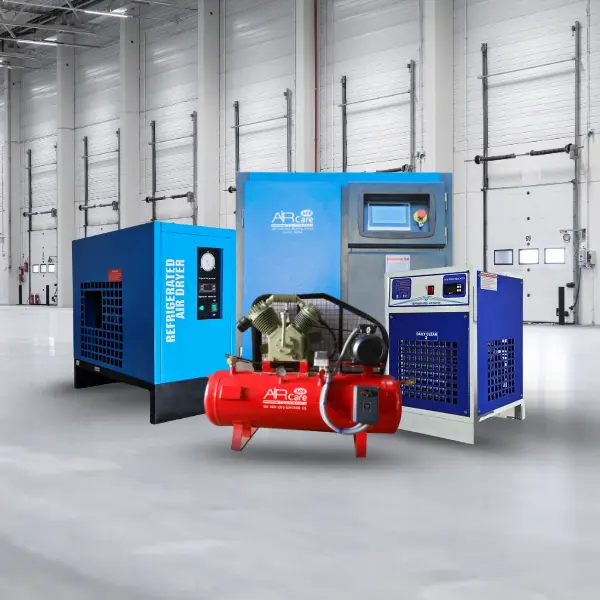
Its product range includes air compressors, air dryers, vacuum pumps, pressure vessels, and other industrial equipment. For businesses looking for industrial cooling and compressed air solutions, equipment should be selected according to actual operating requirements.
Air Care Equipment focuses on practical industrial solutions and quality-controlled manufacturing to support different production and process requirements.
Frequently Asked Questions
What is an industrial water chiller?
An industrial water chiller is a cooling system that removes heat from water or another circulating fluid and supplies the cooled fluid to industrial equipment or processes.
What are the main types of industrial water chillers?
The main types include air-cooled and water-cooled chillers. Chillers can also be classified according to compressor technology, such as scroll and screw compressor systems.
Where are industrial water chillers used?
Industrial water chillers are used in plastics, pharmaceuticals, food and beverage, chemical processing, manufacturing, HVAC, and other industries that require controlled cooling.
What is the role of an air receiver tank?
An air receiver tank stores compressed air and helps manage short-term changes in air demand. It can also help reduce pressure fluctuations in a properly designed compressed air system.
How often should industrial water chillers be maintained?
Maintenance frequency depends on the chiller model, operating hours, environment, water quality, and manufacturer's recommendations. Regular inspection and preventive maintenance are important for reliable operation.
Final Thoughts
Industrial water chillers are important for processes that require reliable and controlled cooling. From plastic manufacturing and pharmaceuticals to food processing and HVAC, the correct chiller can help maintain stable operating temperatures.
When selecting an industrial chiller, consider the cooling load, required temperature, cooling method, installation conditions, energy consumption, maintenance, and technical support.
Industrial facilities may also use supporting equipment such as a screw type air compressor, air receiver tank, air dryer, filters, and pressure vessels. Selecting each component according to the complete system requirement can help improve reliability and operational performance.
Air Care Equipment provides industrial equipment solutions designed around specific application requirements, helping businesses select suitable equipment for their compressed air and industrial needs.
























Sign in to leave a comment.