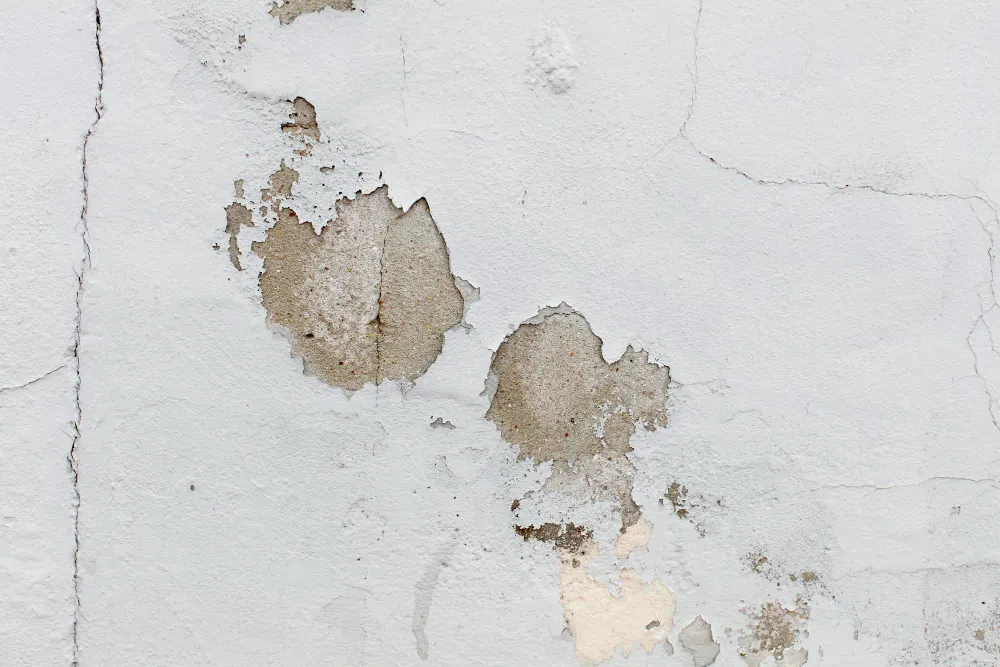

A stain under a window. A patch of stucco that feels soft when you press on it. A musty smell near an exterior wall that won't go away. None of these are dramatic on their own. Together, they usually mean one thing: water has found its way behind the stucco, and it has been sitting there for a while.
Central Florida's mix of heavy storms and constant humidity makes this a common problem, not a rare one. Knowing how it happens, and what a real repair involves, helps homeowners catch it before it spreads.
How Water Actually Gets Behind Stucco
Stucco itself is fairly weather-resistant, so water rarely soaks straight through solid, well-maintained wall. It gets in through the gaps instead. The most common entry points are unsealed cracks and failed caulking around windows and doors. Gaps in the roofline and flashing are another common cause, along with finish areas that have lost their bond with the wall underneath.
Storm-driven rain is what usually exploits these openings. Florida's humid climate then keeps that moisture trapped once it's inside, since there's little chance for the wall to dry out fully between storms. That combination, an entry point plus persistent humidity, is what turns a small leak into a bigger problem.
Windows and doors are the most common starting point, simply because they have the most seams and joints where water can work its way in. Rooflines and flashing junctions come next. These are easy to overlook because they're often out of sight, above eye level or behind gutters, so a gap there can go unnoticed for a long time. Corners and control joints, where two wall sections meet, are the third common spot, especially on older homes where the original sealant has worn thin.
The Warning Signs Worth Watching For
Water damage rarely announces itself clearly. It shows up as a handful of smaller signs that are easy to dismiss individually.
- Staining below windows or along seams, especially after rain, which usually traces back to a nearby gap in the caulking or flashing
- Stucco that feels soft or spongy when pressed, instead of hard and solid, a sign that moisture has been sitting in the wall for some time
- Bubbling or peeling paint on the exterior wall, since trapped moisture pushes against the paint film from behind
- A musty odor near an exterior wall, sometimes noticeable from inside the house before any visible sign shows up outside
- Cracks that keep coming back in the same spot after being patched, which often means the patch sealed the surface without solving what was causing it
Any single sign might have an innocent explanation. Two or more together, especially staining paired with soft stucco, are worth a professional inspection rather than a guess.
Why Waiting Makes It Worse
Water damage does not stay the same size. It follows a fairly predictable path. A small stained area, left alone, can develop into rotted sheathing and interior damage within a single season. What starts as a simple, contained fix can turn into something that needs full stucco remediation instead of a routine repair.
Acting early is not just about avoiding a bigger bill, though that's part of it. It's also about scope. A repair addresses one damaged area. Remediation means stripping back a much larger section of wall, because the moisture has already spread beyond what's visible from the outside.
There's a rough way to tell which situation you're in before a professional even looks at it. If the damage is limited to one clearly bounded spot, with a single visible source, it's more likely a repair. If the same problem keeps coming back in different spots, or if soft areas show up in more than one place along a wall, that pattern usually points toward something more widespread. Either way, the only way to know for certain is to open the wall and look, which is why a real assessment matters more than a guess from the outside.
The Repair Process, Step by Step
A proper water damage repair follows a clear sequence, not just a patch over the stained spot.
- Assess the water source. Find where the moisture is actually entering, not just where it shows up.
- Open the affected area. This exposes how far the damage has spread behind the visible surface.
- Correct the underlying cause. A repair that skips this step will fail again from the same entry point.
- Rebuild the moisture barrier behind the stucco, so the wall is protected going forward.
- Match the new stucco's texture to the surrounding wall, so the repair blends in.
The first two steps are the ones most often skipped by a quick patch job, and they're also the ones that matter most. Sealing a stain without finding its source just means the same stain comes back.
The One Mistake That Makes It Worse: Sealing a Wet Wall
It seems logical to seal a damp wall right away to stop water from getting in. Done at the wrong time, it backfires. If the wall is sealed while it's still wet, the moisture already inside gets trapped rather than released. That accelerates hidden deterioration instead of stopping it.
This is why an assessment has to come before any sealing work. A wall needs to be properly dried, and its moisture source addressed, before it gets closed back up. Skipping that order is one of the most common reasons a stucco repair fails within a year.
This is also why a DIY caulk gun and a tube of sealant, while useful for small maintenance jobs, are not a fix for an active leak. Sealing the surface without knowing what's happening underneath can hide a problem instead of solving it. That sometimes makes the eventual repair more involved than if the wall had simply been assessed properly from the start.
Preventing Water Intrusion in the First Place
A few habits reduce how often water finds a way in.
- Recaulk around windows and doors every few years, before the existing sealant visibly cracks or pulls away.
- Keep an eye on flashing and roofline junctions, since gaps there are a common, hard-to-spot entry point.
- Repair small cracks while they're still small, instead of waiting for a bigger project.
- Walk the exterior after major storms and look for new staining or soft spots.
None of this eliminates the risk entirely. Florida's storms and humidity make some amount of water exposure unavoidable. Catching problems early is what keeps a minor repair from turning into a much larger one.
It also helps to know your home's age when thinking about risk. Newer homes usually have fresher caulking and sealant, so their main risk is a missed spot during original construction. Homes past the ten to fifteen year mark are different. Their sealant is more likely to have started shrinking or pulling away, even if it still looks intact from a distance. That's often the point where a proactive recaulking job is worth scheduling, rather than waiting for a stain to show up first.
Water damage in stucco is rarely dramatic at first. It's a stain, a soft spot, a smell that lingers. Taking those small signs seriously, and understanding why the source matters more than the symptom, is what keeps a manageable repair from becoming a much bigger project down the line.
If you're noticing any of these signs on your home, get the wall assessed before deciding how to move forward. Knowing the actual extent of the damage is the only way to know whether you're looking at a repair or something larger.





















Sign in to leave a comment.