Water-to-Water Heat Exchanger Types Explained: Plate, Shell and Tube, and More

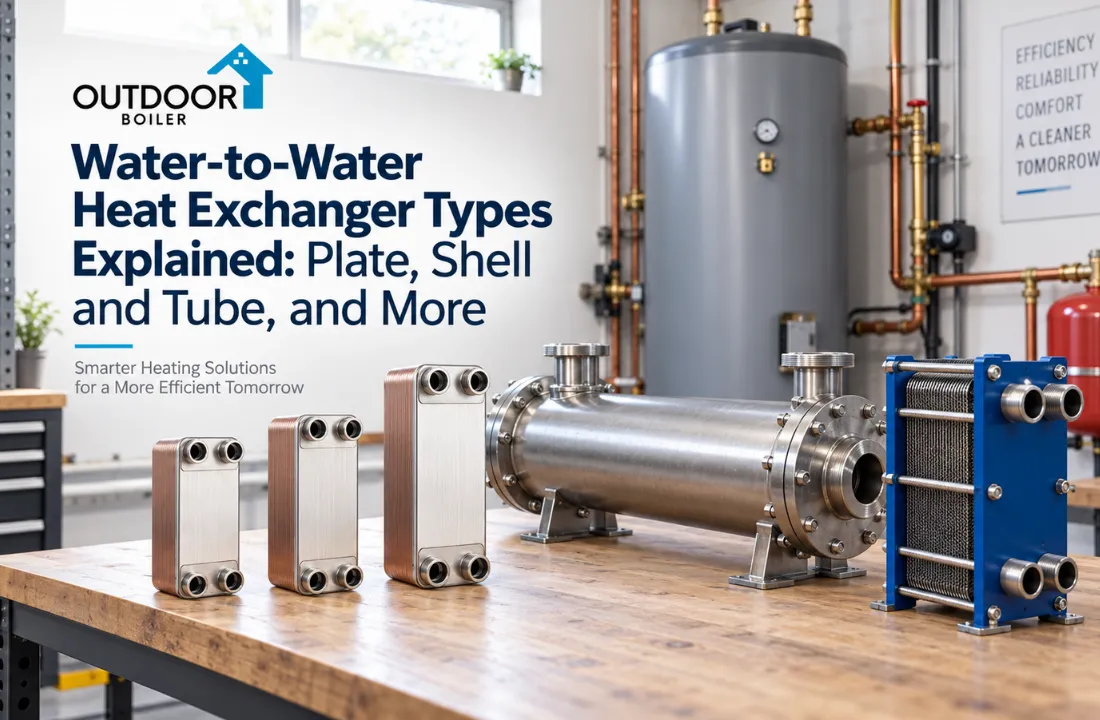
Wondering which water-to-water heat exchanger is right for your setup? The main types are plate, shell-and-tube, and double-pipe designs, and the best choice depends on your flow rate, operating pressure, temperature range, and available space.
I get asked about this a lot, and the honest answer is that no single design wins every time. Each type moves heat between two separate water streams in its own way, with its own strengths and trade-offs. Here is a plain look at how they differ so you can narrow things down with confidence.
What a Water-to-Water Heat Exchanger Does
A water-to-water heat exchanger transfers heat from one water stream to another without letting the two mix. Hot water flows on one side of a thin metal barrier, cooler water flows on the other, and heat passes through the metal. This is the same basic principle described in the general overview of heat exchangers on Wikipedia.
You will find these units in hydronic heating, outdoor boiler systems, pools, geothermal loops, snow melt systems, and many industrial processes. Keeping the two loops separate protects equipment from dirty or treated water, and it lets each loop run at its own pressure.
Plate Heat Exchangers
Plate units are stacks of thin, corrugated metal plates pressed together. Water flows through alternating channels, so the hot and cold streams sit right next to each other across a very large surface area. That design makes them compact and very efficient, which is why they are so common in home heating and small commercial jobs.
There are two popular versions. Gasketed plate exchangers use rubber seals between the plates and can be opened for cleaning or expanded later by adding plates. Brazed plate exchangers are sealed permanently with copper or nickel, so they are lighter and usually cheaper, but they cannot be taken apart. If you want a real example of this style, a water-to-water plate heat exchanger designed for outdoor boiler systems shows how a compact unit can be sized for a residential setup.
The main drawback is that the narrow channels can clog with debris or scale, so water quality matters.
Shell and Tube Heat Exchangers
A shell and tube exchanger bundles many tubes inside a larger cylindrical shell. One water stream runs through the tubes while the other flows around them inside the shell. These units handle high pressures and high temperatures well, and they tolerate dirtier water better than plate designs because the flow passages are wider.
You will see them in industrial plants, power generation, and large building systems. The tradeoff is size. They take up more room and often cost more than a plate unit for the same amount of heat transfer. On the plus side, many models allow the tube bundle to be pulled out for cleaning, which helps with long-term upkeep.
Double Pipe Heat Exchangers
This is the simplest design of the group. One pipe sits inside another, with one stream running through the inner pipe and the other through the space between the two. They are easy to build, easy to repair, and work well for smaller flow rates or high-pressure situations. Once you need a lot of capacity, they get bulky quickly, so they fit best on modest jobs where simplicity is the priority.
Other Types Worth Knowing
A few other designs show up in specific situations:
Coil-in-tank exchangers place a coil of tubing inside a storage tank, which is common when heating a buffer tank or domestic hot water supply. Spiral exchangers wind two long channels around a center, and the smooth flow path makes them a good fit for water that carries solids or sediment. Plate and shell hybrids combine features of both styles to balance efficiency and durability.
How to Choose the Right Type
Start with the basics. How much heat do you need to move, and how fast is the water flowing on each side? Next, look at your supply and return temperatures, since a close temperature approach calls for a larger or more efficient exchanger. Then consider pressure ratings, because both loops must be within the unit's limits.
Water quality is the factor many people overlook. Clean, treated water works well with plate designs, while water with particles or heavy mineral content may be better served by shell and tube or spiral designs. Finally, think about space and budget. Plate exchangers save room and money, while shell and tube units offer toughness at a higher cost and footprint.
If you want a deeper walkthrough, this guide on what to know before you buy a heat exchanger covers common mistakes worth avoiding. You can also browse a range of heat exchangers to compare sizes and capacities side by side.
Keeping Your Heat Exchanger Working Well
Whatever type you pick, a little maintenance goes a long way. Watch for a drop in heat transfer or a rise in pressure difference across the unit, since both can point to fouling or scale buildup. Flushing the system, using clean or properly treated water, and installing strainers upstream can extend its life considerably. Gasketed plate and shell-and-tube models can be opened and cleaned, while brazed plate units are usually flushed with a cleaning solution.
Final Thoughts
Plate exchangers are compact and efficient, shell-and-tube units are built for tougher conditions, double pipe designs keep things simple, and specialty types cover the in-between cases. Match the design to your system's heat load, pressure, and water quality, and you will end up with a unit that performs reliably for years.
Have questions about sizing or selection? Visit our website at outdoorboiler.com to learn more, or contact our team, and we will gladly help you find the right fit.


Sign in to leave a comment.