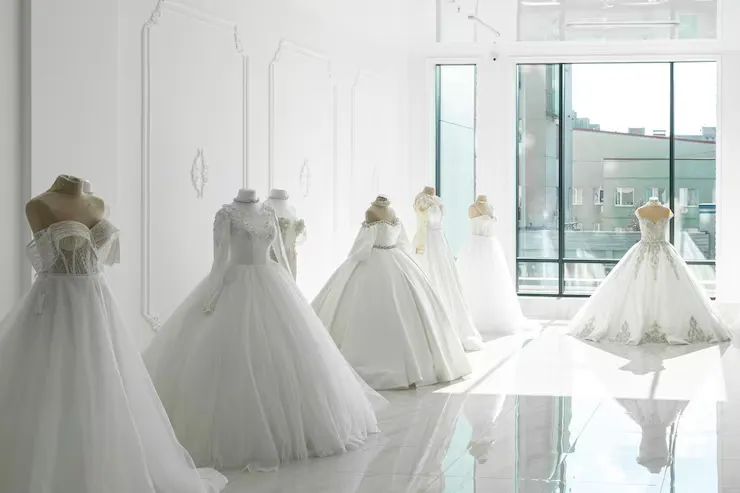


Wedding fashion in 2026 is at an interesting moment. The pandemic years loosened the unspoken rules around bridal formality, and that loosening has permanently changed what bridal collections look like. Minimalism has deepened its hold on the market while maximalism has pushed back with structured volume. The result is a broader range of genuinely beautiful options than the industry has seen in years.
The Minimalist Bridal Movement
Clean lines, column silhouettes, and Greco-inspired draping continue to define the minimalist end of bridal 2026. Designers like Vera Wang and Monique Lhuillier have put out collections leaning into simple elegance—crepe and silk charmeuse fabrics with structural seaming and minimal ornamentation. This style photographs exceptionally well in natural light, making it a smart choice for outdoor ceremonies or couples prioritizing editorial-quality photography over theatrical drama.
Structured Volume and Drama
On the opposite end, ballgown and princess silhouettes have fully re-entered the market with modern proportions. The 2026 versions feature exaggerated volume through the skirt while maintaining clean, fitted bodices—rather than the layer-cake fullness of earlier decades. Puff sleeves, which began as a microtrend several years ago, have graduated into a consistent bridal option that works particularly well with A-line and ballgown silhouettes.
Fabric Trends Defining the Season
Mikado, a heavyweight matte silk-blend fabric, has become the fabric of choice for sculptural wedding gowns because it holds shape without boning while remaining comfortable. Satin has returned in a softer, less shiny finish than its 1990s version. Lace has shifted toward Chantilly and broderie anglaise rather than the heavier Spanish or Venetian lace that dominated earlier decades. The shift in lace weight has produced veils and overlays that feel airy rather than stiff.
Choosing a Silhouette That Actually Works for You
Bridal magazines consistently recommend shopping by body type, but the more accurate advice is to shop by comfort and by the venue's physical context. A column gown that requires careful walking may be impractical on a beach or cobblestone courtyard. A full ballgown is uncomfortable in small venue spaces and requires significant bustle work for the reception. If you're choosing between several wedding dress styles, consider the practicalities of the actual event rather than the ideal version of the event in your head.
The Case for Non-Traditional Bridal
A sizable portion of 2026 brides are choosing non-white and non-ivory for their wedding day. Blush, champagne, and soft sage have been consistent choices for several years, but deeper ivory with pink or gold undertones has gained ground. The trend toward separates—a structured bridal top with wide-leg trousers or a fluid skirt—has solidified from a novelty into a legitimate category. Multiple outfits for the ceremony and reception have also become more common, driven partly by social media and partly by brides who simply want to dress differently for dancing.
Bridal Accessories That Make the Look Work
The dress is only part of the outfit, and the right accessories can make a familiar silhouette feel distinctly your own. In 2026, the most useful approach is to choose accessories that support the gown's shape rather than compete with it.
A minimalist column dress pairs naturally with a simple veil, sculptural earrings, or a delicate headpiece. A ballgown can carry more dramatic accessories, such as a cathedral-length veil or statement earrings, without losing its sense of proportion. For lace gowns, consider whether the veil's texture complements the dress rather than simply matching it.
Shoes deserve practical attention, too. A beautiful pair that becomes uncomfortable after an hour is not a good choice for a full wedding day. Consider the ceremony surface, the amount of walking, and whether you'll want a second pair for dancing. The same applies to veils and trains: if you love the drama but not the maintenance, a detachable train or shorter veil can give you the look without making the reception difficult.
The best accessory choices are the ones that make the dress feel more personal while still allowing you to move, sit, and enjoy the day comfortably.
Conclusion
Wedding dress shopping in 2026 offers genuine range. Whether you're drawn to clean minimalism, sculptural volume, or something entirely non-traditional, there are beautifully made options across the market. The most useful guiding principle remains the same as it has always been: wear something you feel entirely yourself in, on an occasion that is fundamentally about you.




















Sign in to leave a comment.