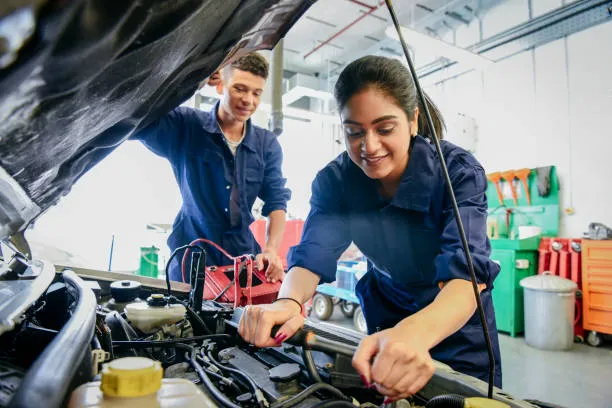

Welding and metal fabrication are essential skills across Australia's engineering, manufacturing, construction and industrial sectors.
From structural steel and machinery components to specialised fabricated products, skilled workers are involved in producing, assembling, modifying and repairing metal components.
For people who enjoy practical work, precision and working with machinery, a career in welding or metal fabrication can offer an interesting trade pathway.
However, professional welding involves much more than joining two pieces of metal.
Workers need to understand materials, welding processes, safety procedures, fabrication techniques, measurements and quality requirements.
What Is Metal Fabrication?
Metal fabrication involves creating structures, components and products from metal.
A fabricator may work with materials such as steel, stainless steel or aluminium, depending on the industry and application.
Fabrication work can include:
- Cutting
- Shaping
- Forming
- Welding
- Assembly
- Finishing
- Repair
- Modification
- Measurement
- Quality checking
The exact work depends on the industry and specialisation.
What Does a Welder Do?
A welder joins metal components using an appropriate welding process.
Different welding methods are suitable for different materials, thicknesses and applications.
Training can introduce students to welding processes such as:
- Manual metal arc welding
- Gas metal arc welding
- Gas tungsten arc welding
- Flux core arc welding
- Oxy-fuel welding
- Brazing
- Thermal cutting
The correct process depends on the task and workplace requirements.
Why Formal Welding Training Matters
Professional welding requires consistency and attention to detail.
Incorrect welding can affect the strength, appearance and performance of a fabricated component.
Formal training can help students understand safe work practices, welding principles, equipment operation and fabrication processes.
It also provides a structured pathway for developing practical competency.
InTech's Certificate III in Engineering – Fabrication Trade covers areas including metal fabrication, fabrication assembly, sheet metal work, welding and surface finishing.
What Skills Can You Learn?
Engineering fabrication training can involve a wide range of technical skills.
Students can develop knowledge and practical skills in areas such as:
Welding
Learning different welding processes and understanding when they are appropriate.
Cutting
Using mechanical and thermal cutting techniques to prepare materials.
Fabrication
Measuring, forming, shaping and assembling metal components.
Workshop Equipment
Learning to safely operate relevant tools, machinery and workshop equipment.
Quality Control
Understanding how fabrication and welding quality can be monitored.
Safety
Following appropriate workplace safety procedures is an essential part of engineering training.
Career Opportunities in Welding and Fabrication
A recognised engineering qualification can provide a foundation for different trade roles.
Potential occupations can include:
- Welder
- Metal fabricator
- Fitter-welder
- Boilermaker
- Sheet metal worker
- Fabrication tradesperson
- Engineering workshop technician
The appropriate pathway depends on the qualification and area of specialisation.
Welding Courses in Sydney
Sydney has a diverse industrial and manufacturing sector, creating demand for people with practical engineering skills.
For people searching for welding courses in Sydney, it is important to consider more than the course title.
Look at the practical training environment, qualification outcome, study options and whether the course aligns with your intended career.
InTech has a Sydney campus in Silverwater and offers engineering training that includes fabrication and welding pathways.
Is Welding a Good Career for Practical Learners?
People who prefer practical learning may find welding and fabrication particularly engaging.
The work involves tools, machinery, materials and physical problem-solving.
A typical task can require a worker to read information, measure materials, prepare components, select an appropriate process and complete the job accurately.
This combination of practical and technical work makes fabrication different from many office-based careers.
Engineering Training for Experienced Workers
Not every student entering an engineering qualification is new to the industry.
Some workers may already have years of experience in welding, fabrication, machining or mechanical work.
If an experienced worker does not have a formal qualification, RPL may provide a pathway to have existing competencies assessed.
The worker still needs to provide evidence demonstrating their skills against the qualification requirements.
Engineering Qualifications and Further Study
A trade qualification can also be a starting point for further education.
InTech offers engineering pathways ranging from Certificate III and Certificate IV programs through to diploma-level study.
For example, engineering packaged programs can combine fabrication or mechanical qualifications with higher-level engineering training.
The right pathway depends on the student's experience, goals and eligibility.
Safety Is a Core Part of Welding
Welding involves heat, equipment, gases, electricity and potentially hazardous working environments.
That makes safe work practices essential.
Students should develop an understanding of appropriate personal protective equipment, equipment handling, workplace procedures and hazard awareness.
Safety should never be treated as an optional part of technical training.
What Makes a Skilled Fabricator?
A strong fabricator needs more than welding ability.
Important skills include:
- Accurate measurement
- Technical understanding
- Attention to detail
- Problem-solving
- Equipment knowledge
- Communication
- Safety awareness
- Ability to interpret technical information
- Practical coordination
The ability to work accurately and consistently is particularly important.
Frequently Asked Questions
What is the difference between welding and fabrication?
Welding focuses on joining materials, while fabrication can include the broader process of measuring, cutting, shaping, assembling and finishing metal components.
Can I study welding in Sydney?
Course availability depends on the provider. InTech offers engineering fabrication training at its Sydney campus.
Do I need experience to start a welding course?
Entry requirements depend on the specific qualification. Beginners and experienced workers may have different study pathways.
Can experienced welders use RPL?
Experienced workers may be able to use RPL if they can provide appropriate evidence of existing skills and competency.
What jobs can welding qualifications lead to?
Potential roles include welder, metal fabricator, fitter-welder and other engineering trade positions.
Start Your Engineering Career
Welding and fabrication combine practical ability with technical knowledge.
For students who enjoy working with metal, machinery and engineering systems, vocational training can provide a structured pathway towards a trade career.
Whether you are starting from the beginning or already working in the industry, explore the available engineering and fabrication pathways and choose training that matches your skills and long-term goals.
























Sign in to leave a comment.