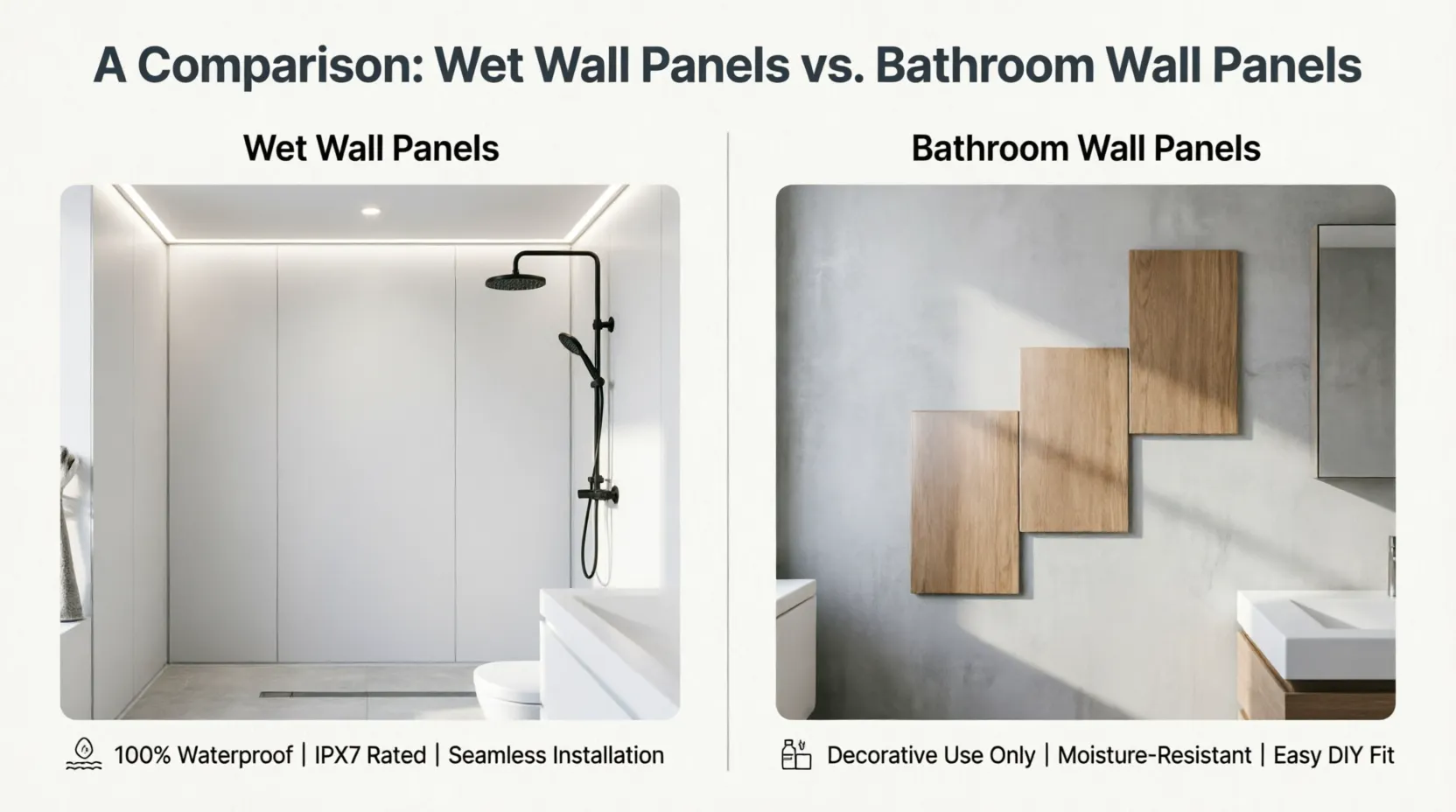

Search for panels to line a shower and you'll encounter two labels that sound as if they belong to separate categories: wet wall panels and bathroom wall panels. Suppliers use them slightly differently, leaving the buyer to wonder whether one is tougher, requires a different fitting method or the distinction itself is simply marketing. The short answer is the terms overlap heavily but the reason for making them distinct is, in fact, valuable once you understand what it really applies to. This guide explains where the names come from, what genuinely differs and how to choose between products.
Two Names, One Overlap
"Bathroom Wall Panels" is the catch-all, common language for a panel designed to line the walls of a bathroom, from a decorative board on a wall that sees nothing more rigorous than steam rising from a basin to a panel taking direct spray in a shower. The category includes PVC, laminate, composite and acrylic products.
"Wet Wall Panels" is a narrower, technical label, applied to panels intended for frequent wet areas (often a shower enclosure) without necessarily excluding other damp parts. In practice, many products are described under both headings and the same panel may be sold under either name at different retailers.
Without a standard behind the labels, the chosen term says little of use. What matters is what the manufacturer considers the panel to be appropriate for and how they advise it is fitted.
Where the Real Differences Show Up
The useful distinction really emerges between a wall seeing the occasional splash and one getting regularly soaked to the point of running. A panel above a basin and near a toilet receives moisture in the form of steam and the occasional splash; a shower wall takes a regular flow of water and repeated exposure to varying temperatures.
The point translates into three areas: how a panel resists water through its joints and edges, and how the wall behind, whether tiled or plaster, receives that force. A product that says it is for wet walls will usually include specific advice in all three areas and sometimes offer matching jointing profiles or trims for each junction. A more general bathroom wall panel may operate successfully in a less harsh environment but leave you more responsible for the specifics.
Construction and Materials
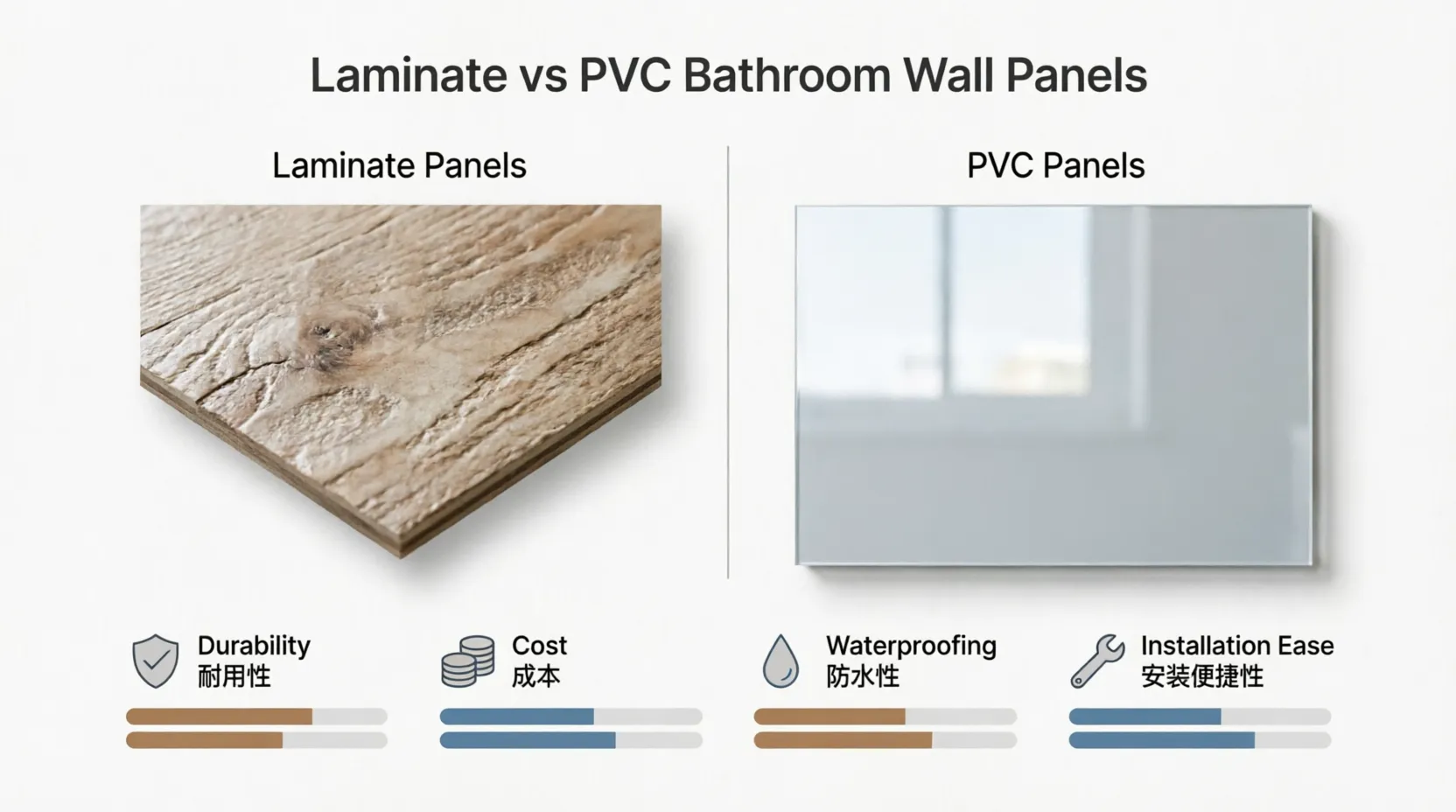
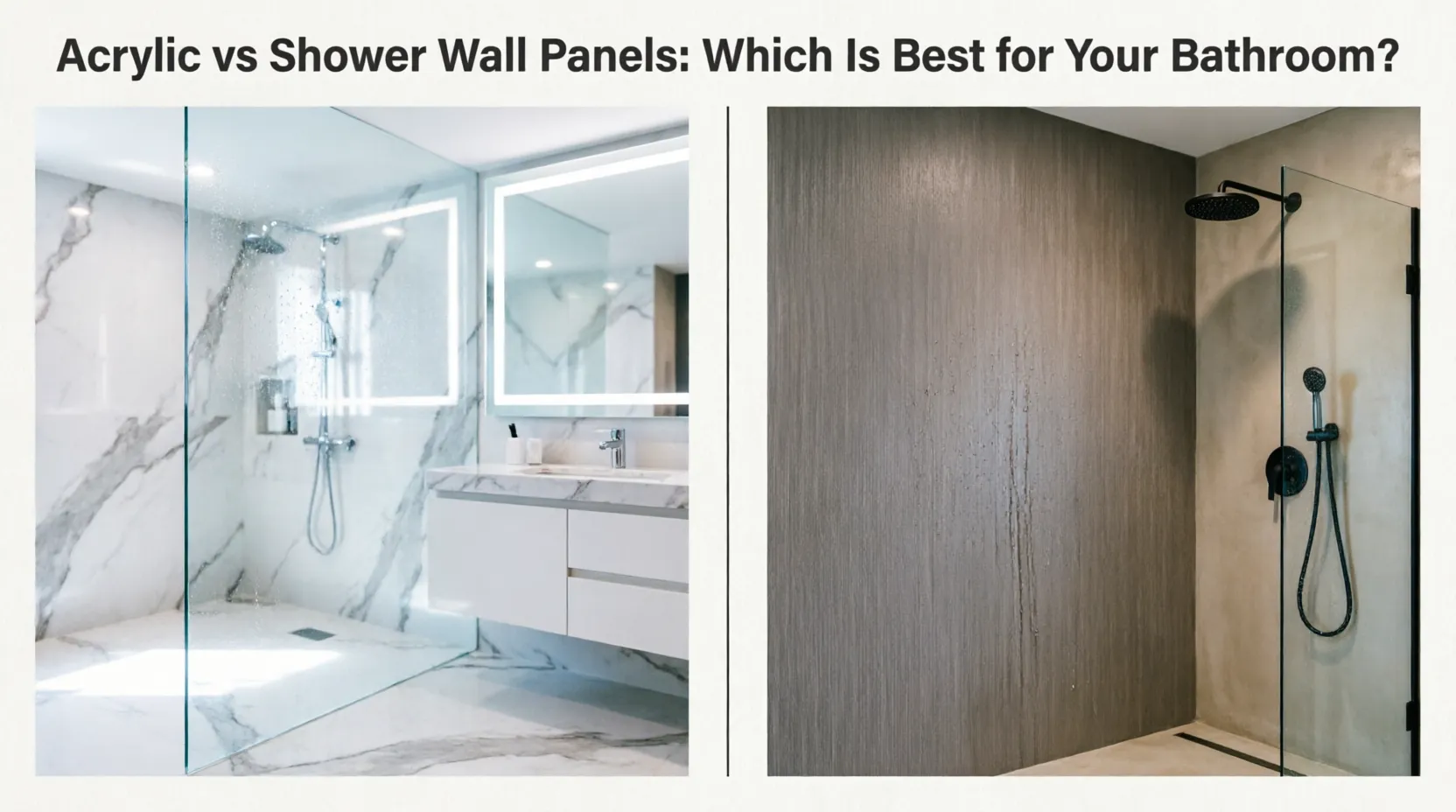
Both sets of terminology apply across the same materials. PVC panels are made from plastic, most often in the form of light, multi-walled sheets or thick slabs that can be curved into shape. Laminate panels have a decorative layer that is bonded to a board core. Composites are a dense core overlaid with a surface layer, and acrylic panels are hard, glossy sheets of plastic.
What varies for wet applications is the focus on edges and cores. A panel with a core that could hold water must be sealed at the edges and manufacturers of wet area products generally give detailed specifications for cut ends and cut-outs. Non-absorbent materials are more flexible but hollow construction always requires trims at open ends. Read the specification for the product you're considering since the same material can be constructed very differently from one supplier to another.
Joints and Water Management
Water reaches a panel along its seams, corners, cut-outs and the edge where it meets the tray or bath, not through the face of the board. It is at the joints that a system designed for a wet wall tends to put attention: profiles in the form of tongues and grooves that interlock, strips that keep a constant gap between adjacent boards, and corner and edge pieces to hold a junction.
No matter which product you choose, seal the junctions with a flexible sanitary silicone and follow trims advice from the manufacturer. A supplier such as adds fitting guidance as a section alongside the listings, which is a simple way of finding out the system's approach to each area of the bathroom.
Fitting Requirements
Overall, the preparation is the same for both. The wall needs to be dry, stable, clean and reasonably flat. Test for damp, remove loose paint and old sealant, fill any minor imperfections and test the flatness with a long straight edge. Where a wall is significantly uneven, battens can be used as a base if the system is compatible.
For wet walls additional protection might be required, such as a membrane behind the panels in a wet room or an open shower. Whether one is advised depends on the panel system, the condition of the wall and the manufacturer's advice, so it is not a consistent requirement.
When setting out a shower enclosure, browsing the FloorsToWalls Shower Panels range can be a valuable exercise: the size and style of the panels available will indicate the joints between them that a planned enclosure might need to accommodate.
Choosing for Each Part of the Bathroom
It is unusual in practice to see an entire bathroom using products of the same panel system. A shower enclosure will require a product that is suitable for direct water contact, has appropriate jointing mechanisms and trim profiles. A wall above a basin, a splashback behind a bath or a feature wall beyond an area of spray will accept a general bathroom panel, as long as it is specified for bathrooms and its edges are sealed correctly.
It is tempting to consider one panel for the whole bathroom and in many cases that is suitable. If you do so, choose the product based on the wall that has the most demanding water contact and ensure the instructions say it is suitable elsewhere.
Mixing different systems will lead to variation in appearance and thickness, which shows at junction points.
Cost and Checking the Claims
The cost is dictated more by materials rather than label. One product described as suitable for wet walls may be higher in price than another of the same overall thickness and finish - or indeed, cheaper; the term says nothing of value about the overall cost of using the product. Consider the costs of any trims, adhesive, sealant and fitting when comparing your options.
Scepticism is appropriate towards any claims of waterproofing or lifespan unless a written warranty or document from the manufacturer confirms them and specifies whether shower use was included or excluded.
Buying With Confidence
Because the components of a system have to function together, the supplier's advice matters. Independent reviews offer a valuable perspective on how a business handles post-sale communications and the strong values of trust page for FloorsToWalls is one way of investigating the reputation of a supplier before buying from them.
Conclusion
Wet wall panels are really a type of bathroom wall panel, but applied to areas of direct and regular water and the two categories overlap sufficiently that the choice between them depends on what the manufacturer says the product is for, and its advice for joints, edges and other sealing. A logical step is to mark the walls in your bathroom that take direct spray and those that do not, and cross-reference each product's specification according to this map, to see which would be right for your walls.






















Sign in to leave a comment.