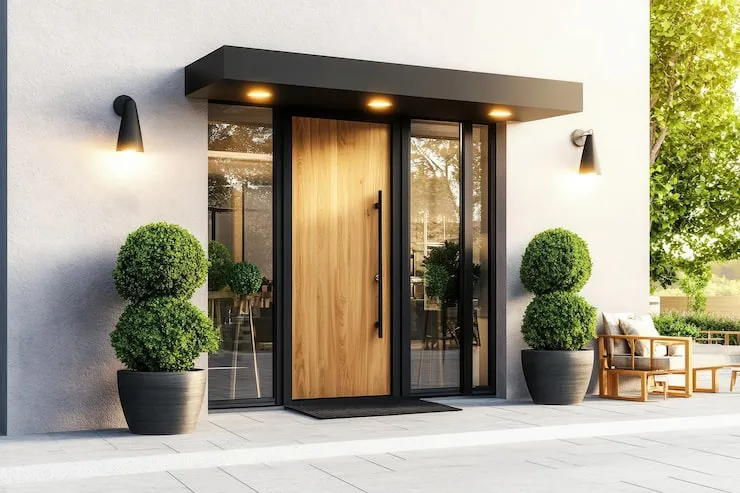

Wood doors ask for very little, which is precisely the trouble. A door that never complains gets forgotten, and a forgotten door eventually fails in the least convenient way possible. Most of what a commercial wood door needs is small, regular attention, not grand intervention.
Humidity Is the Real Antagonist
Wood swells when the air is wet and shrinks when it is dry, and it does both without asking permission. A door that closed cleanly in March can bind by July, for no reason anyone did wrong.
What a Good Company Actually Checks
Finding a commercial wood door company that understands this timing matters more than finding one with the largest inventory. A good company checks the frame as readily as the door itself, since the frame usually moves first. The door only follows.
A commercial wood door company earns its fee doing unglamorous things: measuring an opening twice, not once, and checking whether the frame is actually square before ordering a replacement. None of this shows up in a photograph.
Where the Wear Shows Up First
Hinges wear unevenly. A door swinging a thousand times a week puts more strain on the top hinge than the bottom one, a detail most owners never notice until the door begins to sag on one side. By then, the fix is larger than it needed to be.
Lite Kits Complicate the Picture
Vision panels have to sit correctly within a frame that is itself prone to shifting. A door with a lite kit that no longer sits flush is not simply cosmetic. It is usually the first visible sign that the door has begun to move.
Knowing When to Stop Patching
Cost follows a predictable pattern. A hinge adjustment costs little. A full door and frame replacement costs considerably more, and the gap between the two widens the longer a small problem goes unaddressed.
Not every problem calls for replacement. A door that has failed the same way three times, though, has usually said everything it needs to say. Continuing to patch it is rarely the cheaper option once the pattern is counted honestly.
New Jersey's Two Climates
Coastal towns along the shore deal with salt air that corrodes hardware faster than inland corridors ever will. Inland office parks along the turnpike corridor face a more ordinary but still relentless freeze and thaw cycle each winter. Commercial wood door repair in NJ has to account for both conditions, sometimes on doors in the same portfolio less than forty miles apart.
Newark and Jersey City carry an older mix of industrial and converted office buildings, many with original wood doors that have outlasted several rounds of tenants. Princeton's office corridor tends toward newer construction, where the doors are younger but the daily traffic is often heavier. Neither market behaves quite like the other.
Treating every door in the state identically is how a repair ends up needing a second visit. A closer calibrated for shore humidity behaves differently once installed forty miles inland. The technician who knows this saves everyone a return trip.
The Door With a Personality
Every property seems to have one door that has developed a personality. It sticks for the newest tenant and swings freely for the one who has worked there a decade. The difference is not loyalty, but a hinge and a closer slowly drifting out of calibration, noticed only by the people who use the door daily.
Fire Ratings and ADA Requirements
Fire rated wood doors add a further requirement. Hardware substituted without checking the label can void the door's rating, even though the door itself looks unchanged afterward. The label only means what it says if everything attached to it still matches what was originally tested.
ADA hardware requirements apply to wood doors just as they do to any other material. A lever that requires too much force, or a closer that swings shut too quickly, can put a building out of compliance regardless of how the door looks. Nobody fails an inspection because a door looked worn. They fail because nobody tested the hardware.
Keeping a Record
A written record helps more than people expect. Noting which hinge was adjusted, and when, turns a vague sense that a door keeps sticking into an actual pattern worth addressing. Memory is a poor substitute for a dated service log.
Why Ownership Sometimes Factors In
Some property managers look specifically for a veteran owned commercial wood door company, and the reasons vary. Personal preference is one. Procurement policy is another, since many municipal and federal contracts give explicit weight to veteran owned vendors during bidding.
Ownership does not change how a hinge behaves in July humidity. It does, for some clients, factor into which company gets the call in the first place, and that preference is worth naming rather than assuming.
Calling Early, Not Fast
Most wood door problems are not emergencies the day they start. They become emergencies only after being ignored long enough, which is really an argument for calling early rather than calling fast.
None of this calls for alarm. It calls for a schedule, and for a commercial wood door company willing to look at hinges and frames before they become a Saturday morning emergency. Wood is a patient material, and it rewards the same quality in return.




























Sign in to leave a comment.