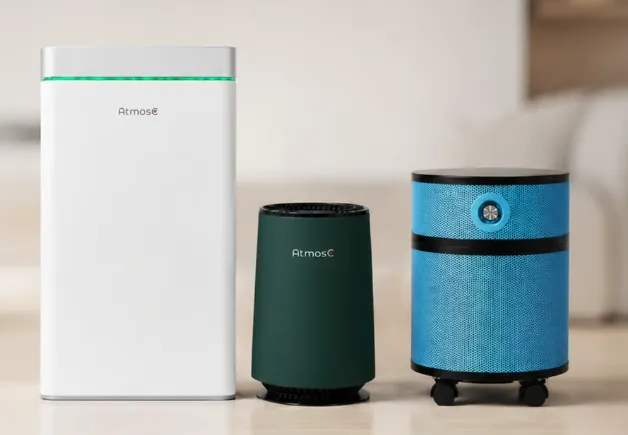

You walk into your living room, take a breath, and everything smells fine. No dust hanging in the air, no strange smell. So the purifier must be doing nothing, right? Here's the twist: your nose is one of the worst tools for judging air quality. By the time you can smell or see a problem, the air has been bad for hours already. A home air purifier works long before your senses catch up, quietly removing things you will never smell, see, or feel.
This piece breaks down what actually happens in that gap.
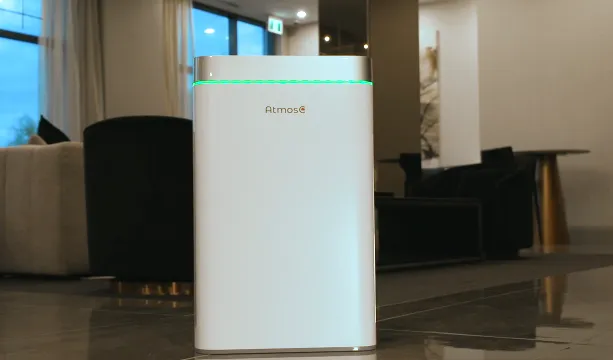
Why You Can't Feel Clean Air the Way You Feel Clean Surfaces
Wipe a dusty table, and you can see the difference right away. Air doesn't work that way. Most of what makes air unhealthy is invisible. Fine particles, gases, and mold spores float around at sizes far too small for your eyes to catch. Your nose isn't much help either. It tires out fast, a trick called olfactory fatigue, so a room can smell "normal" within minutes even while pollution levels stay high. So when people say they can't tell if their purifier is doing anything, that's not really a flaw in the machine. It's a limit of what human senses can pick up.
The Invisible Pollutants a Home Air Purifier Targets
| Pollutant | Common Source | Can You Sense It? |
| PM2.5 (fine particles) | Cooking, candles, traffic | No |
| VOCs | Paint, cleaners, furniture | Only at high levels |
| Dust and pollen | Outdoor air, pets | Only once it settles |
| Mold spores | Damp corners, poor airflow | No |
A home air purifier doesn't wait for you to notice a problem before it acts. It works on all of these at once, all day, whether or not you're paying attention.
What Happens Inside a Home Air Purifier Before You Notice Anything
Air gets pulled in through a pre-filter that grabs the big stuff, like hair and lint. From there, it passes through a HEPA filter, which traps tiny particles, some smaller than you could ever picture.
Next, a layer of activated carbon soaks up smells and gases. This whole cycle takes seconds, not hours. A home air purifier repeats it nonstop while you go about your day without giving it a second thought.
One number worth knowing here is CADR, short for Clean Air Delivery Rate. It tells you how much clean air a unit can produce for a given room size. A lot of complaints about a "useless" home air purifier trace back to this one detail: a small unit stuck in a big room simply can't keep up, no matter how well it's built.
Why the First 30 Minutes Matter Most
Particle levels don't fall in a straight line. They drop fast at first, then taper off, roughly like cutting a number in half every few minutes. That means the biggest cleanup usually happens in the first half hour after you switch a purifier on, right when you're least likely to be checking an app. By the time you think to check, most of the heavy lifting is already finished.
How a Smart Sensor Air Purifier in Canada Makes the Invisible Visible
This is where numbers replace guesswork. A smart sensor air purifier in Canada checks particle and gas levels in real time and shows the results right on a screen or app. Instead of wondering whether the air improved, you can watch a number drop.
This matters here, since Canadian homes are sealed tight for cold winters, which traps pollutants indoors, and since wildfire smoke can push outdoor PM2.5 to rough levels for days. A sensor turns something invisible into something you can genuinely track.
Automatic Adjustments You'd Otherwise Miss
Good sensors don't just report numbers; they act on them. If someone lights a candle, or smoke drifts in from outside, the unit can speed up its fan on its own, then quiet back down once levels settle. You never have to touch a button. This is one of the biggest reasons people pick a smart sensor air purifier over a basic model.
Can You Trust the Sensor Readings?
It's a fair question. Built-in sensors aren't lab-grade instruments, so the exact figure on your app might drift a little from a professional monitor. What matters more is the trend. If the reading drops after cooking, or climbs during wildfire season, that pattern is reliable, even when the precise number isn't. Placement matters too, so keep the unit a bit away from walls and corners for a more honest reading.
Signs Your Home Air Purifier Is Working, Even If You Can't Tell
You don't have to trust your nose alone. Check the app or monitor for a downward trend across a few days, not just a few minutes. Look at the filter itself. One turning grey or brown over the weeks is proof it's catching something real. Pay attention to smaller clues too, such as less dust on shelves or fewer morning sneezes after weeks of steady use. None of this shows up instantly, and that's normal. A home air purifier does slow, steady work. It isn't putting on a show for you.
Choosing a Home Air Purifier that Matches How Your Air Actually Changes
Match the CADR rating to your real room size, not the "recommended" size printed on the box, which tends to be optimistic. Look for true HEPA filtration paired with activated carbon, since one handles particles and the other handles smells and gases.
If you'd rather have proof than guesswork, choose a model with sensors and a filter-change indicator, so you're never left wondering when the parts inside stop pulling their weight. A well-matched home air purifier cleans more than a bigger, flashier one sitting in the wrong room.
In Closing,
Clean air isn't loud about it. There's no smell, no sound, no obvious sign that anything shifted, just a slow, steady change happening while you're busy with everything else. That's exactly why a home air purifier deserves your trust, even on days it feels like it's doing nothing.
If you'd rather stop guessing and watch the shift happen instead, look into a smart sensor air purifier in Canada, and let the numbers do the noticing for you.
FAQs
1. How long does it take for a home air purifier to clean a room?
Most of the visible drop in particle levels happens within the first 30 minutes, though full circulation through a whole room can take a little longer depending on its size and airflow.
2. Can a smart sensor air purifier detect wildfire smoke indoors?
Yes. Sensors tracking PM2.5 usually pick up a spike as smoke seeps in, before you can smell it, which lets the unit respond on its own.
3. How do I know if my air purifier's filter needs replacing?
Check the filter for discoloration, or rely on a built-in filter-life indicator if your model has one, instead of guessing based on smell alone.
4. Are smart sensor readings on air purifiers accurate?
They're close enough to be genuinely useful for spotting trends, even if they aren't as precise as professional lab equipment.

























Sign in to leave a comment.