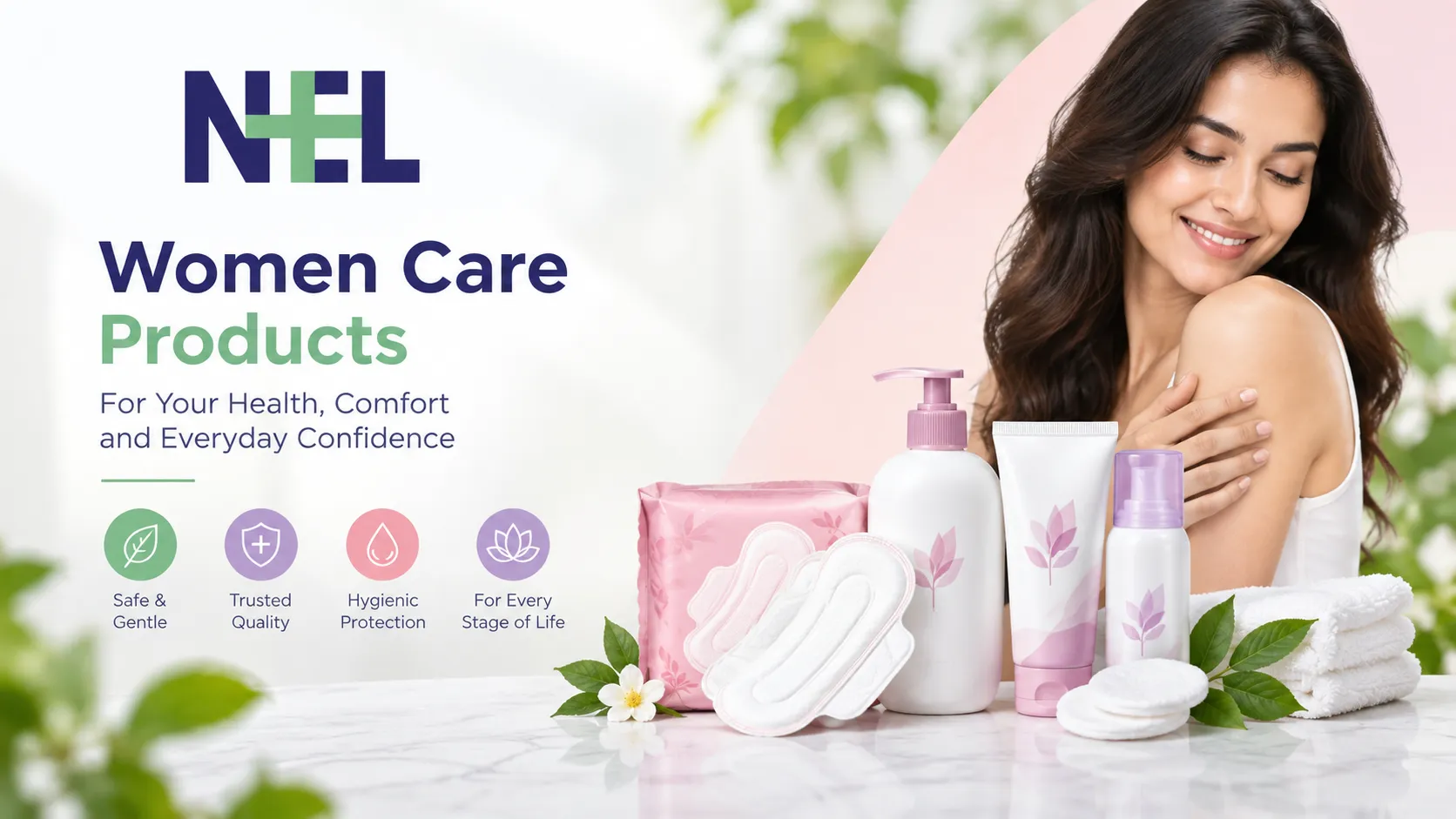

A pharmacist in Nagpur once rejected an entire consignment of sanitary pads over absorption inconsistency — not because the fabric was wrong, but because three batches from the same supplier tested differently. That's the reality buyers of Women Care Products rarely see coming. Most procurement teams assume compliance certificates and clean packaging mean the product performs the same way every single time. It doesn't. Manufacturing consistency is the actual battle, and it's fought long before a carton reaches a distributor's warehouse.
This piece breaks down what genuinely separates a dependable manufacturer from one that just looks good on a spec sheet.
Specification
Women's hygiene products — sanitary napkins, panty liners, intimate wash, and related SKUs — carry technical requirements most buyers skim past.
Absorption Core Composition
The core layer typically uses fluff pulp, SAP (super absorbent polymer), or a blended composite. SAP ratio changes absorption speed and retention under pressure — a detail almost never listed on a basic product sheet, but one that determines whether a product performs in humid coastal markets versus drier northern regions.
Top Sheet and Breathability
Non-woven top sheets vary in GSM (grams per square meter), and lower GSM doesn't automatically mean cheaper or worse — it depends on the intended use case. Buyers sourcing for premium retail chains often specify 18-22 GSM for a softer feel; institutional buyers prioritize durability over softness.
pH Balance and Dermatological Testing
Products marketed for daily use need documented pH testing, typically maintained around 4.5-5.5 to match natural vaginal pH. A supplier who can't produce a lab report for this on request is not someone you want holding your brand's reputation.
The detail most buyers overlook: batch-to-batch consistency testing. A single passed lab report from six months ago tells you nothing about the batch shipping next week.
Objective — 5 Criteria to Evaluate Any Supplier
1. Certification currency. A bad answer sounds like "we're WHO-GMP certified" without a date. Ask when it was last renewed.
2. Batch testing frequency. A bad answer is "we test regularly." Regularly means nothing. Ask for the actual testing interval in writing.
3. Defect and returns policy. A bad answer is "we handle it case by case." That's not a policy — that's a negotiation you'll lose after the shipment has already landed and the damage is done.
4. Raw material traceability. A bad answer would be any that mentions the actual pulp or SAP supplier. If they can‘t track it back to them, they can‘t be sure of it.
5. Production capacity versus order commitment. A bad answer overpromises timelines without showing you the production line schedule. Nobody tells you this, but overcommitted factories are where quality slips first.
Benefits
Reduced compliance risk. Working with a WHO-certified manufacturer means fewer surprises during regulatory audits, which protects your margin from recall costs.
Consistent absorption performance. Batch-tested cores mean fewer customer complaints reaching your retail partners, which protects repeat business.
OEM flexibility without MOQ shock. Custom packaging and formulation options that don't force you into warehouse-crushing minimum order quantities.
Faster reorder cycles. A manufacturer with documented production scheduling gives you predictable lead times instead of guesswork.
Export-ready documentation. Products built for international shelf compliance from day one save you the cost of re-certification later.
Most manufacturers won't tell you which of these actually matter most for your specific market. That's a conversation, not a brochure line.
Availability
We manufacture and ship from our facility in India, covering domestic distribution across major states and export routes to Southeast Asia, the Middle East, and parts of Africa. Sourcing Women Care Products Manufacturers in India gives buyers a logistics advantage — shorter lead times to South Asian and Gulf markets compared to sourcing from East Asian manufacturers, where freight alone can add two to three weeks.
That advantage disappears fast if the manufacturer isn't actually equipped for export documentation. We've seen buyers get burned by suppliers who quote competitive pricing but can't produce a certificate of origin without a two-week delay.
About Us
We've been manufacturing personal care and hygiene products since 2013, and we stopped sourcing from one long-term pulp supplier in 2022 after inconsistent fluff density showed up across two consecutive audits. We switched suppliers within six weeks. That's what a decade of manufacturing accountability actually looks like — not a claim on a website, but a decision that cost us short-term convenience for long-term reliability.
We're a WHO-certified facility building for pharmaceutical companies, retail chains, hospital procurement teams, and exporters who need a partner that treats specification sheets as commitments, not marketing copy.
Send us your target SKU specifications, expected monthly volume, and destination market, and we'll respond within 48 hours with a formal quote and sample availability. Our standard MOQ for private label orders starts at 10,000 units per SKU, though we can discuss smaller trial runs for new partners. Email your requirements directly — we don't route inquiries through a sales queue.
Conclusion
Sourcing Women Care Products isn't about finding the lowest quote — it's about finding a manufacturer who treats batch consistency as seriously as certification paperwork. The buyers who get burned are usually the ones who never asked about testing frequency. The ones who don't are asking better questions from the start.
FAQs
1. What certifications should I require from Women Care Products Manufacturers?
WHO-GMP & recent laboratory reports for pH & absorption testing. Part of due diligence. May suggest a dodgy supplier if you are obligated to seek clarification twice.
2. How do I evaluate Women Care Products Suppliers in India specifically?
Confirm the export documentation history with the previous customer and the loading transit time. Not only a list of certification and send once a certification, but have been export inexperienced international freight.
3. What‘s a reasonable MOQ for private label orders?
It can differ from manufacturer to manufacturer, but anything below a 5,000 unit SKU tends to be more expensive on a per unit basis. We use 10,000 as our round pricing figure with room to negotiate for repeat business.
4. Can Women Care Products Suppliers accommodate custom packaging?
Yes, most OEM-capable manufacturers can, but the lead time for custom packaging tooling can be anywhere between 2-4 weeks. We don‘t avoid addressing lead times just because a customer is in a rush.
5. How often should batch testing happen?
Each batch should have its own test record. Buying a supplier that undertakes tests at a time interval and not on a batch-to-batch basis means that you are accepting a risk that you probably don‘t know you‘re accepting.



















Sign in to leave a comment.