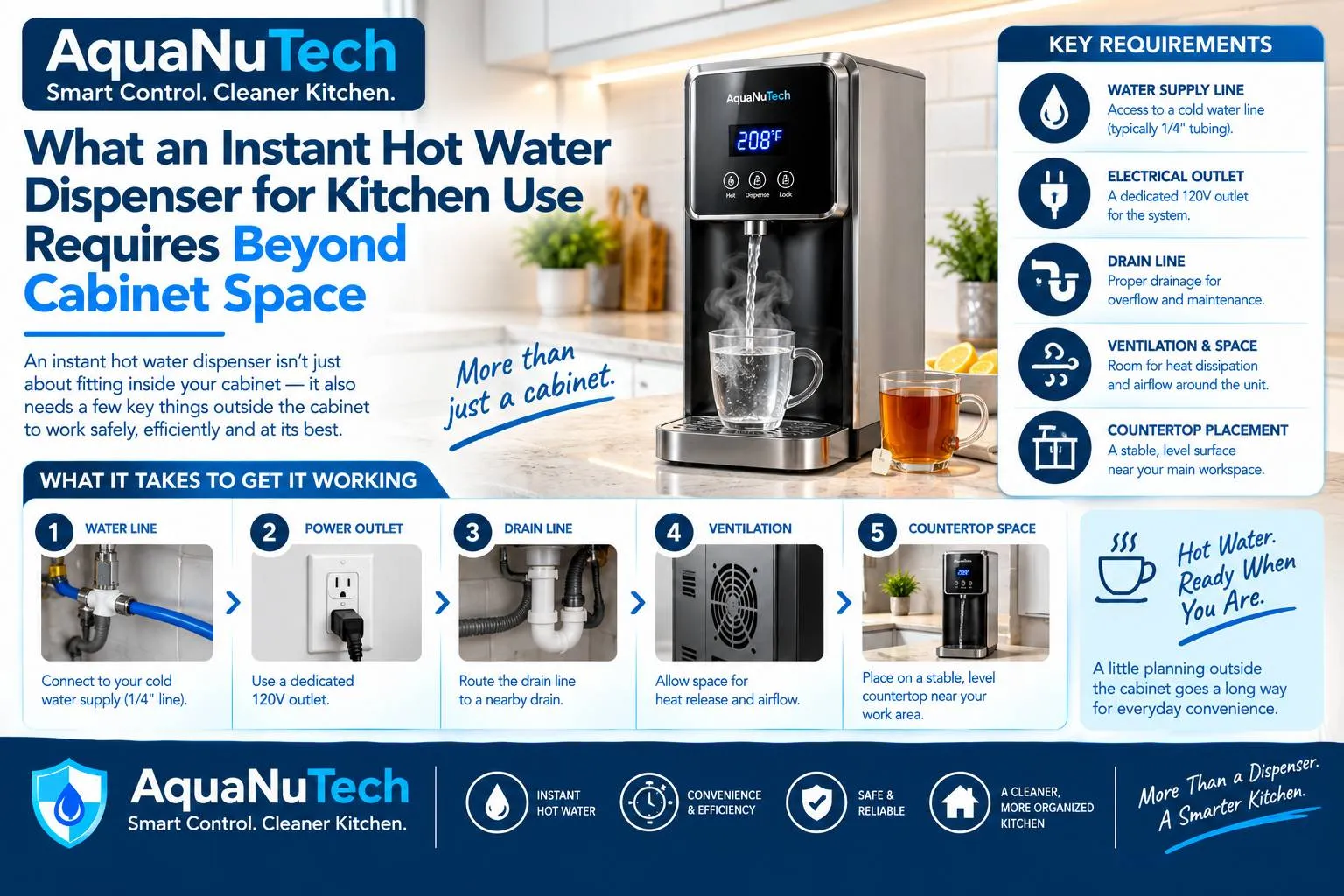

What good is a compact hot water tank if its connections block the shutoff valve or leave no room to replace a filter?
Cabinet dimensions answer part of the installation question. An instant boiling water dispenser also needs compatible plumbing, suitable electrical provision, and access for maintenance.
Choosing an instant hot water dispenser for kitchen sink use therefore starts with the complete setup. The tank, faucet, filtration equipment, and household demand need to work together.
Plan Service Access Around the Tank
An empty section of cabinet floor can look adequate until hoses, fittings, and a filter housing occupy the same area. The installation plan should account for the equipment and the space a person needs to reach it.
For an instant hot water dispenser for kitchen sink installation, the assessment should cover:
- Connection Access: Leave room to inspect fittings and operate the water shutoff.
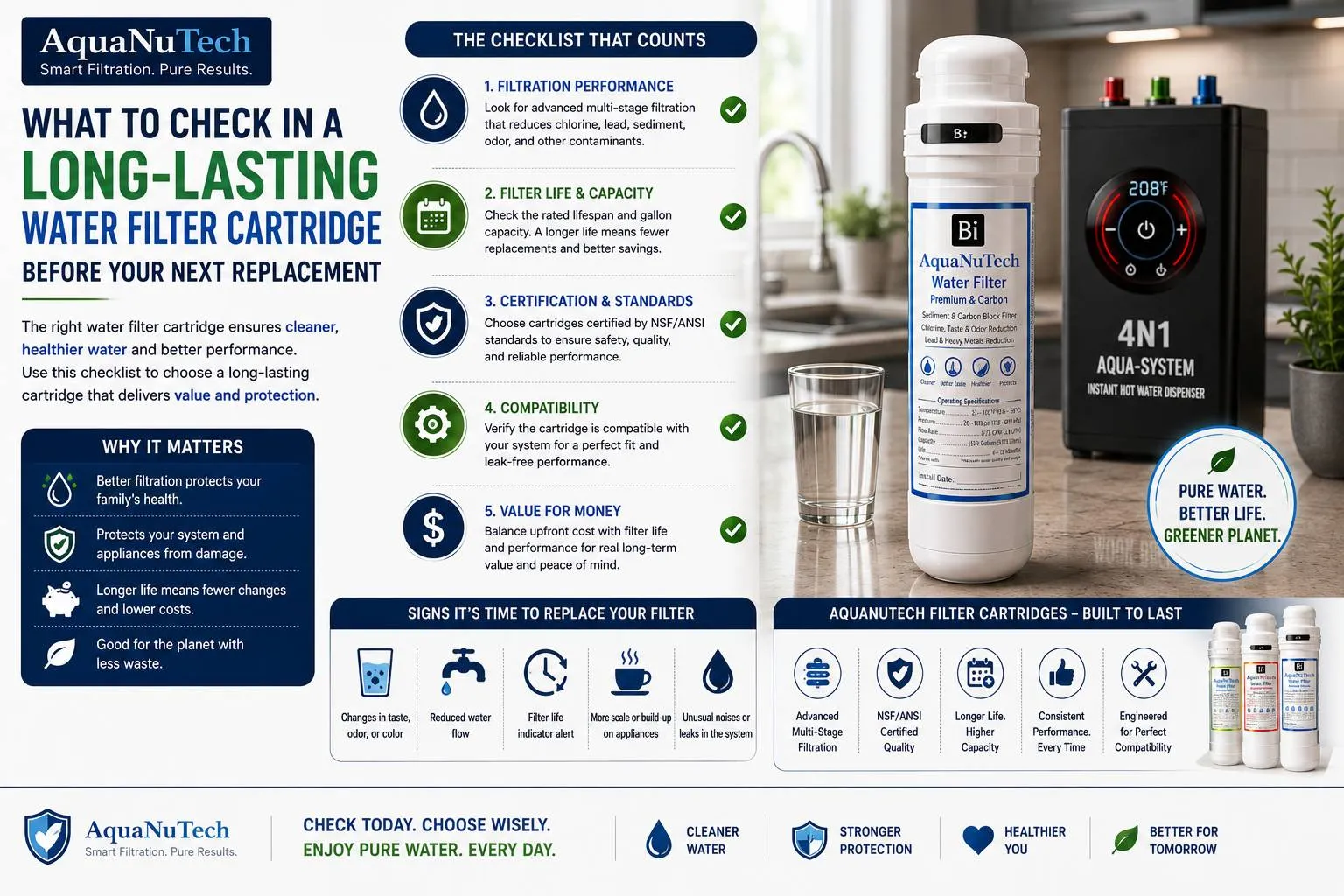
- Filter Replacement: Allow the clearance that the selected cartridge requires.
- Tubing Routes: Follow the manufacturer’s instructions without forcing sharp bends.
- Electrical Provision: Confirm the appliance requirements and outlet suitability with a qualified installer.
- Tank Removal: Keep a route available for servicing or replacement.
These checks prevent a compact footprint from becoming a cramped installation. Storage baskets and cleaning supplies also need a separate place that does not obstruct equipment access.
Match Temperature Settings to Kitchen Tasks
An instant boiling water dispenser does not guarantee that water reaches a rolling boil. The model’s stated temperature range determines what it delivers, so the product label deserves more scrutiny than the category name.
Households also use hot water for different purposes. Tea preparation, coffee brewing, and food preparation may call for different temperatures. An adjustable setting offers control, but users still need to follow the preparation requirements for each task.
AquaNuTech’s digital dispenser offers adjustable temperature settings through a soft-touch control panel.
A visible setting gives the household a reference when changing routines, rather than relying on an assumption that the hottest option suits everything.
Separate Stored Capacity From Heating Recovery
An instant boiling water dispenser supplies water that the tank has heated. After a substantial draw, incoming water changes the tank temperature, and the heater needs time to restore the selected setting.
That distinction becomes relevant when several people prepare drinks together. Occasional cup filling creates a different demand from consecutive beverages followed by a larger cooking task.
Hourly output does not describe the amount available at full temperature in one uninterrupted draw. Tank capacity, incoming water temperature, and recovery performance influence the experience.
The manufacturer’s startup and reheating guidance therefore belongs in the comparison. “Instant” describes access to prepared hot water; it does not remove the heating cycle or create an unlimited supply.
Confirm Faucet and Filtration Compatibility
An instant hot water dispenser for kitchen sink use needs a faucet that suits the tank’s specified connections and operating design. Matching finishes cannot establish mechanical compatibility.
An existing drinking-water faucet may look suitable, but the installer should confirm its tubing arrangement against the dispenser’s requirements. The same review applies when a household wants to retain a reverse-osmosis system.
Compatibility with filtration means the equipment can support an approved arrangement. It does not mean every filter, connector, or existing installation will work without changes.
The plan should identify the water supply route, the required components, and access for cartridge changes. This review also separates equipment that the household owns from components the new package includes.
Understand Heating Safeguards and Leak Response
An instant boiling water dispenser may include dry-burn and overheat sensors. These features address equipment conditions; they do not eliminate the need for correct installation or careful handling of hot water.
Leak detection serves another purpose. It responds to water where it should not collect, while a connected shutoff mechanism can interrupt the protected supply.
AquaNuTech offers a package that combines its hot water dispenser with leak detection and automatic water shutoff.
The installer still needs to establish which line the device controls and where the sensor belongs. Protection depends on the installation arrangement, including whether escaping water reaches the sensor.
Check Package Contents and Ownership Requirements
Comparing an instant hot water dispenser for kitchen sink use requires more than comparing tank prices. A standalone heater, faucet combination, and filtration package can include different components.
The purchase review should identify missing fittings, installation work, filter replacements, and warranty conditions. Vacation-mode instructions also deserve attention when the household expects extended absences.
Clear package information helps the homeowner understand both the initial installation and the responsibilities that follow.
Base the Decision on the Complete Installation
An instant boiling water dispenser should suit the household’s demand as well as the available cabinet space. Temperature selection, recovery, compatible connections, and maintenance access establish that fit.
Assessing an instant hot water dispenser for kitchen sink use benefits from an installation consultation that resolves those details before purchase. The outcome should be a defined equipment list and a workable service layout.























Sign in to leave a comment.