
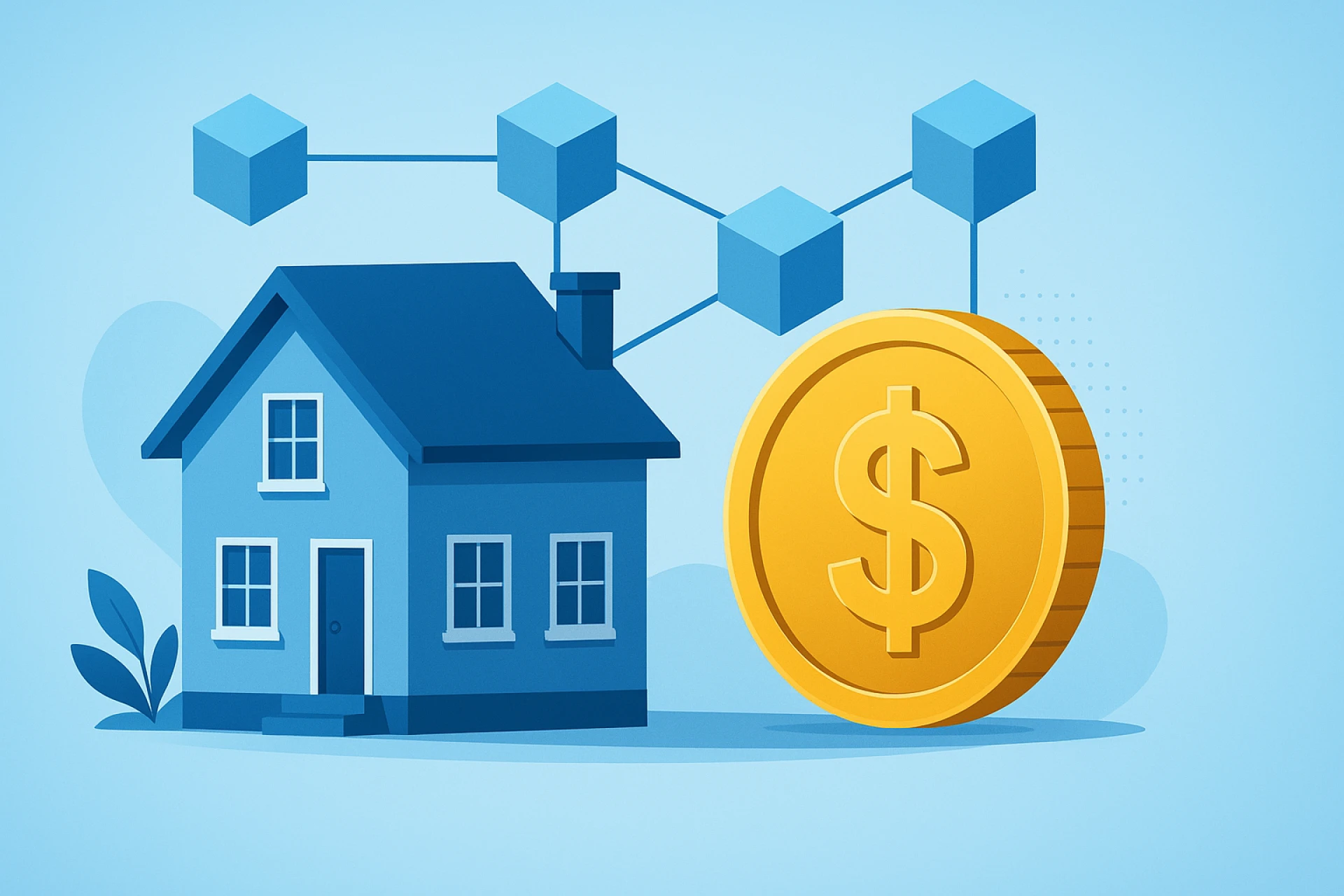
Real-world asset (RWA) tokenization is moving beyond the experimental stage of blockchain adoption and toward a broader transformation of how assets are issued, owned, managed, and traded. Real estate, private credit, government securities, commodities, investment funds, and other traditionally illiquid assets can increasingly be represented through blockchain-based tokens. However, simply creating a digital token does not make an RWA project successful. The real challenge lies in building an infrastructure that connects blockchain technology with legal ownership, regulated financial processes, asset servicing, investor requirements, and secondary-market activity.
The Bank for International Settlements (BIS) describes tokenization as transforming claims into tokens on a programmable platform, combining information about the asset and ownership with rules and governance. It also highlights that tokenization can automate transactions involving financial and real assets through smart contracts.
A successful RWA tokenization platform therefore needs to function as more than a token-issuance system. It should provide an integrated environment in which assets can be verified, legally structured, tokenized, distributed, transferred, monitored, and ultimately redeemed. The following components are particularly important in achieving that objective.
1. Strong Asset Origination and Verification Infrastructure
The foundation of an RWA platform is the asset itself. Before an asset is represented on-chain, the platform must establish what the asset is, who owns it, what legal rights are attached to it, and how its value can be demonstrated.
This process is particularly important because blockchain records can establish that a particular token exists and has been transferred, but they do not automatically prove that the underlying property, security, commodity, or receivable exists or that the token holder has enforceable rights over it. The connection between the digital token and the physical or legal asset must therefore be carefully designed.
A robust platform should support asset due diligence, documentation, ownership verification, valuation records, asset identifiers, and ongoing monitoring. For example, tokenizing a commercial property may require property-title verification, valuation reports, ownership documentation, incorporation of a special-purpose vehicle, and clear definitions of what token holders actually receive.
This creates an important principle for RWA infrastructure: on-chain transparency cannot compensate for weak off-chain asset verification. The platform must establish a reliable bridge between the blockchain representation and the underlying asset.
2. Regulatory Compliance and Investor Eligibility
Regulatory compliance is arguably one of the most critical components of an RWA tokenization platform because many tokenized assets can fall within existing securities, investment, property, payments, or financial-services regulations.
A platform should therefore incorporate compliance into its architecture rather than treating it as an administrative process that happens after token issuance. Depending on the asset and jurisdiction, this can involve Know Your Customer (KYC), Anti-Money Laundering (AML) procedures, investor accreditation, sanctions screening, jurisdiction restrictions, transaction monitoring, transfer restrictions, and regulatory reporting.
The importance of integrating these controls can be seen in institutional tokenization projects. For example, Securitize's infrastructure for Arca's U.S. Treasury Fund included investor verification, KYC/AML onboarding, token issuance, transfer-agent functions, and maintenance of off-chain ownership records.
This demonstrates why compliance-aware smart contracts are valuable. Instead of allowing tokens to move freely between any blockchain addresses, the platform can restrict transfers to verified and eligible participants. Compliance rules can consequently become part of the transaction infrastructure itself.
Regulatory requirements also differ significantly across jurisdictions. A platform designed for international investors must therefore use a configurable compliance architecture rather than relying on one fixed set of rules.
3. Programmable Smart Contracts
Smart contracts form the operational engine of tokenized assets. They determine how tokens are created, transferred, redeemed, frozen, burned, or otherwise managed.
For an RWA platform, smart contracts need to handle considerably more than basic token transfers. Depending on the asset, they may implement:
- Token issuance and redemption
- Whitelisting and investor restrictions
- Transfer controls
- Ownership rules
- Dividend or interest distributions
- Corporate actions
- Asset servicing
- Voting rights
- Automated settlement
- Emergency controls
The BIS has emphasized that programmable platforms can execute actions according to predefined conditions, enabling transactions to occur when corresponding requirements are satisfied.
For example, a tokenized private-credit product could use smart contracts to distribute interest according to predefined schedules. A tokenized fund could automate subscriptions and redemptions subject to eligibility conditions. A real-estate token could maintain ownership records while enabling approved transfers between eligible investors.
However, smart-contract functionality must be balanced with flexibility. RWA markets often operate within legal frameworks that require human intervention, court orders, regulatory actions, or administrative updates. Consequently, sophisticated platforms should include carefully governed administrative functions rather than assuming every process can be completely decentralized.
4. Secure and Flexible Blockchain Infrastructure
The underlying blockchain is another fundamental component. An RWA platform must choose infrastructure according to the asset class, transaction volume, regulatory requirements, settlement model, fees, security, and interoperability needs.
Public blockchains can provide transparency, broad accessibility, and composability with decentralized applications. Permissioned networks can provide stronger access controls and privacy. In some cases, a multi-chain architecture can provide access to different ecosystems while maintaining consistent compliance and ownership controls.
The choice should therefore be based on business requirements rather than simply selecting the most popular blockchain.
Security is equally important. Smart-contract vulnerabilities, compromised administrative keys, oracle manipulation, and poor wallet architecture can undermine an otherwise credible tokenization platform. Security audits, role-based permissions, multisignature controls, monitoring systems, upgrade governance, and incident-response mechanisms should be incorporated into the platform design.
5. Reliable Custody and Wallet Management
Token ownership introduces new operational requirements around custody. Investors may hold assets through self-custody wallets, qualified custodians, institutional wallets, or platform-controlled accounts.
A successful platform should accommodate appropriate custody models while maintaining strong security and compliance controls. Institutional users may require segregated wallets, transaction approval workflows, multisignature authorization, policy-based transfers, and detailed audit trails.
BlackRock's BUIDL fund illustrates the importance of combining blockchain ownership with established financial infrastructure. The fund uses Securitize as its transfer agent and tokenization platform, while BNY Mellon serves as custodian and administrator. Eligible investors can transfer tokens around the clock to other approved investors and have different custody options.
This type of architecture highlights an important lesson: tokenization does not necessarily eliminate traditional financial infrastructure. Instead, successful platforms often connect blockchain systems with established custody, administration, compliance, and settlement functions.
6. Oracle and Off-Chain Data Integration
Blockchain networks cannot independently access every piece of information required to manage real-world assets. They may need external data relating to asset valuations, interest rates, property information, market prices, fund NAVs, commodity prices, or other events.
Oracles provide this connection between external information and smart contracts. For example, a tokenized fund may require updated valuation information before calculating subscriptions or redemptions. A tokenized commodity may depend on an external benchmark price.
Oracle infrastructure must therefore be carefully selected and secured. Incorrect or manipulated data can cause smart contracts to execute incorrect actions. Platforms should consider multiple data sources, validation mechanisms, update frequency, fallback procedures, and governance around oracle providers.
The growing importance of this infrastructure can be seen in tokenized-fund implementations where blockchain-based assets use oracle feeds for valuation and interest-related information.
7. Primary Issuance and Investor Onboarding
An effective platform should make the transition from traditional asset ownership to blockchain-based ownership as straightforward as possible.
Investor onboarding should ideally combine registration, identity verification, KYC/AML checks, eligibility assessment, wallet setup, subscription, payment, and token allocation into one integrated workflow. Complicated onboarding can undermine the accessibility benefits that tokenization is supposed to provide.
Payment infrastructure is another important consideration. Investors may need to fund purchases using fiat currencies, stablecoins, or other approved payment methods. Securitize, for example, partnered with Zero Hash to provide fiat and USDC funding rails for deposits and withdrawals connected to its tokenized-asset infrastructure.
This demonstrates how RWA platforms increasingly need to connect blockchain transactions with conventional financial rails.
8. Secondary Market and Liquidity Infrastructure
Tokenization is frequently promoted as a way to improve liquidity, but creating a token does not automatically create a liquid market. Liquidity requires buyers, sellers, compliant transfer mechanisms, market infrastructure, pricing information, and appropriate regulatory permissions.
A mature RWA platform should therefore consider secondary-market functionality from the beginning. Depending on the asset and jurisdiction, this could involve an integrated marketplace, regulated trading venue, broker-dealer infrastructure, peer-to-peer transfers, or connections with external exchanges.
The importance of this integrated approach is illustrated by Securitize's expansion into fund administration, primary markets, secondary trading, transfer-agent services, and tokenization within a unified infrastructure.
More recently, Securitize and the New York Stock Exchange announced a collaboration focused on developing infrastructure for tokenized securities, including digital transfer-agent capabilities and on-chain settlement.
These developments suggest that the future of tokenization will depend not only on issuing assets on-chain but also on building credible markets around them.
9. Interoperability and Multi-Chain Capability
Fragmentation is one of the major challenges facing blockchain-based financial infrastructure. If a token exists on only one isolated network, its potential distribution and integration opportunities may be limited.
Interoperability allows tokenized assets to interact with multiple blockchain ecosystems, liquidity venues, payment systems, and decentralized applications. However, cross-chain transfers introduce additional technical and security considerations, particularly around bridges, wrapped assets, messaging protocols, and transaction verification.
BIS research identifies limited interoperability between DLT platforms and legacy systems as one of the factors constraining broader tokenization adoption.
A practical RWA architecture should therefore be designed with interoperability in mind while ensuring that regulatory restrictions and ownership rules remain consistent across networks. VanEck's tokenized VBILL fund, for example, launched across Avalanche, BNB Chain, Ethereum, and Solana, with interoperability supported through Wormhole.
10. Asset Servicing, Reporting, and Governance
Tokenization does not end after issuance. Real-world assets have continuing operational requirements.
A property may generate rental income. A private-credit instrument may produce interest payments. A fund may calculate NAV and distribute returns. A corporate security may undergo voting, dividends, or other corporate actions.
The platform must therefore support ongoing asset servicing and reporting. Investors need access to ownership information, transaction history, distributions, valuations, and relevant documents. Issuers and administrators need dashboards, APIs, reporting tools, and audit trails.
Governance is equally important. The platform should clearly define who can update contracts, approve investors, freeze tokens, initiate corporate actions, modify asset information, and respond to emergencies. Governance controls should be transparent and protected through appropriate authorization mechanisms.
11. Enterprise-Grade APIs and Scalability
An RWA platform intended for institutional adoption cannot operate as an isolated application. It needs to integrate with banks, custodians, accounting systems, identity providers, exchanges, payment processors, asset managers, and enterprise applications.
APIs are therefore essential. They enable organizations to automate onboarding, retrieve ownership information, execute transactions, access compliance records, and synchronize blockchain activity with existing systems.
Scalability also matters. A platform designed for a few thousand transactions may fail when institutional adoption brings millions of users, assets, or transfers. The architecture should consequently account for transaction throughput, database performance, blockchain fees, indexing, cloud infrastructure, disaster recovery, and monitoring from the beginning.
For an Enterprise RWA Tokenization Platform, scalability should not simply mean processing more transactions. It should mean supporting larger organizations, multiple asset classes, multiple jurisdictions, complex permissions, regulatory workflows, and integrations without sacrificing security or operational reliability.
12. Transparency, Analytics, and Investor Experience
Finally, a successful platform must make complex tokenized assets understandable to users. Investors should be able to see what they own, what rights their tokens represent, how the underlying asset is performing, and what transactions have occurred.
Dashboards can display token balances, asset information, distributions, transaction history, valuation data, compliance status, and portfolio performance. Analytics can also help issuers understand investor activity, liquidity, subscriptions, redemptions, and asset-level performance.
The user experience is particularly important because tokenization combines traditional finance with blockchain technology. If investors need to understand complicated wallet mechanics, gas fees, blockchain addresses, and compliance processes simply to purchase an asset, adoption can suffer.
The strongest platforms abstract unnecessary technical complexity while retaining the transparency and programmability of blockchain infrastructure.
How These Components Work Together
The real strength of an RWA platform comes from integration rather than from individual features. Asset verification establishes trust in the underlying asset. Legal and compliance infrastructure defines who can participate. Smart contracts enforce ownership and transaction rules. Blockchain infrastructure records activity. Oracles connect external information to on-chain processes. Custody protects assets. Payment rails facilitate investment. Market infrastructure enables transfers and liquidity. APIs connect the platform to institutional systems.
This interconnected architecture is becoming increasingly relevant as financial institutions explore tokenized assets. BIS research notes that tokenization can potentially reduce reconciliation and operational frictions by combining assets, money, and programmable transaction logic, while its Project Agorá work has demonstrated how tokenized deposits and central-bank reserves can operate together on a shared programmable platform.
The implication is significant: successful RWA tokenization is not fundamentally about putting an asset on a blockchain. It is about creating an end-to-end digital financial infrastructure in which legal rights, asset data, compliance, ownership, settlement, and servicing can work together.
Conclusion
A successful RWA tokenization platform requires far more than token creation or smart-contract deployment. Asset verification, regulatory compliance, programmable contracts, secure custody, oracle connectivity, investor onboarding, liquidity infrastructure, interoperability, asset servicing, APIs, scalability, and user experience must operate as one coordinated ecosystem. As institutional adoption develops, platforms that successfully connect traditional financial processes with blockchain's programmability are likely to have the strongest foundation for long-term growth. Blockchain App Factory provides best services for businesses looking to develop secure, scalable, and feature-rich RWA tokenization platforms tailored to their asset, compliance, and business requirements.
FAQs
1. What is an RWA tokenization platform?
An RWA tokenization platform is a blockchain-based infrastructure that enables real-world assets to be represented digitally as tokens and supports their issuance, ownership, transfer, compliance, and management.
2. What is the most important component of an RWA platform?
Regulatory and legal infrastructure is among the most important components because the token must have a clearly defined relationship with the underlying asset and applicable investor rights.
3. Why are smart contracts important for RWA tokenization?
Smart contracts automate token issuance, transfers, eligibility rules, distributions, redemptions, and other predefined processes while helping enforce platform rules consistently.
4. Does RWA tokenization automatically create liquidity?
No. Tokenization can make assets easier to transfer, but meaningful liquidity requires compliant marketplaces, sufficient buyers and sellers, appropriate market infrastructure, and effective pricing mechanisms.
5. Why is interoperability important for RWA platforms?
Interoperability allows tokenized assets to interact with multiple blockchains and financial systems, potentially expanding distribution, liquidity, and integration opportunities while reducing dependence on a single network.




















Sign in to leave a comment.