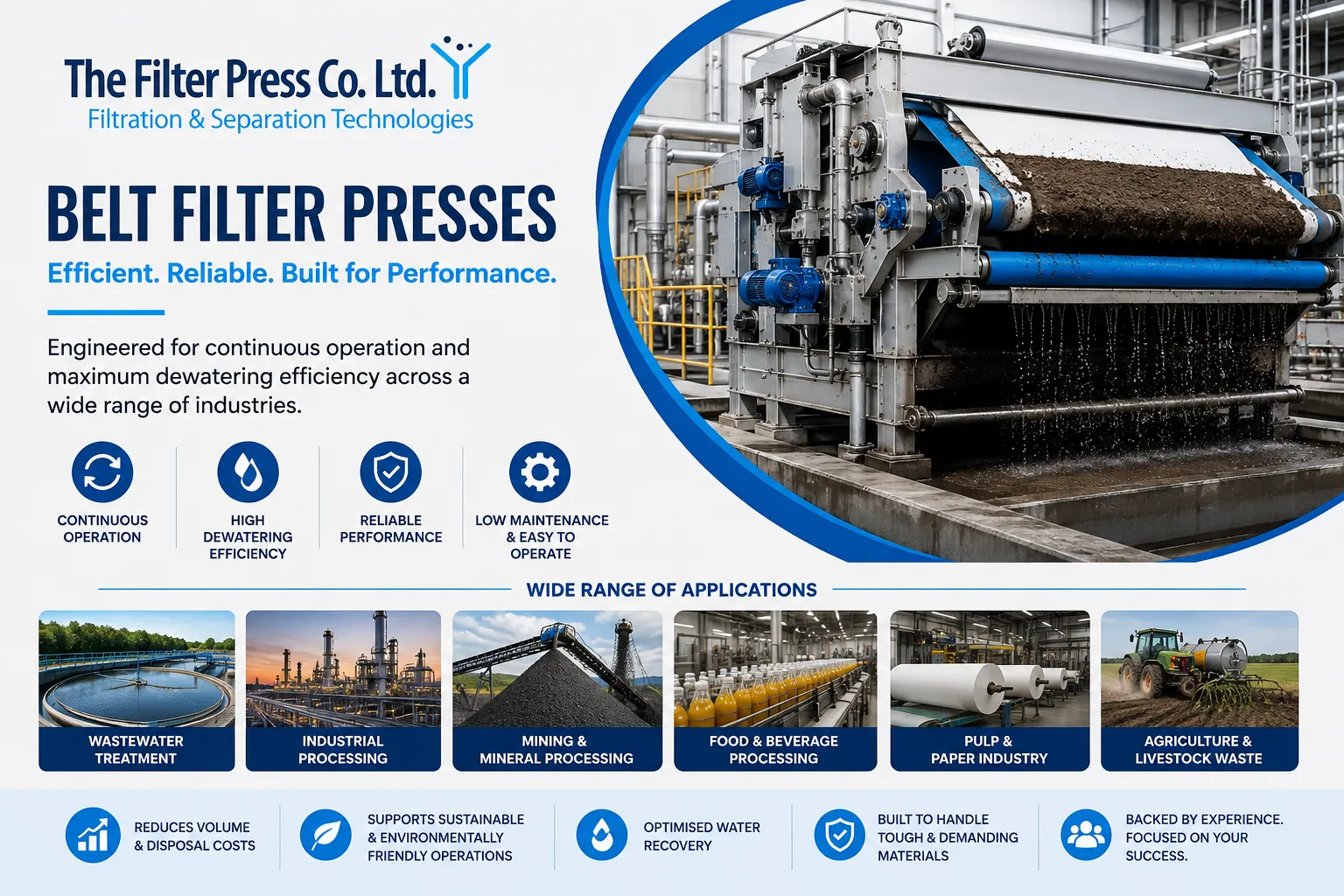

If you have ever wondered how factories, water treatment plants, and food processing units separate liquids from solids on a large scale, the answer often comes down to one hard-working machine: the belt filter press. This equipment has become a go-to choice across many industries because it is reliable, efficient, and relatively simple to operate. In this article, we will walk through the main applications for belt filter presses, explain why they are so widely used, and touch on how they compare to alternatives like a membrane filter press.
A Quick Introduction to Belt Filter Presses
A belt filter press works by squeezing a mixture of liquid and solid material between two moving belts. As the belts pass through a series of rollers, pressure gradually increases, forcing water out and leaving behind a drier solid material known as a cake. This process is continuous, which means belt filter presses can handle large volumes of material without needing to stop and start repeatedly. That continuous operation is one of the biggest reasons industries prefer belt filter presses when they need to process a steady stream of sludge or slurry.
Belt filter presses are not new technology, but they have been refined over decades to become more energy efficient and easier to maintain. Today, you will find them in municipal wastewater plants, mining operations, food factories, and many other settings. Let's look at each of these applications in more detail.
Municipal Wastewater and Sewage Treatment
One of the most common uses for a belt filter press is dewatering sludge at municipal wastewater treatment plants. After water has been treated and cleaned, what remains is a thick sludge made up of organic matter and other solids. This sludge needs to be reduced in volume before it can be disposed of, transported, or repurposed as fertiliser. A belt filter press removes much of the water content from this sludge quickly and continuously, which significantly cuts down on transport and disposal costs. Because towns and cities generate wastewater every single day, having equipment that can run around the clock without frequent downtime is essential, and this is exactly where belt filter presses shine.
Industrial Wastewater Treatment
Factories and manufacturing plants also produce wastewater that contains various solids, chemicals, and byproducts. Whether it is a textile mill, a chemical plant, or a metal processing facility, industrial wastewater often needs to be treated before it can be safely discharged or reused. Belt filter presses are commonly installed in these settings because they can be adjusted to handle different types of sludge, from oily residues to chemical precipitates. Their ability to process large throughput while keeping operating costs manageable makes them a practical choice for industries that need consistent, dependable dewatering.
Mining and Mineral Processing
The mining industry deals with enormous quantities of slurry generated during ore extraction and mineral processing. Separating valuable minerals from water and waste material is a critical step, and belt filter presses are often used to dewater tailings before they are stored or disposed of. This not only reduces the amount of water lost in the process but also makes the resulting material easier and safer to transport. Mining companies value belt filter presses for their ability to handle abrasive and heavy materials without excessive wear, which helps keep long-term maintenance costs down.
Food and Beverage Processing
You might not think of the food industry as a place for filtration equipment, but belt filter presses play an important role here too. Breweries, dairies, and food processing plants generate wastewater loaded with organic solids from production processes. Rather than sending this waste straight to disposal, many facilities use belt filter presses to separate solids from liquids, reducing waste volume and sometimes even recovering byproducts that can be reused or sold. This makes belt filter presses a sensible investment for food producers looking to operate more sustainably while keeping costs under control.
Pulp and Paper Industry
Paper mills produce large amounts of wastewater containing fibres, chemicals, and other residues from the pulping process. Belt filter presses help these facilities dewater the resulting sludge efficiently, allowing the water to be recycled back into the production process wherever possible. Given how much water paper mills consume, having equipment that supports water recovery is not just good practice but also a smart financial decision.
Agricultural and Livestock Waste Management
Farms, particularly those with large livestock operations, generate significant amounts of manure and organic waste. Belt filter presses are increasingly used in this sector to separate solids from liquid waste, making the resulting material easier to store, transport, and apply as fertiliser. This application has grown in popularity as farms look for ways to manage waste responsibly while also making use of nutrient-rich byproducts.
Comparing Belt Filter Presses to Membrane Filter Press Systems
While belt filter presses are excellent for continuous, high-volume applications, some industries require an even drier cake or need to process materials in smaller, more controlled batches. In these cases, a membrane filter press may be the better fit. A membrane filter press uses inflatable membranes to apply additional pressure to the filter cake after the initial pressing stage, which typically results in a drier and more consistent product. The choice between a belt filter press and a membrane filter press really comes down to the specific needs of your operation, including the type of material being processed, the desired dryness of the cake, and how much throughput you require.
Choosing the Right Equipment and Supplier
Selecting the right filtration equipment is not something to rush into. Every industry, and even every individual facility, has different requirements based on the type of waste being processed and the desired outcome. This is why working with experienced filter press suppliers matters so much. A knowledgeable supplier will take the time to understand your process, recommend the right type of press, whether that is a belt filter press or a membrane filter press, and provide ongoing support to keep your equipment running smoothly for years to come.
At The Filter Press Co. Ltd, based in Huddersfield, West Yorkshire, we have spent years building a reputation as one of the trusted filter press suppliers serving industries worldwide. Our team brings hands-on experience and a genuine understanding of liquid-solid separation challenges, and we take pride in helping customers find equipment that fits their exact needs, whether that means a robust belt filter press for continuous municipal use or a specialised membrane filter press for more demanding applications.
Frequently Asked Questions
What industries benefit most from belt filter presses?
Municipal wastewater treatment, industrial processing, mining, food and beverage production, paper manufacturing, and agriculture are among the industries that rely heavily on belt filter presses for dewatering sludge and slurry.
How is a belt filter press different from a membrane filter press?
A belt filter press uses continuous moving belts and rollers to squeeze water out of material, making it ideal for high volumes. A membrane filter press uses inflatable membranes for additional pressure, usually producing a drier cake, and tends to suit batch processing where higher dryness is required.
How do I know which type of press is right for my facility?
The best approach is to speak with experienced filter press suppliers who can assess your material, throughput needs, and desired cake dryness before recommending the most suitable equipment.
Are belt filter presses expensive to maintain?
Compared to many alternatives, belt filter presses are generally cost-effective to run and maintain, especially when properly serviced and matched correctly to the application from the start.
Can belt filter presses handle abrasive materials like mining tailings?
Yes, many belt filter presses are specifically designed with durable components to handle abrasive slurries, making them a popular choice in mining and mineral processing operations.
If you would like advice on choosing the right filtration solution for your operation, the team at The Filter Press Co. Ltd is always happy to help guide you through the options available.

























Sign in to leave a comment.