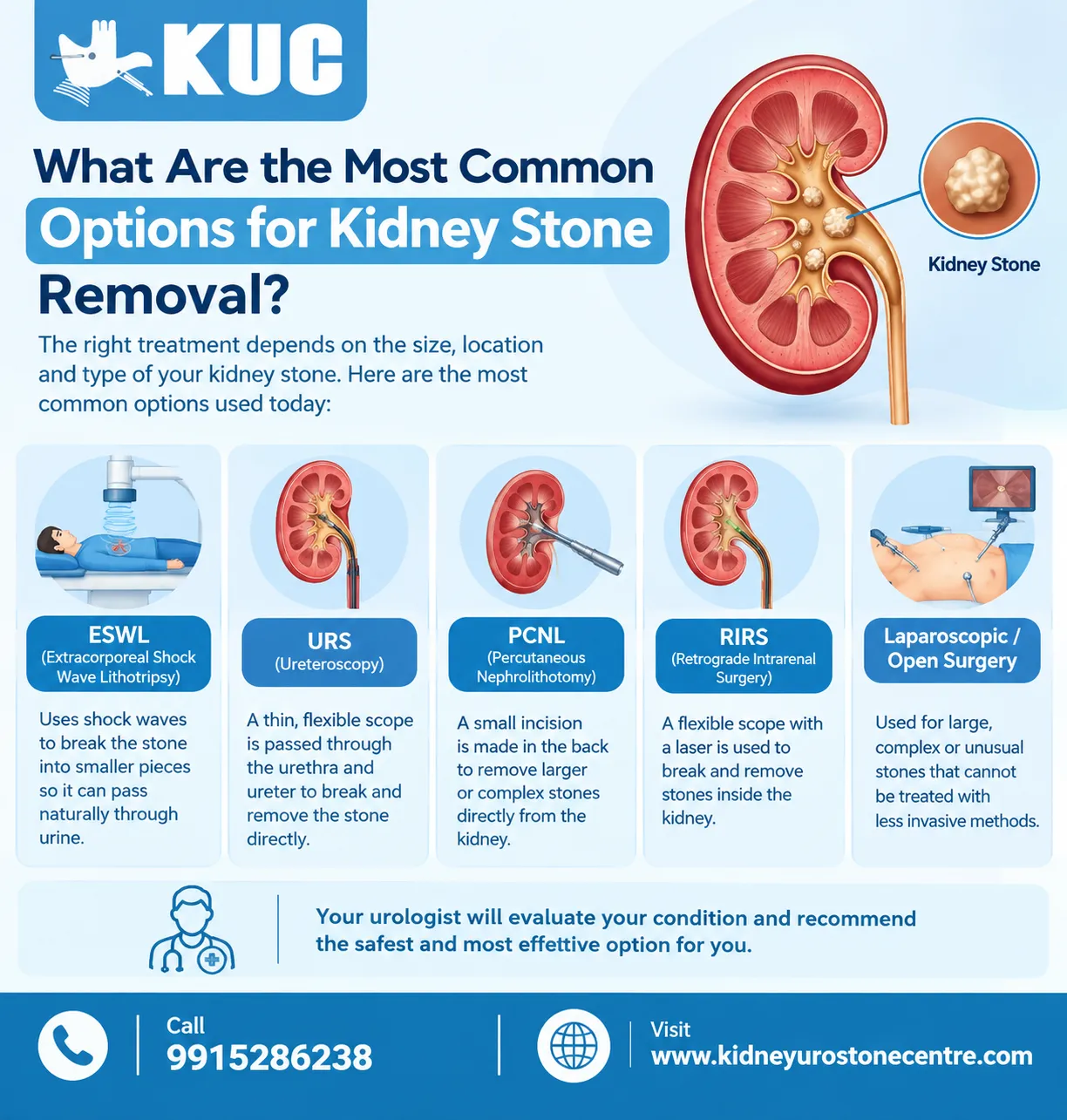

Kidney stones can range from very small crystals to larger stones that cause significant pain or urinary problems. Treatment depends on the stone’s size, location, symptoms, and whether it is blocking the flow of urine. Doctors evaluate these factors before recommending the most suitable Kidney Stone Removal option.
When Do Kidney Stones Need Treatment?
Not every kidney stone needs immediate removal. Small stones may sometimes pass naturally with medical guidance. However, treatment may be considered when a stone is large, causes persistent pain, blocks urine flow, does not pass naturally, or leads to other complications.
Common Options for Kidney Stone Removal
1. Medical Management
For some smaller stones, doctors may recommend medicines and observation to help manage symptoms and allow the stone to pass naturally. Fluid intake and medication should follow the advice given by a healthcare professional.
2. Ureteroscopy
Ureteroscopy is a minimally invasive procedure used to treat stones in the urinary tract. A thin instrument is passed through the natural urinary passage to reach the stone. The stone may then be removed or broken into smaller pieces.
3. RIRS
Retrograde Intrarenal Surgery, commonly known as RIRS, is another minimally invasive approach used for certain kidney stones. A flexible scope is guided into the kidney, allowing the doctor to locate and treat the stone, often using laser energy to break it into smaller fragments.
4. PCNL
Percutaneous Nephrolithotomy, or PCNL, may be recommended for larger or complex kidney stones. It involves creating a small access through the skin to reach and remove the stone from the kidney.
How Do Doctors Choose the Right Option?
The choice of treatment depends on several factors, including the size and location of the stone, number of stones, symptoms, urinary blockage, and the patient's overall health. Imaging tests such as ultrasound or CT scans can help doctors understand the stone and plan appropriate treatment.
Why Professional Evaluation Matters
There is no single treatment that is suitable for everyone. Proper diagnosis allows a urologist to determine whether observation, medication, or a procedure is appropriate. Choosing the right Kidney Stone Removal method can help manage the stone while considering the patient's individual needs.
If you experience severe or persistent flank pain, painful urination, vomiting, or blood in the urine, seek medical evaluation rather than delaying treatment.
Frequently Asked Questions:
What is the most common treatment for kidney stones?
Treatment varies depending on the stone. Options may include observation, medication, ureteroscopy, RIRS, or PCNL.
Can small kidney stones pass naturally?
Yes, some small stones may pass naturally. A doctor can advise whether observation and medical management are appropriate.
What is RIRS used for?
RIRS is a minimally invasive procedure that can be used to treat certain kidney stones by reaching the kidney with a flexible scope.
When is PCNL recommended?
PCNL is generally considered for larger or complex kidney stones where other approaches may not be suitable.
Is kidney stone removal always necessary?
No. Some stones can pass naturally without a procedure. The need for treatment depends on the stone and the patient's symptoms and condition.




























Sign in to leave a comment.