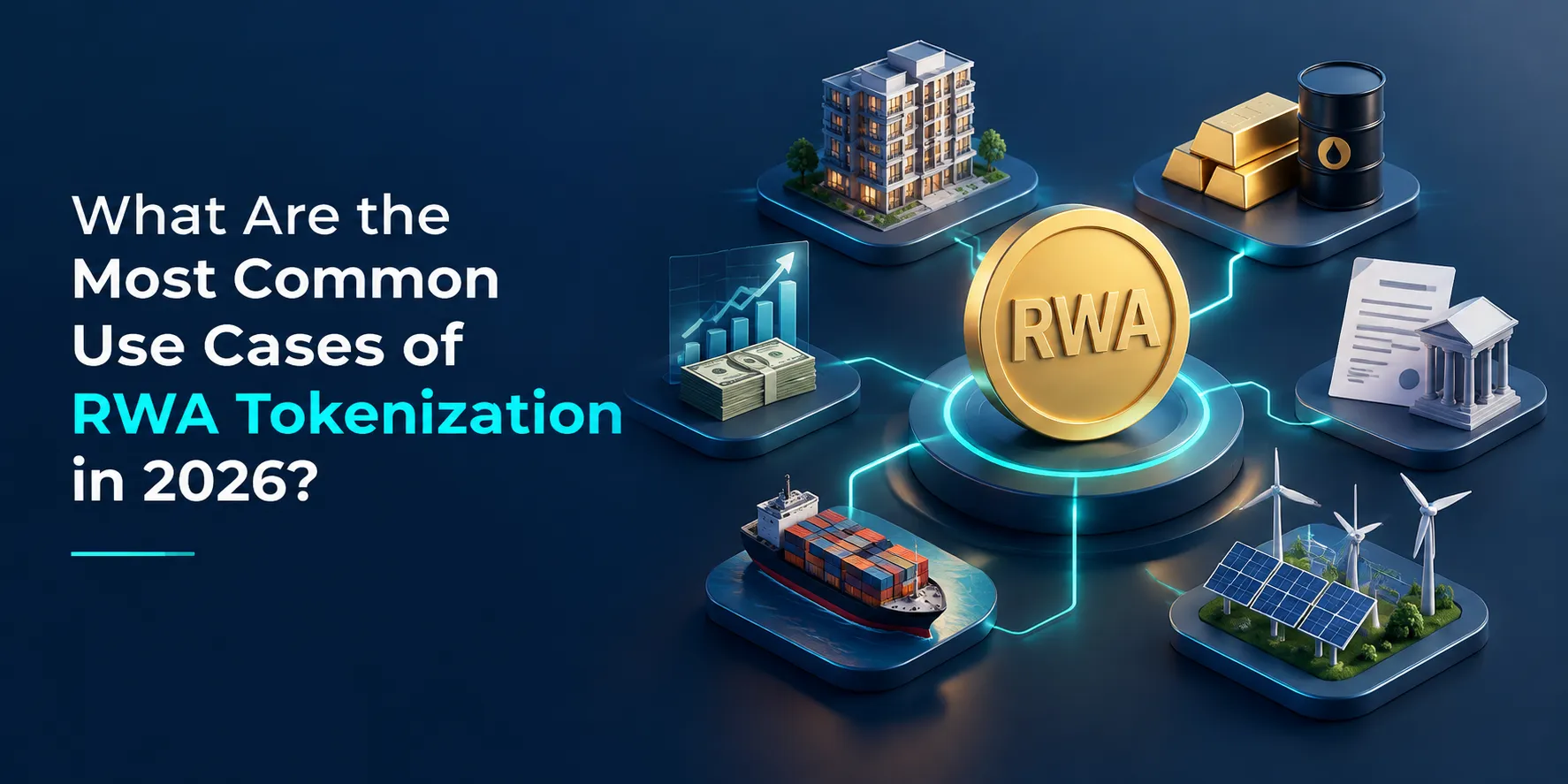

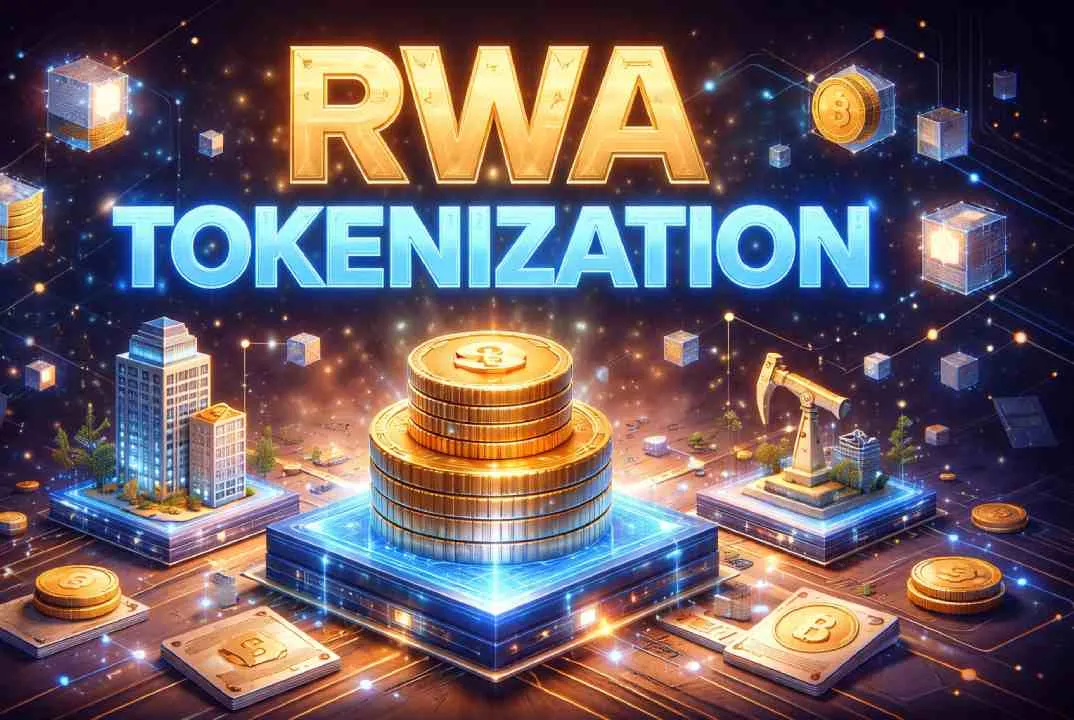
Real-world asset (RWA) tokenization has moved beyond being a blockchain experiment into an emerging infrastructure layer for financial markets. In 2026, institutions, fintech companies, asset managers, property businesses, and governments are exploring ways to represent traditional assets as blockchain-based tokens. The objective is not simply to put an asset on a blockchain. It is to create a more programmable way to issue, transfer, settle, manage, and potentially fractionalize ownership or economic rights.
The Bank for International Settlements (BIS) describes tokenization as a process that can combine information about an asset with the rules governing its transfer. This creates possibilities such as automated settlement, programmable payments, and reduced reconciliation between market participants.
The use cases emerging in 2026 are therefore broader than cryptocurrency. Government bonds, private credit, investment funds, real estate, commodities, equities, trade finance instruments, and other financial claims are becoming candidates for tokenization. Among these, tokenized securities and funds are particularly important because they combine large existing markets with clear opportunities for faster settlement and improved operational efficiency.
Understanding RWA Tokenization in 2026
RWA tokenization converts an asset or a legally enforceable claim connected to an asset into a digital token recorded on a blockchain or distributed ledger. Depending on the structure, the token may represent ownership, a beneficial interest, debt, a fund unit, a contractual claim, or another economic right.
The distinction between tokenization and simple digitization is important. Digitization creates a digital record of information. Tokenization can connect that representation with programmable ownership and transfer rules. A token can potentially trigger payments, enforce eligibility requirements, update ownership records, or support delivery-versus-payment transactions through smart contracts.
This programmable characteristic is one reason financial institutions are paying attention. BIS research notes that tokenization can integrate messaging, reconciliation, and settlement into a more unified process. It can also reduce settlement risk and enable new financial arrangements.
The market is still developing, however. Tokenization does not automatically make an underlying asset liquid, legally transferable, or safer. Legal ownership, custody, valuation, investor eligibility, taxation, compliance, and governance still need to be addressed. The Financial Stability Board and BIS have both highlighted regulatory and operational challenges alongside the potential benefits.
Why Blockchain-Based RWA Tokenization Is Expanding
Blockchain-Based RWA Tokenization and a Real-World Asset Tokenization Platform can provide the infrastructure needed to issue tokens, manage investor permissions, connect wallets, execute smart contracts, and maintain transaction records. The value becomes more significant when these capabilities connect with traditional financial infrastructure rather than operating separately from it.
One of the clearest benefits is settlement efficiency. Traditional securities transactions often involve several intermediaries and separate systems for payment, ownership records, compliance, and settlement. Tokenization can bring some of these functions onto programmable infrastructure. BIS research identifies delivery-versus-payment as a central example, where asset delivery and payment can be linked so that one occurs only when the other is satisfied.
Another benefit is fractionalization. A high-value asset can potentially be divided into smaller economic interests, allowing investors to access exposure without purchasing an entire asset. This does not guarantee liquidity or regulatory approval, but it can create new structures for distributing investment opportunities.
The growing institutional interest is also visible in government and securities markets. BIS reported that more than 20 sovereigns and supranational institutions had issued tokenized bonds by mid-2025, covering nine currencies and more than $4 billion in issuance.
1. Tokenization of Government Bonds and Treasuries
Government securities are among the most important RWA tokenization use cases because they have established legal structures, deep markets, standardized terms, and significant institutional demand.
Tokenized government bonds can represent claims on sovereign debt while using distributed ledger technology for issuance, ownership records, transfers, and settlement. Investors can potentially interact with these instruments through digital financial infrastructure rather than relying entirely on traditional settlement workflows.
The BIS reported that tokenized government bonds were still at an early stage but had already demonstrated encouraging characteristics. Its 2025 assessment noted that tokenized bonds had reached roughly $8 billion in issuance and showed lower bid-ask spreads than comparable conventional bonds while maintaining comparable issuance costs.
The use case extends beyond buying and selling. Tokenized bonds can potentially be used as collateral in programmable transactions. Interest payments can also be automated through smart contracts. This creates opportunities for faster collateral movement, automated servicing, and more efficient treasury management.
India is also becoming part of this broader movement. Recent 2026 developments include pilots involving tokenized corporate bonds and blockchain-based settlement infrastructure, demonstrating how tokenization is being tested within regulated financial markets.
2. Real Estate Tokenization
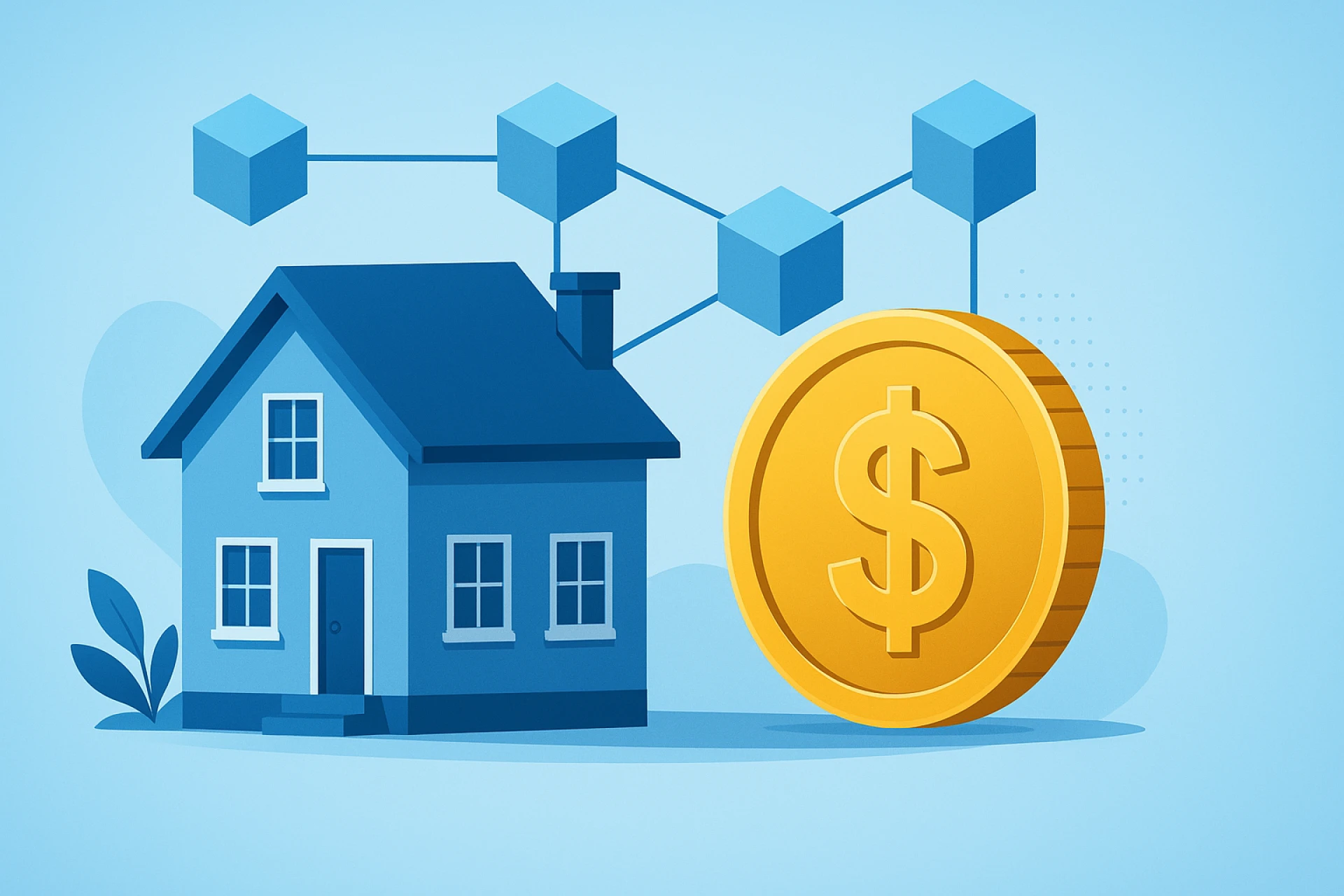
Real estate remains one of the most discussed RWA tokenization applications because property is valuable but traditionally difficult to divide and transfer efficiently.
A tokenization structure can represent an ownership interest, shares in a property-holding entity, debt secured by property, or another legally defined economic interest. Investors may then hold tokens representing smaller portions of an investment rather than acquiring an entire property.
The potential advantage is not simply fractional ownership. A properly designed system can connect property records, investor onboarding, KYC and AML checks, token issuance, distributions, and transfer restrictions. Rental income or other cash flows may also be incorporated into the investment structure.
For example, suppose a commercial property is valued at $10 million. Instead of requiring a single investor to acquire the entire economic interest, a compliant structure could divide the investment into a large number of digital units. Eligible investors could purchase those units according to the applicable securities and property laws.
The important point is that tokenization does not eliminate the legal structure behind real estate. The token must still correspond to enforceable rights. Property title, corporate ownership, investor rights, taxation, custody, and transfer restrictions remain essential.
The BIS has specifically identified real estate as an asset class that could benefit from increased liquidity and fractionalization, while also emphasizing that legal and governance issues determine how suitable particular assets are for tokenization.
3. Private Credit and Debt Instruments
Private credit is another major area for RWA tokenization because loans and credit agreements involve substantial documentation, servicing, payment schedules, and investor reporting.
Tokenized private credit can represent claims on loans or portfolios of loans. Smart contracts can help automate certain administrative functions, such as payment schedules, interest calculations, ownership records, and distribution mechanisms.
The opportunity is particularly relevant because private credit markets have expanded rapidly while remaining relatively complex and illiquid compared with public securities markets. Tokenization could help create more efficient infrastructure for distributing certain private credit products to eligible investors.
However, tokenization does not remove credit risk. A token representing a loan is still exposed to borrower default, valuation changes, restructuring, and other risks associated with the underlying credit.
Recent developments demonstrate the growing connection between tokenized money and private credit. In September 2026, Tether announced a $400 million private credit fund designed to support lending to small and mid-sized businesses, illustrating how digital-asset infrastructure is increasingly being connected with traditional credit markets.
4. Tokenized Investment Funds
Investment funds are another practical application because fund units already represent fractional interests in pools of underlying assets.
Tokenization can create blockchain-based representations of fund shares or units. Investors can potentially receive more transparent ownership records, while fund managers can automate selected processes around issuance, transfer, eligibility, and distributions.
Money market funds are receiving particular attention. In Hong Kong, the BIS Innovation Hub's Ensemble initiative moved toward real-value experimentation involving tokenized deposits and digital assets, with tokenized money market funds identified as an initial area for mature use cases.
This demonstrates an important direction for 2026: tokenization is increasingly being explored as part of regulated financial infrastructure rather than only as an alternative investment mechanism.
5. Tokenized Equities and Securities
Equities are becoming another significant RWA tokenization category. A tokenized share can provide digital representation of an equity interest while potentially enabling more efficient settlement and transfer.
The development is particularly notable because traditional financial exchanges and established market infrastructure providers are becoming involved. In September 2026, Nasdaq announced a $100 million investment in Kraken's parent company, Payward, with the collaboration focused partly on infrastructure for trading tokenized equities.
The development suggests that tokenized securities are increasingly being considered within mainstream capital-market infrastructure.
However, tokenized equities require careful attention to shareholder rights, settlement finality, custody, market surveillance, investor protection, and securities regulation. The technical ability to create a token is much easier than creating a legally recognized and widely interoperable securities market.
6. Commodities and Precious Metals
Gold, commodities, and other physical resources are also natural candidates for tokenization.
A commodity-backed token can be designed to represent ownership or a contractual claim connected to an underlying quantity of physical assets. Gold is particularly suitable for this concept because it is standardized, valuable, globally recognized, and already traded through established financial markets.
Tokenization can potentially improve transferability and create digital records for ownership and settlement. It can also make smaller investment denominations possible.
India is currently exploring this area as well. Recent discussions involving the RBI and Maharashtra government have included broader asset-tokenization frameworks and potential applications involving tangible assets such as gold.
The key challenge is maintaining a reliable connection between the digital token and the physical asset. Custody, audits, redemption rights, insurance, and verification become critical.
7. Trade Finance and Invoice Financing
Trade finance provides another compelling application because many processes still depend on documentation, intermediaries, and manual verification.
Invoices, warehouse receipts, purchase orders, bills of lading, and other trade related claims can potentially be represented through digital tokens or tokenized records. These representations could then support financing arrangements.
For example, a business waiting 60 or 90 days for an invoice payment could potentially use an eligible tokenized receivable as part of a financing structure. Lenders could evaluate verified transaction data and provide capital against the receivable.
This concept becomes particularly powerful when tokenized assets interact with programmable payments and verified business data. Recent discussions around India's emerging “Finternet” vision have specifically highlighted tokenizing invoices, agricultural receipts, and other economic assets to improve access to credit.
8. Tokenized Funds and Real-World Collateral
A broader use case is using tokenized assets as collateral. Instead of keeping ownership and collateral records across disconnected systems, a programmable platform can potentially monitor collateral status and automate selected actions.
Tokenized government bonds, funds, commodities, or other eligible assets could be pledged against loans or financing arrangements. Smart contracts can establish rules around collateral ratios, transfers, and settlement.
BIS research identifies tokenized government securities as potential collateral within a programmable financial system. It also discusses the possibility of automated collateral transfers when predefined conditions occur.
This application could become increasingly important as tokenized financial markets grow because collateral mobility is a major component of institutional liquidity.
The Main Benefits Behind These Use Cases
Although the assets differ, most RWA tokenization applications pursue a similar group of objectives.
Greater fractionalization: High-value assets can potentially be divided into smaller investment interests.
Faster settlement: Blockchain infrastructure can reduce delays between asset transfer and payment.
Programmability: Smart contracts can automate selected financial processes.
Improved recordkeeping: Shared ledgers can reduce reconciliation between participants.
Broader distribution: Eligible investors may access investment opportunities through digital platforms.
Operational efficiency: Issuance, servicing, reporting, and transfers can potentially become more automated.
BIS research supports several of these potential benefits, including improved efficiency, reduced settlement risk, broader access, and new financial services. At the same time, it cautions that many benefits remain dependent on infrastructure, regulation, governance, and market adoption.
Challenges That Could Limit RWA Tokenization Adoption
The growth of tokenization should not be confused with the disappearance of traditional financial challenges.
The first issue is legal recognition. A token must provide clearly defined rights, and those rights must be enforceable within the relevant jurisdiction. Regulatory requirements can also differ substantially between countries.
The second challenge is asset verification. Tokenizing a property does not prove that the property exists or that the issuer has the authority to represent it. Reliable custody, audits, valuation, and proof of ownership remain necessary.
Interoperability is another concern. A token issued on one platform may not automatically work with another platform, wallet, custodian, or financial market. Without common standards, tokenized markets could become fragmented.
Liquidity also requires careful consideration. Fractionalization creates smaller units, but it does not guarantee buyers. A tokenized property can remain illiquid if there is insufficient demand or no compliant secondary market.
Finally, cybersecurity and operational governance remain essential. Smart-contract vulnerabilities, compromised wallets, incorrect asset data, and poor administrative controls can create serious risks.
What the Future of RWA Tokenization Looks Like
The most important trend in 2026 is the movement from isolated token experiments toward integrated financial infrastructure.
Instead of tokenizing an asset simply to place it on a blockchain, institutions are increasingly considering how tokenized assets can interact with tokenized money, regulated custody, compliance systems, exchanges, lending platforms, and automated settlement.
This direction is consistent with the BIS vision of a tokenized financial system in which assets and money can operate on programmable infrastructure.
Real estate, government securities, private credit, funds, equities, commodities, and trade finance are likely to develop at different speeds. Assets with clear legal structures and strong institutional demand may move faster, while complex physical assets may require more work around ownership verification and governance.
The strongest RWA projects will therefore not be defined only by blockchain technology. They will be defined by the quality of their legal framework, asset verification, compliance architecture, investor protection, custody model, interoperability, and ability to create genuine economic value.
Conclusion
RWA tokenization is becoming an important part of the evolution of digital financial infrastructure in 2026. From government bonds and real estate to private credit, investment funds, commodities, equities, and trade finance, tokenization can introduce fractionalization, programmable transactions, faster settlement, and improved operational efficiency. However, successful implementation requires more than issuing tokens. Legal enforceability, compliance, custody, asset verification, liquidity, and security must work together. Businesses seeking reliable infrastructure and tailored implementation can work with Blockchain App Factory, which provides best services for RWA tokenization, helping organizations develop solutions aligned with their asset type, business model, and regulatory requirements.
FAQs
1. What is RWA tokenization?
RWA tokenization is the process of representing real-world assets or legally defined claims on blockchain-based tokens.
2. What are the most common RWA tokenization use cases in 2026?
Major use cases include government bonds, real estate, private credit, investment funds, equities, commodities, trade finance, and tokenized collateral.
3. Can real estate be divided into tokens?
Yes. A compliant legal structure can divide an economic interest in real estate into smaller tokenized units, subject to applicable property and securities regulations.
4. Does tokenization guarantee asset liquidity?
No. Tokenization can make assets easier to transfer or fractionalize, but actual liquidity depends on market demand, regulatory permissions, trading infrastructure, and investor participation.
5. Why are financial institutions interested in RWA tokenization?
Financial institutions are exploring tokenization because it can potentially improve settlement, automate processes, reduce reconciliation, support fractional ownership, and create new financial products.


















Sign in to leave a comment.