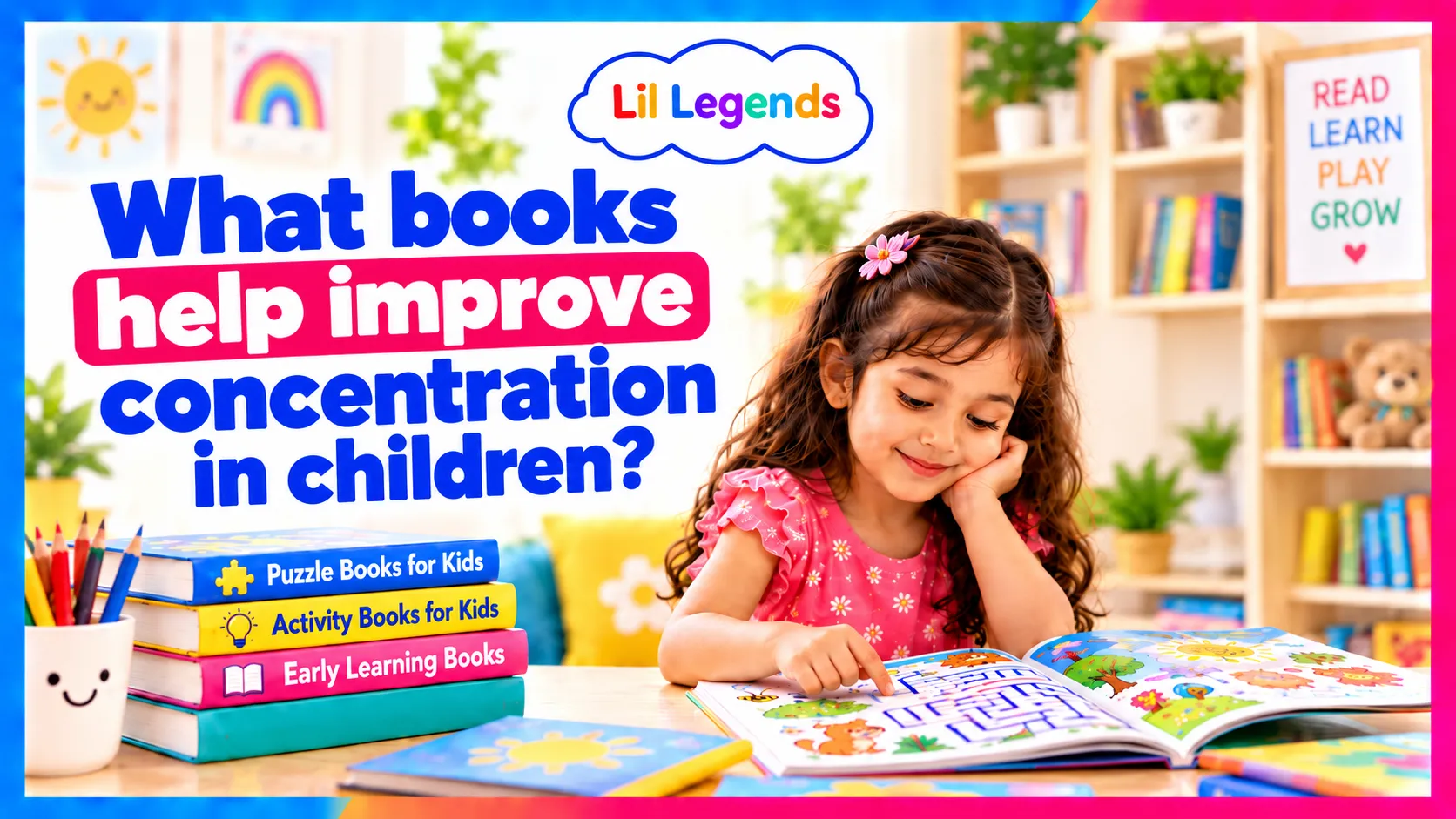

Books that require children to observe, think, solve, match, trace, remember, and complete tasks can help support concentration and attention skills. Activity books, puzzle books, word search books, tracing books, colouring books, and interactive learning books are especially useful because they encourage children to focus on one task at a time.
For parents, choosing a book that matches a child's age, interests, reading level, and attention span is more important than simply choosing a book labelled as an educational book.
Concentration develops gradually. A child does not need to sit with a book for an hour. Even 10–15 minutes of enjoyable, focused activity each day can help children practise paying attention and completing tasks.
What Types of Books Help Improve Concentration in Children?
Different books engage different skills. The best choice depends on what your child enjoys and what type of activity keeps them interested.
Here are some book types that can encourage focus and concentration:
- Puzzle books – encourage children to think, compare, and find solutions.
- Word search books – require children to scan letters and identify specific words.
- Activity books – combine different tasks such as matching, counting, mazes, and puzzles.
- Tracing books – encourage children to follow lines and patterns carefully.
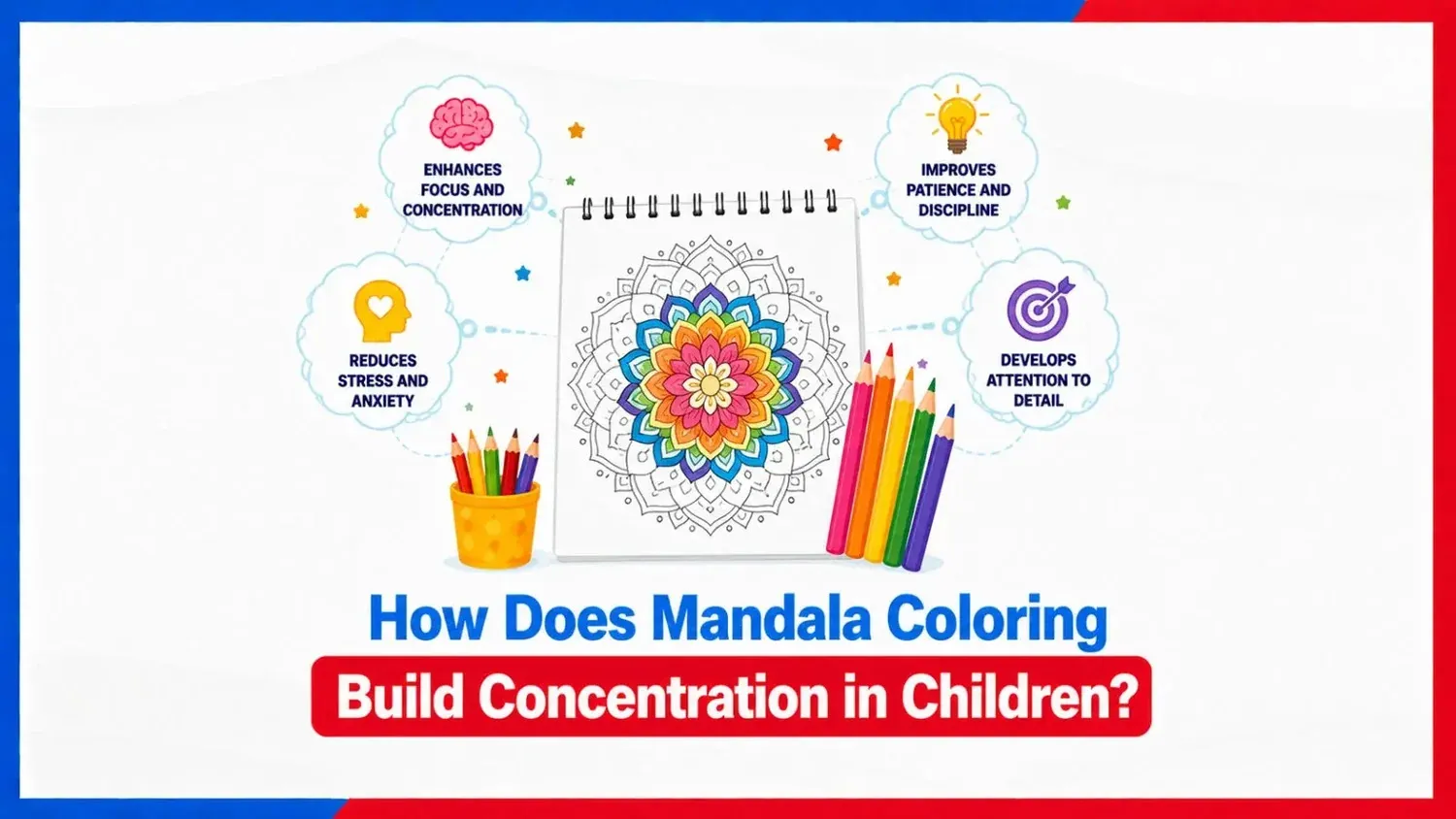
- Colouring books – help children practise staying with one creative task.
- Spot-the-difference books – encourage observation and visual attention.
- Matching activities – help children compare pictures, shapes, or objects.
- Storybooks – encourage children to listen, follow characters, remember events, and understand sequences.
- Interactive learning books – keep children involved through hands-on activities.
The most effective book is often the one that makes a child want to continue exploring.
How Do Books Help Children Improve Concentration?
Books can provide children with opportunities to practise sustained attention in a simple and enjoyable way.
For example, when a child completes a maze, they need to follow a path without losing track. When they solve a word search, they need to scan letters carefully. When they complete a colouring activity, they need to focus on the area they are working on.
These activities encourage children to:
- Focus on instructions.
- Observe details.
- Remember information.
- Follow steps.
- Complete a task.
- Correct mistakes.
- Stay engaged with an activity.
This does not mean that a particular book can instantly “fix” concentration problems. Rather, books can provide regular opportunities to practise attention-related skills.
Are Activity Books Good for Children's Concentration?
Yes. Activity books can be useful for practising concentration because they give children specific tasks to complete.
Unlike passive entertainment, many activity books require children to actively participate.
A child might have to:
- Find hidden objects
- Complete a maze
- Match two pictures
- Count objects
- Trace letters or numbers
- Solve a simple puzzle
- Find differences between pictures
- Search for words
- Complete patterns
- Colour within an area
These activities can make concentration feel like play instead of study.
For younger children, activity books can also introduce the idea of finishing one task before moving to another, which is an important habit for learning.
Which Books Are Best for a Child Who Has a Short Attention Span?
If your child finds it difficult to stay focused, start with short, simple, and visually engaging activities.
Avoid beginning with a long book containing difficult instructions.
Instead, look for books with:
- Large and clear illustrations
- Short activities
- Simple instructions
- Age-appropriate difficulty
- Familiar topics
- A variety of tasks
- Opportunities for independent participation
For example, a preschool child may enjoy a simple matching or colouring activity, while an older child may prefer word searches, puzzles, logic activities, or more challenging observation games.
The goal is to gradually increase the amount of time the child spends engaged with an activity.
Latest Blog: https://lillegendsbooks.com/blogs/kids-zone/what-books-help-improve-concentration-in-children
How Can Parents Use Books to Build a Daily Concentration Routine?
You do not need to create a complicated learning schedule.
A simple routine can work well:
Step 1: Choose a fixed time.
Pick a time when your child is usually calm and alert.
Step 2: Start small.
Begin with 10 minutes of focused activity.
Step 3: Remove distractions.
Keep televisions, unnecessary notifications, and unrelated toys away during the activity.
Step 4: Let your child choose.
Give them two or three suitable books and allow them to select one.
Step 5: Complete one activity.
Encourage your child to finish the activity before switching to another.
Step 6: Appreciate the effort.
Praise their attention and effort rather than only praising correct answers.
Over time, this can become a simple daily concentration-building habit.
Can Puzzle Books Improve Children's Focus?
Puzzle books can provide useful opportunities for children to practise focused thinking.
Depending on the child's age, puzzles may include:
- Mazes
- Matching
- Sequencing
- Pattern completion
- Simple logic questions
- Picture puzzles
- Number puzzles
- Find-and-search activities
When children solve puzzles, they often need to examine information carefully before deciding what to do.
For young learners, simple puzzles can also help develop problem-solving, visual observation, memory, and attention to detail.
Are Word Search Books Good for Concentration?
Word search activities can encourage children to pay attention to individual letters and identify patterns.
A child may need to search horizontally, vertically, or diagonally depending on the difficulty level.
This activity can encourage:
- Visual scanning
- Letter recognition
- Attention to detail
- Vocabulary development
- Persistence
- Focused observation
Choose word searches that match your child's reading ability. If the activity is too difficult, the child may become frustrated instead of enjoying the process.
Do Colouring Books Help Children Focus?
Colouring can be a simple way to encourage children to spend time on one creative activity.
Children need to decide which areas to colour, which colours to use, and how to complete the picture. Some children may also enjoy adding their own details.
Colouring should not be treated as a strict exercise where children must stay perfectly inside every line. The main goal is to encourage creative engagement and sustained attention.
For younger children, large and simple illustrations may be easier to manage. Older children may enjoy detailed colouring pages.
How Should Parents Choose Concentration-Building Books by Age?
Ages 2–3
Choose books with:
- Large pictures
- Matching activities
- Simple colouring
- Basic tracing
- Picture identification
- Very short activities
At this age, adult participation can make the experience more enjoyable.
Ages 4–5
Children can begin exploring:
- Mazes
- Pattern activities
- Simple puzzles
- Tracing
- Spot-the-difference
- Matching
- Counting activities
Ages 6–8
Older children may enjoy:
- Word searches
- More challenging puzzles
- Logic activities
- Detailed colouring
- Brain games
- Observation activities
- Reading-based challenges
Always adjust the difficulty according to the individual child rather than age alone.
How Can Storybooks Support Concentration?
Concentration is not only developed through puzzles.
Storybooks can also encourage children to listen, follow a sequence, remember characters, and understand what happens next.
While reading a story, parents can ask:
“What do you think will happen next?”
“Why did the character do that?”
“Can you remember what happened at the beginning?”
These questions encourage children to listen carefully and remember details from the story.
Short stories with engaging pictures can be especially helpful for younger children who are still developing their ability to listen for longer periods.
What Should Parents Look for in a Good Concentration Book?
When choosing a book, consider these five factors:
FactorWhat to Look ForAgeActivities suitable for the child's developmental stageDifficultyChallenging but not frustratingInterestTopics the child naturally enjoysActivity typePuzzles, searches, tracing, matching, or creative tasksDesignClear instructions and child-friendly illustrations
A book does not need to be difficult to be useful. The right level of challenge is more important than complexity.
How Can Lil Legends Books Support Learning Through Activities?
Parents looking for activity-based learning resources can explore children's books that combine learning with hands-on activities.
Lil Legends Books offers a range of children's educational books designed around different early-learning needs, including activity-based learning, colouring, tracing, puzzles, stories, and other interactive formats.
The idea is simple: children can practise important skills while enjoying activities that feel like play.
When selecting a book, parents should always consider their child's age, interests, reading ability, and preferred learning style.
Common Mistakes Parents Should Avoid
While encouraging concentration, parents should avoid turning every activity into a test.
Try not to:
- Force children to complete very long activities
- Compare their concentration with other children
- Choose books that are too difficult
- Interrupt them repeatedly while they are focused
- Correct every small mistake
- Make reading or activities feel like punishment
Instead, give children time to explore and make mistakes.
Enjoyment is an important part of building a lasting learning habit.
Frequently Asked Questions
What are the best books for improving concentration in children?
Activity books, puzzle books, word search books, tracing books, colouring books, observation books, and interactive learning books can provide children with activities that encourage focused attention.
How long should a child use a concentration-building book?
Start with around 10–15 minutes for younger children and adjust according to their age, interest, and attention span. Gradually increasing activity time can be more effective than forcing long sessions.
Can activity books improve a child's attention span?
Activity books can give children regular opportunities to practise focusing on instructions, completing tasks, observing details, and staying engaged. They are one useful part of a broader routine that supports learning and attention.
Which activities are best for children's concentration?
Mazes, puzzles, word searches, matching, tracing, spot-the-difference, pattern completion, colouring, and observation activities can encourage children to focus on a specific task.
Should I choose educational books or fun books for concentration?
Choose books that are both age-appropriate and interesting to the child. A fun activity that keeps a child engaged can provide valuable opportunities to practise concentration.
Final Thoughts
The best books for improving concentration in children are books that encourage active participation and make children want to focus.
Puzzles, word searches, activity books, tracing, colouring, observation games, and interactive stories can all provide opportunities to practise attention in different ways.
Parents do not need to make concentration practice complicated. Start with a few minutes each day, choose activities that match your child's interests, reduce distractions, and gradually introduce more challenging tasks.
Most importantly, remember that every child develops concentration at a different pace.
When learning feels enjoyable rather than forced, children are more likely to stay engaged, explore independently, and build positive habits that support learning both inside and outside the classroom.
Contact Us :
1/8 Sahitya Kunj,
M.G. Road, Agra,
Uttar Pradesh, India
Email: [email protected]
Website: https://lillegendsbooks.com


















Sign in to leave a comment.