What Construction Tools Are Essential for Drilling, Cutting, and Fastening?

At 8 a.m. on a commercial site in Pune, Rakesh had four hours before the MEP inspection. His crew needed to fix support brackets to a concrete soffit, and the job looked simple on paper. Within the first hour, a drill bit struck rebar and drifted offline. A borrowed cutting disc gave up halfway through a chase, and two anchors spun loose during the torque check. None of these construction tools was faulty, yet together they cost Rakesh his morning. With India's FY27 capital expenditure set at a record ₹12.2 lakh crore, up from ₹11.2 lakh crore the year before, sites like his have less room than ever for that kind of slip. So which tools actually earn their place, and how should they work together?
Every Strong Fixing Starts With an Honest Hole
What Drilling Into Concrete Really Demands
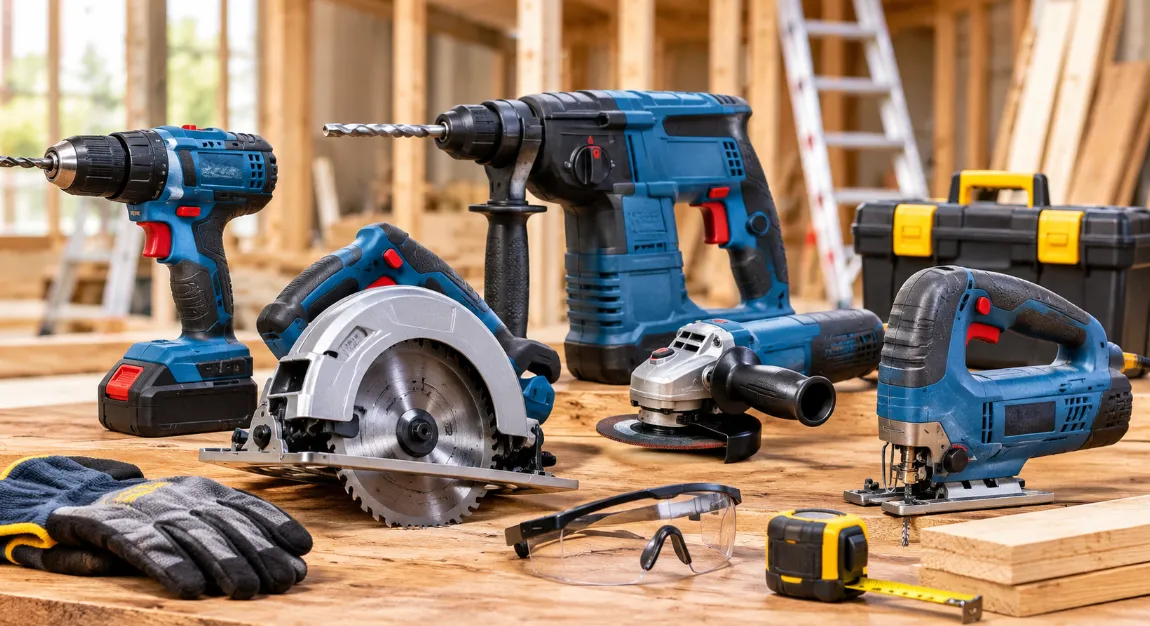
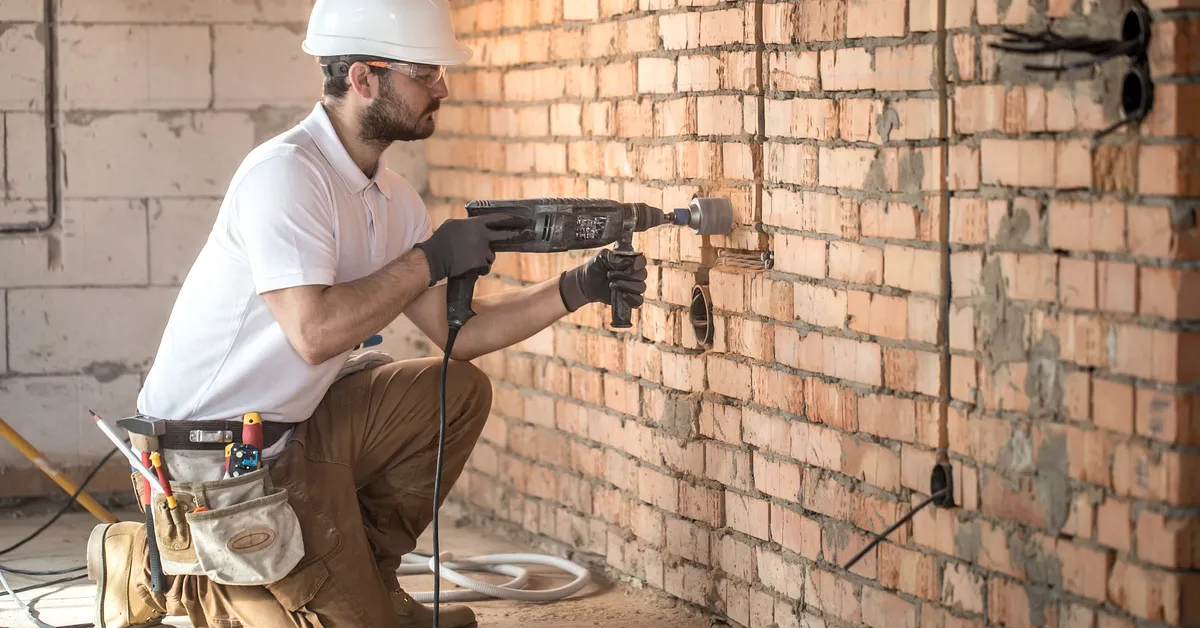
A standard drill driver only spins. That works for timber and light steel but reinforced concrete needs impact as well as rotation. A rotary hammer delivers both, chipping at the material while the bit turns. SDS plus models handle most everyday anchor holes. SDS max machines take on heavier anchoring and light demolition, when a hole must pass cleanly through a slab or wall for pipes or ducts, a diamond core drill is the better choice because it cuts the concrete instead of shattering it.
These concrete construction tools do the heavy work, but construction hand tools finish it. A depth gauge, a hole-cleaning brush, a blow-out pump and a spirit level decide whether the hole actually matches the anchor's specification.
The Dust Nobody Budgets For
Drilling into concrete always throws up dust, and that dust contains respirable crystalline silica. OSHA estimates that about 2 million construction workers in the United States drill, cut, crush or grind materials such as concrete and stone. Its standard limits exposure to 50 micrograms per cubic metre of air across an eight-hour day, and Table 1 of the standard pairs common tasks with specific dust controls. This lesson matters on every site, not just American ones. A dust shroud or extraction attachment should be part of the drilling kit from day one rather than an item left for next year's budget.
Rakesh's Retrofit Drilling Routine
Rakesh learned this on a retrofit job in an older commercial building, where chemical anchors had to hold new steel brackets, his crew now scans for rebar before marking a single hole. They match the bit diameter to the anchor manufacturer's specification, set the depth stop and clean each hole exactly as the injection mortar's instructions require, this routine adds a few minutes per hole and has removed most of his callbacks.
The hole sets the limit for every fastener that follows. Once drilling is under control, the next trouble spot on most sites is the cut.
Cutting Clean Without Creating a Second Problem
Matching the Cut to the Material
Cutting seems simple until the material starts resisting, for most concrete and masonry trimming, an angle grinder fitted with a diamond blade does the job. A wall chaser cuts twin grooves for conduits in a single pass, while a cutoff saw takes on deeper slab and kerb cuts. Electric or hydraulic rebar cutters leave clean, square ends without generating heat, these power tools for construction add speed to the job, yet hand alternatives still have a role. In tight corners, a hacksaw, bolt cutter or cold chisel offers a level of control that a spinning blade cannot match.
What the Safety Data Reveals About Cutting
Cutting concentrates the risks that drilling introduces. OSHA notes that a handheld power saw cutting concrete without dust controls can expose workers to high silica levels it estimates that more than 840,000 exposed construction workers face levels above the permissible limit. Vibration is the slower threat, grinders and saws pass it into the hands over months and years which is why it is recommended by NIOSH to redesign both jobs and tools to reduce exposure to vibrating hand tools.
Rohan Plans a Slab Opening
Both risks came together for Rohan when a client asked for a new duct opening through an existing slab. He refused to begin until the structural engineer had approved the location. His crew then scanned for rebar, picked a blade rated for reinforced concrete and used wet cutting to control the dust. On the longer cuts, Rohan rotated operators so that no one absorbed the vibration for an entire shift. The job took slightly longer than planned, but the slab, the schedule and the crew all came out of it unharmed.
A clean cut protects the structure and the person holding the tool, it also leads into the stage where every earlier shortcut finally shows.
Fastening Is Where Small Shortcuts Become Visible Failures
The Tools That Close the Loop
Fastening tools turn prepared holes into load-bearing connections. Impact drivers set screws quickly. Impact wrenches run nuts down on larger bolts, and a calibrated torque wrench applies the final, measured tightening that an anchor needs. Drop-in anchors need their matching setting tool; nail guns and powder-actuated tools fix timber, tracks and light fixtures at speed. Among all construction hand tools, the torque wrench carries unusual responsibility because it confirms what power tools only approximate.
Speed Versus Control in Fastening
Speed helps in fastening, but it costs dearly when control slips. NIOSH research found that US emergency departments treated an average of about 37,000 nail gun injuries a year between 2001 and 2005 and 87% involved puncture wounds or embedded objects. OSHA and NIOSH recommend full sequential trigger nail guns as one of the most effective ways to prevent these injuries.
Anchors teach a similar lesson. Too little torque leaves an anchor unset, and too much can crack the concrete around it. Manufacturer torque values exist to remove that guesswork.
Passing the Pull Out Test the First Time
On Rakesh's site the two loose anchors told a simple story. A crew member had drilled the holes slightly oversize using the wrong bit. Nobody had cleared the dust out and the anchors went in with an impact wrench when they needed a torque wrench, Rakesh chose to fix the process instead of blaming the worker, every fastening crew on his site now carries a calibrated torque wrench and a simple chart near the material store shows which tool goes with which fastener. A supervisor also signs off each batch of anchors before the crew moves on.
Fastening exposes every decision made earlier in the chain. That raises a bigger question about how sites buy their tools in the first place.
Building a Toolkit That Works as One System
Think in Chains, Not Individual Purchases
Many tool problems on site trace back to buying habits. A crew picks up a drill one month, a grinder the next and anchors from whoever has stock. A better approach starts from the fixing itself; the anchor specification decides the bit size, the bit decides the drill, and the anchor type decides the setting tool and torque value. Shared cordless battery platforms cut downtime further, since one charged pack keeps several machines running; tools for construction work perform best when someone has already planned how they connect, and those who plan outperform others in the business.
What Experienced Buyers Look For
Experienced procurement heads look past the price tag, they check published vibration ratings and confirm that drills and grinders accept dust extraction attachments, they also ask about service support and spare parts before they ask about discounts. Low vibration models cost more upfront, but they protect the hands of the operators you most want to keep on your crew. That is how you earn the trust of your team as well as improve your work completion time.
Rohan's Procurement Checklist by Project Type
Rohan now plans tools by project type. For a residential fit out, his crews carry an SDS plus rotary hammer, a compact grinder with extraction, an impact driver and a torque wrench. For industrial and infrastructure work, he adds SDS max machines, core drills and hydraulic rebar cutters, he rents the heaviest equipment instead of letting it sit idle between jobs. He also standardises brands across sites, so batteries, bits and accessories move wherever the work goes.
When construction tools are chosen as a set, three separate tasks become one predictable workflow. On a busy site that idea comes down to a short checklist.
Before the Next Pour, Check These
- Match bit diameter and depth to the anchor manufacturer's specification every time,
- Treat dust extraction as part of the drilling and cutting kit
- Scan for rebar before drilling or cutting existing concrete
- Keep a calibrated torque wrench with every fastening crew
- Choose full sequential trigger nail guns, especially for newer operators
- Rotate operators on high vibration tasks
- Buy tools as a compatible system not as emergency one offs.
The Strongest Structure Starts With the Smallest Hole
Drilling, cutting and fastening rarely fail on their own. They fail as a chain and the weakest link decides the result, be it an uncleaned hole, an unsuitable blade or an anchor tightened by feel. As infrastructure spending climbs through 2026, sites that keep buying tools reactively will keep paying for it in rework, delays and injuries that never needed to happen.
Rakesh's site runs differently now. The drills arrive with extraction, every cutting plan starts with a scan and the torque wrench travels with the anchors, none of it feels dramatic and that is exactly the point, if someone audited your crew's toolkit tomorrow would it read as a system or as a collection?







Sign in to leave a comment.