What Does Dog Training and Obedience Actually Teach Your Dog?

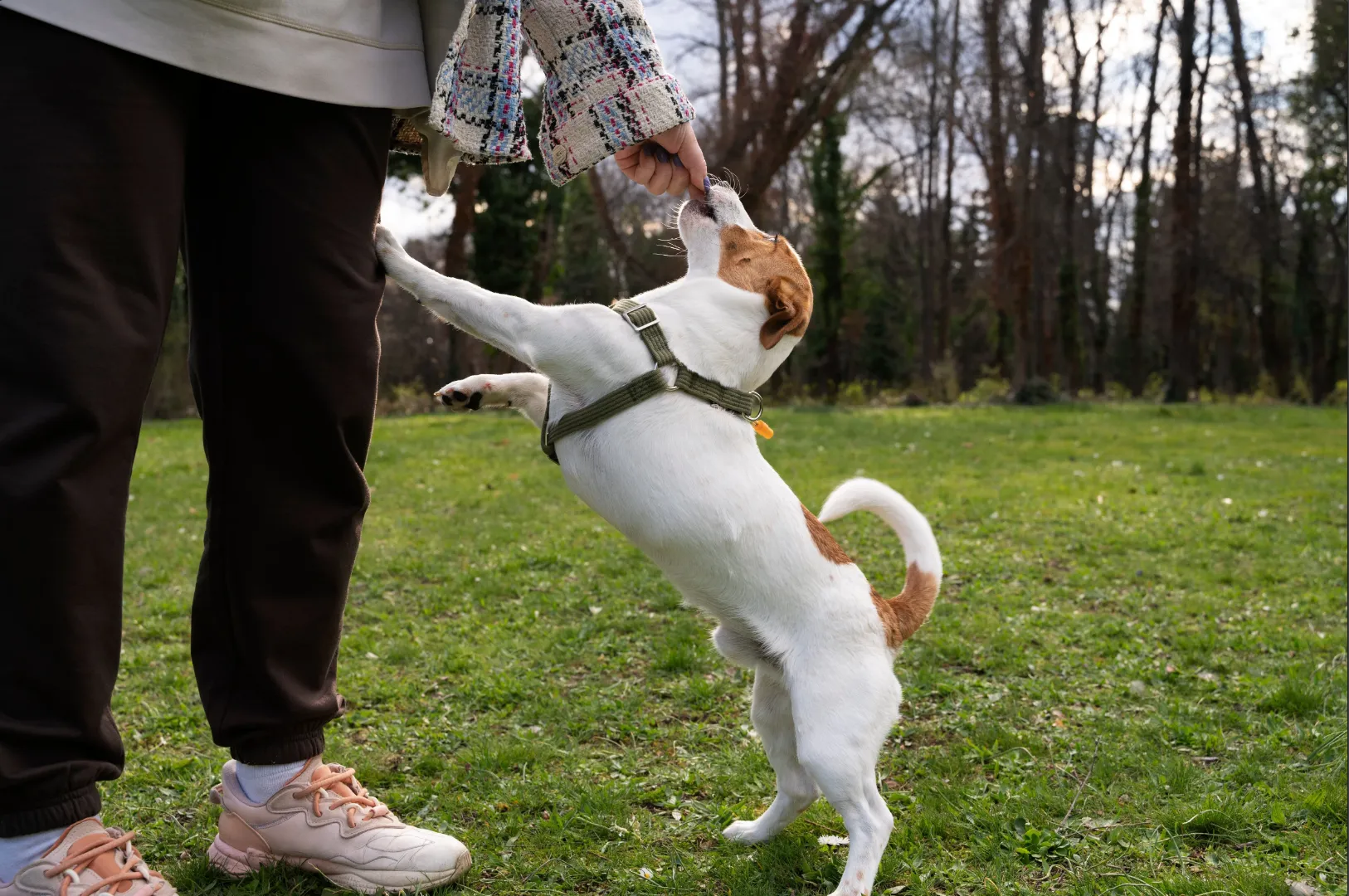
Dog Training and Obedience should teach far more than sit, stay, and come. A useful training program develops communication, household manners, leash skills, impulse control, confidence, social behavior, and the ability to remain responsive when everyday life becomes distracting. Aly’s Puppy Boot Camp builds those skills around the idea of real-life training for real-life challenges, so dogs learn while living the kind of life they will return to after training. Reliable obedience is not measured by how perfectly a dog performs in a quiet room. It is measured by whether the dog can make appropriate choices around people, other dogs, doorways, cars, visitors, food, noise, and normal family activity.
Table of Contents
- What does Dog Training and Obedience really include?
- Which obedience skills matter most in everyday life?
- Why do dogs obey at home but ignore commands around distractions?
- Is professional boot camp better than training at home?
- Why are leash manners part of obedience training?
- How does training create a calm and confident family dog?
- Can obedience prepare a dog for future service work?
- How should families maintain training after a dog comes home?
- Frequently Asked Questions
What Does Dog Training and Obedience Really Include?
Dog Training and Obedience includes communication, boundaries, leash behavior, recall, household manners, impulse control, social skills, confidence, and responses to useful cues. The goal is not simply teaching a dog to perform commands. The goal is helping that dog understand how to behave successfully while participating in normal family life.
It is easy to judge training by vocabulary. Owners proudly tell trainers that their dog knows sit, down, stay, shake, or place, yet those same owners may struggle to walk the dog past another dog or answer the front door without chaos.
That does not mean the dog learned nothing. It means knowing a cue and applying that cue around real distractions are different stages of learning.
The current training philosophy on the site centers on structure and consistency because dogs learn through patterns. When a behavior receives the same response every day, expectations become clearer. When the rules change according to who is handling the dog or how busy the family feels, the dog receives conflicting information.
Consider something as simple as a doorway. One person requires the dog to wait calmly before going outside. Another family member opens the door while the dog is jumping and pulling. Both humans are training the dog, whether they intended to or not.
The same thing happens during meals, walks, greetings, play, car rides, grooming, and quiet time.
This is why Aly’s approach describes training as something that happens during life rather than only during formal sessions. The dog is learning when breakfast is prepared, when guests arrive, when the leash goes on, and when the household becomes quiet for the evening.
A well trained dog therefore understands more than commands. The dog begins to understand patterns that make life predictable.
That is the foundation of useful obedience.
Which Obedience Skills Matter Most in Everyday Life?
The most useful obedience skills are the ones that improve safety, communication, and daily household life. Recall, loose leash walking, sit, down, place, calm greetings, waiting at boundaries, handling tolerance, and settling around distractions usually provide more practical value than teaching a long list of impressive tricks.
The American Kennel Club’s Canine Good Citizen program offers a useful example of this practical approach. Its 10 skill test looks at behaviors such as politely greeting a stranger, accepting petting, grooming tolerance, walking on a loose leash, moving through a crowd, responding to sit and down, coming when called, reacting appropriately to another dog, handling distractions, and supervised separation.
Notice how ordinary those behaviors are.
There is no spectacular trick on that list because everyday reliability is more valuable than performance.
Recall matters because a dog needs to turn away from something exciting and return to the person responsible for it. Place matters because a dog needs to settle while dinner is happening, guests are visiting, or the household becomes busy. Loose leash walking matters because walks happen repeatedly throughout the dog’s life.
The ability to do nothing also deserves more attention.
Some dogs can perform several commands but have never learned how to simply relax. They constantly look for the next activity, interaction, sound, or movement. Teaching a dog that calm behavior is part of life can make the household easier for everyone.
That is especially relevant when choosing trained family dogs. A family should look beyond whether the dog knows basic obedience and ask how the dog behaves between cues. Does the dog settle? Does it respect household boundaries? Can it walk through a new environment without becoming overwhelmed? Can normal grooming and handling happen comfortably?
Those skills tell you how the dog actually lives.
Everyday Obedience Skills Compared
| Skill | What the Dog Learns | Why It Matters in Real Life |
| Recall | Return attention and movement to the handler | Helps when distractions, doors, or unexpected situations appear |
| Loose leash walking | Move with the handler without constant pulling | Makes daily walks calmer and easier to manage |
| Place and settling | Remain in a designated area and relax | Helps during meals, visitors, work, and household activity |
| Calm greetings | Approach people without uncontrolled jumping | Creates safer, more comfortable social interactions |
| Boundary manners | Wait at doors and respect household spaces | Improves safety and impulse control |
| Handling tolerance | Accept normal grooming and body handling | Supports veterinary care, grooming, and everyday maintenance |
The strongest training foundation is not complicated. It is repeated until the dog understands how those skills apply during ordinary life.
Why Do Dogs Obey at Home but Ignore Commands Around Distractions?
Dogs struggle around distractions because learning does not automatically transfer from one environment to another. A dog that performs perfectly in a quiet kitchen still needs practice around people, dogs, traffic, smells, movement, wildlife, visitors, and unfamiliar places before the same behavior becomes reliable there.
This is one of the most common sources of frustration for owners.
“My dog knows come.”
Then someone opens the backyard gate and a squirrel appears.
Suddenly the dog that came perfectly from fifteen feet away in the living room seems to have forgotten the command.
The dog did not necessarily forget it. The difficulty changed.
Training has to progress through levels. A quiet home is easier than a backyard. A backyard is easier than a quiet sidewalk. A quiet sidewalk is easier than walking past another dog. Each environment asks the dog to filter more competing information while still listening to the handler.
Good training increases difficulty gradually.
This is where the client phrase train as we live becomes useful. Instead of separating training from normal life, ordinary environments become part of the education.
Families searching for dog training Arroyo Grande should therefore look at how training is practiced, not simply which commands appear on a program page. The site's approach describes dogs learning among people, animals, routines, noise, smells, errands, and the kinds of distractions they will encounter after training.
That transfer matters because no family lives inside a controlled training room.
The dog has to learn that “come” still means come when something interesting is happening. Loose leash walking still matters when another dog appears. Place still matters when guests arrive.
Reliable training develops when the dog can recognize a familiar expectation in changing environments.
The objective is not a dog that ignores the world completely. The dog can notice what is happening. The important skill is remaining capable of responding instead of allowing every distraction to take control.
Is Professional Boot Camp Better Than Training at Home?
Professional training and home training solve different problems. A structured boot camp provides concentrated repetition, consistent routines, professional observation, and opportunities to practice throughout the day. Home training gives owners direct involvement in the environment where the dog will eventually live. The strongest results come when professional training transfers clearly back to the household.
A dog does not learn only during a twenty minute obedience session.
That is one reason immersive training can be effective. Every transition becomes an opportunity to reinforce behavior. Walking to another area teaches leash communication. Waiting for food reinforces impulse control. Rest periods teach settling. Entering and leaving doors reinforces boundaries.
The current program explains this through daily structure and repetition. Dogs practice calm behavior, obedience, and impulse control throughout the day rather than receiving one isolated lesson.
That concentrated rhythm can help dogs understand expectations faster because the rules remain consistent.
The limitation appears when the dog returns home.
Professional trainers can establish a strong foundation, but they cannot control what happens during every future walk, meal, visitor interaction, or doorway at the owner’s house. The family eventually becomes responsible for maintaining the patterns.
Home training provides that owner practice from the beginning. The site's home training content emphasizes turning kitchens, yards, doorways, meals, walks, and everyday routines into teaching opportunities.
Neither approach removes the human component.
The best training plan is one where the owner understands what the dog has learned and how to continue it.
If the trainer teaches one set of rules and the household teaches another, dogs adapt to what works in the household.
Professional training creates momentum. Owner consistency decides whether that momentum continues.
Why Are Leash Manners Part of Obedience Training?
Leash manners are part of obedience because walking requires the dog to remain connected to a handler while the environment competes for attention. The leash provides physical management, but calm walking is learned through communication, direction, timing, and repetition. Equipment supports training. It does not replace the behavior being taught.
A leash reveals a great deal about communication between dog and human.
Does the dog constantly drag toward every smell? Does another dog immediately create pulling or barking? Can the handler change direction without turning the walk into a physical battle? Does the dog naturally check back with the person holding the leash?
Those behaviors matter because walking is one of the most repeated interactions between dogs and owners.
A dog walker leash can give the owner a secure connection during training, but the tool alone cannot teach the dog what successful walking means.
The dog learns from outcomes.
If pulling repeatedly moves the dog closer to another dog, person, or smell, pulling works. If remaining connected to the handler keeps the walk moving and provides controlled access to the environment, the dog learns a different pattern.
This is why leash training is not simply preventing pulling. It develops awareness between both ends of the leash.
For powerful dogs, reliable leash behavior also becomes an important safety skill. For family dogs, it makes regular exercise more manageable. For working dogs, it helps create the handler focus needed in more demanding environments.
Good walking does not require the dog to stare at the owner throughout the entire outing. The dog can explore and notice the environment. The goal is that environmental interest does not completely replace communication.
That is what makes a walk cooperative instead of competitive.
How Does Training Create a Calm and Confident Family Dog?
Training creates calm behavior by giving dogs predictable expectations and repeated opportunities to make successful choices. Confidence grows when a dog learns how to process normal environments, recover from uncertainty, follow guidance, and understand what behavior works. Obedience supports that process, but confidence cannot be reduced to commands alone.
Owners sometimes assume confidence means a dog should happily approach every person, animal, or environment.
That is not necessary.
A confident dog can notice something unfamiliar without immediately needing to investigate or escape it. The dog can process what happened, look to its handler, and continue functioning.
This is why socialization and obedience work together.
Socialization introduces the dog to life. Obedience gives the owner a shared language for moving through it.
A dog that has never encountered traffic, children, household noises, grooming, or unfamiliar surfaces can know several obedience commands and still become overwhelmed when the environment changes.
Likewise, a dog that has met hundreds of people but never learned impulse control may become excessively excited whenever someone approaches.
Good training creates balance.
The program repeatedly describes the desired result as a calm, confident dog, and its broader philosophy focuses on dogs learning inside real family routines rather than only performing commands in controlled sessions.
This becomes especially useful when families are choosing a dog rather than raising one from the beginning. Professionally trained dogs can offer more behavioral information because trainers have seen how the dog responds to routines, new places, grooming, leash work, social situations, and distractions.
That does not mean a trained dog arrives permanently complete.
The new household still needs to create a relationship and maintain the expectations the dog understands.
A trained dog brings a foundation.
The family builds the life around it.
Can Obedience Prepare a Dog for Future Service Work?
Yes. Strong obedience can create part of the foundation for service work because service dogs need reliable handler focus, leash behavior, settling, appropriate responses to distractions, and dependable everyday manners. Obedience alone does not make a dog a service dog. Disability related task training and individual suitability are separate requirements.
This distinction matters when families research trained service dogs for sale.
A beautifully obedient dog can still be a family companion.
Service work adds a specific job.
Before advanced training begins, however, foundational manners can tell trainers a great deal about the dog. Can the dog remain focused while people move nearby? Can it settle for extended periods? Does another dog immediately take over its attention? How does it recover when the environment changes?
The AKC notes that service dog organizations have used Canine Good Citizen skills as an early foundation when evaluating dogs for more demanding roles.
That makes sense because foundational behavior reduces the number of problems competing with advanced learning.
A dog struggling constantly with pulling, jumping, environmental fear, or an inability to settle has more foundational work to complete before specialized training becomes the priority.
The service task is another layer.
This is why owners should not treat the words “fully trained” and “service trained” as interchangeable. Ask what the dog actually knows, which behaviors have been generalized to real environments, and what specialized work has been trained.
The best service candidate is not simply the dog with the largest obedience vocabulary.
It is the individual dog whose temperament, health, stability, foundational behavior, and advanced training fit the intended role.
How Should Families Maintain Training After a Dog Comes Home?
Families maintain training by continuing the same expectations around walking, doorways, meals, visitors, settling, greetings, and household boundaries. The dog needs consistent information from every person who regularly handles it. Professional training establishes the foundation, but everyday household patterns determine whether those behaviors remain reliable.
This is where excellent professional training can either become permanent progress or slowly disappear.
Imagine a dog that has learned to wait calmly before going through the front door. At home, one person continues that routine while another family member lets the dog rush outside every morning.
Which rule applies?
From the dog's perspective, both have worked.
Consistency means making the answer clearer.
The same applies to walking. If a dog learned to walk calmly but pulling becomes successful after returning home, the walking pattern changes. If jumping starts earning attention again, jumping can return.
This does not mean families need to turn the house into a permanent obedience class.
Training should eventually feel like normal life.
Waiting at doors becomes normal. Calm walking becomes normal. Settling while the family eats becomes normal. Greeting people politely becomes normal.
That is the point.
The site's training from home content describes these ordinary moments as training opportunities because useful behavior is built through daily rhythms rather than isolated drills.
This is also where the phrase safe, sane, and civilized becomes practical rather than promotional. It describes a household where expectations are understandable to both dog and human.
A trained dog should know what the family wants.
A trained owner should know how to communicate it.
Both parts matter.
Frequently Asked Questions About Dog Training and Obedience
What is Dog Training and Obedience?
Dog Training and Obedience is the process of teaching a dog useful behaviors, communication, household expectations, leash skills, recall, impulse control, and responses to cues. Good obedience training goes beyond formal commands by helping the dog apply those skills around real distractions and during normal family routines.
What obedience commands should every dog know?
Sit, down, come, place, and basic boundary cues provide useful foundations, but command count is not the best measure of training. Loose leash walking, calm greetings, settling, recall around distractions, handling tolerance, and household manners frequently matter more during everyday life. The strongest training combines useful cues with appropriate behavior between those cues.
How long does obedience training take?
There is no single training timeline because dogs begin with different ages, temperaments, experiences, behavior histories, and learning needs. Foundational skills can begin quickly, while reliability around distractions requires continued repetition. Training also does not stop after a professional program ends. Owners continue strengthening behavior as the dog encounters new environments and situations.
Why does my dog listen at home but not outside?
Outside environments contain more competing information. Dogs, smells, traffic, people, wildlife, sounds, and movement increase the difficulty of responding. Practice the same behavior gradually in increasingly distracting environments rather than expecting a dog that performs perfectly in the kitchen to immediately show identical reliability on a busy sidewalk.
Are trained family dogs easier for first time owners?
They can provide a stronger starting point because foundational work around household routines, leash behavior, socialization, and obedience has already begun. The owner still needs to understand how those behaviors were trained and maintain the same expectations. A trained family dog reduces foundation building but does not eliminate ongoing owner responsibility.
What is the best leash for obedience training?
The best leash gives the handler secure physical control while allowing clear communication. The specific equipment matters less than the consistency of the training attached to it. Dogs learn whether pulling works, whether remaining connected keeps the walk moving, and how the handler communicates direction through repeated experiences.
Can obedience training prepare a dog for service work?
Yes. Obedience can create an important foundation by developing handler focus, leash skills, settling, recall, and reliable responses around distractions. It does not itself make a dog a service animal. Specialized service work requires additional training matched to the handler's needs and careful evaluation of the individual dog's suitability.
What Does Successful Dog Training Look Like in Real Life?
Successful training looks less like a dog performing constantly and more like a dog that understands how to live with people. The dog can walk calmly, settle while nothing interesting is happening, respond when called, respect boundaries, recover after distractions, and remain connected to the person responsible for it.
That is ultimately what Dog Training and Obedience should create.
Commands matter because they give people and dogs a shared language. Structure matters because it makes expectations predictable. Socialization matters because dogs need experience with the world they live in. Leash skills matter because movement and distractions are part of daily life.
But none of those pieces work alone.
The dog also needs a human who understands what their own behavior is teaching.
This is the human component that appears throughout Aly's approach. Training does not happen only on the dog side of the relationship. Owners establish routines, decide which behaviors receive access and attention, determine how boundaries work, and create the patterns the dog experiences every day.
A well trained dog is therefore not a dog that has memorized the largest number of commands.
It is a dog that understands the household well enough to make useful choices without constant conflict.
That is why real world practice matters more than perfect performance inside a quiet training environment. The dog needs to learn that good manners still apply when the doorbell rings, when another dog appears, when the family goes somewhere new, and when ordinary life becomes distracting.
Professional training can accelerate that learning by creating structure and repetition. Home training carries it forward. When both pieces support each other, obedience becomes part of the dog's lifestyle rather than something that appears only when someone says a command.
That is the goal: a calm, confident companion whose training makes everyday life easier for both sides of the leash.




Sign in to leave a comment.