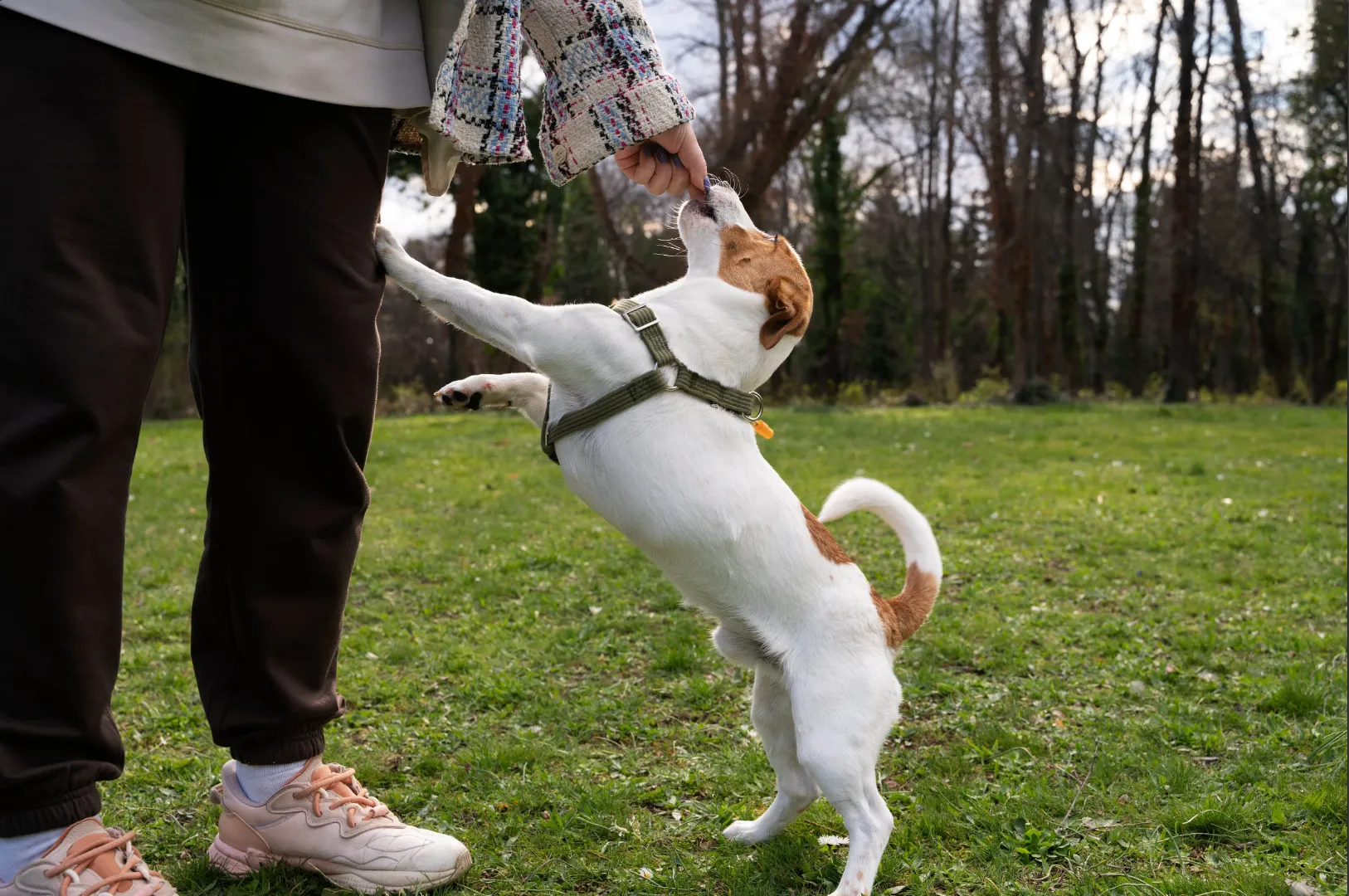

Service Dog and Therapy Dog Training should begin with the right dog, a strong behavioral foundation, and a clear understanding of the job that dog is expected to perform. Service dogs and therapy dogs can both be highly trained, but they serve different roles. Under the ADA, a service dog must be individually trained to perform work or tasks directly related to a person's disability. Therapy dogs instead work with their handlers to visit and support other people in settings such as schools, hospitals, and nursing homes. Aly’s Puppy Boot Camp approaches both paths by focusing first on temperament, real life behavior, handler communication, and the ability to remain calm and reliable around everyday distractions.
Table of Contents
- What is the difference between service dog training and therapy dog training?
- What foundation should both service and therapy dogs have?
- How do you know whether a dog has the right temperament?
- Why does real life socialization matter for working dogs?
- How important are leash manners and handler communication?
- Should you train your own dog or choose a professionally trained dog?
- What should you check when looking at trained service dogs for sale?
- How should owners maintain training after placement?
- Frequently Asked Questions
What Is the Difference Between Service Dog Training and Therapy Dog Training?
Service dog training prepares a dog to perform work or tasks for one person with a disability, while therapy dog training prepares a dog and handler team to interact appropriately with other people in approved settings. Both roles require good manners and stability, but the legal purpose, access rights, training goals, and relationship to the handler are different.
This distinction should be clear before training begins because the dog's eventual role changes what success looks like.
The ADA defines a service animal as a dog individually trained to perform work or tasks for a person with a disability. The task has to be directly related to that person's disability. Examples include retrieving items, alerting to sounds, helping during a seizure, or taking a trained action during a psychiatric event. The ADA also makes clear that professional training and certification are not required.
Therapy dogs serve another purpose. The AKC Therapy Dog Program describes therapy dogs as dogs that accompany their owners while volunteering in places such as schools, hospitals, and nursing homes. These dogs interact with other people and do not receive the same public access rights as service dogs.
That means the same foundational skill can serve different goals.
A service dog needs calm behavior around strangers because the dog must remain available to its handler rather than seeking interaction.
A therapy dog needs calm behavior around strangers because appropriate interaction with unfamiliar people is part of the job.
Both dogs need control, confidence, and stability, but the purpose of the behavior is different.
The client's working dog article makes the same distinction and emphasizes that service dogs, emotional support animals, and therapy dogs should not be treated as interchangeable roles. It also frames training as a long term process rather than a quick designation.
That is the right starting point. The label should come after the role has been defined, not before.
What Foundation Should Both Service and Therapy Dogs Have?
Both service and therapy dogs need reliable foundational behavior before specialized work becomes the priority. Useful foundations include loose leash walking, settling, household manners, basic obedience, confidence, appropriate social behavior, handling tolerance, and the ability to stay composed while ordinary distractions occur around them.
Advanced work becomes harder when the dog is still struggling with daily life.
A dog that cannot settle in a quiet restaurant will have difficulty focusing on a disability related task there. A therapy prospect that becomes frantic whenever a stranger approaches will struggle in environments where unfamiliar people are expected to interact with the dog.
That is why Aly's current working dog content emphasizes building a reliable foundation before expecting specialized performance. The program describes calm leash walking, public manners, behavior in stores and restaurants, and strong everyday obedience as part of preparing dogs for working roles.
The same concept appears throughout the Pillars of Pack Leadership material. Aly describes structure, rituals, purposeful activity, respect of space, and the human component as foundations that can support advanced roles including therapy and service work.
This does not mean every working dog must follow one identical training plan.
The foundation has to fit the dog.
A puppy beginning early development needs short, clear training experiences and appropriate exposure. An adolescent dog needs greater consistency around distractions. An adult dog being evaluated for a working role already brings a history that trainers need to understand.
The common thread is that advanced training should not be built on confusion.
The dog should understand what calm behavior feels like, how to respond to its handler, and how to function around normal activity before the job becomes more demanding.
Comparing Service Dog and Therapy Dog Training
| Training Area | Service Dog | Therapy Dog |
| Primary role | Assist one handler with disability related work or tasks | Visit and interact appropriately with other people |
| Foundational obedience | Essential | Essential |
| Calm behavior around strangers | Needed so the dog stays focused on the handler | Needed so interactions remain safe and appropriate |
| Specialized training | Disability related task training | Preparation for therapy visits and organization requirements |
| Public access | Governed by ADA requirements for qualifying service dogs | No equivalent ADA public access |
| Handler relationship | Dog works primarily for its disabled handler | Dog and handler volunteer as a team |
| Temperament priority | Stability, trainability, recovery, handler focus | Stability, friendliness, handling tolerance, social comfort |
The important lesson is that both roles start with the whole dog, not just the advanced skill.
How Do You Know Whether a Dog Has the Right Temperament?
The right working dog should show a temperament that supports the role. Look for emotional stability, recovery after surprise, manageable energy, responsiveness to people, confidence, willingness to learn, appropriate social behavior, and the ability to settle. For therapy work, genuine comfort around unfamiliar people matters. For service work, handler focus and environmental neutrality matter greatly.
Training cannot manufacture every characteristic a working dog needs.
It can develop skills, strengthen communication, and improve behavior, but it still works with the individual dog in front of you.
This is why selection matters so much.
The site's therapy dog content describes looking for puppies that are friendly, engaged, comfortable with human touch, and able to recover from unfamiliar sounds or startling events. That reflects what therapy work actually asks of the dog. The dog is expected to interact with people in varied environments without becoming overwhelmed.
Service work requires another version of stability.
The dog has to remain capable of performing trained work while the environment continues around it. People move past. Doors open. Another dog appears. Food is nearby. A child makes noise. The handler still needs the dog to remain available.
This is why anyone evaluating trained family dogs for more advanced roles should look beyond basic obedience. A calm family companion can have an excellent temperament without being suited to therapy visits or service work. Likewise, a highly social dog that loves everyone can be an excellent therapy prospect but become too interested in strangers for a particular service role.
The best temperament is therefore not universal.
It is role specific.
The dog should fit the job, the environment, and the person.
That matching philosophy is one of the strongest recurring ideas on the client site. Aly's trained dog page describes the process as finding the right dog for a person's particular season in life rather than assuming every trained dog suits every household.
Why Does Real Life Socialization Matter for Working Dogs?
Real life socialization teaches a dog how to process ordinary environments without treating every person, dog, sound, surface, or movement as something that requires a major reaction. For working dogs, socialization is less about greeting everything and more about learning how to remain calm, adaptable, and responsive to the handler.
This difference is easy to miss.
People sometimes think a socialized dog is a dog that happily approaches everyone.
That is not always useful.
A service dog needs to move through public environments without assuming every stranger is an invitation. A therapy dog needs to enjoy appropriate social interaction while still remaining responsive to its handler and capable of settling when the interaction ends.
Both need exposure, but the desired outcome is thoughtful behavior rather than excitement.
The site repeatedly describes its training environment as real family life. Dogs learn around people, animals, schedules, errands, noises, smells, visitors, and the ordinary distractions they will encounter after training. That approach is especially relevant to working dogs because their training has to survive outside a controlled session.
Families researching dog training Arroyo Grande should therefore pay attention to how a program develops behavior around real environments, not just which obedience cues appear on a curriculum.
A dog can know "down" and still become overwhelmed in a hospital lobby. It can know "heel" and still become fixated on another dog. It can know "stay" and still struggle when a stranger reaches toward it.
Socialization helps bridge that gap.
A well prepared dog learns that unfamiliar experiences can happen without taking over the entire emotional state of the dog.
That is what supports calm, confident work.
How Important Are Leash Manners and Handler Communication?
Leash manners are essential because they show whether the dog can remain connected to the handler while moving through the environment. The leash provides management, but the actual skill comes from communication. A working dog needs to understand pace, direction, boundaries, attention, and how to remain responsive when distractions compete for focus.
Walking is one of the clearest places to see whether dog and handler understand each other.
Can the dog move with the person without constant pulling? Does another dog immediately take over its attention? Can the handler change direction smoothly? Can the dog walk through a new environment without becoming frantic?
Those behaviors matter for family dogs, therapy dogs, and service dogs alike.
A good walker leash can support training by giving the handler a secure way to communicate during walks. The site's Good Walker is designed around the broader goal of improving control and communication when dogs pull, jump, or become distracted.
The tool is still only one piece.
A leash cannot decide how the dog should respond when another dog passes. It cannot teach the dog that pulling should stop producing access to whatever it wants. Those lessons come from what the human repeatedly communicates.
This connects directly to Aly's emphasis on the human component.
A working dog is not trained in isolation from the person who will eventually handle it. The dog needs skills, but the handler needs timing, understanding, and consistency.
That is especially important during placement. A dog that works beautifully with the trainer still needs to learn how the new handler communicates. The handler also needs to understand the system the dog already knows.
Both ends of the leash are part of the working team.
Should You Train Your Own Dog or Choose a Professionally Trained Dog?
Both approaches can work. Training your own dog gives you direct involvement in development and can create a strong working relationship from the beginning. Choosing a professionally trained dog provides a more established behavioral foundation and more information about the dog's abilities before placement. The right choice depends on the role, your experience, and the individual dog.
The ADA specifically states that a service dog does not have to be professionally trained. A person with a disability can train the dog themselves.
That legal freedom is important.
It does not mean every person has the time, experience, or circumstances to develop a working dog from puppyhood.
Service and therapy paths can require substantial training, careful socialization, temperament evaluation, and continued practice. Some people want to participate in every stage. Others need professional support because their health, schedule, family responsibilities, or training experience make the process difficult.
Professionally trained family dogs can also provide another starting point for people who need companionship but do not require disability related service tasks. The site's trained dog program includes family companions as well as dogs that can receive additional training for therapy, emotional support, or service roles.
The advantage is not simply convenience.
Trainers have more opportunities to observe the dog.
How does the dog respond to new environments? How quickly does it recover? How social is it? Can it settle? How does it respond to handling? Is it comfortable in the car? What happens around other dogs?
Those observations help determine whether the individual dog fits the intended person and role.
Professional training should therefore be thought of as preparation and evaluation, not just command teaching.
What Should You Check When Looking at Trained Service Dogs for Sale?
When evaluating trained service dogs for sale, ask what disability related tasks the dog performs, how reliably those tasks transfer to the intended handler, how temperament and health were evaluated, what environments the dog has worked in, and what owner training and long term support are included. Avoid relying on broad labels such as "fully trained" without understanding what the dog actually does.
This is one of the most important places to ask detailed questions.
A dog can have outstanding obedience and still not be trained for the work a particular handler needs.
The site's own working dog guidance makes this distinction clear. Service dogs need task training connected to the person's disability, excellent public manners, and the ability to perform their work reliably wherever the handler needs them.
That means families researching trained service dogs for sale should look beyond the listing title.
Ask what the dog does.
If the dog performs deep pressure therapy, under what circumstances has that behavior been trained? If the dog retrieves items, what items and in which environments? If it performs an alert or interruption task, how has reliability been established?
Then ask about the transition.
A dog's training belongs in a relationship. The dog needs to learn the new handler's communication, routine, environment, and specific needs. The handler needs to learn how the dog's behaviors were trained and how to maintain them.
Ongoing support becomes especially valuable because working dog training does not stop at placement.
The current client material repeatedly stresses support after the dog goes home, including education for the person and continued access to guidance.
That is the difference between simply purchasing training and building a working team.
How Should Owners Maintain Training After Placement?
Training after placement should continue through ordinary routines rather than relying only on formal practice sessions. Owners need to maintain the same expectations around walking, settling, greetings, public behavior, task performance, boundaries, and handler communication that the dog learned during professional preparation. Consistency helps the dog understand that the rules still apply with the new person.
This is where a good training foundation either becomes durable or begins to fade.
Dogs learn from what happens repeatedly.
If calm walking is expected during training but pulling suddenly works after placement, the dog begins learning a new rule. If strangers are ignored during service training but the new handler encourages constant greetings, the dog's public focus changes. If a therapy dog practices calm interactions but becomes overstimulated because visits are too long or poorly managed, quality can decline.
Owners therefore need to understand more than the commands.
They need to understand why the dog was taught those patterns.
For service dog teams, task maintenance matters as well. The dog should continue practicing relevant work under realistic conditions so the behavior remains reliable.
Therapy teams have their own responsibilities. The dog should continue demonstrating comfort, appropriate interaction, and manageable behavior in the settings where visits occur.
Aly's working dog article describes this as a journey rather than a destination, which fits both service and therapy work particularly well.
A dog does not graduate from learning.
Neither does the handler.
Frequently Asked Questions About Service Dog and Therapy Dog Training
What is Service Dog and Therapy Dog Training?
Service Dog and Therapy Dog Training prepares dogs for specialized working roles after foundational obedience, socialization, confidence, and handler communication are established. Service dog training adds disability related task work for one handler. Therapy dog training prepares a dog and owner team for appropriate visits and interactions with other people in approved settings.
Are therapy dogs the same as service dogs?
No. The ADA defines service dogs by their individually trained disability related work or tasks. Therapy dogs instead visit people with their handlers in settings such as schools, hospitals, and nursing homes. Therapy dogs do not receive the same ADA public access rights as service dogs.
Does a service dog need professional training?
No. The ADA does not require professional service dog training. A person with a disability can train their own dog. The dog still needs to be individually trained to perform work or tasks directly related to that person's disability and remain appropriately controlled.
What makes a good therapy dog candidate?
A strong therapy prospect should be comfortable around people, able to remain calm during handling, recover well from unexpected sounds or movement, and behave appropriately in unfamiliar environments. The individual dog should genuinely tolerate or enjoy the kind of interaction expected during therapy visits rather than merely enduring it.
Are trained family dogs suitable for therapy work?
Some can be strong candidates because good household manners, leash skills, socialization, and confidence create a useful foundation. Therapy work still requires evaluating whether the individual dog is comfortable with unfamiliar people and appropriate for the intended therapy environment. Being an excellent family dog does not automatically make a dog a therapy dog.
What should I ask when considering trained service dogs for sale?
Ask exactly which disability related tasks the dog performs, what environments it has worked in, how temperament and health were evaluated, how the dog is matched to the handler, and what transition training is provided. Also ask what ongoing support is available because maintaining the working relationship continues after placement.
Why is leash training important for working dogs?
Leash training helps the dog stay connected to the handler while moving through environments filled with people, animals, smells, sounds, and other distractions. For therapy dogs, good leash behavior supports appropriate visits. For service dogs, leash reliability helps the dog remain available to perform work while accompanying the handler.
What Does Successful Working Dog Training Look Like?
Successful working dog training produces a dog that can perform the required role while remaining stable, responsive, and manageable during real life. The dog should understand foundational manners, communicate clearly with the handler, recover from distractions, and perform specialized work without losing the behavioral foundation that supports it.
That is ultimately what separates a working dog from a dog that simply knows commands.
A service dog needs disability related tasks, but those tasks exist inside everyday life. The dog still needs to move through doors, walk through public environments, settle while the handler is occupied, and remain available when the surrounding world becomes distracting.
A therapy dog has a different job, but the same principle applies. The dog needs to interact appropriately with people while remaining calm, comfortable, and responsive to the handler.
This is why Service Dog and Therapy Dog Training should never begin with the label.
It begins with the individual dog.
Temperament matters. Health matters. The dog's ability to recover matters. Foundational training matters. The intended environment matters. The human on the other end of the leash matters.
Once those pieces are strong, specialized training has something solid to build on.
The client site repeatedly returns to this idea of matching the right dog to the right job and supporting both dog and person throughout the process. That approach is more useful than treating service or therapy status as a training package that can be added to any dog.
The strongest working teams are built when the dog's characteristics, the handler's needs, and the training goal all point in the same direction.




















Sign in to leave a comment.