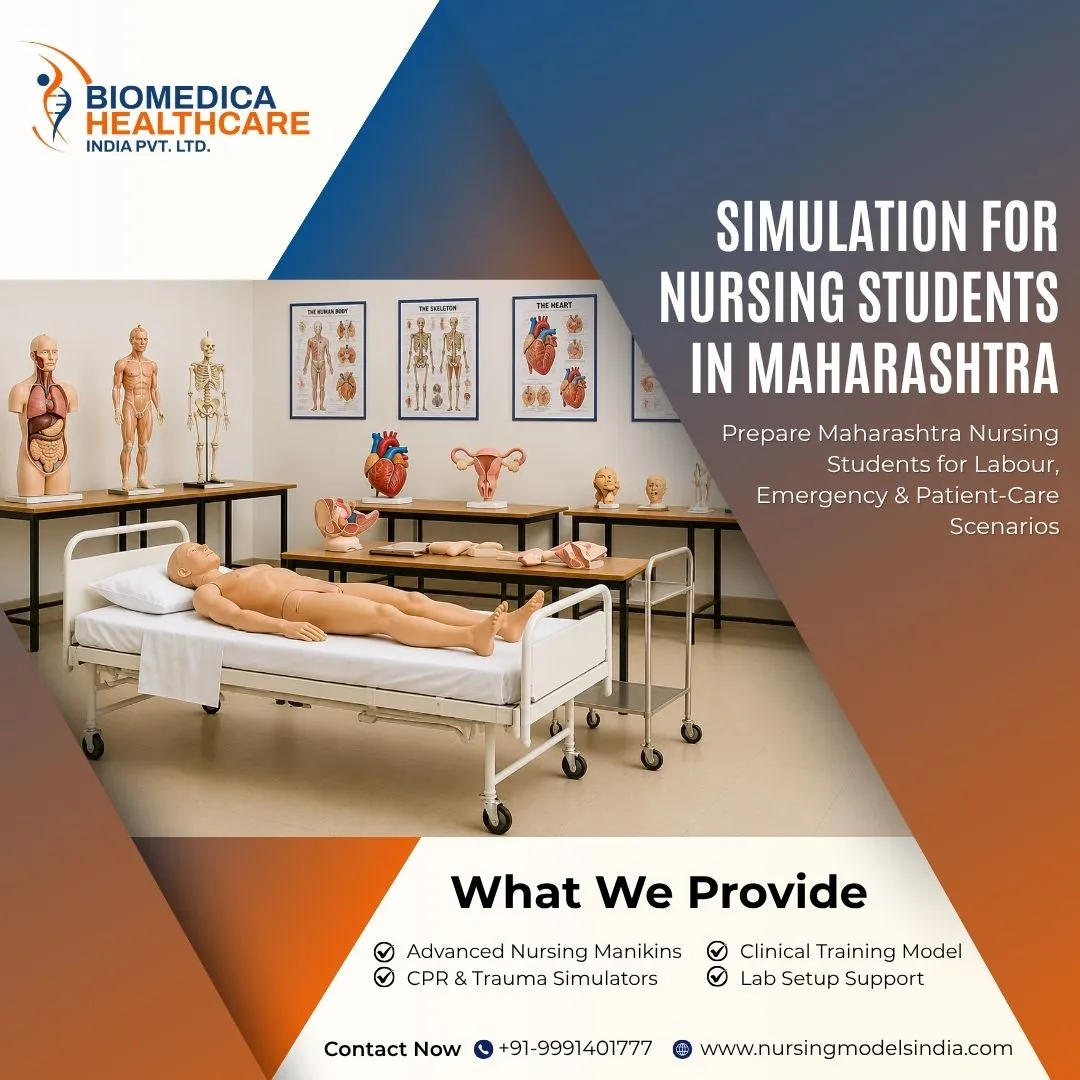

Nursing students need more than classroom knowledge to handle real clinical situations confidently. From checking vital signs to assisting during childbirth, practical training helps them understand how to provide safe and effective patient care. Simulation for Nursing Students in Maharashtra allows colleges to teach essential clinical procedures in a controlled learning environment, where students can practise before working with actual patients.
For nursing colleges in Mumbai, Pune, Nagpur, Nashik, and other parts of Maharashtra, selecting the right simulation equipment is an important part of laboratory planning. The equipment should support the college's nursing programmes, practical training requirements, student strength, and available budget.
1. Nursing Manikins for Everyday Clinical Practice
Nursing manikins are among the most important resources in a nursing simulation laboratory. They allow students to practise patient care procedures repeatedly without putting real patients at risk. A basic nursing foundation lab may require adult patient-care manikins, male and female manikins, and models designed for specific clinical procedures.
Common equipment includes:
- Adult patient-care manikins for basic nursing procedures
- Male and female catheterisation models
- Injection practice models for intramuscular and intravenous procedures
- Bed bath and personal hygiene training models
- Wound dressing and bandaging practice models
- Feeding and nursing care simulators
When choosing these products, colleges should consider their durability, ease of cleaning, anatomical accuracy, and suitability for the procedures taught in their courses.
2. CPR and Emergency Care Simulation Equipment
Emergency situations require quick decisions and correct clinical responses. Students need opportunities to practise cardiopulmonary resuscitation (CPR), first aid, and basic life support techniques. A simulation lab should include CPR manikins and other emergency training equipment appropriate to the institution's teaching objectives.
Essential items may include:
- Adult CPR training manikins
- Infant and child CPR manikins
- Automated external defibrillator (AED) trainers
- First aid training kits
- Airway management trainers
- Bag-valve-mask training equipment
These resources help students learn chest compression techniques, emergency response sequences, and basic resuscitation procedures. Instructors can observe student performance, correct mistakes, and repeat demonstrations when necessary.
3. Obstetric and Neonatal Simulation Models
Maternity and newborn care require specialised training because students must understand procedures related to pregnancy, delivery, and immediate newborn care. Colleges offering nursing programmes should assess the need for obstetric and neonatal simulation equipment based on their curriculum and practical training requirements.
Important equipment may include:
- Birthing simulators for labour and delivery demonstrations
- Pelvic models for understanding reproductive anatomy
- Foetal skull models
- Episiotomy and perineal repair trainers
- Newborn care manikins
- Neonatal resuscitation training models
These models help students understand the stages of labour, newborn assessment, and essential maternity nursing procedures. Simulation also allows instructors to explain clinical steps in a structured manner before students participate in supervised hospital training.
4. Advanced Nursing Skills and Patient Care Simulators
As students progress, they need equipment that supports more complex clinical procedures. Advanced simulation resources can help bridge the gap between basic nursing practice and the responsibilities encountered in clinical settings. Depending on the programme, colleges may consider patient care simulators, advanced injection trainers, venepuncture models, wound care trainers, and other procedure-specific equipment.
Some institutions may also benefit from simulators with features such as palpable pulses, observable chest movement, measurable vital signs, or interactive feedback. These features can support scenario-based teaching and improve the learning experience.
When evaluating Nursing Manikin Suppliers in Maharashtra, college management should check product specifications carefully. A suitable supplier should help buyers understand the differences between basic practice models and advanced simulators instead of recommending equipment that may not match the institution's actual requirements.
5. Anatomy Models and Demonstration Aids
Simulation training becomes more effective when students can connect practical procedures with their understanding of human anatomy.
Anatomical models help teachers explain body structures, organ functions, and the relationships between different systems before students practise relevant nursing procedures.
Useful demonstration aids include:
- Human skeleton models
- Brain and spinal cord models
- Heart and lung models
- Digestive and urinary system models
- Eye and ear anatomical models
- Anatomical charts and teaching diagrams
These resources are particularly useful for anatomy, physiology, and pre-clinical science teaching. Colleges can select models according to their subjects, available laboratory space, and teaching priorities.
6. Vital Signs and Patient Monitoring Equipment
Nurses must understand how to assess a patient's condition and recognise changes that may require clinical attention. For this reason, a simulation laboratory should include appropriate equipment for practising routine patient assessments. Common requirements include digital thermometers, blood pressure apparatus, stethoscopes, pulse oximeters, weighing scales, and training monitors where suitable. Students can practise measuring vital signs, recording observations, and communicating their findings under instructor supervision. Training monitors and compatible simulators can also be useful for teaching patient assessment scenarios.
Colleges should select equipment that is suitable for their intended training activities and ensure that students learn correct measurement techniques.
7. Hospital Furniture and Laboratory Essentials
Even high-quality manikins cannot provide a complete training environment without suitable furniture and supporting accessories.
A well-planned simulation lab may require hospital beds, bedside lockers, examination tables, instrument trolleys, screens, stools, and storage cabinets. Other essentials include dressing trays, kidney trays, bed linen, waste bins, and procedure-specific accessories. Colleges should also consider adequate lighting, electrical points, ventilation, cleaning arrangements, and safe equipment storage. Before purchasing furniture, management should prepare a laboratory layout that allows students and instructors to move comfortably between workstations.
8. How Can Maharashtra Colleges Choose the Right Equipment?
The right purchasing decision begins with identifying actual training needs rather than selecting products based only on price. College administrators should review the intended courses, practical sessions, student intake, available floor space, and existing equipment. They should also check applicable regulatory requirements and confirm the latest expectations with the relevant authorities.
When comparing suppliers, evaluate the following factors:
- Product suitability: Does the equipment support the required nursing procedures?
- Quality and durability: Can it withstand regular student practice?
- Demonstration and training: Are instructions or product demonstrations available?
- Installation and delivery: Can the supplier coordinate delivery and setup?
- After-sales support: Are maintenance assistance and replacement parts available?
- Budget planning: Can essential equipment be prioritised without compromising training needs?
Colleges planning a new laboratory should also consider future expansion. A practical purchasing plan can help institutions add specialised simulators later without replacing their entire initial setup.
Conclusion
A successful nursing simulation laboratory combines appropriate manikins, emergency care trainers, obstetric and neonatal models, anatomical aids, patient assessment equipment, and essential hospital furniture. The right selection depends on the college's curriculum, student intake, teaching objectives, and budget. Investing in Simulation for Nursing Students in Maharashtra can give learners more opportunities to practise clinical procedures, develop confidence, and prepare for supervised patient care. Colleges should assess their requirements carefully and work with reliable suppliers who understand nursing education needs. By consulting experienced nursing manikin suppliers in Maharashtra, institutions can plan their equipment purchases more effectively, identify suitable training models, and build a practical learning environment that supports nursing students throughout their education.


























Sign in to leave a comment.