What Factors Should You Consider When Choosing Rebar Cutting Equipment?

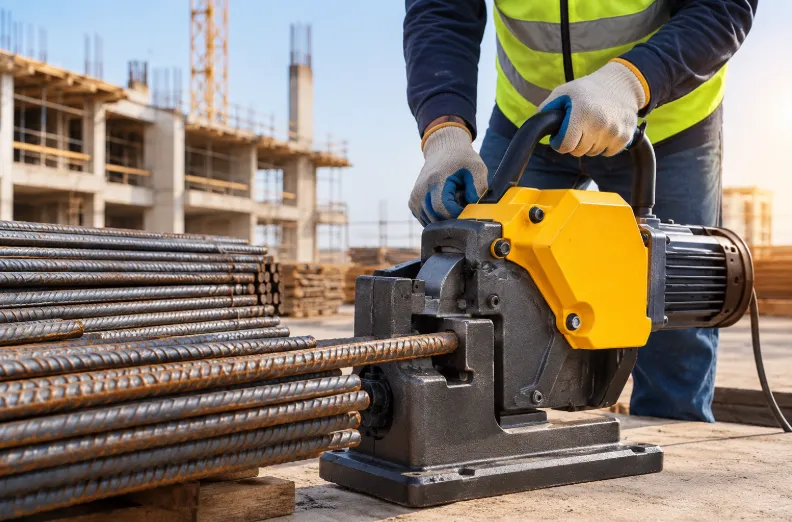
It is seven in the morning on a mid-rise site on the edge of Pune and Rakesh’s crew is standing around a stack of 25 mm bars. The angle grinder they borrowed from the next site is already on its third disc. Sparks drift toward the shuttering, the slab pour is booked for Thursday and the bar bending schedule still shows two hundred cuts to go. Rohan, the project manager, watches for a while before he asks the question every site eventually asks. Why is cutting steel slowing down the entire job?
The answer usually starts long before that morning, before many teams treat rebar cutting equipment as a minor purchase, so they paid little to no attention to it, something to sort out once the bigger decisions are made. In 2026, that habit costs more than it used to; the Union Budget has set public capital expenditure at, and India consumed finished steel in FY2025–26. More steel is moving through more sites on tighter schedules; choosing well comes down to a handful of practical questions, and they are best answered in the order a careful buyer would ask them.
The Bar Decides Before the Budget Does
Before anyone opens a catalogue, the steel itself has already narrowed the choice. Bar diameter and grade decide which machines belong on your shortlist, and they matter more than brand colour or price. This is a crucial decision because the strength of your structure depends on it.
Diameter is the obvious factor. A machine that slices through 16 mm bars with ease may stall, jam or wear out its blades quickly on 32 mm bars. Grade is the factor buyers tend to miss. Under IS 1786, the figure after “Fe” in a grade such as Fe 500D is the bar’s minimum yield stress, and the letter D marks a bar with higher elongation. Stronger steel resists the cut harder. A rebar cutting machine rated for mild steel at a given diameter will not necessarily handle a high-strength TMT bar of the same size.
There is also a gap between rated capacity and comfortable capacity. The figure on a datasheet is usually the maximum a machine can manage. Run it at that limit all day, and blades dull faster, motors run hot and cycle times creep up. Experienced buyers leave headroom.
This is why Rakesh starts with paperwork rather than products; he pulls the bar bending schedule and notes the heaviest diameter and highest grade the crew will cut regularly. Then he asks for a reinforcement bar cutting machine rated comfortably above that point. He does not plan for the average bar. He plans for the heaviest one that turns up every week.
A capacity mismatch is the most common buying mistake, and it is the most expensive to fix once the purchase order has gone out. With the steel setting the limits, the next question is where the cutting will actually happen.
Matching the Machine to the Way Your Site Moves
Rebar gets cut in two very different places. Most of it is cut in the yard, in bulk to the lengths on the schedule. The rest is cut in place where crews trim a starter bar, correct a lap or clear an opening in a cage that is already tied. These jobs call for different tools.
Stationary and bench machines suit yard fabrication where the same cut repeats hundreds of times a day. Portable hydraulic cutters cover mid-volume work and move between locations on site. Cordless models have changed in-place cutting. A crew can now trim bars at height or inside a dense cage without dragging cables or hoses behind it. Manual cutters still have a role, but only for small diameters and occasional cuts.
Spec sheets help here if you read them carefully. One leading manufacturer’s cordless rod cutter lists a cutting range. It can also trim bars from the corner of a mesh, which is exactly what a crew needs when it corrects a cage in place. Another cordless model from the same maker claims to cut a single battery at its maximum bar size. Figures like these are useful, but they come with conditions. Check which battery the test used and which bar grade. Also check whether the capacity applies to rebar or only to mild steel rod.
Rohan approaches this as a workflow question rather than a shopping question. He splits the job into yard cuts and in-place cuts and estimates the volume of each. On most mid-rise projects, the answer turns out to be two tools. A heavier machine handles the yard, and a portable rebar cutter handles corrections. That beats one compromise machine doing both jobs poorly.
The right equipment fits how your site moves; not only what your bars measure, but how the machine cuts matters just as much as where it cuts.
Clean Cuts, Cool Steel, and Steady Hands
Rebar can be sheared, sawn with a cold cutting blade, or ground through with an abrasive disc. From a distance, the results look similar. Up close, they are not.
Abrasive cutting generates heat and a shower of sparks, and it often leaves a burr or a discoloured end. That matters when bars feed into mechanical couplers or threading, where a clean, square end saves rework. Sparks also matter near timber formwork, waterproofing membranes or occupied areas of a building. Shear and cold saw cutting avoid most of these problems, which is why many site teams now prefer them for finished cuts.
Then there is the person holding the tool. NIOSH describes hand-arm vibration syndrome as a group of nerve, blood vessel and musculoskeletal disorders linked to regular use of vibrating power tools, including grinders; the damage builds slowly and can become permanent. Gloves help less than most crews assume. NIOSH testing found that vibration-reducing gloves absorbed only a fraction of the vibration from grinders and saws. The agency recommends lower-vibration machinery and shorter exposure times instead.
So the operator belongs in the specification. Compare the declared vibration and noise values on each data sheet. Pick the tool up and judge its weight, grip and balance. Look at the guarding and at how quickly a blade can be changed without improvising, Rakesh insists on a short trial with his own crew before any order goes out. The people who use rebar cutting tools for eight hours notice problems a brochure never mentions.
Cut quality and operator safety are part of the specification, not extras added later. Even the cleanest, safest machine still has to make sense on the balance sheet.
The Price Tag Is Only the First Invoice
Purchase price is the number everyone compares, and it is often the least useful one. The real cost of rebar cutting equipment shows up over months of use. It includes blades and dies, abrasive discs, batteries, hydraulic oil, servicing and, above all, downtime.
A simple way to see this is to think in cost per cut. An angle grinder is cheap to buy, but it burns through discs and every disc change stops the crew. A dedicated cutter costs more at the start, yet its consumables can last far longer. One manufacturer rates the blade on its cordless cutter for smaller bars before it needs replacing. Set that against the number of discs your crew goes through in a week, and the comparison often looks very different.
Support matters as much as the machine. Before choosing a supplier, Rohan now works through a short list. He asks whether spare parts are stocked locally and how long a repair takes. He asks whether someone will train the crew on safe use and whether genuine blades and dies are easy to buy. Finally, he checks what the warranty actually covers on a working construction site.
A cheaper machine that waits a week for a spare part is the expensive one. Once these questions are answered, the whole decision fits on a single page.
Seven Checks Before You Sign the Purchase Order
- Note the largest bar diameter and highest grade you cut regularly
- Choose a machine rated comfortably above your heaviest routine cut
- Treat yard cutting and in place cutting as separate needs
- Prefer shear or cold cutting where heat, sparks or end quality matter
- Compare declared vibration and noise values across datasheets
- Work out cost per cut not just purchase price
- Confirm spares, service and training support close to your site
Every Clean Cut Is a Decision Made Months Earlier
By Thursday, Rakesh’s crew had a dedicated cutter in the yard and a cordless unit for corrections. The pour went ahead on time. Nobody celebrated the cutting, and that was the point. Good equipment disappears into the rhythm of the work.
Cutting looks like a small step, but it sets the pace for everything that follows, from fixing and inspection to the pour and the handover. As infrastructure spending grows and stronger steel grades become routine, makeshift cutting stops being a minor inconvenience; it becomes a schedule risk and a quality risk. Over time, it becomes a health risk for the people doing the work.
The decision that keeps a slab on schedule is rarely made on the day of the pour. Someone makes it months earlier by reading a bar schedule carefully and asking what the steel actually needs. If your next pour depended on a single tool this week, would you trust the one you have?






Sign in to leave a comment.