

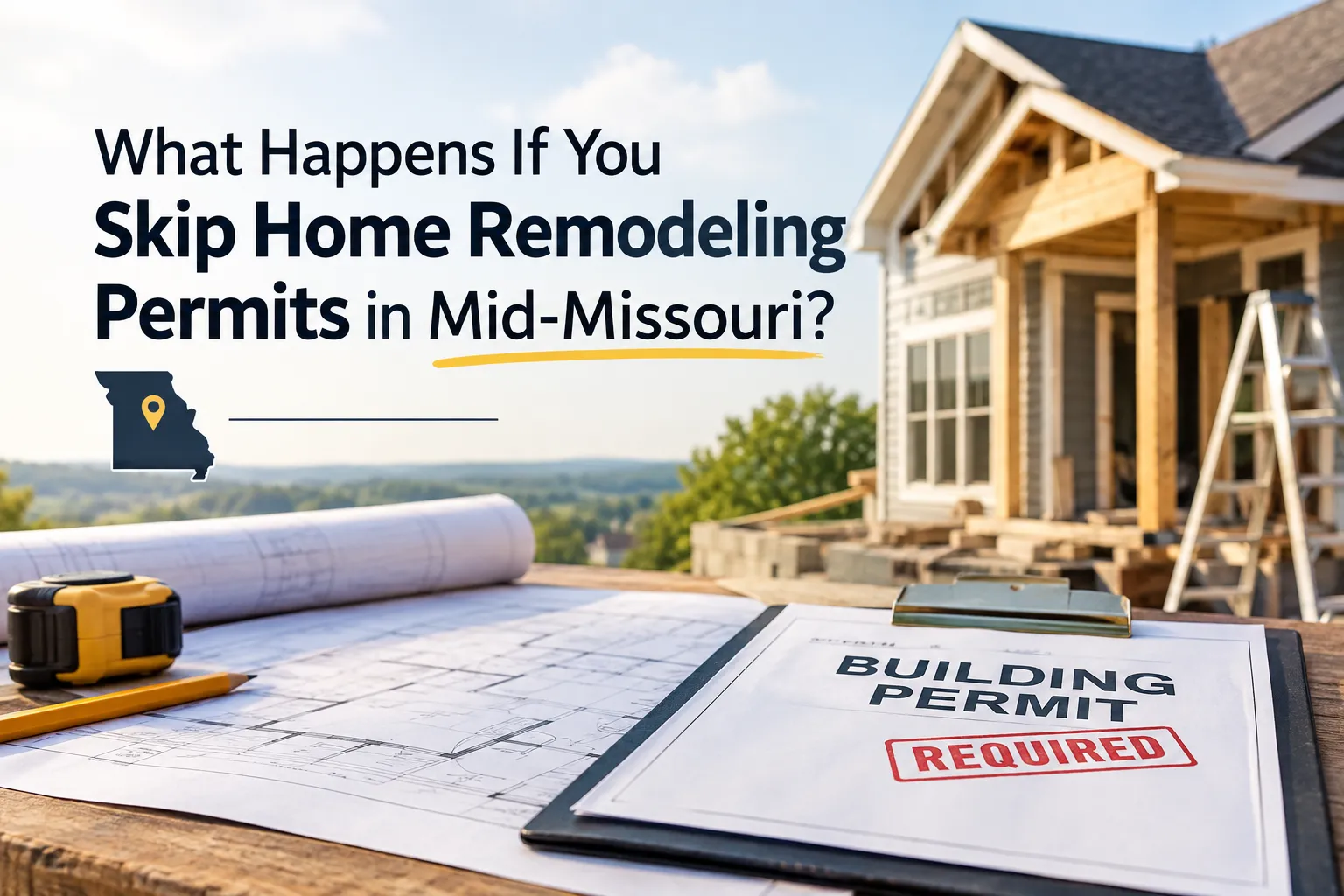
If you skip home remodeling permits where they're required, you risk stop-work orders, fines, paying to open finished walls for inspection, trouble with an insurance claim tied to the unpermitted work, and a harder sale when a buyer's inspector or lender asks for records. In Mid-Missouri the rules depend on where the house sits, because cities like Jefferson City and Columbia run their own building departments, while some rural areas regulate far less. Check what home remodeling permits your city or county requires before work starts, not after.
Key takeaways
- Missouri leaves building codes to cities and counties, so requirements for home remodeling permits change from one town to the next.
- Structural, electrical, plumbing, HVAC and addition work usually needs building permits where a code is in force.
- Cosmetic updates like paint, flooring and cabinet swaps usually don't.
- Unpermitted work tends to come back up at sale time, or when something goes wrong.
Why the rules vary so much around Mid-Missouri
Missouri doesn't have a single statewide residential building code. Each city or county decides whether to adopt one, and which edition. That's why a homeowner in Columbia and one outside Tipton or Jamestown can get very different answers to the same question.
A few practical points follow from that:
- Inside city limits, expect a building department, a permit application and inspections.
- In unincorporated areas, the county may handle permits, or there may be no residential building permit at all.
- Even with no building code, other approvals can still apply, such as zoning setbacks, floodplain rules, septic work and utility connections.
The only reliable answer comes from the local office that covers your address.
What usually needs building permits
Where a code is in force, building permits are typically required for:
- Moving or removing walls, especially load-bearing ones
- New electrical circuits, panel upgrades or rewiring
- Relocating plumbing, adding a bathroom or replacing a water heater
- Replacing or adding HVAC equipment or ductwork
- Finishing a basement into living space
- Decks, porches and anything that changes the home's footprint
- Window or door openings cut into exterior walls
Projects that usually don't need home remodeling permits include painting, flooring, new countertops, cabinet replacement in the same layout, and swapping a light fixture or faucet in place. Local rules can still differ, so confirm.
The real costs of skipping a permit
Fines and stop-work orders
If an inspector learns about unpermitted work in progress, they can halt the job. You may then pay permit fees, possible penalties and the cost of fixing anything that doesn't meet code.
Opening finished work
Inspectors need to see framing, wiring and plumbing before drywall covers it. If the work was closed up without inspection, you may have to cut open walls or ceilings so they can look, then pay to repair them.
Insurance problems
If a fire, leak or collapse traces back to unpermitted work, your insurer may look closely at that work when handling the claim. Policies differ, so ask your agent how yours treats unpermitted improvements.
Resale headaches
Buyers' inspectors often spot added rooms or basement bedrooms that don't match county records. Appraisers may not count unpermitted square footage, and some buyers will walk away or ask for a lower price. Getting a permit after the fact is often possible, but it usually costs more and takes longer than doing it up front.
How a home addition permit is different
A home addition permit usually asks for more than a remodel permit, because the project changes the size and footprint of the house. Expect to provide some or all of the following:
- A site plan showing the addition and its distance from property lines
- Construction drawings covering the foundation, framing and roof
- Zoning review for setbacks, height and lot coverage
- Floodplain review if the lot is near a river or creek, including parts of the Missouri River and Osage River areas
- Septic review if more bedrooms add load to an existing system
Inspections also come in stages: footings, foundation, framing, rough electrical and plumbing, insulation and final. Plan your schedule around those visits.
Who pulls the permit?
In most cases your contractor pulls home remodeling permits and schedules inspections, but ask directly before you sign. If you pull a homeowner permit yourself, you may be taking on responsibility for the work meeting code.
Before work starts, ask your contractor:
- Will you obtain all required permits, and is the fee in the quote?
- Which inspections does this project need?
- Will I get copies of the approved permit and final inspection?
Keep those records with your house documents. They'll matter when you sell.
FAQs
Do I need a permit to remodel a bathroom in Missouri?
It depends on your city or county. Moving plumbing or adding circuits usually needs one where a code is in force. Replacing fixtures in place often doesn't.
Can I get a permit after the work is done?
Often, yes. Expect inspection, possible wall openings and corrections before approval.
Does Missouri have a statewide building code for homes?
No. Cities and counties adopt their own codes, so check with your local office.
How long does a home addition permit take?
It varies by jurisdiction and workload. Additions take longer than simple remodels because they need plan and zoning review.
What happens if I buy a house with unpermitted work?
You inherit it. Ask the seller for permit records and have an inspector look at any additions or finished basements.





















Sign in to leave a comment.