

Every harvest leaves something behind. Husks, stalks, shells, sawdust, and other plant residues pile up faster than most operations know what to do with. Some of it gets burned in the field, some gets dumped, and some sits and rots. None of these are particularly good outcomes, open burning creates smoke and wastes a material that still holds energy, while dumping just shifts the problem to a corner of the yard.
The trouble with loose biomass isn't that it lacks value. It's that its physical form makes it awkward to handle. Husk and straw are bulky, inconsistent in shape, and low in density, which means transporting or storing them takes up far more space and cost than the material itself is worth. This is the practical problem that briquetting is meant to solve.
Compressing Waste Into a Usable Shape
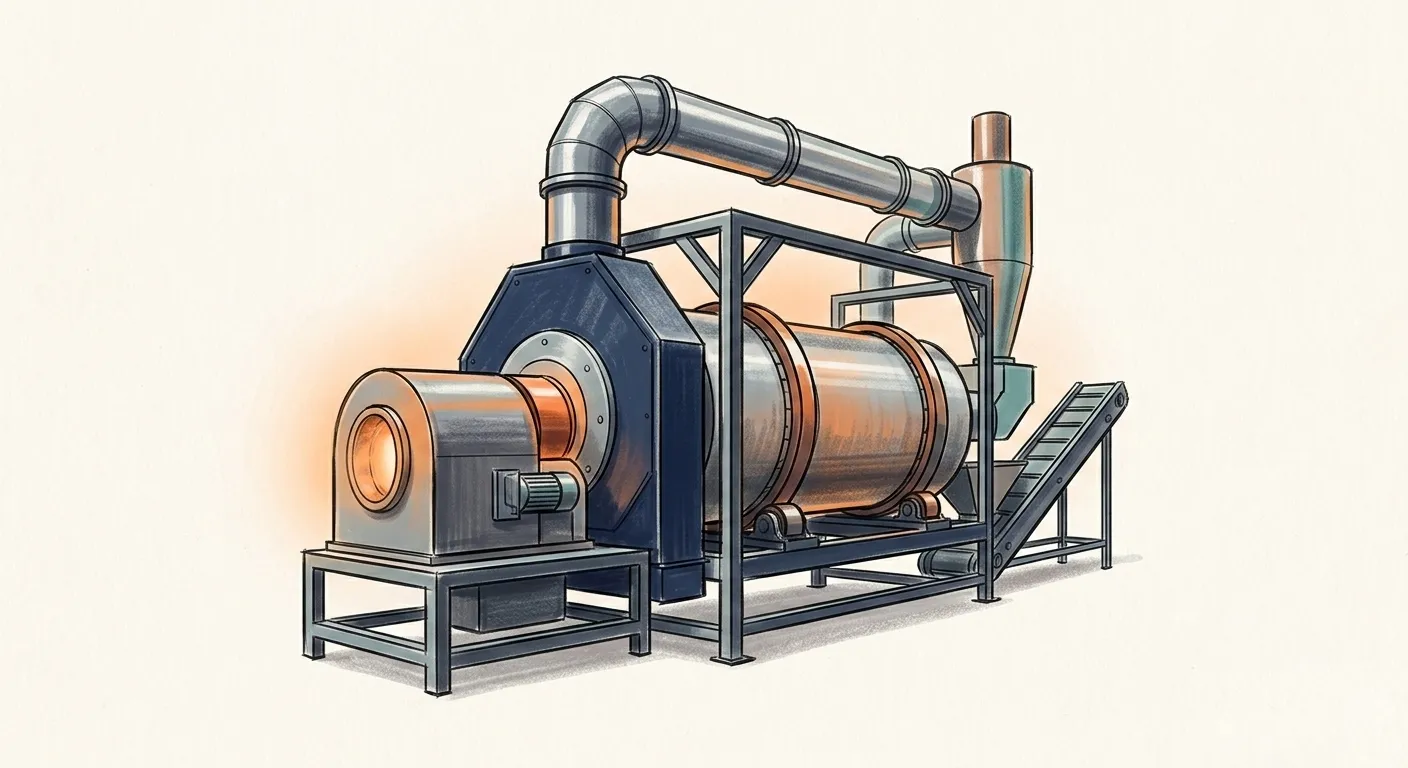
A biomass extrusion briquette machine takes this loose material, agricultural residues, forestry waste, or other organic by-products, and compresses it under high pressure into briquettes of a consistent shape and size. The process combines pressure and temperature, and as the material passes through the extrusion screw, the natural lignin in the biomass softens enough to bind the particles together without needing an external adhesive.
What comes out the other end is a solid, energy-dense block that behaves nothing like the loose material it started as. Instead of a tonne of husk that fills several times its equivalent volume in solid fuel, an operation ends up with briquettes that stack, store, and move the way a conventional fuel would.
Why the Shape Change Actually Matters
It's easy to treat briquetting as a cosmetic step, but the shape is really the whole point. Loose biomass is difficult to feed consistently into a furnace or boiler, it absorbs moisture unevenly, and it takes up storage space that most facilities don't have to spare. A uniform briquette solves each of these problems at once, it's easier to feed, easier to stack, and easier to protect from moisture during storage.
The size of the briquette can be adjusted depending on what it's being used for, which matters because a fuel destined for a large industrial furnace has different handling needs than one meant for smaller-scale use. Machines built for this process are generally designed to work with more than one type of feedstock, since operations rarely have access to a single uniform waste stream throughout the year.
Where Briquettes Get Used
The resulting briquettes are used mainly as a fuel source, but that's not the only application. Beyond direct combustion for heat or energy generation, briquetted biomass shows up in waste management programmes, as bedding material for animals, as a soil improvement input, and in some cases as a substitute for charcoal. Some operations also route it into broader biomass supply chains rather than using it on-site. The variety of uses reflects the fact that the underlying problem, what to do with awkward, low-density organic waste, comes up across quite different industries.
Fuel Comparisons Worth Understanding Carefully
Biomass briquettes are often discussed alongside coal, and there are reasonable grounds for that comparison. They're generally presented as a more cost-effective option than coal, and because they're made from organic residue rather than a fossil fuel, they're positioned as a greener alternative. Combustion is also described as more consistent than some conventional fuels, which matters for anyone trying to maintain a steady heat output.
That said, these are the kinds of claims that deserve a bit of caution rather than blanket acceptance. Actual cost and environmental performance depend heavily on the feedstock used, the equipment's efficiency, and local fuel pricing, so it's worth treating broad comparisons as a starting point for further investigation rather than a guarantee that applies to every setup.
What to Think About Before Choosing a Machine
Anyone evaluating this kind of equipment is really weighing a few practical factors: what feedstock is actually available on-site, how much output capacity is needed, how automated the controls should be, and how much space the unit itself will occupy. A compact design with automated controls reduces the amount of manual oversight required, but the right configuration still depends on the scale and consistency of the waste stream feeding into it. Maintenance requirements are also worth checking upfront, since ease of upkeep affects long-term running costs more than the purchase price often suggests.
Turning a Waste Stream Into a Managed Resource
For businesses already generating agricultural or forestry residue, extrusion briquetting is less about adopting a new technology and more about giving an existing waste stream a usable form. Kerone Engineering Solutions Ltd., which works across biomass processing and related sustainable energy technologies, offers a biomass extrusion briquette machine designed around this kind of feedstock conversion, built to handle varied organic inputs and produce consistently sized output.
The bigger question for most operations isn't whether briquetting works, it's whether their own waste stream is steady and large enough to make the investment worthwhile. Is that something worth mapping out before deciding on equipment?
Frequently Asked Questions
1. What is a biomass extrusion briquette machine?
A biomass extrusion briquette machine converts suitable biomass materials such as agricultural residues, forestry waste and other organic by-products into compact briquettes. The process uses pressure and temperature to produce a more consistent shape and size.
2. What types of biomass can be used for briquetting?
Suitable feedstocks can include agricultural residues, forestry residues and various types of organic waste. The suitability of a particular material depends on its characteristics and the intended application.
3. Why is loose biomass converted into briquettes?
Loose biomass can be bulky and difficult to handle, transport and store. Briquetting changes it into a compact, consistent form that can be more convenient for storage, movement and use.
4. What are biomass briquettes commonly used for?
Biomass briquettes can be used for fuel production and energy generation, as well as applications such as waste management, animal bedding, soil improvement, charcoal replacement and biomass supply chains.
5. Can the size of biomass briquettes be adjusted?
Yes. Adjustable briquette size is listed among the features of the Biomass Extrusion Briquette Machine. The required size can depend on how the finished briquettes will be handled or used.
6. Are biomass briquettes only used as a fuel?
No. Although fuel production is an important application, the supplied product information also identifies animal bedding, soil improvement, waste management, charcoal replacement and other applications.
7. What should be considered before selecting a briquetting machine?
The available feedstock, required output capacity, briquette size, level of automation, equipment footprint and maintenance requirements are important considerations. The machine should be evaluated in relation to the material being processed and its intended use.
8. How does a biomass briquette machine fit into a biomass processing system?
Briquetting can serve as a conversion stage in which loose agricultural, forestry or organic residues are transformed into a compact solid product. The resulting briquettes can then be stored, transported or directed toward their intended application.






















Sign in to leave a comment.