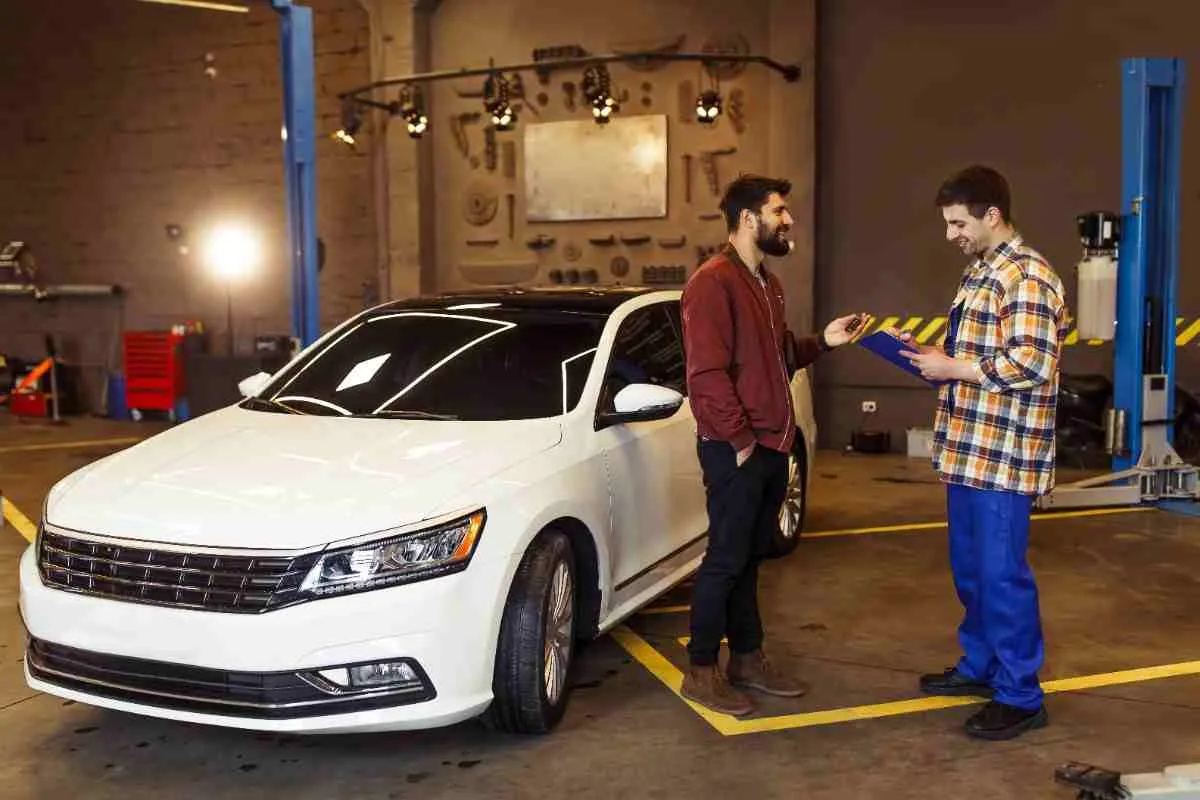

If your Tesla has been in a collision, it's natural to worry about where you can safely take it for repair. In 2026, many Tesla owners still assume that stepping outside the dealer network puts their warranty at risk.
The truth is more specific than that. Understanding it can help you choose a Tesla-certified body shop for the right reasons. Those reasons are safety and repair quality, not fear of losing coverage you're already entitled to.
The short answer: federal law protects your warranty
Under U.S. federal law, a manufacturer cannot void your entire vehicle warranty simply because you chose an independent repair shop. This protection comes from the Magnuson-Moss Warranty Act, which applies to Tesla the same as any other automaker.
"Companies can't void a consumer's warranty or deny warranty coverage solely because the consumer uses a part made by someone else or gets someone not authorized by the company to perform service on the product." — Federal Trade Commission, 2019
That means Tesla cannot cancel your entire warranty just because a collision repair happened at a non-Tesla facility. That includes your Basic Vehicle Limited Warranty. It also includes your Battery and Drive Unit warranty, which currently runs 8 years and between 100,000 and 150,000 miles depending on the model.
What actually happens when you skip a Tesla-certified body shop
The federal protection above has an important limit. Tesla's own warranty terms state that the company is not responsible for problems caused by improper repair or maintenance performed by a third party.
In practice, your broader warranty stays intact. Tesla can still decline to cover one specific issue if it can show that issue was caused by substandard repair work. That might include a component that fails because it was installed or bonded incorrectly.
This is why the real conversation isn't about whether your warranty disappears. It's about whether the shop doing the work has the training and equipment to avoid creating a problem in the first place. That matters most around the battery pack, structural adhesives, and safety sensors that make up a modern Tesla.
What "Tesla-approved" actually means
A Tesla-approved collision center isn't just a shop that says it can handle EVs. It has to meet documented training and equipment standards set by Tesla and verified through I-CAR.
"Each Tesla Approved Collision Center in Wurtsboro NY, facility that performs structural repairs must have two technicians certified in each welding course, covering both Aluminum GMA (MIG) Welding and Steel GMA Welding. Welding certifications must be renewed every three years." — I-CAR, Tesla Network Programs
That level of structured, renewable training is what separates an approved facility from a general auto body shop that simply accepts EV work. It also explains why not every shop that advertises "EV-friendly" service actually holds current Tesla certification.
The real risks of an uncertified repair
Tesla vehicles use aluminum body panels and structural adhesives instead of some traditional welds. They also rely on a network of cameras and sensors that support Autopilot and other driver-assistance features. A shop without the right training can miss a required recalibration step.
It can also use an incorrect bonding process, or work near the high-voltage battery without following the correct safety procedure. None of these mistakes show up as a warranty notice. They show up later, as a safety system that doesn't work the way it should. Sometimes that's only noticeable in a moment when you actually needed it.
Consider a driver whose Tesla needed a front-end repair after a low-speed collision. A general shop completed the bodywork and returned the car, but the forward camera had not been recalibrated. The driver only found out when a lane-departure warning stopped functioning correctly weeks later. A second inspection at a certified facility identified and corrected the missed step before it became a bigger problem.
How to compare a Tesla-approved collision center in Wurtsboro, NY
If you're weighing your options nearby, a short checklist helps separate a genuinely qualified shop from one that simply advertises EV experience:
- Ask whether technicians hold current I-CAR aluminum and steel welding certifications
- Confirm the shop has Tesla's required structural repair equipment on site
- Check whether ADAS calibration is listed as a separate, documented step
- Ask how the shop handles high-voltage battery safety during repair
- Look for direct-repair-program relationships with major insurers
A shop that can answer each of these clearly, without hesitation, is generally a safer bet than one that simply says it "works on EVs."
If you're comparing options further south, our roundup of the Top 5 Tesla-Approved Body Shops in Westchester County, NY is a useful starting point.
Why Spectrum Auto is a trusted Tesla-certified body shop in Wurtsboro, NY
Spectrum Auto Inc. is a Tesla-approved body repair facility with I-CAR Platinum-certified technicians and OEM-aligned repair processes across its West Nyack, Montrose, and Wurtsboro, NY locations. From your estimate to final quality checks, the team keeps the repair process clear, so you understand exactly what work is being done and why.
That includes a quality-control inspection before your vehicle is returned to you. It also includes genuine parts priority for certified repairs, wherever your repair plan calls for them.
Frequently asked questions
Q: Does going to a non-certified shop void my Tesla's warranty?
No, not automatically. Federal law prevents a manufacturer from voiding your entire warranty simply because you used an independent shop. Tesla can, however, decline to cover a specific problem if it was caused by improper repair work performed elsewhere.
Q: What's the difference between my Tesla's warranty and collision repair coverage?
Your factory warranty covers manufacturing defects in the vehicle itself. Collision repair after an accident is a separate matter, handled through insurance or paid out of pocket. It doesn't fall under the manufacturer's warranty either way.
Q: Can my insurance company require me to use a specific repair shop?
In most states, including New York, the choice of repair shop belongs to the vehicle owner. Insurers can recommend a shop, sometimes called a direct-repair-program facility, but they generally cannot require you to use one against your preference. You can still work with your insurer on the claim while having the vehicle repaired somewhere you trust.
Q: What could go wrong if an uncertified shop repairs my Tesla?
The biggest risks involve missed steps rather than a canceled warranty. That includes incorrect structural bonding, skipped sensor recalibration, or high-voltage battery work performed without the correct safety procedures.
Q: How do I find a Tesla-certified body shop near me?
Look for current I-CAR aluminum and steel welding certifications, documented ADAS calibration steps, and Tesla-required structural equipment on site. A shop that can walk you through these details, rather than just claiming EV experience, is a good sign.
Choosing where to repair your Tesla after a collision is ultimately about safety and repair quality, not warranty fear. If you'd like a transparent estimate and a repair plan built around Tesla's own standards, find a Tesla-approved repair center with Spectrum Auto. A member of the team will walk you through the process.






















Sign in to leave a comment.