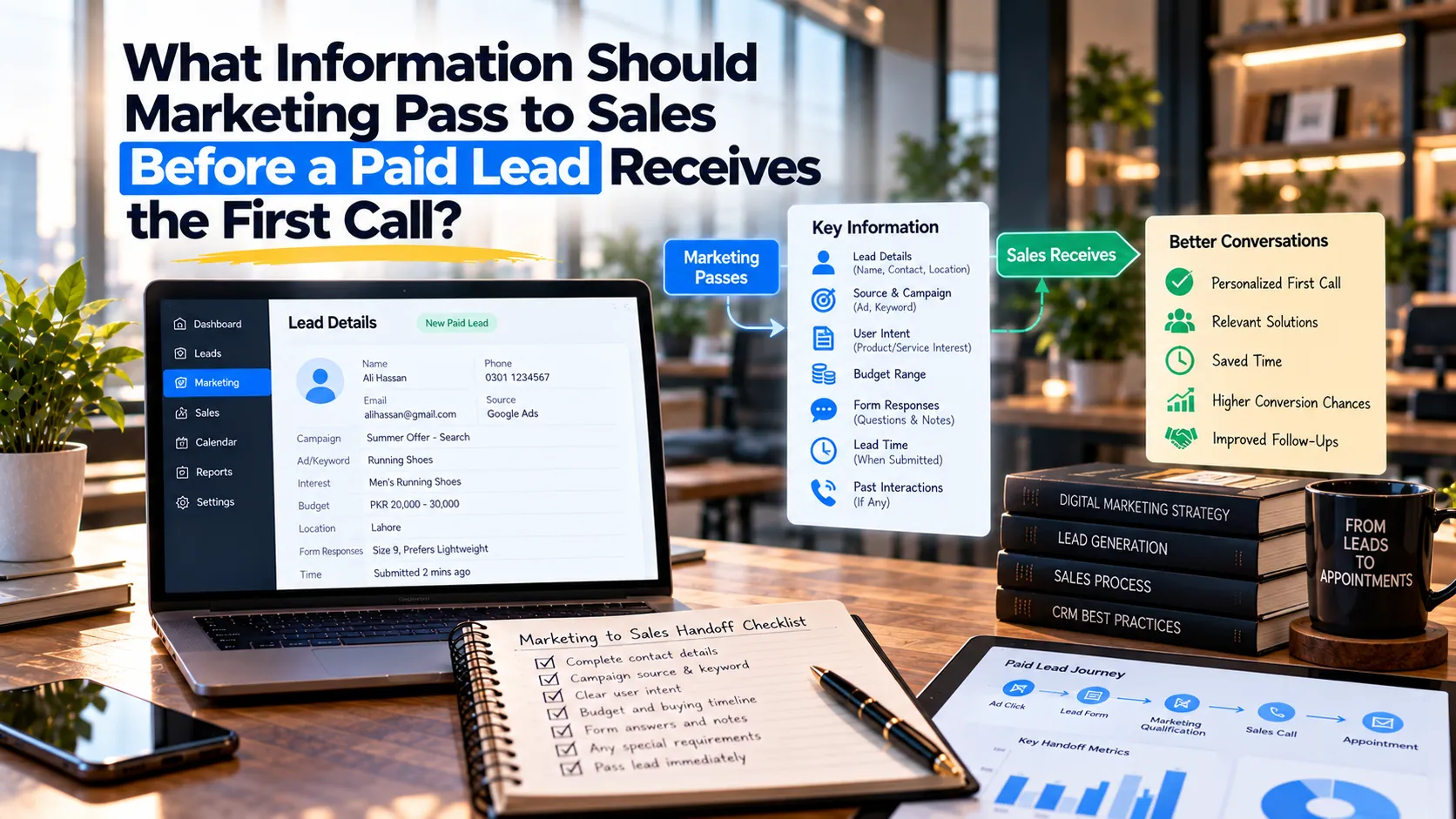

Paid advertising can generate enquiries quickly, but generating a lead is only the beginning of the sales process. The quality of the first conversation often depends on whether the sales representative understands why the prospect responded, what they were promised, and which problem they want to solve.
When marketing sends only a name and phone number, sales must begin the conversation without context. This can create awkward questions, irrelevant pitches, and a poor customer experience. A structured marketing-sales handoff for paid leads ensures that important campaign information reaches the salesperson before contact is made.
Why Does the Marketing-Sales Handoff Matter?
A lead may have clicked an advertisement after seeing a specific benefit, case study, price message, or service offer. If the sales representative does not know which message attracted the person, the conversation may feel disconnected from the advertisement.
For example, a prospect may request help with reducing advertising costs, but the salesperson may begin by discussing website design. The lead then has to explain everything again and may assume the business is poorly organized.
An effective handoff helps sales continue the conversation that marketing started. It also allows the company to evaluate whether campaign messaging attracts people who are suitable for its services.
A knowledgeable performance marketing expert should consider the sales process when planning lead-generation campaigns, not just the cost of form submissions.
1. Campaign and Lead-Source Information
The sales team should know exactly where each lead originated. Basic source information may include:
- Advertising platform
- Campaign name
- Ad set or audience
- Advertisement or creative variation
- Landing page
- Date and time of enquiry
- Device or placement, when relevant
This information allows the salesperson to understand the context behind the enquiry. It also helps the marketing team connect eventual sales outcomes to particular campaigns.
Simply labeling every enquiry as a “paid lead” is not detailed enough. A lead from a branded Google search may have very different intent from someone who watched a short social media video.
Clear campaign naming conventions and accurate CRM fields make the information easier to interpret.
2. The Advertisement and Offer the Prospect Saw
Sales representatives should know which advertisement the prospect clicked and which offer was presented.
The handoff does not always need to include the complete advertisement. However, it should identify the main hook, benefit, service, and call to action.
This prevents the salesperson from introducing an offer that conflicts with the original message. It is especially important when a business runs multiple promotions, service packages, or lead magnets at the same time.
If an advertisement offers a free account review, the salesperson should not behave as if the prospect requested an immediate product demonstration. Maintaining consistency builds trust and reduces confusion.
3. Information Collected Through the Lead Form
Form responses can provide useful preparation for the first call. Depending on the service, relevant fields may include:
- Primary business objective
- Current challenge
- Required service
- Estimated budget range
- Desired timeline
- Company size or industry
- Current advertising activity
- Preferred contact method
The form should collect only information that marketing or sales will genuinely use. Unnecessary questions create friction and may reduce completion rates.
A skilled digital marketing strategist can help determine which questions support better qualification without making the conversion process unnecessarily difficult.
4. The Prospect’s Stage of Awareness
Not every paid lead is equally familiar with the business or its solution. Some prospects are actively comparing providers, while others are only beginning to understand their problem.
Sales should know whether the lead came from:
- A high-intent search advertisement
- A general educational campaign
- A retargeting advertisement
- A case study
- A pricing or service page
- A downloadable resource
This information helps the representative choose an appropriate opening. A person who requested pricing may be ready for a detailed commercial discussion. Someone who downloaded a guide may need more education before considering a purchase.
Using the same sales script for every lead ignores these important differences.
5. Previous Website and Content Interactions
When tracking systems and privacy requirements allow it, previous interactions can give sales useful context.
A lead may have visited several service pages, watched a video, downloaded a resource, or returned to the website multiple times before completing the form. These actions can indicate which subjects matter most to the prospect.
However, sales representatives should use this information carefully. The first conversation should feel helpful, not intrusive. Instead of listing every page the person visited, the representative can ask a relevant question based on the demonstrated interest.
The purpose of behavioural data is to improve the conversation, not make the prospect uncomfortable.
6. Consent and Contact Preferences
Marketing must pass clear consent information to sales. The representative should know which communication methods the prospect approved and whether the person requested a call, email, message, or scheduled consultation.
Contact preference is part of the customer experience. Calling someone repeatedly after they requested email communication may create frustration before a meaningful conversation even begins.
The handoff should also include the correct time zone and preferred appointment time when applicable. This is particularly important for businesses serving customers in multiple regions.
7. Lead Priority and Response Deadline
Some enquiries require faster action than others. A prospect requesting an urgent consultation should not enter the same general follow-up queue as someone downloading an educational checklist.
Marketing and sales should agree on simple priority levels. For example:
- High priority: direct consultation, pricing, or urgent service request
- Medium priority: service-specific enquiry with a defined need
- Lower priority: educational download or early-stage interest
Each level should have a clear response expectation. A high-intent paid lead may need contact within minutes, while an early-stage lead may enter a structured nurturing sequence.
The priority should guide response speed without replacing individual judgment.
8. Assigned Owner and Next Action
Every lead needs a clearly assigned owner. Without ownership, two representatives may contact the same person, or everyone may assume someone else has handled the enquiry.
The CRM record should show:
- Assigned sales representative
- Required first action
- Response deadline
- Follow-up status
- Scheduled appointment, if applicable
Businesses offering different paid advertising services may also route leads according to platform, industry, location, or service type. The assignment process should remain simple enough for the team to follow consistently.
Prepare Sales Representatives to Use the Information
Collecting data is not useful if sales representatives cannot interpret it. Teams need a short, practical process for reviewing lead records before making contact.
The representative should be able to understand the important details within a minute or two. If the record contains dozens of unclear fields, valuable information may be ignored.
A useful lead summary might state:
“Requested a Meta Ads performance review after viewing an advertisement about high customer acquisition costs. Currently spending within the selected budget range and wants to improve lead quality during the next quarter.”
This summary gives the representative a relevant starting point without requiring a long investigation.
Build a Feedback Loop From Sales to Marketing
The handoff should not move in only one direction. Sales should report what happened after contacting the lead.
Useful feedback may include:
- Contacted or unreachable
- Qualified or unqualified
- Main objection
- Incorrect contact information
- Appointment booked
- Proposal sent
- Sale completed or lost
- Reason the opportunity did not progress
This feedback helps marketing understand which campaigns produce genuine opportunities. Without it, marketers may optimize for cheap leads even when those leads rarely convert into customers.
Regular reviews between both teams can identify repeated problems with targeting, form questions, offers, and follow-up speed.
Measure Handoff Quality
Businesses should track more than lead volume and cost per lead. Useful handoff metrics include:
- Time to first contact
- Percentage of leads with complete source data
- Contact rate
- Qualified lead rate
- Appointment rate
- Opportunity rate
- Sales conversion rate
These measurements reveal whether problems exist in advertising, data transfer, lead assignment, or sales follow-up.
A campaign should not automatically be considered unsuccessful because its raw leads are expensive. If it generates well-documented enquiries that sales can convert efficiently, it may be more valuable than a campaign producing a large number of cheap but unsuitable contacts.
Final Thoughts
A reliable marketing-sales handoff for paid leads connects campaign activity with real conversations and revenue. Sales should receive the lead source, advertisement, offer, form responses, awareness level, contact preference, priority, and next action before making the first call.
The process does not need to be complicated. It needs to be consistent, clear, and useful.
When marketing provides relevant context and sales returns accurate outcome data, both teams can improve their decisions. Prospects receive a more personalized experience, representatives spend less time gathering basic information, and advertising campaigns can be optimized using genuine business results.
Frequently Asked Questions
What is a marketing-sales handoff?
A marketing-sales handoff is the process of transferring a lead and its relevant campaign, qualification, consent, and behavioural information from marketing to the sales team.
How quickly should sales contact a paid lead?
High-intent leads should usually receive a fast response because interest can decline quickly. The appropriate response time depends on the offer, industry, contact preference, and urgency expressed by the prospect.
Which lead details are most important for sales?
The most important details normally include the lead source, advertisement, requested service, primary challenge, budget or timeline when relevant, contact preference, and required next action.
Should marketing score leads before sending them to sales?
Lead scoring can help when a business receives a high volume of enquiries. The scoring model should use meaningful indicators and should be reviewed against actual sales outcomes.
How can sales feedback improve paid campaigns?
Sales feedback reveals which leads are qualified, which objections appear frequently, and which campaigns generate opportunities or revenue. Marketing can use this information to refine targeting, messaging, offers, forms, and budget allocation.























Sign in to leave a comment.