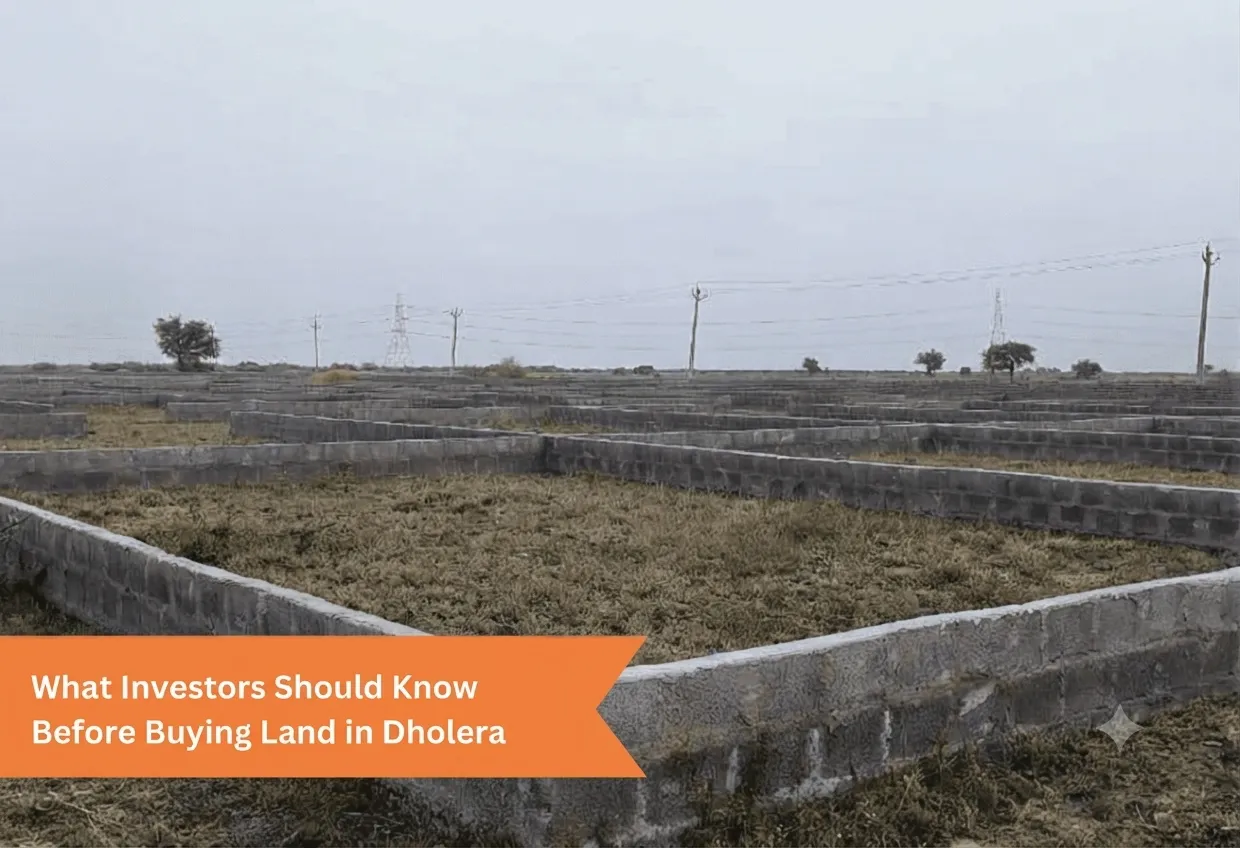

Buying property in Dholera has attracted increasing attention from investors looking at Gujarat's developing infrastructure and planned urban growth. However, purchasing land is not simply about finding a plot at an attractive price. Investors need to understand the exact location, ownership, land use, approvals, infrastructure and the credibility of the seller before making a decision.
Dholera SIR is being developed as a planned industrial and urban region, which makes location and development context particularly important for anyone considering land in Dholera. A property that appears attractive in an advertisement may have different characteristics depending on its zoning, accessibility and documentation.
Before buying a property, investors should verify the property's exact location, ownership and title, permitted land use, applicable approvals, infrastructure access, developer credentials and total acquisition costs.
Why Are Investors Interested in Dholera?
Dholera has gained attention because of its planned development model and its connection with Gujarat's broader infrastructure and industrial growth. The area is associated with the Dholera Special Investment Region (SIR), where development is planned across industrial, residential, commercial and supporting infrastructure.
For investors, this creates interest in both current property opportunities and the area's longer-term development potential. At the same time, planned development should not be confused with completed development. Investors need to look at what exists today as well as what is officially planned for the future.
Dholera SIR and Planned Development
Dholera SIR is a planned development region designed to support industrial, residential, commercial and other related activities. Its development approach includes infrastructure planning, road networks, utilities and designated land uses.
This planned structure is one reason investors consider Dholera for property opportunities. However, the purpose of a particular plot matters. Land designated for industrial activity, for example, may have very different usage conditions from land intended for residential or commercial purposes.
Therefore, investors should identify the planning and zoning status of the specific parcel instead of assuming that all land within the broader Dholera region can be used in the same way.
Infrastructure and Connectivity
Infrastructure is an important part of any land investment. Road connectivity, access to major routes, utilities and proximity to developing areas can influence how practical a property is for future use.
When evaluating a plot, investors should consider both existing and planned infrastructure. Existing roads and access points can be assessed directly, while proposed infrastructure should be verified through reliable official information wherever possible.
A property located close to a planned development does not automatically mean that the development will increase its value in the short term. The timing, implementation and actual accessibility of infrastructure all matter.
Dholera Smart City Gujarat
The broader vision associated with Dholera Smart City Gujarat has contributed to growing interest in the region. Planned industrial and urban development can create opportunities for residential, commercial and supporting activities over time.
This is also why investors research different investment opportunities in Dholera. However, the development story should always be considered alongside the fundamentals of the individual property. A strong regional development narrative cannot replace proper title, zoning and documentation checks.
6 Things to Check Before Buying Land in Dholera
Before paying an advance or signing an agreement, investors should carry out a property-level assessment. The following six checks can help create a more complete picture.
1. Verify the Exact Location
One of the first things to check is the property's exact location.
A listing may simply describe a property as being in “Dholera,” but the broader region covers a significant area. The actual location can affect accessibility, surrounding development, road connectivity and permitted land use.
Ask for the precise survey number, plot number, site location and relevant land records. If possible, compare the documents with the physical location and available mapping information.
Also consider:
- Access roads to the property
- Distance from major roads
- Nearby existing development
- Surrounding land use
- Availability of utilities
- Proximity to relevant infrastructure
Two plots advertised under the same Dholera location can have very different characteristics when their exact positions are examined.
2. Check Ownership and Title Documents
Title verification is one of the most important parts of any land transaction.
Investors should establish who legally owns the land and whether the seller has the right to transfer it. The property's ownership history should also be examined for potential disputes, claims, mortgages, liens or other encumbrances.
Depending on the property and transaction, relevant records may include sale deeds, revenue records, mutation entries and other supporting documents.
Because land documentation can be complicated, it is sensible to have the documents reviewed by an independent property lawyer before making a substantial financial commitment.
3. Confirm Zoning and Permitted Land Use
A common mistake is assuming that purchasing land automatically gives the buyer freedom to construct any type of property.
Land use and zoning restrictions can determine what activities or construction may be permitted. A parcel may be designated for residential, commercial, industrial, agricultural or another purpose, subject to applicable planning rules.
Before buying, investors should determine:
- Current land-use classification
- Applicable zoning requirements
- Whether conversion is required
- Permitted development or construction
- Applicable development restrictions
- Whether additional permissions are needed
This check becomes particularly important for buyers planning to construct a building rather than simply hold the land.
4. Verify Approvals and Applicable Registrations
Investors should review all approvals and registrations relevant to the specific property or plotted development.
Where applicable, this may include layout approvals, development permissions, planning-related documentation and registration under the relevant regulatory framework. RERA registration should also be checked where it applies to the project or transaction.
The exact requirements can vary depending on the type of property and development. Buyers should therefore avoid relying only on marketing material and instead request supporting documentation.
A clear documentation process can make it easier to identify what has already been approved and what may still require approval.
5. Assess Infrastructure and Connectivity
Infrastructure should be evaluated based on what is available today, not just what is mentioned in a future development plan.
Visit the location if possible and examine road access, surrounding development and nearby facilities. Consider whether the property can be practically accessed and whether basic infrastructure is available or expected to be provided.
At the same time, separate confirmed infrastructure from proposed infrastructure. If a seller refers to a future road, industrial project or major development, investors should verify the information through reliable sources.
6. Research the Developer or Seller
The seller's or developer's background can provide useful context when evaluating a property.
Look at the developer's previous projects, documentation practices, communication, project information and post-purchase support. Buyers should also check whether the information provided about the property matches the official documentation.
A transparent seller should be able to explain the property's location, ownership, applicable approvals, payment terms and other relevant details clearly.
If important information is unavailable or difficult to verify, investors should investigate further before proceeding.
How to Evaluate Dholera Land Investment Potential
Buying land as an investment requires a broader assessment than comparing prices. Investors should consider why a particular property may suit their objectives and what factors could affect its future use. Those exploring Dholera Land Investment can also review factors such as location, documentation, infrastructure and the intended holding period before making a decision.
Location and Development
Location remains one of the basic factors in evaluating land.
Accessibility, surrounding development, road connectivity and proximity to relevant infrastructure can influence how useful a plot may be for future construction or resale.
For example, two plots with the same size and similar asking prices may have different characteristics if one has better access or is surrounded by established development while the other is located farther from existing infrastructure.
The key is to evaluate the individual property rather than treating the entire Dholera region as one market.
Current Development vs Future Plans
Investors should make a clear distinction between completed infrastructure and proposed development.
Future plans can be relevant when considering a long-term investment, but they should be verified through reliable sources. Marketing claims about future roads, commercial hubs or industrial development should not be treated as guaranteed outcomes.
A useful approach is to create two separate lists:
What exists today: roads, nearby development, utilities, access and surrounding facilities.
What is planned: proposed infrastructure, future projects and other announced developments.
This makes it easier to understand the property's current position without overlooking its wider development context.
Investment Time Horizon
The expected holding period should also influence the property evaluation.
Someone purchasing land for long-term investment may assess future infrastructure and regional development differently from someone looking for land for immediate construction.
Investors should consider:
- Expected holding period
- Intended future use
- Construction plans
- Potential resale requirements
- Available budget
- Ongoing ownership costs
Having a clear objective can make the property comparison more practical.
How to Compare Dholera Land for Sale
When comparing Dholera land for sale, investors can use a simple framework instead of looking only at the quoted price.
| Factor | What to Check |
| Location | Exact location and accessibility |
| Documentation | Title and ownership |
| Zoning | Permitted land use |
| Infrastructure | Existing and planned connectivity |
| Developer | Track record and transparency |
| Cost | Total purchase and associated costs |
| Purpose | Investment, construction or resale |
The purchase price is only one part of the overall calculation. Registration charges, stamp duty, legal verification, development-related costs and other expenses may also affect the total amount required.
Comparing the complete property profile gives investors a better basis for understanding the differences between available plots.
Common Mistakes to Avoid When Buying Dholera SIR Plots
Investors considering Dholera SIR plots should be careful about several common mistakes:
- Choosing a plot only because the price is low. A lower price may reflect location, accessibility, zoning or other factors.
- Not checking the exact location. The word “Dholera” alone does not provide enough information about a property.
- Assuming every Dholera property has the same zoning. Land-use conditions can differ between parcels.
- Relying entirely on future-development claims. Proposed projects should be independently verified.
- Skipping title and document verification. Proper legal checks can help identify ownership or documentation issues.
- Not checking applicable approvals. Buyers should understand which approvals and registrations apply to the particular property.
- Ignoring additional purchase costs. Stamp duty, registration, legal fees and other expenses should be included in the budget.
Final Checklist Before Buying Land in Dholera
Before completing a purchase, investors can use the following checklist:
- Exact location verified
- Survey and plot details checked
- Ownership and title verified
- Potential encumbrances reviewed
- Land use and zoning confirmed
- Applicable approvals verified
- Relevant registration requirements checked
- Existing infrastructure assessed
- Future-development claims independently verified
- Developer or seller researched
- Total purchase cost calculated
- Investment objective defined
- Expected holding period considered
- Legal review completed where appropriate
Conclusion
Buying land in Dholera requires more than comparing plot prices or relying on the broader development story. Investors should assess the specific property's location, ownership, title, zoning, approvals, infrastructure and seller or developer background before making a commitment.
Dholera's planned development makes the region relevant to investors exploring residential, commercial and other property opportunities. However, every plot should be evaluated on its own documentation and characteristics.
A careful approach can help investors understand what they are actually purchasing, what the land can be used for and what costs and considerations may arise later. Whether the objective is long-term investment, future construction or resale, proper research and independent verification should be part of the buying process. Shyam Group provides property options in Dholera and helps buyers explore available opportunities while considering important factors such as location, documentation and the intended use of the property.

























Sign in to leave a comment.