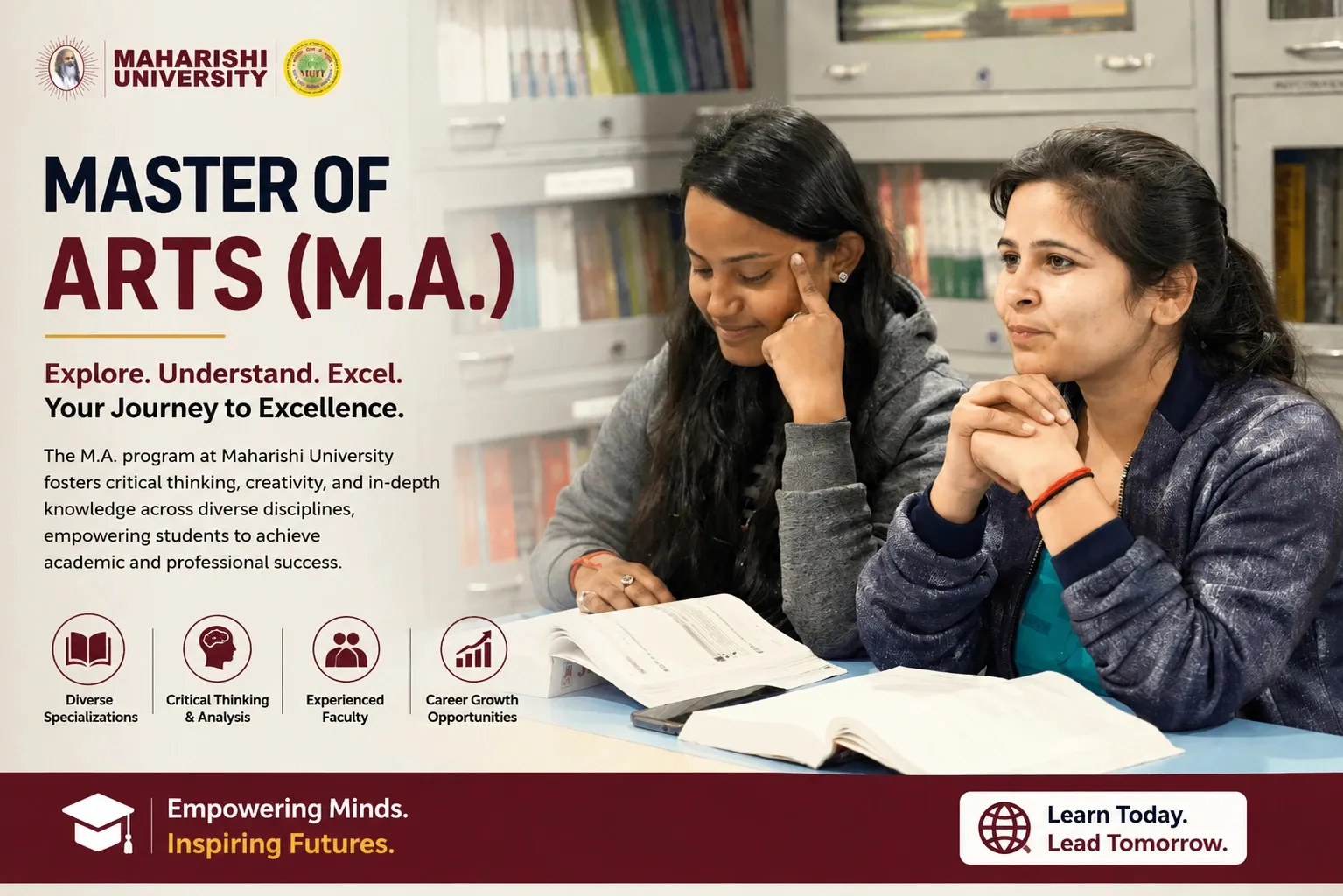
A Master of Arts (MA) is a postgraduate degree designed for students who want to gain advanced knowledge in humanities, social sciences, languages, and related disciplines. The programme builds subject expertise, strengthens analytical and research abilities, and prepares graduates for diverse professional roles. Understanding Master of Arts Course Details helps students choose the right specialisation and plan a successful academic and career journey.
What is a Master of Arts?
A Master of Arts is a postgraduate programme that enables students to study their chosen subject in greater depth. It combines theoretical learning, practical assignments, research projects, presentations, and seminars to enhance intellectual and professional development.
Students can pursue an MA after completing a bachelor's degree from a recognised university. The programme is suitable for those interested in higher education, research, teaching, administration, media, public policy, and several other career fields.
Master of Arts Course Details
When exploring Master of Arts Course Details, students should understand the programme's structure and learning approach.
Some key highlights include:
- Course Level: Postgraduate
- Course Duration: Generally two years divided into four semesters
- Eligibility: Bachelor's degree from a recognised university
- Mode of Study: Regular, online, distance, or blended (depending on the institution)
- Learning Approach: Classroom lectures, research work, seminars, presentations, assignments, and project-based learning
The curriculum is designed to develop advanced subject knowledge while encouraging critical thinking, communication, and research capabilities.
Popular MA Specialisations
One of the biggest advantages of an MA programme is the wide variety of specialisations available. Students can choose a field that matches their interests and long-term career goals.
Popular MA specialisations include:
- English
- Hindi
- Political Science
- History
- Economics
- Sociology
- Psychology
- Public Administration
- Journalism and Mass Communication
- Education
- Philosophy
- Geography
- International Relations
- Sanskrit
Different universities may offer additional interdisciplinary or emerging specialisations based on academic demand.
Subjects Covered in an MA Programme
Although subjects vary according to the chosen specialisation, the curriculum generally includes:
- Core subject papers
- Elective courses
- Research methodology
- Academic writing
- Case studies
- Seminars and presentations
- Dissertation or project work (where applicable)
These subjects help students develop both theoretical understanding and practical problem-solving abilities.
Skills Developed During an MA
An MA programme equips students with valuable professional and academic skills that are useful across industries.
Some important skills include:
- Critical and analytical thinking
- Research and data interpretation
- Written and verbal communication
- Problem-solving abilities
- Leadership and teamwork
- Presentation and public speaking
- Time management
- Report writing
- Decision-making
- Creative thinking
These transferable skills improve employability and prepare graduates for leadership roles.
Career Opportunities After MA
One of the key aspects of Master of Arts Course Details is the wide range of career opportunities available after graduation.
MA graduates can explore careers in:
- Teaching and higher education
- Research organisations
- Government departments
- Civil services preparation
- Media and journalism
- Publishing and content development
- Public relations and communications
- Non-governmental organisations (NGOs)
- Corporate training and human resources
- Policy research and consultancy
- Social development organisations
- Digital content and communication roles
Graduates can also pursue higher studies such as MPhil, PhD, professional certifications, or specialised research programmes.
Why Choose a Master of Arts?
Choosing an MA offers several academic and professional benefits, including:
- Advanced subject expertise
- Better research capabilities
- Improved communication skills
- Opportunities for academic careers
- Eligibility for higher education and doctoral programmes
- Diverse employment options across industries
- Enhanced leadership and critical thinking abilities
An MA also provides flexibility to specialise in a field aligned with individual interests and career aspirations.
Apply Now for Master of Arts
📞 Call Us: +91-9870200541
📧 Email: [email protected]
🌐 Apply Online: MUIT Lucknow Admission Portal
🏫 Visit Website: MUIT Lucknow Official Website
FAQs
1. What is the duration of a Master of Arts programme?
Most MA programmes are completed in two years and are divided into four semesters.
2. Who can apply for an MA course?
Candidates who have completed a bachelor's degree from a recognised university are generally eligible to apply.
3. What are the popular MA specialisations?
Popular options include English, Hindi, Political Science, History, Economics, Psychology, Sociology, Public Administration, Education, and Journalism.
4. What skills are developed during an MA programme?
Students develop research, analytical thinking, communication, leadership, presentation, critical thinking, and problem-solving skills.
5. What career options are available after completing an MA?
Graduates can pursue careers in education, research, media, publishing, government services, NGOs, public relations, human resources, consultancy, and corporate communications. They may also continue with higher studies such as MPhil or PhD.





















Sign in to leave a comment.