

A kid in cardiac arrest is not just a smaller version of an adult emergency. Airways are narrower, doses are different, and the window to act correctly is shorter. That's why PALS exists and why hospitals, clinics, and EMS agencies treat this certification as non-negotiable for anyone who works with children.
If you've seen "PALS" on a job posting or a renewal notice and weren't sure what it involved, you're not alone. Here's a plain explanation of what a PALS course covers, who needs one, and why KT Global CPR built its training around real clinical skill instead of just checking a box.
What Does PALS Actually Stand For?
PALS stands for Pediatric Advanced Life Support, a certification developed by the American Heart Association for healthcare providers who respond to emergencies involving infants and children.
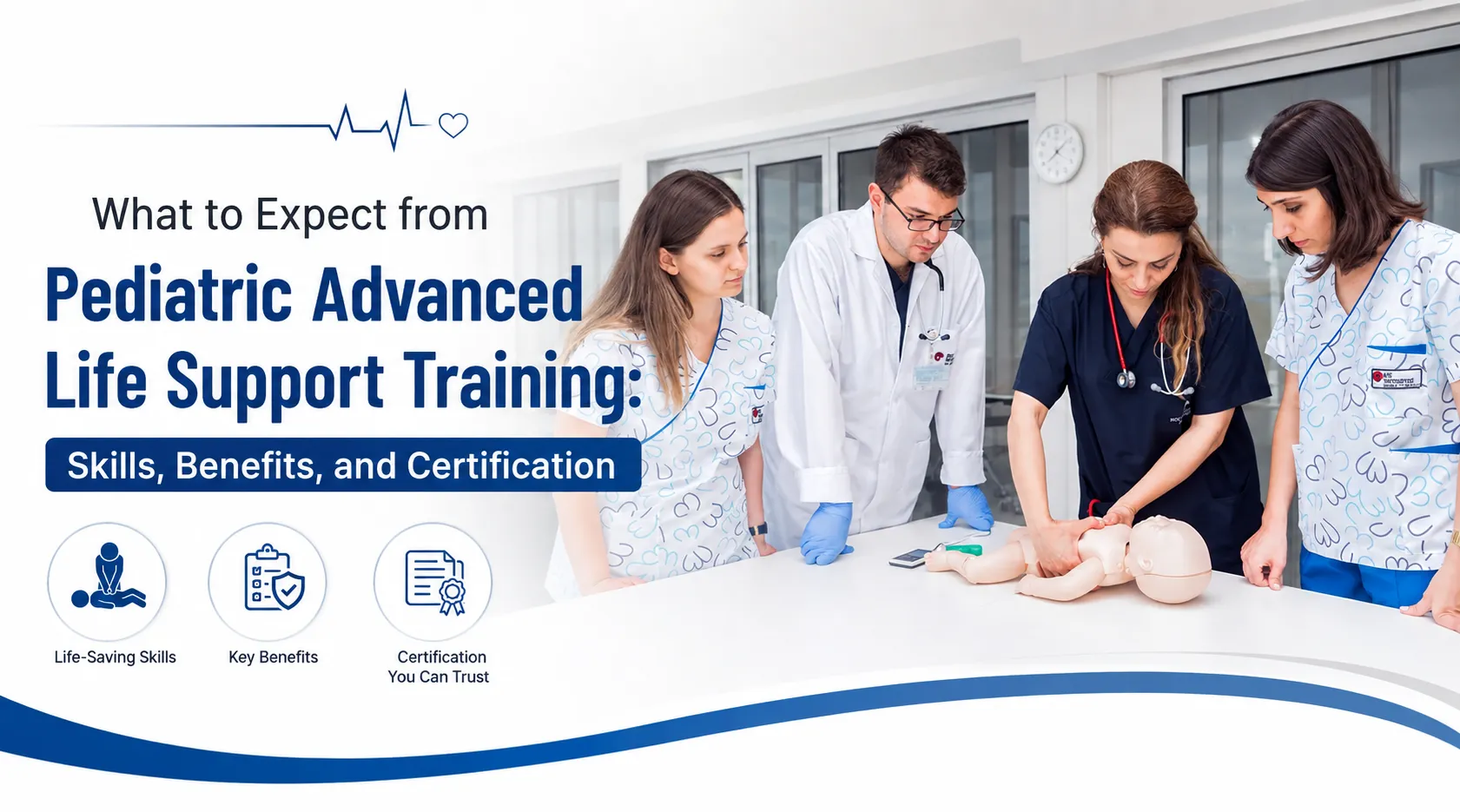
Unlike basic CPR, which focuses on simple life-saving steps anyone can learn, a PALS course goes much deeper. It covers advanced assessment, team-based resuscitation, and the pharmacology involved in treating a child in crisis. This is the kind of Pediatric Advanced Life Support training that nurses, physicians, paramedics, and respiratory therapists rely on when seconds matter and a child's physiology doesn't leave room for guesswork.
Who Actually Needs This Certification?
Not every healthcare job requires PALS, but a surprising number do, especially anywhere kids show up as patients.
You'll typically need current PALS certification if you work as
- A pediatric nurse, or NICU or PICU staff member
- An emergency room nurse or physician
- A paramedic or EMT on a unit that responds to pediatric calls
- A respiratory therapist working with infants or children
- A physician or nurse practitioner in pediatrics or family medicine
- Staff at urgent care clinics that see pediatric patients
Even outside of direct patient care, some school health programs and specialized childcare facilities require staff to complete PALS classes as part of their emergency readiness plan.
What You'll Actually Learn
This isn't a lecture where you sit and take notes for eight hours. A good PALS course is built around scenarios, because that's how the skills actually transfer to a real code.
Here's what the training typically covers:
- Recognizing early signs of respiratory failure and shock in children
- Systematic pediatric assessment using the standard AHA approach
- High-quality CPR adapted for infants and children.
- Airway management, including bag-mask ventilation and advanced airways
- Medication dosing for pediatric emergencies
- Team dynamics during resuscitation, since real codes involve more than one person
By the end, you're not just familiar with the material. You've run through simulated scenarios enough times that your response becomes closer to instinct.
Why This Training Actually Matters
It's tempting to treat PALS like any other line item on a credentialing checklist, but the stakes here differ from most workplace certifications.
Children go into cardiac arrest less often than adults, which sounds like good news until you realize it also means fewer providers get regular hands-on practice with pediatric codes. Skills that aren't used often fade fast. Structured training exists specifically to keep that muscle memory sharp so providers don't have to relearn everything in the middle of an actual emergency.
There's also the physiology itself. A child's heart rate, blood pressure, and airway anatomy are nothing like an adult's, and treating a pediatric patient with adult protocols can do real harm. This training builds the instinct to recognize these differences fast, not by pausing to look them up while a child's condition is deteriorating.
Renewing Your PALS Certification
Like most AHA certifications, PALS doesn't last forever. Cards typically expire every two years as guidelines get updated. Letting certification lapse can mean losing job eligibility or falling behind on best practices, which matters in a field where the standard of care keeps shifting.
KT Global CPR offers straightforward PALS renewal courses that refresh your skills without making you sit through material you already know cold. The renewal format is faster than the initial course but still hands-on, so your certification stays current.
Why Choose KT Global CPR for PALS Training
Not all PALS classes are created equal. Some are rushed, oversized, or taught by instructors who've never actually worked a pediatric code themselves. That gap shows up the moment a real emergency hits.
KT Global CPR is a family-owned business based in Houston with over 20 years of combined healthcare experience behind our instructor team. We've trained hospital staff, EMS crews, and clinic teams across the Houston area, and our Pediatric Advanced Life Support training centers on realistic scenarios instead of passive lecture time.
A few things that set our training apart:
- Small class sizes so instructors can give real, individual feedback
- Instructors with actual pediatric and emergency care backgrounds
- On-site group training available for hospitals, clinics, and EMS teams
- Both AHA and flexible scheduling options built around shift work
Whether you're getting certified for the first time or renewing, the goal is the same: you should walk out actually confident, not just holding a card.
Prepared Providers Save Children's Lives
This certification isn't just a requirement to check off your list. It's the training that stands between a chaotic pediatric emergency and a calm, coordinated response that gives a child the best possible chance. If you work anywhere near pediatric patients, PALS isn't optional in any real sense, even on the days it feels like paperwork.
The providers who handle pediatric codes well aren't the ones who got lucky. They're the ones who trained hard enough that the right response became automatic.
Ready to Get Certified or Renew Your PALS Card?
KT Global CPR offers PALS courses and renewal training for healthcare professionals across Houston, taught by instructors with real clinical experience. Visit ktglobalcpr.com to book a free quote and find a class that fits your schedule. Or call (832) 262-4622 to talk through which PALS training option is right for you.























Sign in to leave a comment.