What Is a Tyre Pressure Monitoring System (TPMS) and How Does It Work?

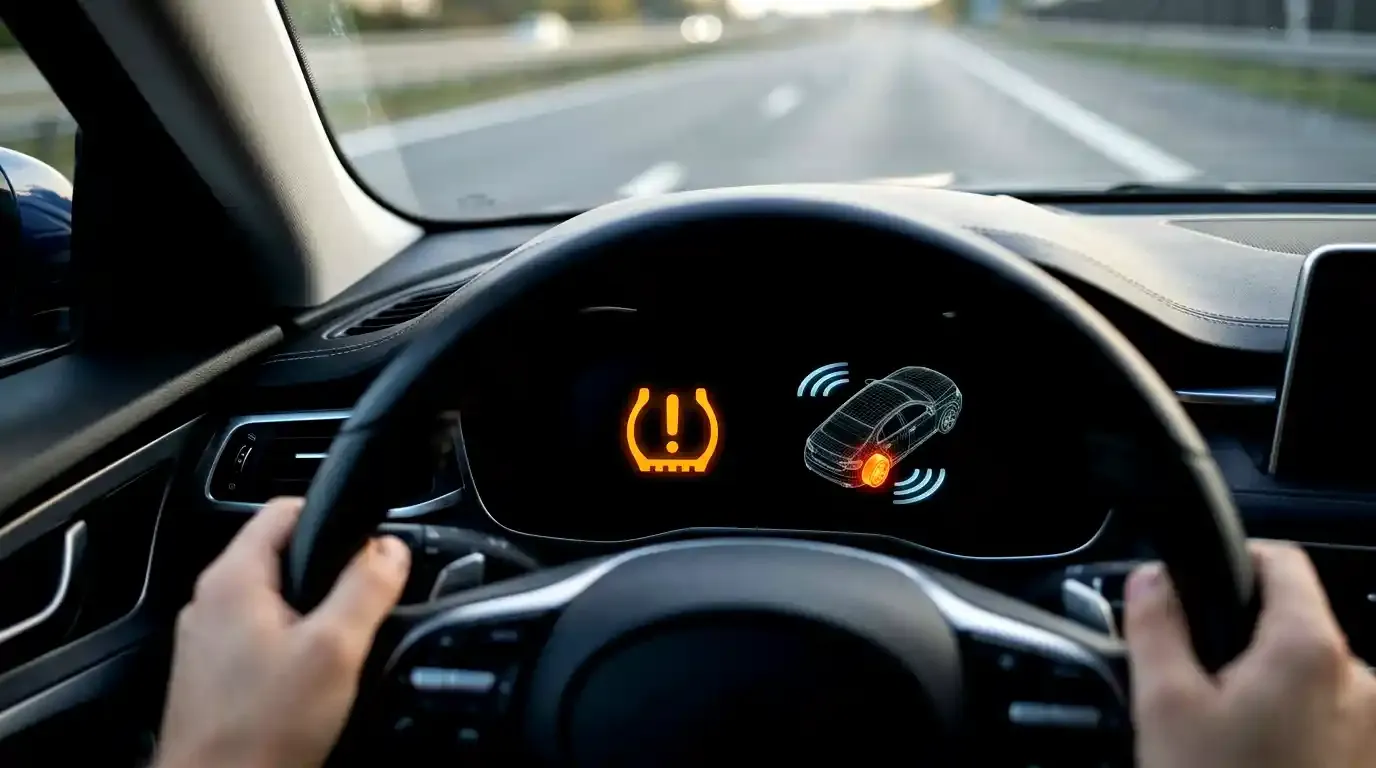
Most of us check our tyre pressure before a long drive and then forget about it until the next one. A tyre pressure monitoring system does the remembering for us. It is an electronic safety feature that tracks the air pressure in your tyres and switches on a dashboard warning when one or more of them falls below a safe level.
This guide explains how the two types of TPMS work, what the warning light is telling you and what to do when the system plays up.
What Is a Tyre Pressure Monitoring System?
TPMS stands for tyre pressure monitoring system. Whatever the design, it has three basic parts: something that detects a loss of pressure, a control module that interprets the signal and a warning light on the dashboard. Some systems also show the pressure of each tyre on the instrument screen, and a few report tyre temperature as well. Pressure is usually measured in psi, bar or kPa, and the correct figure for your car is set by the vehicle manufacturer.
It helps to be clear about what TPMS cannot do. It will not stop a tyre from failing. What it gives you is notice. A slow puncture is easy to miss by eye, because a tyre can lose a surprising amount of air before it looks flat, and the warning buys you time to slow down, pull over and check.
Most modern cars leave the factory with TPMS fitted, and it has been required on new passenger cars in Europe since 2014. If yours did not come with it, aftermarket kits exist, and a good one can be just as useful as a factory system.
How Does TPMS Work?
The sequence is the same in both types. Something notices that a tyre has lost pressure, passes that information to the car’s control module, and the module lights up the warning. Most systems trigger when a tyre drops roughly 20 per cent or more below its recommended pressure, although the exact threshold varies between manufacturers. For a tyre that should sit at 32 psi, that means the light may stay off until it reaches about 25 psi. That is already a meaningful drop, which is one reason TPMS works best alongside regular manual checks.
Types of TPMS: Direct vs Indirect
Cars use one of two systems, and knowing which one yours has makes everything else in this guide easier to apply.
Direct TPMS
Direct TPMS places a small sensor inside each tyre, usually attached to the valve stem or the wheel. The sensor measures the actual air pressure, and often the temperature too, then sends the readings wirelessly to the control module. Because it reads pressure directly, it can show which tyre is low and by how much, and it usually catches a problem earlier.
The drawbacks are cost and upkeep. Sensors are more expensive to fit and replace, they run on small batteries that eventually go flat, and they need careful handling whenever a tyre is removed from the wheel.
Indirect TPMS
Indirect TPMS has no pressure sensors at all. It uses the wheel speed sensors that the anti-lock braking system (ABS) already relies on. A tyre with less air has a slightly smaller rolling diameter, so it spins a little faster than the others, and the software picks up on that difference.
It costs less and needs less maintenance, which is why many manufacturers choose it. The catch is that it estimates the problem instead of measuring it, so it cannot give you a pressure figure for each tyre. On some cars the light does not say which tyre is low, and you will need to check all four by hand. It also has to be reset after you inflate the tyres or rotate them, otherwise it works from the wrong baseline.
Direct vs Indirect TPMS at a Glance
| Feature | Direct TPMS | Indirect TPMS |
| How it detects low pressure | Sensor inside each tyre | ABS wheel speed data |
| Shows actual pressure | Yes, on many cars | No |
| Identifies the low tyre | Usually | Not always |
| Temperature monitoring | Often | No |
| Cost to fit and replace | Higher | Lower |
| Reset after inflating or rotating | Sometimes | Yes |
| Sensor battery to replace | Yes | No |
To find out which system your car has, look in the owner’s manual. If the dashboard displays a pressure figure for each tyre, it is almost certainly direct. If you only ever see a warning light, it could be either, and a tyre technician can tell you in a minute.
Why Does a Tyre Pressure Monitoring System Matter?
Safety comes first. An under-inflated tyre flexes more, runs hotter and is more likely to fail at speed. It can also stretch your braking distance and make the steering feel vague, which is the last thing you want when a Singapore downpour has just soaked the expressway.
Then there is the cost of running the car. Low pressure wears the edges of the tread faster and raises rolling resistance, so the engine works harder and fuel consumption creeps up. Electric car owners feel it as lost range. Catching a few psi early often costs you nothing more than a visit to the air pump.
What Does the TPMS Warning Light Mean?
The symbol is usually a horseshoe-shaped outline, like a tyre in cross-section, with an exclamation mark in the middle. What it means depends on how it behaves.
A solid light means at least one tyre is below its recommended pressure. A light that flashes for about a minute when you start the car and then stays on usually points to a fault in the system itself, such as a failed sensor. Your manual will confirm how your car signals this.
When a solid light appears, do not wait for the next service. Head to a petrol station or any safe spot with an air pump, check all four tyres with a gauge and look for a nail or screw in the tread. Set each tyre to the figure on the sticker inside the driver’s door or in the manual. Warm tyres read higher than cold ones, so it is worth knowing about checking and adjusting tyre pressure in Singapore’s climate before you start adding or releasing air. If a tyre looks flat, the car pulls to one side or the steering shakes, stop driving and call for help or fit the spare.
Common TPMS Problems and How to Fix Them
The light stays on after you top up the tyres. Indirect systems need a manual reset, usually through a button or a menu setting. Direct systems may need a few minutes of driving before they update.
The light appears after a tyre change or rotation. Direct sensors sometimes have to be re-registered to their new positions, which a technician does with a scan tool.
A sensor battery has died. These batteries are sealed in and commonly last somewhere between five and ten years. When one fails, the sensor is replaced, and it is worth asking about the age of the other three at the same time.
The light comes on after the car has been parked for weeks. Tyres lose a little air naturally, so a long idle spell can be enough.
If the light stays on after you have corrected the pressures and tried a reset, have the system checked.
Do You Still Need to Check Tyre Pressure Manually?
Yes. Because the warning only appears after a notable drop, tyres can run slightly low for weeks with no light at all, quietly wearing the tread and costing fuel. A monthly check with a decent gauge, done when the tyres are cold, takes five minutes. Use the pressure printed on the door sticker or in the manual, not the maximum figure moulded into the sidewall. Spare tyres are often not covered by TPMS either, so give yours a look too.
Conclusion
A tyre pressure monitoring system is a useful early warning, not a substitute for looking after your tyres. Know whether your car has a direct or indirect system, treat a solid light as a prompt to check straight away, and keep up the monthly gauge check. If the light stays on after you have corrected the pressures, a tyre specialist can tell you whether it is a reset, a faulty sensor or a genuine leak.
FAQs
Can I drive with the TPMS light on?
With a solid light, drive carefully to the nearest place where you can check the pressures, and do not carry on for long. If the tyre is visibly flat or the car pulls or vibrates, stop straight away. A flashing light suggests a system fault, but check the pressures by hand anyway.
How do I reset the TPMS light?
First set every tyre to the correct pressure. After that, the method depends on the car: many have a reset button under the dashboard or an option in the settings menu, while others reset after a short drive. Your manual has the exact steps.
Is direct or indirect TPMS better?
Direct is more accurate and shows real pressure readings. Indirect costs less and needs less upkeep. Your car comes with one of them, and changing from one to the other is a job for an experienced technician.
Does TPMS work on the spare tyre?
On many cars it does not, though some models include a sensor in the spare. Check your manual, and check the spare’s pressure by hand.
How long do TPMS sensors last?
Battery life commonly runs from five to ten years, depending on the sensor and how much you drive. Since the tyre has to come off the wheel to replace a sensor, it is often convenient to do it when you buy new tyres.




Sign in to leave a comment.