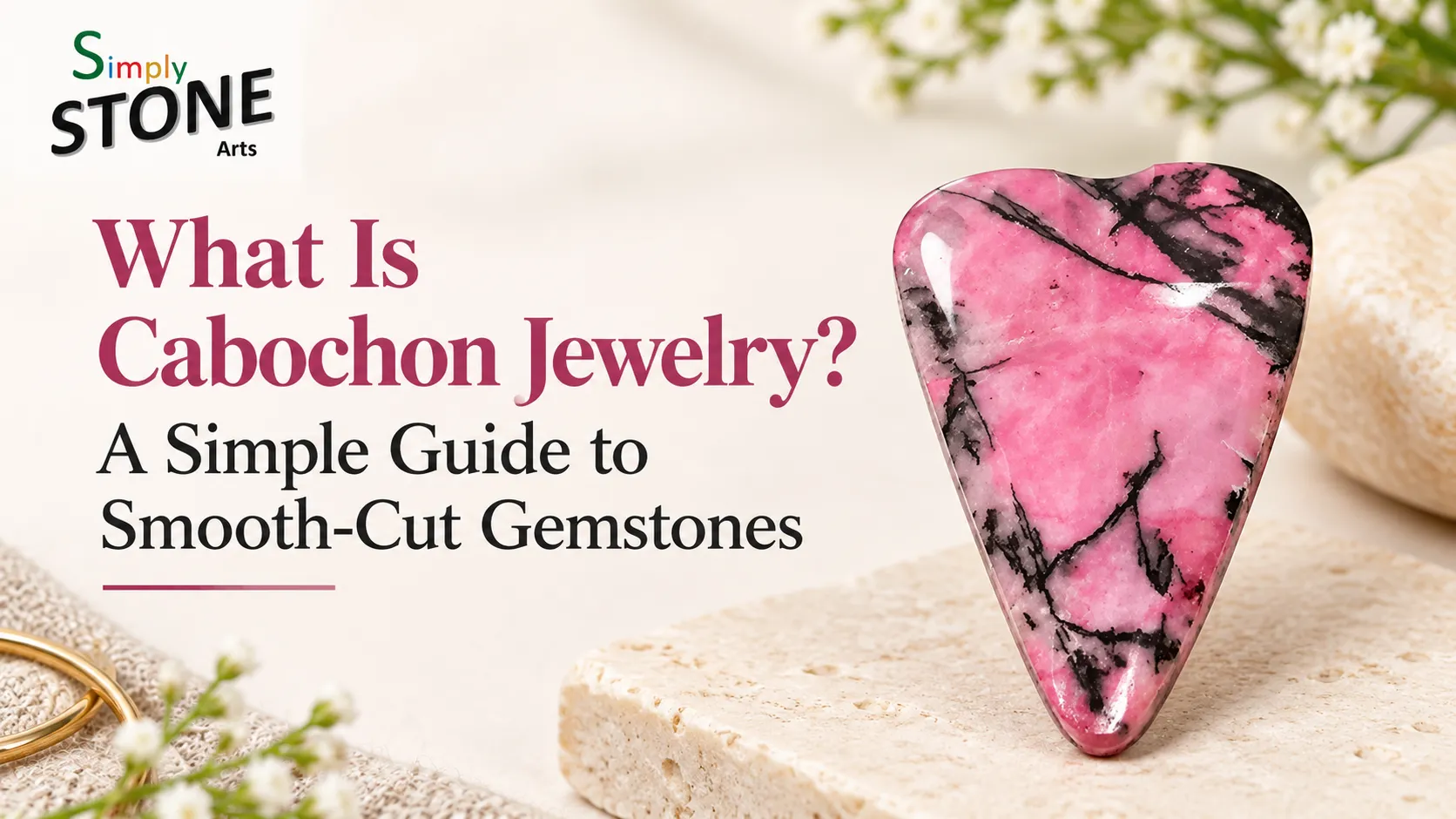

Some gemstones are known for their sparkle. Others stand out because of their colour, patterns, and smooth polished surface. That is what makes cabochon jewelry so appealing. Instead of being cut with many flat facets, a cabochon is shaped into a smooth stone, usually with a rounded top and a flat back.
This style of cutting lets the natural character of the gemstone take centre stage. From the shifting colours of labradorite to the earthy patterns of jasper, cabochons make each stone feel a little more personal. In this guide, we will look at what cabochons are, why they are popular, and how to choose a piece that suits your style.
Key Takeaways
- A cabochon is a smooth, polished gemstone, typically with a rounded top and flat back, rather than a faceted stone designed mainly for sparkle.
- Cabochon cuts are especially effective for natural stones with visible bands, swirls, colour flashes, or soft glows because the smooth surface keeps those details in focus.
- Labradorite, jasper, agate, tiger eye, moonstone, and rhodonite are popular cabochon choices because each can show distinctive colour, pattern, or surface effects.
- Cabochons are versatile enough for pendants, earrings, rings, bracelets, and personalised designs, with the stone’s size, shape, and setting influencing both appearance and comfort.
- Choose a cabochon by considering colours you already wear, the stone’s individual pattern, the size and shape that fit your style, and a setting that offers the right balance of protection and design.
- The appeal of cabochon jewelry is its individuality: no two natural stones look exactly alike, so a well-chosen piece can feel personal, wearable, and one of a kind.
What Is a Cabochon?
A cabochon is a gemstone that has been shaped and polished instead of cut into facets. Faceted stones have many small, flat surfaces that reflect light and create sparkle. Cabochons have a smoother finish, which allows people to focus more on the details already present in the stone.
Most cabochons have a domed top and flat bottom, making them easier to set into pendants, earrings, rings, and bracelets. They can be round, oval, teardrop-shaped, rectangular, or completely freeform. A freeform stone follows the natural shape and character of the material, so it may look different from anything you would find in a standard jewelry store.
Cabochon jewelry is especially well suited to stones with bold markings, interesting layers, or colour changes that appear as the stone moves in the light. Rather than trying to make every stone look identical, the cut brings attention to what makes that particular piece different.
Why are Cabochons Popular in Jewelry?
Cabochons have remained popular because they highlight what makes natural gemstones interesting in the first place. Their smooth finish brings attention to colour, patterns, and the individual character within every stone.
They Highlight Natural Patterns
Some natural stones have details that are easy to miss when they are cut into facets. Agate may have soft bands running across the surface. Jasper can show earthy swirls, patches of colour, or picture-like patterns. Dendritic agate may contain markings that resemble trees, branches, or distant landscapes.
A smooth cut gives these natural features more room to stand out. This is one reason a cabochon can feel like a small piece of natural artwork. The pattern was already inside the stone. The cutting process simply helps bring it into view.
They Have a Softer Look
Faceted gemstones can look bright, sharp, and formal. Cabochons create a different feeling. Their rounded surface often looks calmer, softer, and more organic.
That makes them easy to wear in many settings. A simple cabochon pendant can work with everyday clothing, while a larger stone with bold colour or pattern can become a statement piece for a special occasion. The look may be understated, but the stone can still catch attention in a natural way.
They Work with Many Gemstones
Not every gemstone needs facets to look beautiful. Some stones are better known for their colour, pattern, or surface effect than their sparkle. Tiger eye, for example, can show a moving band of golden light. Labradorite may reveal flashes of blue, green, or gold as the pendant shifts. Moonstone can have a soft glow that appears just beneath the surface.
This makes cabochons for jewelry making a popular option for artists and makers. The stone may have a simple shape, but it can still become the main feature of a memorable design.
Every Stone Looks Different
Natural gemstones are never exactly alike. Even two pieces cut from the same type of stone can vary in colour, pattern, and texture. One piece of labradorite may flash bright blue, while another shows more green or gold. One jasper may have rich red tones, while another has softer brown and cream markings.
Those differences are part of the appeal. When someone chooses a cabochon, they are not only choosing a gemstone name. They are choosing one specific stone with its own details and personality.
Gemstones Commonly Cut as Cabochons
Many gemstones look especially striking when they are cut and polished into cabochons. The best choice often comes down to the colours, patterns, and overall look you enjoy most.
| Gemstone | What Makes It Stand Out | Jewelry Styles It Suits |
| Labradorite | Blue, green, or gold flashes in the light | Pendants and statement pieces |
| Jasper | Earthy colours and natural patterns | Everyday pendants and earrings |
| Agate | Bands, layers, and colour variation | One-of-a-kind designs |
| Tiger eye | Warm brown and gold shimmer | Classic pendants and earrings |
| Moonstone | Soft glow across the surface | Delicate jewelry designs |
| Rhodonite | Pink tones with dark natural markings | Meaningful gifts and pendants |
The right gemstone is often the one that draws your eye first. Some people prefer a stone that matches their wardrobe. Others are drawn to a pattern that reminds them of a place, a season, or a favourite colour.
How Cabochons Are Used in Jewelry
Cabochons can work beautifully in many jewelry styles because their smooth shape is versatile and lets the stone remain the main feature. The size, shape, and setting all influence how the finished piece looks and feels to wear.
- Pendants: Larger oval, teardrop, or freeform cabochons often become the centrepiece of a pendant. They give the stone enough space for its patterns and colours to be appreciated.
- Earrings: Smaller cabochons can be used in matching pairs for simple everyday earrings. They can also create a more noticeable design when paired with longer hooks or detailed metalwork.
- Rings: A cabochon ring can highlight a favourite stone in a bold and personal way. A secure setting is important, especially for rings worn often.
- Bracelets: Smaller cabochons may be used as individual details along a bracelet or as one central stone in a simple design.
- Custom designs: Cabochons are often used in handmade pendants, wire-wrapped pieces, and personalised jewelry. Their varied shapes make them a flexible choice for people who want something different from a standard design.
How to Choose Cabochon Jewelry
Choosing a cabochon is often less about finding a perfect stone and more about finding one that feels right to you. Looking at colour, shape, size, and your everyday style can make the decision much easier.
Start with Colour
Think about the colours you already enjoy wearing. If you usually choose neutral clothing, the warm tones of tiger eye or the earthy patterns in jasper may feel like a natural fit. If you prefer cooler colours, you may be drawn to the blue flashes of labradorite or the soft glow of moonstone. There is no right or wrong colour to choose. The best one is usually the stone that you can imagine reaching for again and again.
Look Closely at the Pattern
Natural markings are one of the biggest reasons people enjoy gemstone jewelry. A bold band in agate, a soft swirl in jasper, or an unexpected flash in labradorite can make a stone feel more interesting than one with a completely even surface. Take a moment to look at the stone from different angles. Often, the small details are what make the piece feel truly special.
Think About Size and Shape
Smaller cabochons can be comfortable for everyday wear and easy to pair with different outfits. Larger stones may feel more noticeable and can make a stronger visual statement. Shape matters too. Oval and teardrop stones often have a classic look, while freeform cabochons can feel more artistic and individual. If you are choosing a gift, think about whether the person usually wears subtle jewelry or prefers pieces that stand out.
Consider the Jewelry Setting
The setting should support the gemstone while matching the overall style of the piece. A bezel setting wraps metal around the edge of the stone and can offer additional protection. Wire-wrapped designs can create a more handmade appearance, while open settings may let more of the stone’s shape remain visible. The metal also changes the final look. Sterling silver can complement cool-coloured stones, while gold tones may bring warmth to jasper, tiger eye, or stones with brown and golden details.
Choose a Piece You Will Enjoy Wearing
The best piece of gemstone jewelry is not always the largest or most elaborate one. It is the piece that feels comfortable, suits your style, and gives you a reason to wear it often. Sometimes that will be a simple pendant with a favourite colour. Other times, it may be a freeform stone with a pattern you have never seen before. Trusting your first reaction can often lead you to the piece that feels most personal.
Frequently Asked Questions
What is the difference between a cabochon and a faceted gemstone?
A cabochon has a smooth, polished surface, while a faceted gemstone has multiple flat surfaces designed to reflect light. Cabochons are often chosen to show a stone’s natural colours and patterns.
Are cabochons suitable for everyday wear?
Many cabochons are suitable for everyday jewelry, depending on the gemstone and setting. It is still a good idea to remove jewelry before cleaning, gardening, exercising, or doing work where it could be knocked against a hard surface.
Can cabochons be used in custom jewelry?
Yes. Cabochons are a popular choice for custom pieces because you can select a stone based on its colour, shape, and natural markings. They work especially well in pendants and earrings where the stone can remain the focus.
Why do cabochons look different from one another?
Each natural gemstone forms differently. Variations in mineral content, colour, patterns, and cutting direction all affect the finished appearance. That is why no two cabochons are exactly the same.
Conclusion
Cabochons offer a beautiful way to enjoy natural gemstones. Their smooth, polished surface lets the stone’s colours, patterns, and distinctive details become the centre of attention. Whether you prefer a soft, subtle pendant or a bold freeform piece, every cabochon has its own character.
At Simply Stone Arts, natural stones are carefully cut and polished to highlight what makes each one special. Exploring cabochons for jewelry making or choosing a finished piece can be a simple way to find jewelry that feels personal, natural, and easy to enjoy for years.
About the Author
Simply Stone Arts Team
Every word on this blog comes from the same curiosity that guides our workbench. Simply Stone Arts is located in Readington, NJ. The owner and lapidary artist Tom Monroe carefully cuts and polishes natural gemstones, creating one-of-a-kind pendants and earrings inspired by the character of each stone. Through these blogs, we enjoy sharing what we've learned over the years, hoping to make the world of natural stone a little more familiar for anyone who appreciates handcrafted jewellery.




















Sign in to leave a comment.