

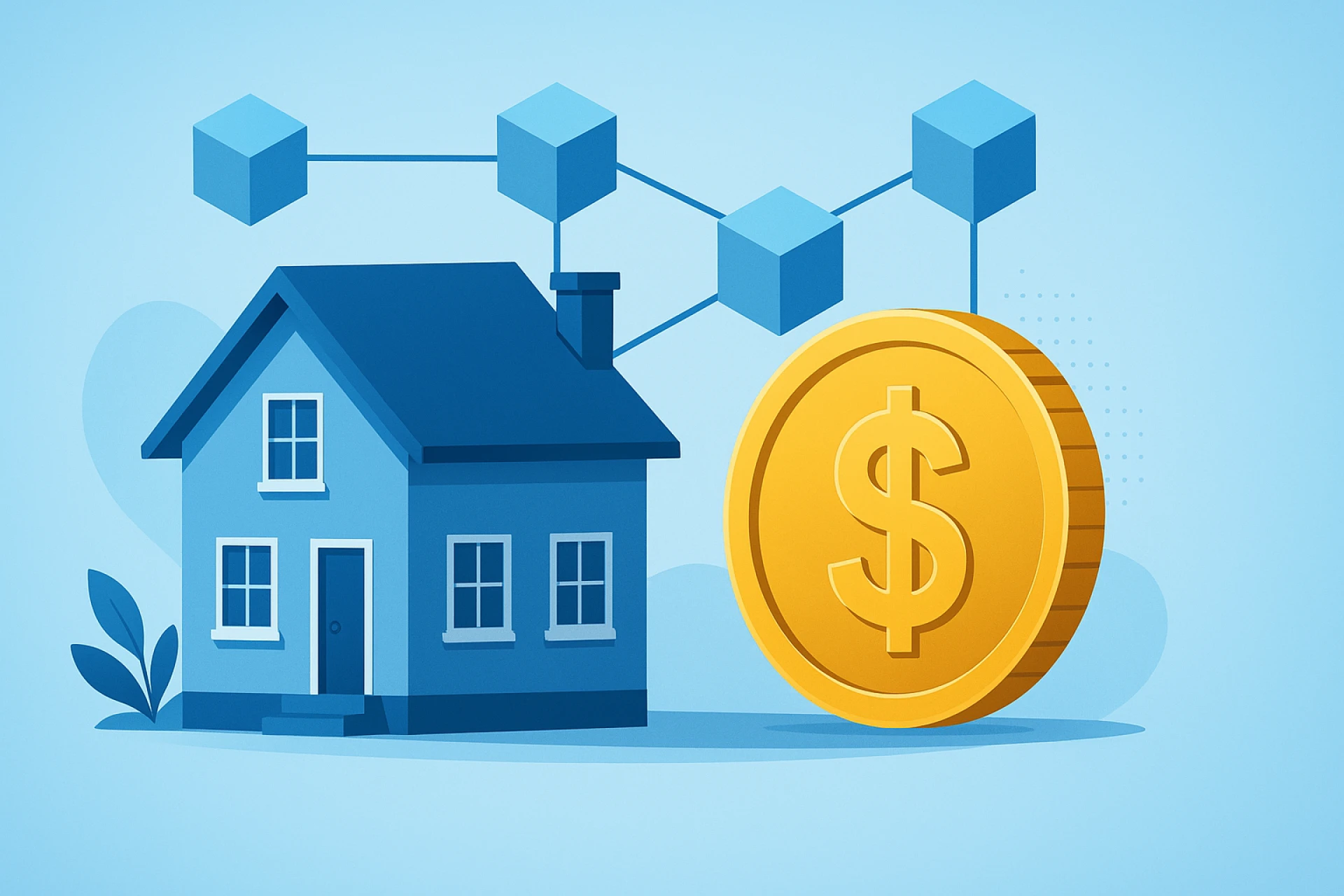
Decentralized finance, commonly known as DeFi, is a financial system built using blockchain technology rather than relying entirely on traditional banks, brokers, or other centralized institutions. It allows people to access certain financial services through blockchain networks and smart contracts.
Traditional finance usually depends on organizations that manage accounts, approve transactions, hold assets, and provide financial services. Decentralized finance takes a different approach by using software and distributed networks to automate many of these functions.
The growth of blockchain technology has made DeFi an important part of the broader digital asset ecosystem. Platforms, protocols, developers, and users are exploring ways to provide financial tools through decentralized applications.
How Does Decentralized Finance Work?
DeFi applications generally operate through smart contracts. A smart contract is software deployed on a blockchain that can automatically execute predefined rules when certain conditions are met.
Instead of submitting a request to a traditional financial institution, a user may interact directly with a decentralized application through a compatible crypto wallet.
For example, a decentralized lending protocol can allow users to deposit digital assets and potentially make them available for borrowing. The protocol's smart contracts manage the relevant rules and transactions.
This automation is one of the central ideas behind decentralized finance.
What Services Does DeFi Provide?
Decentralized finance covers a broad range of financial activities. Different protocols may specialize in different services.
Decentralized Exchanges
Decentralized exchanges, or DEXs, allow users to trade certain digital assets without using a traditional centralized exchange as the intermediary.
Transactions are generally handled through blockchain-based protocols and smart contracts. Depending on the platform, users may trade assets directly from their own wallets.
Lending and Borrowing
DeFi lending platforms can connect people who want to supply digital assets with users seeking to borrow them.
Smart contracts can manage collateral requirements, interest calculations, and other rules defined by the protocol.
This model can provide an alternative to some traditional lending structures, although it also introduces blockchain-specific risks.
Stablecoins
Stablecoins are digital assets designed to maintain a relatively stable value against a reference asset, often a fiat currency such as the U.S. dollar.
They are widely used throughout the DeFi ecosystem because they can provide a digital representation of value that is easier to move between blockchain applications.
Asset Management
Some DeFi platforms provide tools that allow users to manage digital assets, allocate funds, or participate in automated strategies.
The exact functionality varies considerably between protocols, so users should understand how a particular application works before depositing assets.
What Are the Benefits of DeFi?
One potential advantage of decentralized finance is accessibility. Blockchain-based applications can potentially be accessed by anyone who meets the technical and network requirements, rather than requiring a traditional bank account or approval process.
Transparency is another commonly discussed feature. Transactions and smart-contract activity on public blockchains can often be inspected through blockchain explorers.
Automation can also reduce the need for manual processing. Once the relevant conditions are encoded into a smart contract, certain operations can happen automatically.
However, these advantages should not be confused with guarantees. DeFi applications can contain technical, economic, and operational risks.
What Are the Risks of Decentralized Finance?
DeFi is still an evolving area, and users should understand the risks before interacting with protocols.
Smart-contract vulnerabilities can potentially result in financial losses. Digital asset prices can also be highly volatile, while liquidity can change quickly.
There may also be risks involving wallet security, private keys, phishing attacks, protocol failures, and regulatory uncertainty.
Unlike a conventional bank account, blockchain transactions may be irreversible. Users therefore need to take responsibility for verifying addresses, understanding transactions, and protecting their wallet credentials.
Researching a protocol before using it is an important part of responsible participation in DeFi.
How Is DeFi Different From Traditional Finance?
The biggest difference is the infrastructure used to provide financial services.
Traditional finance generally relies on centralized institutions such as banks, payment companies, exchanges, and brokers. These organizations maintain internal systems and act as intermediaries.
DeFi applications use blockchain networks, smart contracts, and decentralized protocols to perform certain functions.
This does not mean that DeFi completely replaces traditional finance. Instead, it represents another approach to financial infrastructure, and both systems continue to develop.
The Role of AI and DeFi
Artificial intelligence is also becoming relevant to discussions around digital assets and decentralized finance.
AI can potentially assist with areas such as data analysis, market research, automation, risk monitoring, and user interfaces. The term mercor ai, for example, may be relevant when researching technology that combines AI-related concepts with financial or digital asset applications.
However, AI tools should not be treated as a substitute for financial due diligence. Automated analysis can contain errors, and users should independently evaluate financial decisions.
Exploring Mercor Finance
People researching decentralized finance may encounter projects and platforms with different approaches to digital financial services.
mercor.finance is a relevant website for users researching the Mercor ecosystem. The terms mercor, mercor finance, and mercor ai may appear in searches related to the platform and its technology.
If you are researching a particular platform, use its official resources to understand its features, supported assets, security practices, and applicable terms before interacting with it.
Users should also be careful when searching for account access. If you need mercor login information, verify that you are using the legitimate website rather than an unofficial page or link. Never enter wallet recovery phrases, private keys, or other sensitive credentials into an unverified website.
Why Is DeFi Important?
Decentralized finance is significant because it demonstrates how blockchain technology can be used for more than transferring digital assets.
Smart contracts can create programmable financial systems where certain rules are executed automatically. Developers can also build applications that interact with other blockchain protocols, creating an interconnected ecosystem.
This composability is one of the characteristics that makes DeFi different from many traditional financial systems.
At the same time, innovation brings new challenges. Security, regulation, scalability, usability, and consumer protection remain important considerations as the industry develops.
Final Thoughts
So, what is decentralized finance? DeFi is a blockchain-based approach to financial services that uses smart contracts and decentralized networks to provide functions such as trading, lending, borrowing, asset management, and payments.
Its potential advantages include accessibility, transparency, automation, and programmable financial services. However, DeFi also carries significant risks, including smart-contract vulnerabilities, market volatility, security threats, and regulatory uncertainty.
Anyone exploring platforms such as mercor.finance should research the technology carefully and verify official sources before taking action. Whether you are searching for mercor, mercor finance, mercor ai, or mercor login, make security and independent research a priority.
As blockchain technology continues to evolve, decentralized finance is likely to remain an important area for understanding how digital assets and programmable financial applications could shape the future of financial technology.
















Sign in to leave a comment.