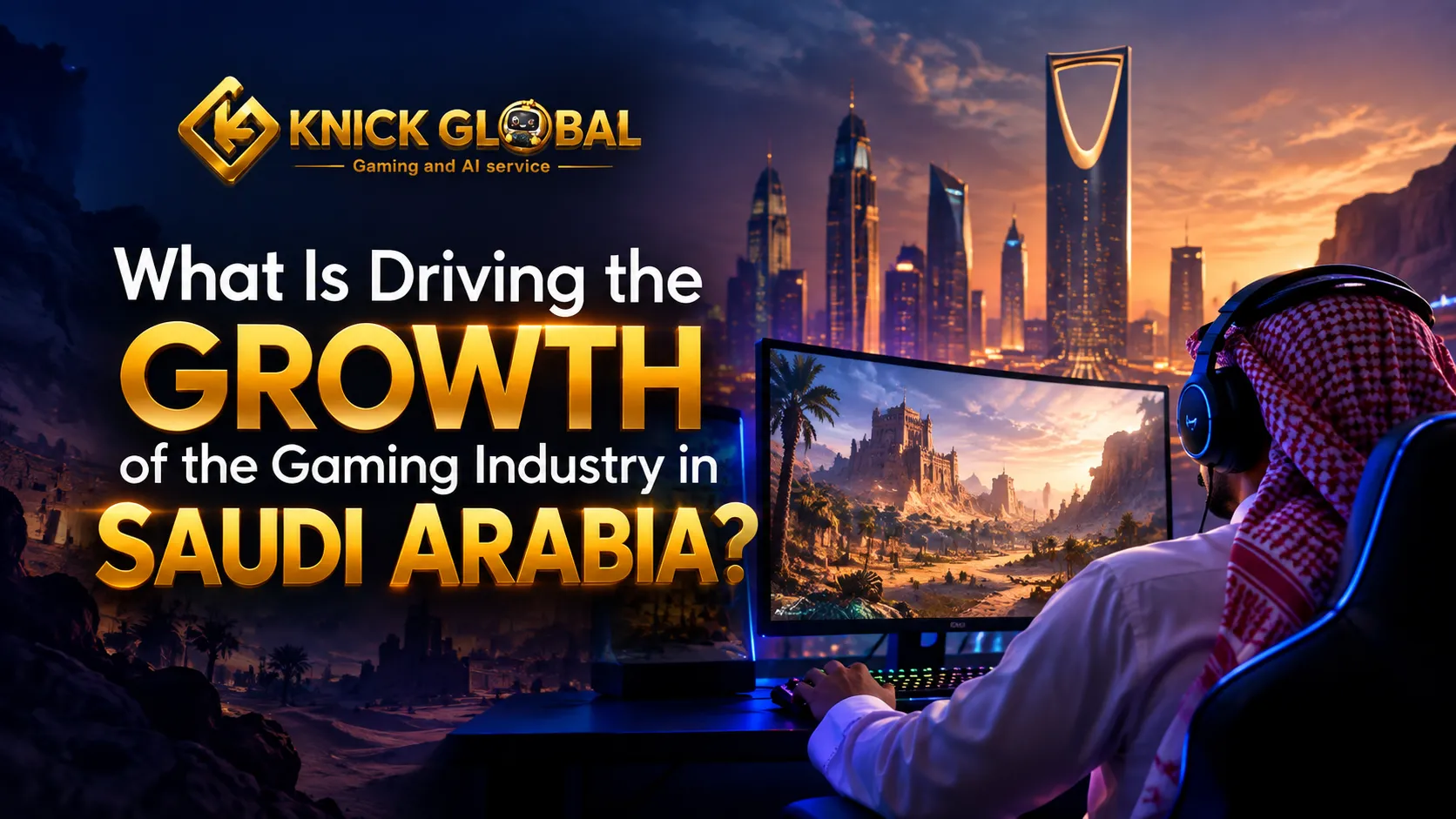

Saudi Arabia’s gaming industry is moving through a period of rapid change. Gaming is no longer viewed only as a form of entertainment. It is becoming part of a much larger digital economy built around technology, creative talent, esports, interactive experiences, and new business opportunities.
This shift is also creating opportunities for every game development company in Saudi Arabia that can turn local ideas into engaging products for Saudi and international players. Businesses are exploring original games, branded gaming experiences, esports concepts, multiplayer titles, and new ways to connect with younger audiences.
So, what is actually driving this growth?
The answer is not one single trend. Saudi Arabia has a young digital audience, strong interest in esports, expanding technology infrastructure, increasing investment, and a long-term ambition to develop its own gaming ecosystem.
Why Is Saudi Arabia’s Gaming Industry Growing So Quickly?
Saudi Arabia has several ingredients that support a strong gaming market. A large share of the population is young and comfortable with smartphones, digital entertainment, social platforms, and online communities.
For many people, games are part of everyday entertainment.
That matters because a strong player base gives developers and businesses room to experiment. A game does not always have to begin as a huge international project. A focused mobile title, culturally relevant multiplayer experience, or competitive game can first build an audience locally and expand later.
The growth of gaming also fits naturally with Saudi Arabia’s wider push toward technology, entertainment, and creative industries.
Vision 2030 Is Creating a Bigger Digital Entertainment Economy
Saudi Vision 2030 has helped put entertainment, technology, tourism, and digital industries in a much more prominent position.
Gaming sits at the intersection of several of these areas.
It needs software engineers, artists, animators, UI/UX designers, writers, game designers, cloud specialists, marketers, and data professionals. A successful gaming ecosystem can therefore create opportunities far beyond game studios themselves.
This broader environment is encouraging companies to look at gaming as a serious business sector rather than a niche entertainment category.
For entrepreneurs, that changes the conversation from “Should we build a game?” to “What kind of gaming business can we build?”
Mobile Gaming Makes Games Easy to Access
One of the biggest reasons behind gaming growth is simple: smartphones.
Players do not need an expensive gaming setup to start playing. A phone provides instant access to casual games, strategy titles, multiplayer experiences, racing games, card games, and many other genres.
That accessibility creates an important opportunity for a mobile game development company. Developers can design experiences around short sessions, social play, competitive features, Arabic localization, live events, and monetization models suited to mobile audiences.
Imagine a player in Riyadh opening a game during a short break. A few minutes later, they are playing against friends in Jeddah or joining an online competition.
That convenience is difficult to match.
Esports Is Turning Players Into Communities
Gaming becomes much more powerful when players do more than simply play.
They watch tournaments. They follow professional players. They discuss strategies. They join teams. They share clips. They attend events.
That is why esports is an important part of Saudi Arabia’s gaming momentum.
Large gaming and esports events can turn individual players into active communities. They also create opportunities for tournament organizers, sponsors, content creators, game publishers, technology companies, and brands.
Competitive gaming can extend the life of a game as well. Rankings, seasonal tournaments, leaderboards, team systems, and spectator features give players reasons to return.
For developers, esports is therefore not just about hosting competitions. Competitive thinking can influence the way a game is designed from the beginning.
Local Players Want Experiences That Feel Relevant
Global games are enormously popular, but there is also room for experiences that understand Saudi players more closely.
Language is one part of that.
Arabic localization should go beyond translating menus. Dialogue, instructions, UI layouts, notifications, customer support, and cultural references may all need careful adaptation.
There is also an opportunity to create original worlds inspired by regional stories, landscapes, architecture, history, and modern Saudi culture.
A skilled game development company in Saudi Arabia can combine those local elements with gameplay standards expected by global audiences.
The goal should not be to make a game feel “local” simply by adding Arabic text. It should feel natural to the audience while still being enjoyable to someone playing from another part of the world.
Investment Is Helping the Ecosystem Mature
Building a serious gaming industry requires more than enthusiastic players.
Studios need funding. Developers need tools. Startups need mentoring. Large projects need infrastructure, publishing support, marketing, and access to experienced talent.
Saudi Arabia’s increasing focus on gaming and esports is helping create a more structured environment around these needs.
This can have a multiplier effect.
When more studios and gaming businesses enter the market, demand grows for programmers, 2D and 3D artists, animators, designers, QA testers, backend developers, cybersecurity specialists, and marketing professionals.
Those professionals gain experience and move on to increasingly ambitious projects.
That is how an industry starts building depth.
Better Technology Is Enabling More Ambitious Games
Today’s players expect smooth gameplay, fast matchmaking, attractive graphics, secure payments, regular content updates, and reliable multiplayer performance.
Modern cloud infrastructure, powerful game engines, analytics platforms, AI-assisted systems, and cross-platform development tools make it possible to build experiences that would have been much harder for smaller teams a few years ago.
Developers can also use player data to understand where users stop playing, which features are popular, how difficulty affects retention, and what needs improvement.
This changes game development from a one-time production process into an ongoing cycle.
Build. Launch. Measure. Improve.
Saudi Businesses Are Discovering Gaming Beyond Entertainment
Another interesting growth area is the use of game mechanics outside traditional games.
Brands can use interactive experiences for promotions and customer engagement. Educational organizations can introduce game-based learning. Tourism projects can create virtual experiences around destinations. Companies can use simulations for training.
Even a simple rewards system can borrow ideas from gaming, such as points, levels, achievements, missions, and leaderboards.
As businesses become more comfortable with interactive technology, the boundary between games, apps, virtual experiences, and digital marketing is becoming less rigid.
What Opportunities Exist for Game Developers in Saudi Arabia?
The market offers opportunities across mobile games, PC and console experiences, multiplayer development, esports, educational games, branded experiences, AR/VR projects, and culturally inspired titles.
For a new studio, however, the smartest approach is not necessarily to build the biggest game possible.
Start with the audience.
What do they enjoy? How often will they play? Which platform do they use? Will they play alone or with friends? What will make them return after the first week?
Answering those questions early can save months of unnecessary development.
Where Is Saudi Arabia’s Gaming Industry Heading?
The next phase is likely to be about building sustainable local capabilities.
Saudi Arabia already has an enthusiastic gaming audience. The bigger opportunity is to convert that demand into original intellectual property, skilled development teams, successful studios, competitive gaming products, and experiences capable of reaching international markets.
Mobile will remain particularly important because of its accessibility, while esports, multiplayer gaming, immersive technologies, and locally relevant content can open additional paths for growth.
For developers and businesses, this is a market worth watching closely.
Build Your Next Gaming Project With Knick Global
The growth of gaming in Saudi Arabia is creating room for fresh ideas, but turning an idea into a successful game still requires careful planning, design, development, testing, and post-launch improvement.
Knick Global works with businesses and entrepreneurs to develop gaming experiences around their audience, platform, gameplay requirements, and long-term goals. Whether you are considering a mobile game, multiplayer experience, 2D or 3D title, or a larger custom gaming platform, the process should begin with a clear understanding of the player.
Have a game concept for the Saudi market? Talk to Knick Global about transforming it into a playable, scalable product.


















Sign in to leave a comment.