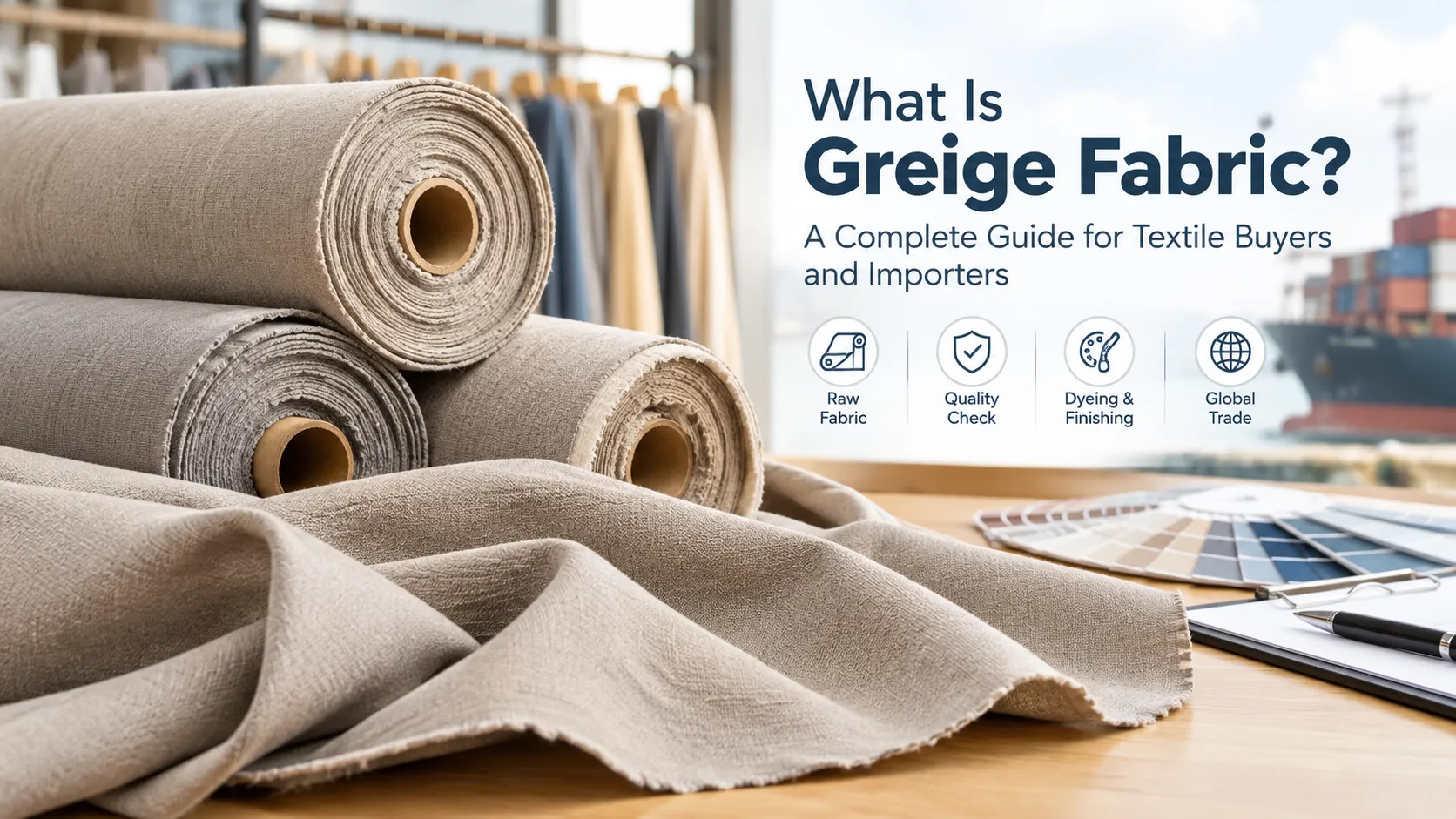

Greige fabric is one of the most important — and most misunderstood — stages in the textile supply chain. If you're a buyer or importer sourcing cloth internationally, understanding greige is the first step toward better quality control and better margins. Here's everything you need to know.
What Is Greige Fabric?
Greige fabric (sometimes spelt "grey fabric" or "grey goods") is fabric in its raw, unfinished state — woven or knitted straight off the loom or knitting machine, but not yet dyed, bleached, printed, or treated. The word "greige" is a blend of "grey" and "beige," describing the natural, off-white color of the cloth before any wet processing.
In simple terms, it's the base material every finished textile starts from. A shirt, a bedsheet, or a curtain all begin life as greige goods before finishing mills turn them into the colored, patterned fabrics you see in stores.
Why Greige Is Treated as Its Own Stage
Many buyers purchase greige fabric specifically because it gives them control over the finishing process. Rather than buying finished cloth, they source the greige separately and send it to specialised dyeing, printing, or finishing units. This approach lets them:
- Choose their own colours, prints, and finishes instead of being locked into a supplier's catalogue.
- Control quality at each stage rather than relying on one vendor for everything.
- Manage costs more precisely, since greige is priced before the value-added finishing steps.
That's why greige is treated as its own product category — with its own specifications, pricing, and dedicated suppliers. Sourcing directly from an established greige fabric manufacturer often gives importers stronger margins than buying finished material downstream.
Common Types of Greige Fabric
Greige fabric varies by fiber and construction. The most common types include:
- Cotton greige — the most widely used, for apparel, home textiles, and industrial applications.
- Polyester / synthetic greige — valued for durability and lower cost.
- Blended greige — such as cotton-polyester (poly-cotton) blends that balance comfort and strength.
Within each, the fabric can be woven (poplin, twill, voile) or knitted (single jersey, interlock), and each construction serves a different end use.
Key Specifications Every Buyer Should Check
Before ordering greige fabric, experienced importers evaluate a few critical parameters:
- GSM (grams per square meter) — the weight and thickness of the fabric.
- Thread/yarn count — the fineness of the yarns used.
- Construction (ends and picks, or wales and courses) — the density of the weave or knit.
- Width — the usable roll width, which affects cutting efficiency.
- Fault rate — the number of defects per unit length.
Getting these right upfront is essential, because any defect present in the greige will still be there after dyeing and finishing.
How Greige Fabric Pricing Works
Greige is typically priced per meter or per kilogram, driven by fiber type, yarn count, construction density, and current yarn prices. Because yarn prices move with cotton and crude markets, greige rates can shift week to week — something buyers should factor into their contracts and lead times.
What to Look for in a Greige Fabric Supplier
Whether you're importing in bulk or sourcing base cloth for garment production, your supplier's reliability matters as much as the fabric itself. Look for consistent quality across lots, transparent specifications, dependable lead times, and the capacity to scale with your orders.
Suppliers based in major textile hubs like India often combine competitive pricing with established export experience. Dinesh Exports, for example, works with international buyers who need consistent, specification-compliant greige goods for their finishing operations.
Final Thoughts
Greige fabric is the foundation of the entire textile value chain — the unfinished cloth that becomes everything from fashion apparel to home furnishings. For buyers and importers, understanding what greige is, how it's specified, and what to look for in a supplier is the first step toward a reliable, cost-effective sourcing strategy. Get the greige right, and everything downstream becomes easier.


























Sign in to leave a comment.