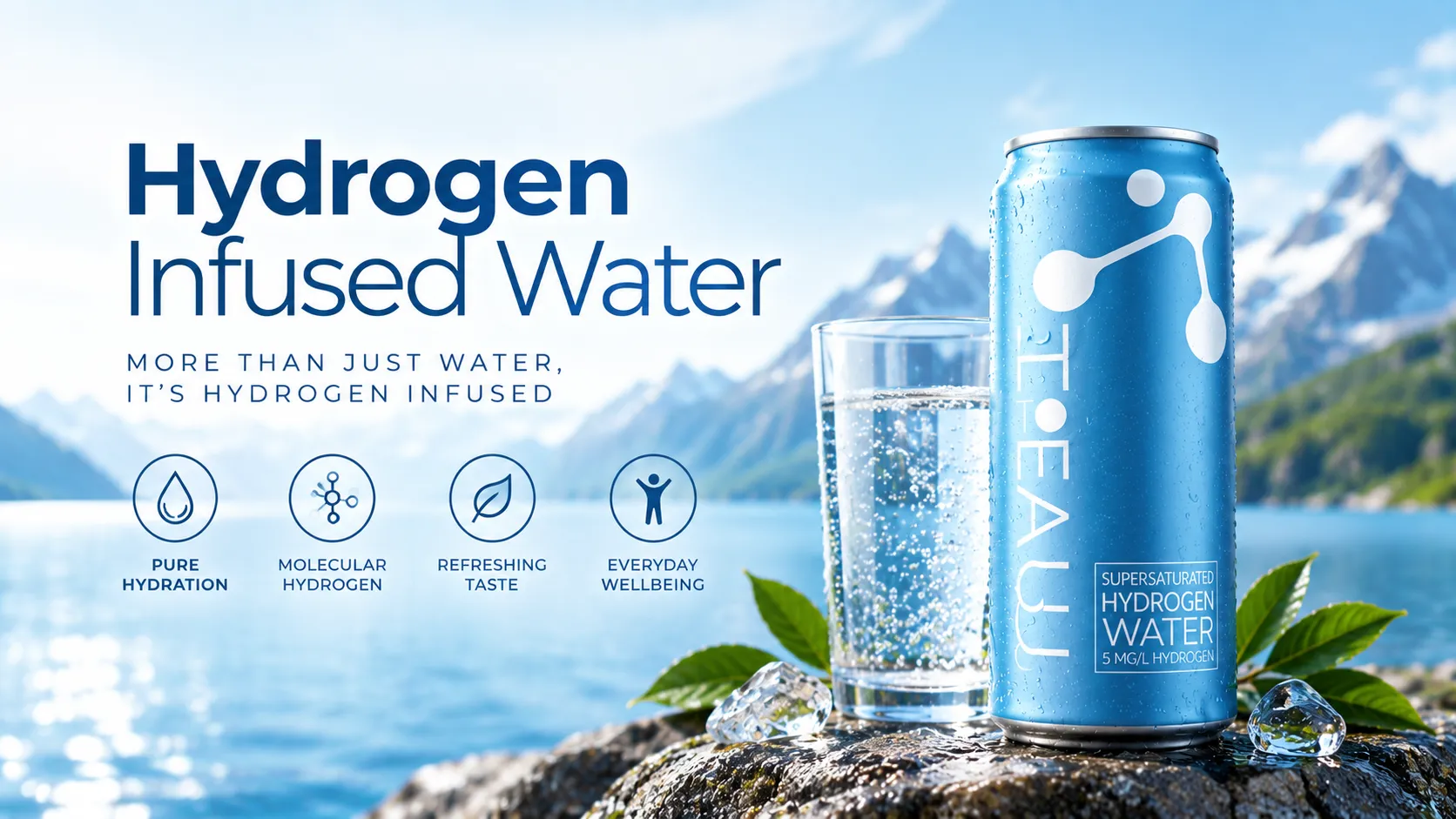

Walk past the water aisle these days and you'll probably spot a few cans or bottles labelled "hydrogen infused." Most people's first reaction is some version of: is this actually different, or just clever packaging? Fair question. Once you understand what's happening at a molecular level and how these products are made, it's much easier to tell a well-made product from one riding on buzzwords or a pretty label.
Here's a practical look at what hydrogen infused water is, how manufacturers get the hydrogen in there in the first place, and what to check before you buy.
What Hydrogen Infused Water Actually Means
Strip away the marketing and hydrogen infused water is just water with extra hydrogen gas dissolved into it. You'll also see it called molecular hydrogen water, which refers to those H2 molecules floating around in the liquid. What makes hydrogen different from other additives is that you can't obviously detect it. No taste change, no smell, nothing visible. That's exactly why some people raise an eyebrow at the whole category — how do you trust something you can't sense at all?
There's a practical reason this matters too. Hydrogen molecules are tiny and light, so they dissolve into water easily, but that same property lets them escape just as easily. Manufacturers spend a lot of effort just trying to keep enough hydrogen trapped in the water long enough for it to still be there when you open the container.
How the Infusion Process Works
A few different methods get hydrogen into water, and each one has its own trade-offs.
Electrolysis
An electric current splits water into hydrogen and oxygen, then some of that hydrogen gas gets reintroduced into the water at a set concentration. You'll see this method in hydrogen water machines or generators.
Magnesium Reaction Tablets
Drop a magnesium tablet into a bottle of water and a chemical reaction releases hydrogen gas right there in the container. No power source needed, which is why this method is common for home use or on the go.
Pressurized Infusion
This works a lot like how sparkling water gets its fizz — hydrogen gas gets forced into the water under pressure. It's a common choice for pre-bottled or canned hydrogen water since it gives manufacturers tighter control over concentration before sealing the product.
Why Packaging Matters More Than People Expect
Here's something most people don't think about: hydrogen molecules are small enough to work their way through regular plastic over time. That's the real reason canned hydrogen water has caught on. Aluminum simply holds onto hydrogen gas better than plastic does, so the water keeps more of its hydrogen content by the time it lands in your hands.
If you're shopping around to buy hydrogen infused water, the packaging alone tells you a lot. A bottle sitting in a thin plastic container on a shelf for a few weeks has probably lost a good chunk of whatever hydrogen it started with.
What to Check Before You Buy Hydrogen Water
A handful of details can help you assess a hydrogen water product:
Hydrogen concentration — look for a specific figure measured in mg/L, rather than a vague “infused with hydrogen” claim.
Packaging type — check how the hydrogen water is packaged and whether the packaging is designed with hydrogen retention in mind.
Production and storage information — look for clear information about when the product was produced and how it should be stored.
Product transparency — a brand that clearly explains its water source, production process, hydrogen concentration and quality approach gives you more useful information when comparing products.
Understanding Molecular Hydrogen Water
Research into molecular hydrogen is continuing, with studies exploring its potential role in areas such as hydration and physical performance. For consumers, the focus should also be on how a product is made, the hydrogen concentration in mg/L, and the quality controls behind it. HtoEAU takes this approach by focusing on controlled production, consistency, and clear product information.
That combination of research, careful production and transparency gives consumers a clearer way to understand what they are choosing when exploring molecular hydrogen water.
The HtoEAU Approach to Consistent Quality
HtoEAU takes a premium approach to hydrogen hydration, pairing pure Icelandic glacial water with precision-infused molecular hydrogen. The brand relies on controlled infusion technology and pressure-controlled filling, which keeps quality consistent and helps the hydrogen remain in the water longer. It's a production process built around one goal: making sure the can you open matches what the label states.
HtoEAU doesn't stop at still hydrogen water either. The lineup also includes a sparkling option, giving people variety whilst exploring advanced hydration, without sacrificing the quality control that goes into every product.
Conclusion
At its core, hydrogen water is water containing dissolved molecular hydrogen (H₂). Different products use different methods to introduce hydrogen into water, while factors such as hydrogen concentration, packaging and production methods can affect the final product.
For consumers, it makes sense to look beyond the marketing and consider what is actually in the can, how the product is made, and the hydrogen concentration in mg/L. HtoEAU takes a controlled approach, combining Icelandic glacial water with molecular hydrogen and focusing on consistency, quality and transparent product information.
FAQs
Does hydrogen infused water taste different from regular water?
No. Hydrogen doesn't change taste, smell, or appearance — the molecules are dissolved at a level too subtle for your senses to pick up.
Is canned hydrogen water better than bottled?
Usually, yes. Aluminum cans hold hydrogen gas in better than plastic, which lets it slip out gradually, so canned versions tend to keep a higher concentration for longer.
How long does hydrogen stay in the water after opening?
Once you open the container, hydrogen starts dissipating pretty quickly. Best to drink within an hour of opening in order to get the maximum benefits.
What does mg/L mean when buying hydrogen water?
mg/L means milligrams per litre. It is the measurement used to indicate how much dissolved molecular hydrogen (H₂) is present in the water. When comparing hydrogen water products, checking the stated mg/L concentration can help you understand the amount of dissolved hydrogen in the product.
What should I look for when buying water hydrogen?
Look for clear information about the hydrogen concentration in mg/L, the water source, production process, packaging and quality standards. These details can help you better understand the product and make a more informed choice.























Sign in to leave a comment.