

The first time I tried kimchi, I wasn't ready for it. I expected something like pickled cabbage, maybe a bit spicy, and instead I got this deep, funky, almost fizzy punch of flavour that I genuinely didn't know how to react to. I remember pausing mid-bite and thinking, what is this, exactly? Years later, I still think that's the most honest reaction most people have the first time.
If you've seen jars of kimchi dubai grocery shelves are increasingly stocking and wondered what you're actually looking at, this is the guide I wish someone had handed me back then.
So What Is Kimchi, Exactly?
Kimchi is a traditional Korean side dish made by fermenting vegetables, most commonly napa cabbage, with a mix of seasonings that usually includes chilli flakes, garlic, ginger, and salted seafood or fish sauce. It's been part of Korean food culture for well over two thousand years, originally developed as a way to preserve vegetables through brutal winters long before refrigeration existed.
Here's the bit that surprises most people, myself included when I first learned it. Kimchi wasn't always spicy. Chilli peppers are native to the Americas and didn't reach Korea until Portuguese traders introduced them in the early 1600s. For roughly two thousand years before that, kimchi was simply salted, fermented vegetables with no heat at all. The fiery red version we think of today is, in the grand scheme of kimchi's history, a relatively recent addition.
What separates kimchi from a simple pickle is the fermentation. The vegetables aren't just soaked in vinegar for flavour. They're salted, mixed with seasoning, packed tightly, and left to ferment with naturally occurring bacteria, which is where all that distinctive tang and depth comes from.
There isn't just one kimchi, either. Korean households have hundreds of regional and seasonal variations, using different vegetables like radish, cucumber, or green onion depending on what's in season. The napa cabbage version most people picture is really just the most internationally recognised one, not the only one.
How Kimchi Is Actually Made
The process starts with salting. Napa cabbage gets cut and soaked in a salt brine for a few hours, sometimes longer, which draws out moisture and softens the leaves. This step matters more than people realise, since under-salted cabbage won't ferment properly and can turn mushy or spoil.
Once rinsed, the cabbage gets coated in a paste made from Korean chilli flakes (gochugaru), garlic, ginger, and often a splash of fish sauce or salted shrimp for umami depth. Some households add a bit of rice flour porridge to help the paste stick and to feed the fermentation process along.
After that, it's packed tightly into a jar, pressed down to remove air pockets, and left at room temperature for a day or two to kickstart fermentation before moving to a cooler spot. Traditionally that meant burying large earthenware jars called onggi underground, where the soil kept a steady cool temperature through the seasons, though most of us just use the fridge now. Over the following days and weeks, the flavour deepens, the texture softens slightly, and that signature sourness builds.
Living in Dubai's heat, I've learned the hard way that kimchi ferments noticeably faster here than the timelines most Western recipes give. A jar that might take five days to properly ferment in a cooler climate can be there in two or three on a warm kitchen counter, so I've started checking mine daily instead of trusting the clock.
What Does Kimchi Actually Taste Like?
This is the part people ask me about most, and it's genuinely hard to describe without tasting it. Fresh, young kimchi tastes bright, crunchy, and mildly spicy, with a garlicky sharpness up front. As it ferments longer, it turns sourer, funkier, and more complex, with a slight fizz on the tongue from the natural carbonation fermentation produces.
It's salty, spicy, tangy, and savoury all at once, hard to compare to anything else in Western cooking. The closest comparison is a spicy, garlicky sauerkraut with more depth and a stronger umami backbone. Some people fall in love with it immediately; others need a few tries before it clicks, and that's completely normal.
Why Kimchi Has Found Such a Following in the UAE
Kimchi in uae kitchens has grown well beyond the Korean expat community over the past few years, and I don't think that's a coincidence. Dubai's food scene embraces bold, layered flavours, and kimchi fits right into that appetite for something different from the usual pickle jar. There's a gut health angle too, and it pairs naturally with rice, grilled meats, and even the shawarma wraps most of us already eat weekly.
Buying Kimchi vs Making Your Own
Making kimchi at home is deeply satisfying, but it asks something of you: the right chilli flakes, patience for the salting step, and acceptance that your first batch might not be perfect. Mine certainly wasn't.
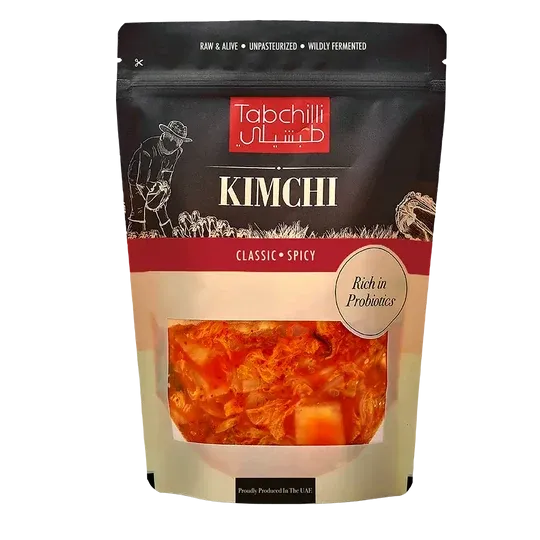
If you'd rather skip the trial and error, Tabchilli's kimchi is made in small batches using traditional fermentation methods, without shortcuts or pasteurisation that would kill off the live cultures that make kimchi worth eating in the first place.
Ready to Try It for Yourself?
Whether you're curious enough to make your first jar or you'd rather start by tasting one that's already been fermented properly, there's no wrong way in. Browse Tabchilli's range of naturally fermented kimchi, or get in touch if you're not sure which one suits your spice tolerance. We've talked plenty of first-timers through their very first bite, and we're happy to do the same for you.


















Sign in to leave a comment.