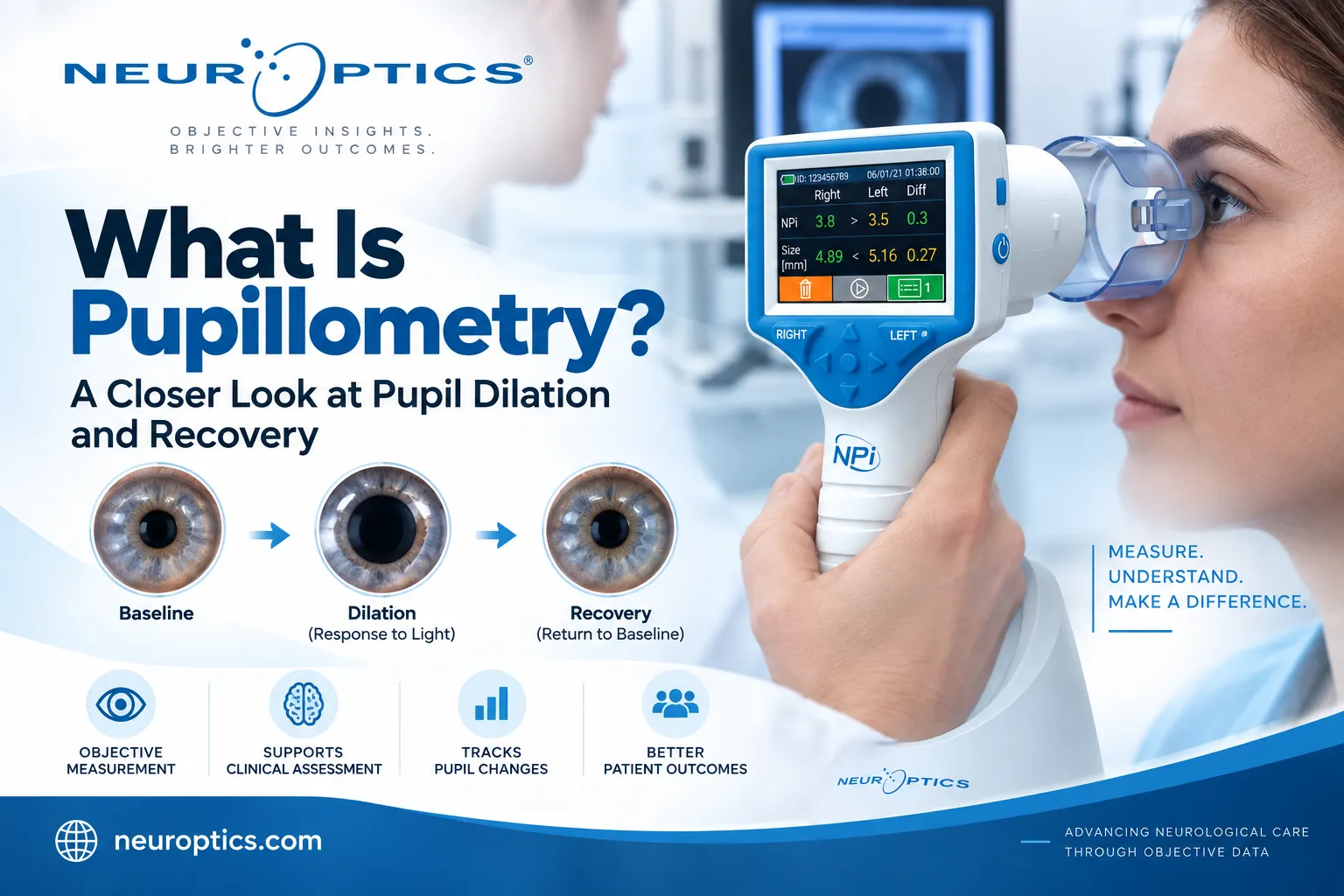

What is pupillometry? It is the quantitative measurement of pupil size and pupillary light response. Instead of relying only on visual descriptions such as “brisk” or “sluggish,” automated pupillometry provides objective measurements throughout the pupillary light reflex (PLR).
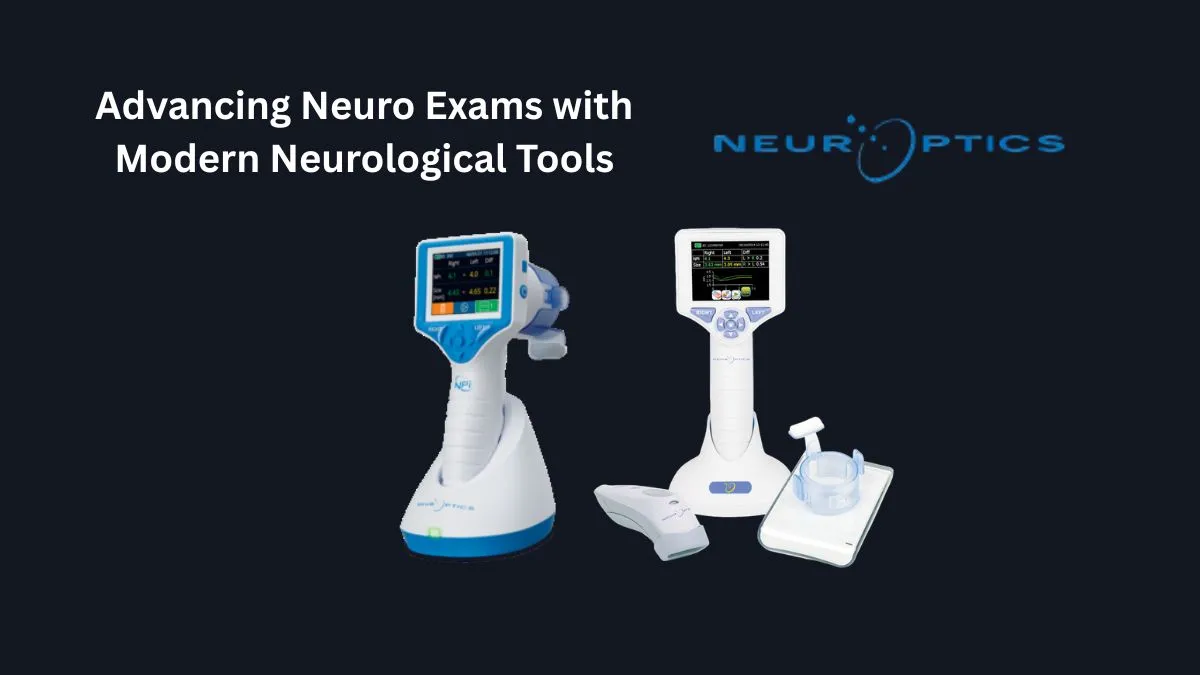
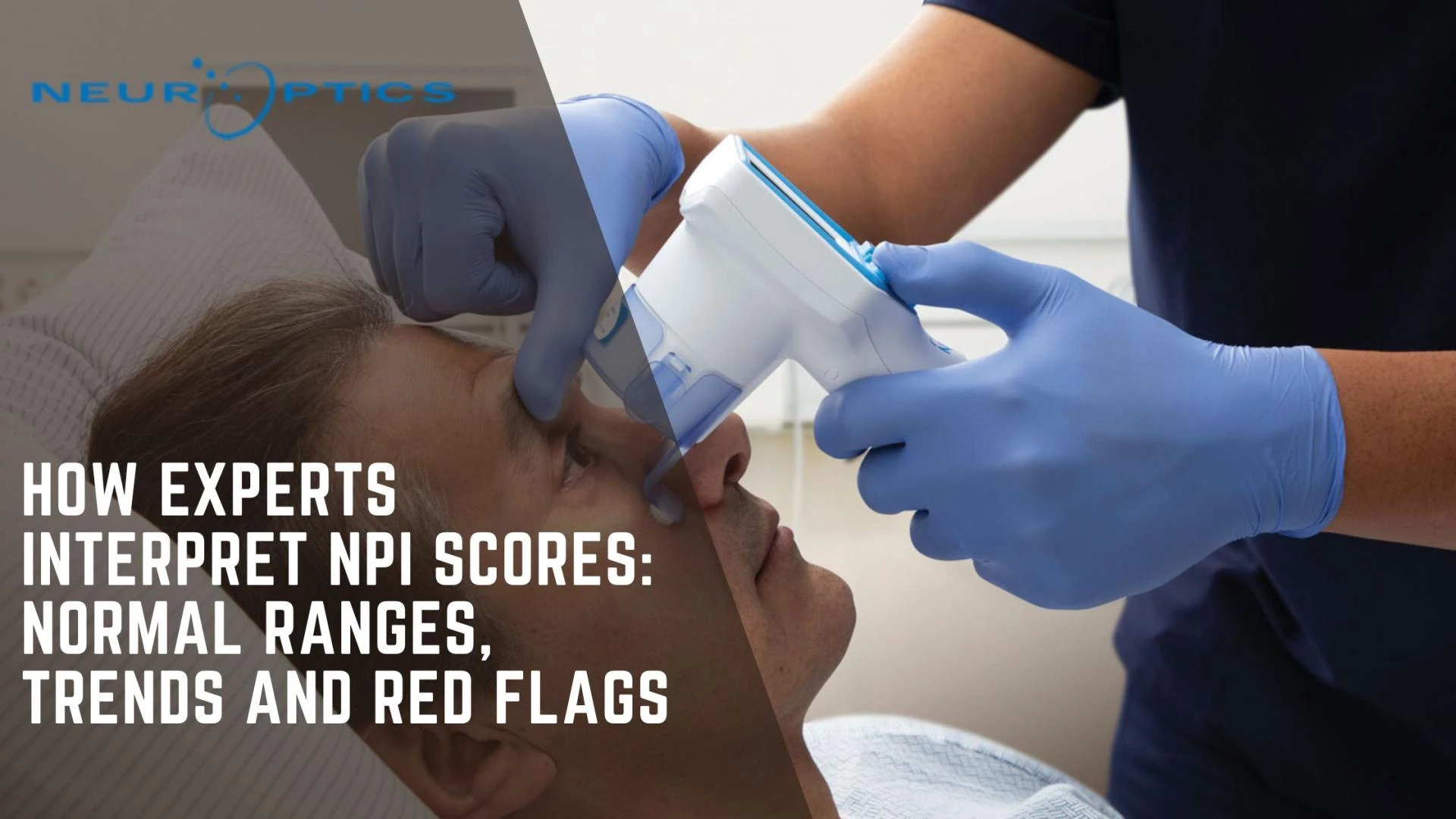
The NeurOptics® NPi®-300 Pupillometer measures pupil size and reactivity throughout the PLR, providing quantitative information that can support neurological pupil assessment.
What Is Pupillometry Actually Measuring?
Pupillometry captures more than the pupil's diameter at a single moment. The NPi-300 measures several characteristics of the PLR, including maximum pupil diameter, minimum diameter, percentage change, latency, constriction velocity, maximum constriction velocity, and dilation velocity.
When clinicians measure pupil size, the NPi-300 identifies the maximum pupil diameter before constriction as Size. MIN represents the pupil diameter at peak constriction.
This gives clinicians quantitative information about different points in the pupil's response rather than one visual observation.
From Pupil Dilation to Constriction and Recovery
A pupil's response can be viewed as a sequence. It begins at its maximum measured diameter, constricts in response to the light stimulus, reaches its minimum diameter, and then begins to recover.
The NPi-300 defines %CH as the percentage change between Size and MIN. This provides a relative measure of how much the pupil diameter changed during constriction.
The device also measures the recovery phase through dilation velocity. Its technical definition describes DV as the average pupillary velocity as the pupil recovers and tends to dilate back toward its initial resting size.
| Parameter | What it measures |
| Size | Maximum pupil diameter before constriction |
| MIN | Diameter at peak constriction |
| %CH | Percentage change from Size to MIN |
| CV | Average constriction velocity |
| MCV | Maximum constriction velocity |
| DV | Average dilation velocity |
Why Pupil Dilation Velocity Adds Another Measurement
Pupil dilation velocity describes the recovery portion of the response, while constriction velocity describes how quickly the pupil constricts.
That distinction matters when reviewing quantitative measurements. One parameter describes the extent of change, another describes constriction speed, and another describes recovery.
The NPi-300's pupil diameter measurement range is 0.80 mm to 10.00 mm, with approximately 0.03 mm resolution for changes in pupil size.
Where Pupillometry Fits into a Neuro Exam
Pupillary assessment is a component of the neurological examination for critically ill patients. NeurOptics describes its NPi Pupillometer as a handheld automated optical scanner providing objective measurements of pupillary size, symmetry, and reactivity.
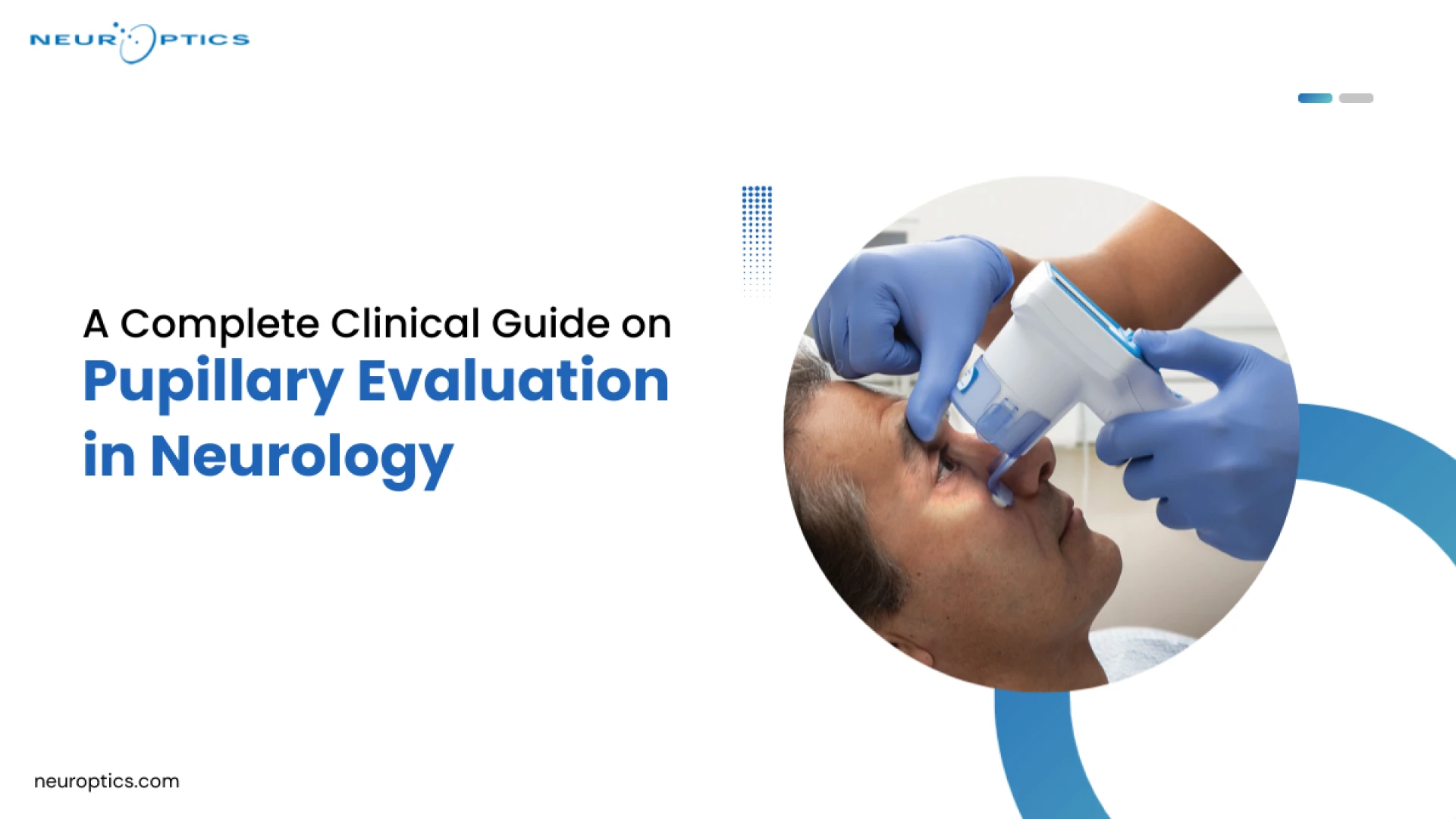
For the NPi-300, consistent measurement begins with correct positioning. The device is placed at a right angle to the patient's axis of vision with minimal tilting. The pupil is centered using the display, and the measurement is completed while the device remains in position for approximately three seconds.
This approach makes quantitative pupillometry a useful addition to the neuro exam workflow for trained clinical personnel.
What It Can Add to TBI Assessment
Quantitative pupillometry can be used to evaluate pupillary response in traumatic brain injury as part of neurological assessment. NeurOptics identifies traumatic brain injury among the neurological conditions in which its NPi Pupillometer can be used to assess and trend pupillary reactivity.
The important distinction is that quantitative pupil data provides additional objective information. It does not replace the broader clinical assessment or clinical judgment.
How NPi® Brings the Measurements Together
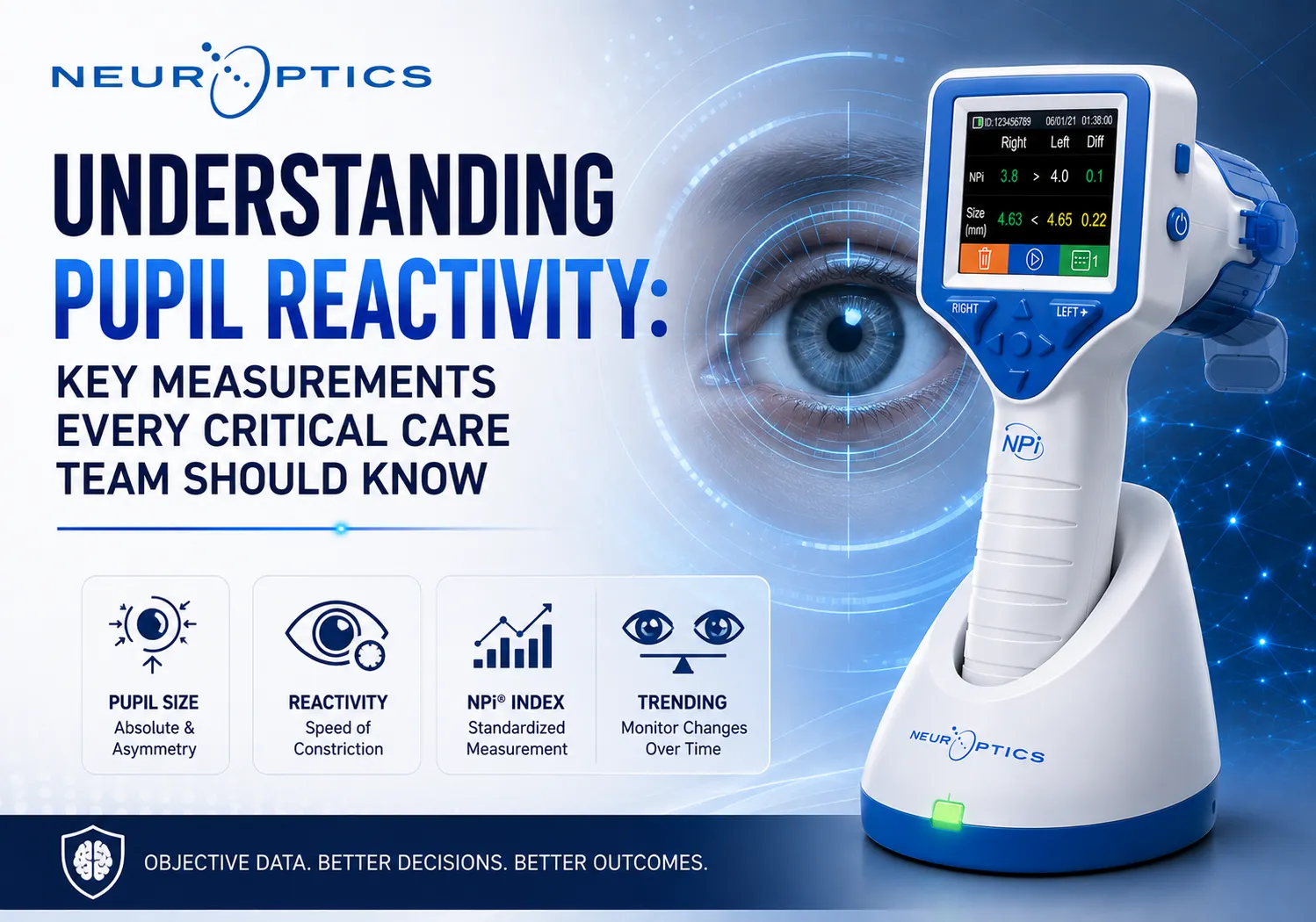
The NPi®, or Neurological Pupil index™, provides a numerical expression of pupil reactivity. The NPi-300 reports an NPi from 0 to 4.9. Its assessment scale identifies 3.0 to 4.9 as Normal/“Brisk,” below 3.0 as Abnormal/“Sluggish,” and 0 as Non-Reactive, Immeasurable or Atypical Response.
NPi is not the same as an individual parameter such as constriction or dilation velocity. Instead, it provides a numerical assessment based on the measured pupillary response.
Why Trending Matters in Critical Care
One measurement gives a snapshot. Repeated measurements can provide a trend.
The NPi-300 allows previous bilateral measurements stored on the SmartGuard® to be reviewed. It also provides an NPi Summary Table and NPi/Size Trending Graph covering 12-hour windows.
For hospitals evaluating neurological tools, this ability to capture, review, and trend quantitative pupil data can support a more consistent approach to ongoing pupillary assessment.
The NPi-300 is intended for properly trained clinical personnel under the direction of a qualified physician, and its results are provided for information rather than as standalone clinical diagnostic results
FAQ Section
Can pupillometry be used for children?
The NeurOptics clinical overview identifies its NPi Pupillometer as usable for adults and children.
What does MIN mean in pupillometry?
MIN is the pupil diameter at peak constriction. It is measured alongside Size and contributes to the NPi-300's %CH calculation.
What is the NPi-300 measurement range?
The NPi-300 measures pupil diameters from 0.80 mm to 10.00 mm. Its specified Size accuracy is approximately ±0.03 mm.




















Sign in to leave a comment.