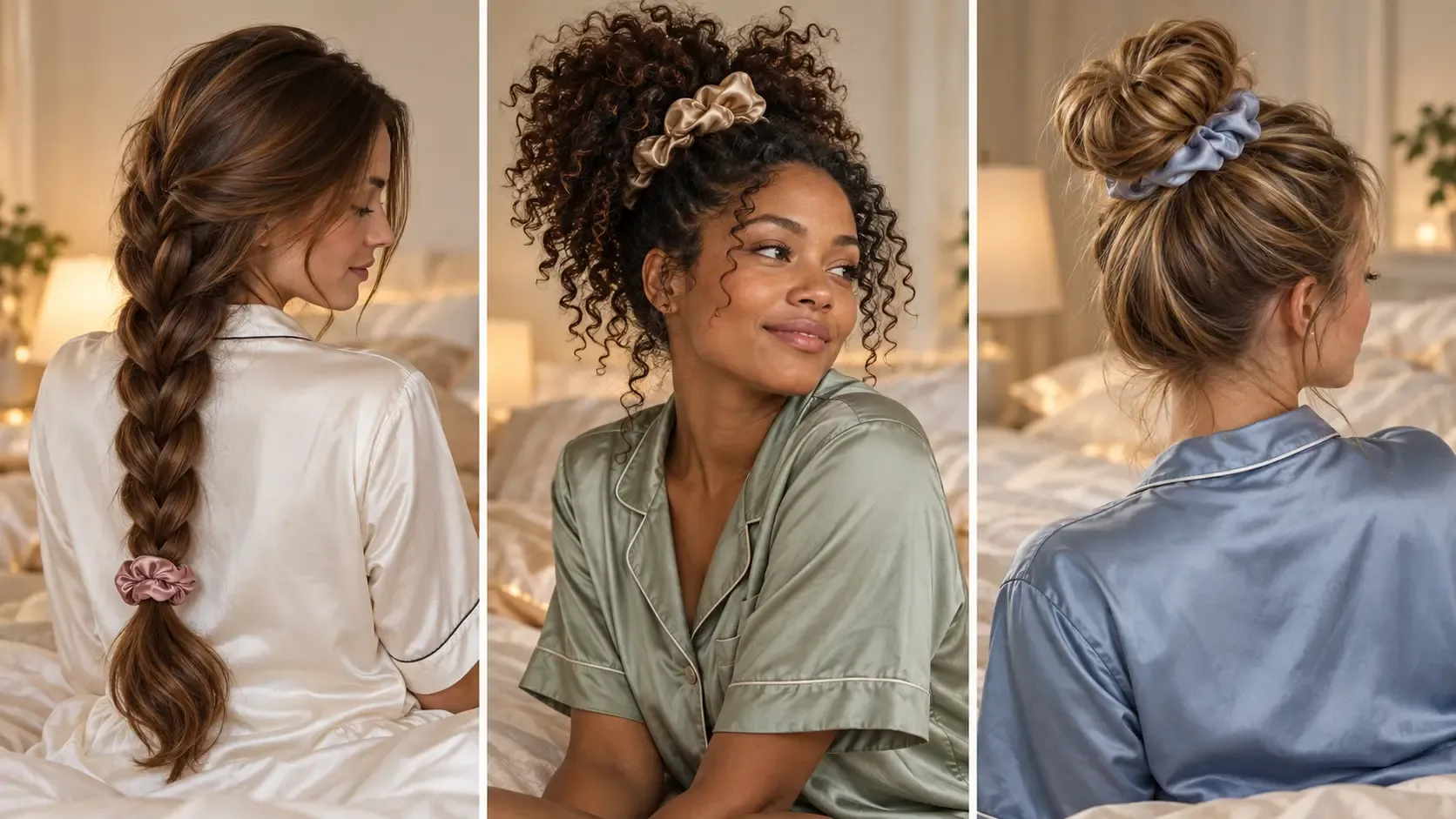

A loose braid is a practical starting point for long, straight or wavy hair. A loose pineapple can suit longer curls, while short hair may need no tying at all. The right choice keeps your hair manageable without pulling your scalp or creating an uncomfortable lump against your pillow.
If you have been wondering what the best hairstyle is to sleep in, start with your biggest morning problem. Are you untangling your lengths, refreshing flattened curls, or trying to remove a ponytail dent? Each problem calls for a slightly different approach.
This guide compares options by comfort, hair length, texture, and the finish you want tomorrow. The recommendations are practical starting points, not results from a controlled overnight hairstyle test.

Choose Your Overnight Hairstyle at a Glance
Use this table to pick one option to try. The trade-offs matter as much as the potential benefits.
| Your hair or morning goal | Starting option | Main trade-off |
|---|---|---|
| Long, straight hair that tangles | One loose braid | May leave waves |
| Wavy hair needing gentle containment | Loose braid or loose bun | Can change the existing wave pattern |
| Long curls you want to preserve | Loose pineapple | May stretch roots or shorter curls |
| Coily hair worn in a stretched style | A few loose twists | Can reshape a wash-and-go |
| Short hair or a bob | Hair down, optionally under a bonnet | Some pillow flattening may remain |
| Straight blowout you want to maintain | Gentle wrap | Requires practice and comfortable placement |
There is no universal winner. The best hairstyle for sleeping is the one that solves your actual problem and still feels comfortable when you lie down.
How to Judge Whether a Sleep Style Works
Before choosing a style, decide what success means. Less morning detangling is a different goal from keeping a blowout straight. Trying to achieve everything with one hairstyle often creates unnecessary work.
Use four questions: Does it pull? Does it press against the pillow? Does it keep the lengths where you want them? Can you undo it without a struggle?
The American Academy of Dermatology warns that repeated pulling from tight hairstyles can cause traction alopecia. Pain is a reason to loosen or remove a style, not something to tolerate until morning.
For protective hairstyles for sleep, comfortable execution matters more than the style's name. A braid, bun, or bonnet can all be unsuitable if they feel tight.
Five Options and When to Choose Them
1. A Loose Braid for Long, Tangle-Prone Hair
Try a simple three-strand braid when loose lengths repeatedly fall past your shoulders. It gathers the hair into one manageable section without requiring a tight ponytail at the roots.
Separate your hair into three sections and start braiding below the nape. Keep the first few crossings relaxed, work down the lengths, and secure the end with a soft covered tie. Avoid pulling the braid tight to make it look neat.
Choose placement around your sleeping position. If a central braid feels bulky when you lie on your back, bring it gently over one shoulder. If that pulls around your neck, try another option.
The compromise is texture. Even a loose braid may leave bends, especially if your hair holds shapes easily. Choose a wrap instead when preserving a straight finish matters more than containing every strand.
2. A Loose Pineapple for Longer Curls
A pineapple gathers curls high on the head with their ends left loose. The AAD includes a loose pineapple or loose braid among its suggestions for caring for curls during sleep.
To try it, lean forward and gather your curls gently with your hands. Place a roomy scrunchie around the gathered hair, using only enough hold to keep it together. Let the ends fall naturally instead of twisting them into a compact bun.
Check the shorter pieces near your hairline. If they cannot reach comfortably, leave them out rather than stretching them into place.
This option may not suit a curly bob or someone whose roots stretch easily. A spacious bonnet without a ponytail is worth comparing. In the morning, release the scrunchie and let the curls settle before deciding which sections need refreshing.
3. Loose Twists for a Stretched Coily Style
Consider a few large twists when you already wear your hair stretched and want an organized way to contain the sections overnight. This is a styling choice, not a promise of identical results across curl patterns.
Divide the hair into manageable sections. Split each section in two and cross the pieces around one another without tightening the base. Use as few sections as your hair comfortably allows.
The trade-off is a possible change in definition. Twists can create their own pattern, so they may be inconvenient when your priority is preserving an existing wash-and-go exactly as it is.
Keep the routine proportionate to the benefit. If nightly twisting takes longer than your morning refresh or requires repeated detangling, try a simpler arrangement. For short coils, a comfortable covering may be easier than forcing the hair into sections too small to handle gently.
4. A Loose Bun When You Want Hair Off Your Neck
A loose bun is an option for people who find dangling lengths distracting. It can also leave soft bends, although the result depends on your hair and how you arrange it.
Gather your hair where the bun will not sit directly beneath your head. Make a relaxed loop or gently fold the lengths, then secure them with a soft scrunchie. Avoid winding everything into a small, hard knot.
Test the placement while lying in your usual position. A bun that feels fine while standing can become uncomfortable on a pillow. Adjust it before settling down.
Very long or heavy hair may feel better divided into two loose sections instead. If any bun requires a strong grip to stay up, use another style. A tidy silhouette is not necessary for bedtime, and loose pieces do not need to be slicked back.
5. Hair Down or Gently Wrapped for Short and Straight Styles
Short hair does not need to be pulled into a ponytail simply because it is bedtime. A pixie, cropped cut, or short bob may be easiest to leave loose.
If you prefer a covering, choose one that accommodates your hair without flattening it into a tight bundle. A snug band that presses on your forehead is a fit problem, not a requirement.
For a straight blowout, experiment with arranging the hair gently around the head beneath a scarf. Start with fully dry hair and avoid making the wrap tighter just to stop movement. If it needs uncomfortable clips or pins to hold, simplify the arrangement.
Expect some trial and adjustment. Wrapping may help maintain the direction of a style, but it cannot guarantee a crease-free morning. Compare the result with simply leaving your hair loose before committing to a longer routine.
A Bedtime Routine You Can Keep Simple
Prepare According to Your Texture
Do not assume every hair type needs dry brushing before bed. The AAD advises minimizing handling of wet hair generally, while noting that tightly curled or textured hair is better detangled wet. Plan that step early enough to allow drying before your sleep routine.
If your hair is already detangled, avoid combing through it again purely out of habit. Work on the sections that actually need attention.
Add Product Only Where Needed
A bedtime routine does not require another layer of oil, cream, and serum every night. If you use leave-in conditioner, follow its directions and choose one suited to your texture. Fine hair generally needs a lighter formula and a smaller amount. Apply it to the hair rather than coating your scalp.
Check Your Accessories in Bed
Lie down, turn your head, and notice where the tie, knot, or band sits. Remove hard accessories that press against you. If your bonnet slips off, try a different size or shape instead of pulling the band progressively tighter.
For visual inspiration beyond these starting options, browse our protective hairstyles for sleep guide and compare the arrangements with your hair length.
Troubleshoot the Problem You Actually Wake Up With
Use the morning result to make one small adjustment. Changing the hairstyle, products, and accessories together makes it harder to tell what helped.
| Morning problem | Adjustment to try next |
|---|---|
| A visible scrunchie dent | Loosen the hold or try an arrangement without a tie |
| A braid pressing into your neck | Change its placement or try two loose sections |
| Curls stretched near the roots | Try a bonnet without gathering them into a pineapple |
| Ends tangled despite a ponytail | Compare with a loose braid that contains more of the length |
| Hair feels coated or limp | Skip the extra bedtime product and reassess |
| Covering repeatedly slips off | Reconsider its size, shape, and fabric rather than tightening it |
These adjustments are suggestions to compare, not guaranteed fixes. Stop any arrangement that causes discomfort.
Try a Three-Night Routine Check
Pick a suitable option from the first table and try it across three comparable nights. Keep your usual products and accessories consistent. If the style feels uncomfortable, stop immediately rather than completing the trial.
Each morning, record four observations: scalp comfort, tangles, how well the hairstyle held its shape, and the time needed to get ready. Use ordinary descriptions such as “easy to undo” or “needed five minutes of refreshing.”
Then try an alternative if necessary. For example, compare a loose braid with a loose bun when both fit your length and preferred morning finish.
This is a personal routine check, not a scientific experiment. Humidity, wash day, and movement during sleep can influence the result. Its purpose is to identify a comfortable habit you will actually maintain, without assuming the most elaborate option performs best.
Can an Overnight Hairstyle Help Hair Grow?
Do not expect a braid or bonnet to speed up growth at the follicle. Managing tangles and treating the lengths gently is about caring for the hair you already have. Length retention and growth rate are different things.
If you are planning a longer hairstyle, visit the AbleStyles Hair Growth Calculator. Treat any calculated timeline as an estimate rather than a promise. Your actual progress also depends on factors a simple calculator may not capture, including trims and breakage.
Photographs taken under similar conditions can make gradual changes easier to compare. New thinning, persistent scalp discomfort, or patches of hair loss deserve an assessment from a dermatologist rather than repeated changes to your bedtime hairstyle.
Frequently Asked Questions
Is It Better to Sleep With Hair Up or Down?
Either can work. Short hair may be comfortable loose, while longer hair may be easier to manage in a relaxed braid. Choose based on tangling, comfort, and tomorrow's styling needs. Hair does not need to be tied up if doing so creates pulling or pressure.
What Is the Best Hairstyle for Sleeping With Fine Hair?
Start with the least complicated arrangement your length allows. A loose braid is worth trying for longer fine hair, while a short cut may need no tie. Avoid heavy accessories and unnecessary product. If you dislike braid waves, compare the result with leaving your hair loose.
Should You Braid Wet Hair Before Bed?
For a routine focused on comfort and gentle handling, let your hair dry before arranging it for sleep. A compact wet braid may still be damp in the morning. Schedule washing and detangling earlier when possible, and avoid pulling wet sections tightly to create an overnight shape.
Do You Need Both a Bonnet and a Special Pillowcase?
You do not need to buy both to start comparing routines. Begin with a comfortable setup you already have. If you choose a hair covering, the AAD identifies silk or satin as gentler options; its fit still matters. Neither accessory makes a tight hairstyle appropriate.
Which Style Should You Try Tonight?
When deciding what is the best hairstyle to sleep in, choose one that suits your length and morning goal: a braid for containment, a pineapple for longer curls, or loose hair for shorter cuts. Check comfort on your pillow, then assess the result tomorrow. Explore AbleStyles.com for daytime hairstyle inspiration that works with your routine.




















Sign in to leave a comment.