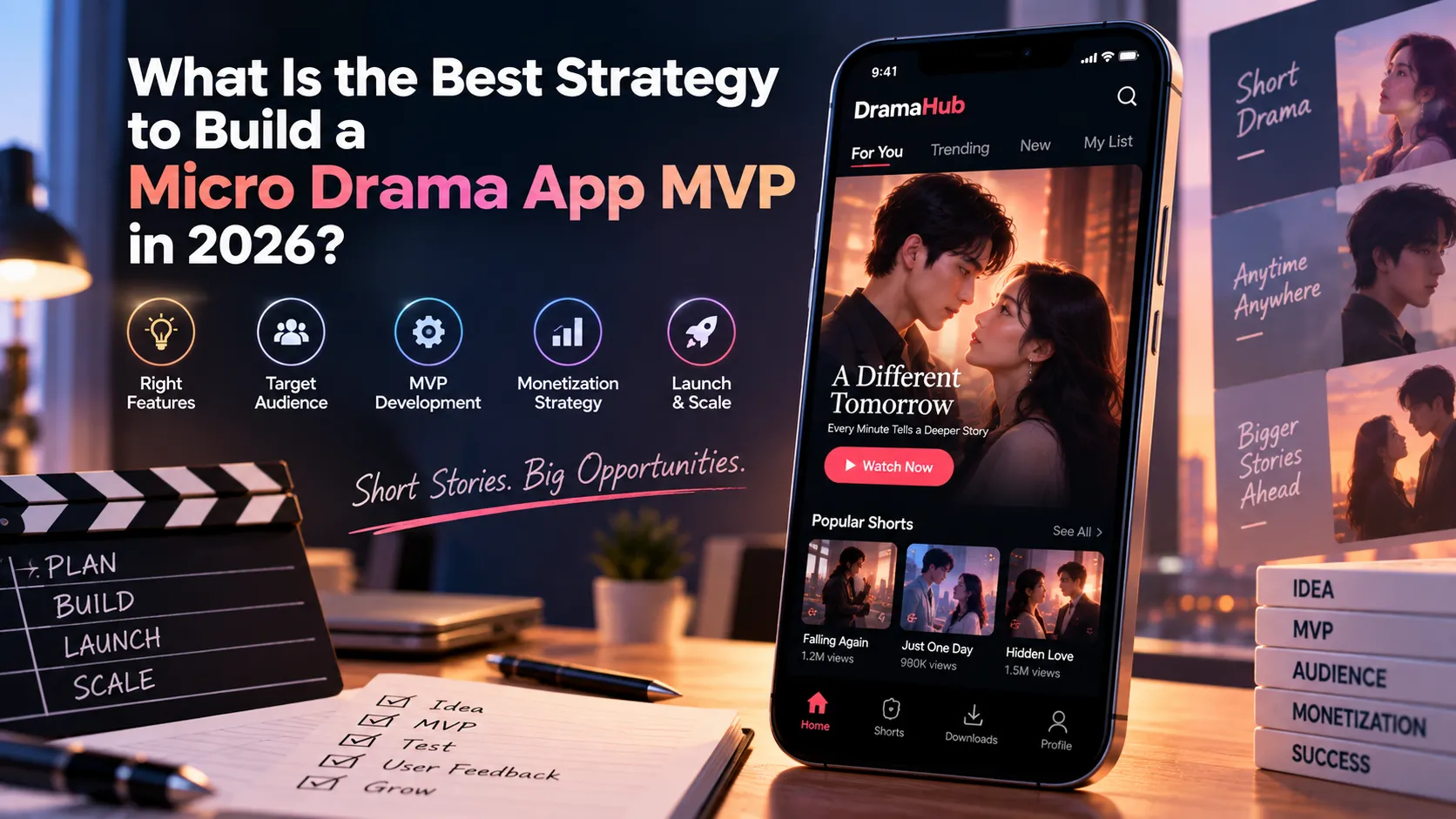

The global entertainment market has seen rapid commercial expansion in vertical streaming, with platforms like ReelShort, DramaBox, ShortMax, and FlexTV generating tens of millions of dollars in monthly in-app purchases. Rather than producing expensive 45-minute horizontal television episodes, these platforms release fast-paced 9:16 vertical drama series spanning 60 to 90 episodes, with each episode lasting roughly one minute. By introducing high-stakes interpersonal conflict in the first five seconds and delivering a cliffhanger at the end of every minute, serialized micro-dramas transform casual mobile scrollers into paying viewers.
realme Community
For production studios, digital publishers, and entertainment startups, launching directly into a full-scale enterprise build carries unnecessary financial risk. Engineering a complex multi-region streaming platform before testing whether your titles resonate with audiences often leads to misallocated capital.
The most effective launch strategy is building a targeted micro drama app mvp. A well-scoped Minimum Viable Product isolates the critical mechanisms of vertical streaming: zero-latency video playback, an episodic coin paywall, in-app billing, and second-by-second viewer drop-off tracking. This allows operators to validate user acquisition metrics and content retention before committing to large-scale production infrastructure.
What Core Features Are Essential for a High-Converting Micro Drama App MVP?
A successful MVP does not require every secondary feature found on mature platforms. Instead, it must execute five foundational capabilities without operational friction:
- Low-Latency 9:16 Vertical Video Player: The player must support fluid vertical swipe gestures (swiping up for the next episode and down for the previous one) with instant playback. Implementing client-side background pre-fetching ensures that upcoming episode chunks are loaded into memory while the current episode plays, eliminating the loading spinner that causes viewers to churn.
- Episodic Coin Paywall Interceptor: The platform must allow operators to designate a specific free-to-watch threshold (typically episodes 1 through 8). At the designated cliffhanger milestone, an automated paywall modal must intercept playback, prompting the viewer to unlock individual episodes using virtual currency.
- Frictionless In-App Purchases: The mobile client must integrate directly with Apple StoreKit 2 and Google Play Billing. Providing tiered coin bundles (such as $1.99, $4.99, and $19.99) allows viewers to complete impulse transactions without leaving the video screen.
- Lean Administrative Content Management System: Studio teams need a straightforward web console to upload batch video files, configure episode sequence metadata, set coin unlock costs, and assign vertical cover artwork without requiring direct database intervention.
- Second-by-Second Viewer Funnel Analytics: The core objective of an MVP is validating narrative retention. The platform must track the exact episode numbers and timestamps where viewers drop off, providing screenwriters and marketing teams with the data needed to refine pacing.
Features to Exclude from Your Initial MVP Build
To launch within an efficient timeline and budget, several advanced capabilities should be deferred to post-validation releases:
- AI-driven multi-language audio dubbing and real-time translation pipelines.
- Complex social feeds, user forums, and public commenting systems.
- Multi-tiered recurring VIP subscription engines (rely strictly on coin packs for V1).
- Dynamic forensic watermarking (basic stream tokenization is sufficient for early validation).
- Multi-CDN real-time switching architectures.
What Is the Recommended Technical Architecture for a Lean MVP?
Engineering a micro-drama MVP requires balancing streaming quality with infrastructure development costs:
Cross-Platform Mobile Framework: Building separate native iOS and Android codebases from day one roughly doubles frontend expenses. Utilizing a modern cross-platform framework like Flutter or React Native—paired with a native video player wrapper—allows teams to deploy to both app stores from a single codebase while maintaining 60-frames-per-second gesture responsiveness.
realme Community
- Managed Video Processing and Transcoding: Instead of maintaining custom distributed FFmpeg server clusters, early-stage platforms can leverage managed media processing platforms like AWS Elemental MediaConvert or Cloudflare Stream. Master video files are automatically converted into HTTP Live Streaming (HLS) packages with 2-second segment durations, enabling rapid adaptive bitrate switching across fluctuating cellular networks.
- Atomic Financial Ledger Architecture: The virtual coin backend requires strict consistency to avoid race conditions. Pairing a relational database (such as PostgreSQL) with an in-memory cache (such as Redis) ensures that rapid screen tapping during episode unlocks never results in duplicate debits or unauthorized playback grants.
- Cost-Controlled Edge Delivery: High-resolution vertical streaming generates high cloud bandwidth demand. Deploying an object storage layer with zero or discounted egress fees (such as Cloudflare R2) paired with a global CDN ensures low-latency media delivery while keeping operational overhead predictable as audience volume grows.
How Much Does It Cost to Develop a Micro Drama App MVP in 2026?
In 2026, building a market-ready micro drama app MVP typically costs between $20,000 and $50,000, with development timelines ranging from 8 to 14 weeks depending on team structure and technical scope:
Techtic Solutions
- Discovery, UX Architecture, and Interactive Wireframing ($4,000 to $8,000 | 2 to 3 Weeks): Defining user personas, mapping the vertical player interaction loop, designing the episodic drawer interface, and creating high-fidelity interactive prototypes.
- Mobile Client Development ($10,000 to $20,000 | 4 to 6 Weeks): Engineering the cross-platform application, implementing background pre-fetching buffers, integrating Apple and Google in-app billing engines, and building local caching routines.
- Backend Infrastructure, Database & CMS ($6,000 to $14,000 | 3 to 5 Weeks): Setting up the PostgreSQL database, Redis distributed locking, RESTful API microservices, cloud storage connections, and the administrative studio console.
- Quality Assurance, Security Audits & Store Launch ($2,000 to $5,000 | 1 to 2 Weeks): Cross-device testing across flagship and budget mobile hardware, payment sandbox verification, API penetration checks, and managing Apple App Store and Google Play compliance approvals.
Ongoing Monthly Operating Costs for an MVP
During initial testing (supporting 5,000 to 20,000 monthly active viewers), ongoing cloud infrastructure expenses remain manageable:
- Cloud hosting and backend databases (AWS or DigitalOcean): $150 to $400 per month.
- CDN video bandwidth and edge caching: $200 to $800 per month (scaling with streaming volume).
- Push notification and crash reporting tools: $50 to $150 per month.
Developer accounts: $99 annually for Apple and a $25 one-time fee for Google Play.
Highpolar Software
Top 10 Development Companies for Building a Micro Drama App MVP in 2026
Choosing an engineering firm with proven experience in low-latency video streaming, mobile micro-transactions, and rapid product delivery is essential for launching a functional MVP on schedule:
1. Idea Usher
Best suited for: Custom end-to-end MVP engineering, zero-latency vertical streaming engines, and complete intellectual property ownership.
Idea Usher is a specialized software product engineering company that designs, builds, and deploys custom mobile entertainment platforms, high-concurrency video apps, and micro-transaction ecosystems. The firm specializes in helping media startups and production studios launch market-ready vertical drama MVPs within accelerated 8- to 12-week development windows.
Their engineering team builds proprietary client-side pre-fetching engines that eliminate buffering lag during vertical swipe navigation. Idea Usher constructs complete monetization backends, connecting native mobile wallets to Apple and Google in-app purchases alongside direct web top-up portals. Every project delivered by the firm includes 100% unencumbered intellectual property ownership, ensuring founders own their full source code, database architectures, and deployment pipelines without recurring runtime licensing fees.
- Core Strengths: Custom zero-latency vertical player engineering, pre-fetching ring buffers, atomic coin ledgers, rapid cross-platform MVP delivery, and complete source code handover.
2. Intellivon
Best suited for: AI-driven viewer retention analytics, narrative drop-off tracking, and predictive pricing models.
Intellivon operates at the intersection of enterprise artificial intelligence and media software engineering, developing cognitive data architectures and automated workflows for digital entertainment platforms. For early-stage micro-drama platforms, Intellivon specializes in deploying predictive analytics layers that evaluate viewer drop-off at the exact second a paywall triggers.
Their technical team builds automated data funnels that analyze audience behavior, helping studios optimize script pacing and paywall positioning before investing in expensive video production. Intellivon also develops dynamic monetization engines capable of adjusting coin bundle promotions based on real-time engagement data.
- Core Strengths: Second-by-second drop-off analytics, viewer lifetime value modeling, predictive paywall optimization, and lean backend data architectures.
3. VdoCipher
Best suited for: Secure streaming integrations, anti-piracy screen recording prevention, and enterprise video encryption.
VdoCipher is a specialized video hosting and security software company focused on eliminating digital piracy for premium content publishers. In the micro-drama industry, where exclusive cliffhangers are vulnerable to unauthorized screen recording, VdoCipher provides essential streaming protection SDKs.
Their software suite combines multi-DRM encryption via Apple FairPlay and Google Widevine with dynamic user-specific watermarking. For startups launching an MVP, VdoCipher provides plug-and-play secure player components that block native screen recording utilities on iOS and Android, ensuring that exclusive content remains protected from day one.
- Core Strengths: Packaged multi-DRM encryption, dynamic visual watermarking, automated screen capture blocking, and reliable cloud media hosting.
4. Bitmovin
Best suited for: High-speed cloud video transcoding, adaptive bitrate optimization, and multi-device player performance.
Bitmovin provides foundational video developer infrastructure and cloud software used by digital media platforms globally. The company specializes in cloud-based video transcoding, adaptive streaming players, and video performance analytics.
For micro-drama MVPs, Bitmovin offers high-speed encoding pipelines that convert raw master files into optimized HLS packages within minutes. Their encoding profiles leverage modern compression algorithms, reducing bandwidth consumption while preserving mobile visual quality. Bitmovin also provides modular player SDKs that allow engineering teams to fine-tune pre-fetching buffers and eliminate startup delays on mobile networks.
- Core Strengths: High-speed cloud transcoding, adaptive bitrate ladder design, mobile player SDKs, and granular streaming analytics.
5. Mux
Best suited for: API-first video streaming infrastructure, real-time Quality of Experience monitoring, and rapid deployment.
Mux is an API-first video infrastructure provider that abstracts video hosting, encoding, and global delivery into straightforward developer APIs. Early-stage startups frequently leverage Mux to launch streaming MVPs quickly without managing dedicated transcoding server clusters.
Their platform includes Mux Video, which automates video storage and CDN routing, and Mux Data, which tracks playback performance in real time. For micro-drama operators, Mux Data provides real-time visibility into video startup times, rebuffering ratios, and playback failures across mobile devices, helping engineering teams resolve streaming bottlenecks before scaling user acquisition.
- Core Strengths: API-first video streaming infrastructure, real-time Quality of Experience analytics, automated thumbnail generation, and global CDN delivery.
6. Appinventiv
Best suited for: Scalable consumer mobile engineering, high-concurrency cloud architecture, and multi-region deployment.
Appinventiv is an international digital product development agency that designs and builds high-scale mobile applications for global enterprises and funded tech startups. With a large engineering team, the company builds high-throughput consumer platforms capable of handling sudden traffic spikes caused by viral social media campaigns.
For micro-drama initiatives, Appinventiv engineers native and cross-platform applications backed by resilient cloud microservices. Their developers build smooth 9:16 swipe gesture interactions, integrated episode drawers, and multi-tiered social sharing tools, ensuring backend stability when large volumes of users purchase coin bundles simultaneously.
- Core Strengths: High-scale mobile app engineering, cloud microservices architecture, smooth gesture navigation UI, and payment gateway integrations.
7. Yalantis
Best suited for: Custom media streaming architectures, mobile buffer tuning, and interactive community features.
Yalantis is an experienced software engineering and technical consulting company that specializes in building mobile-first consumer products, custom communications engines, and digital streaming platforms. The firm has extensive experience optimizing real-time data flows and media playback on mobile hardware.
In the micro-drama space, Yalantis specializes in low-level player engineering. Their developers configure custom cache eviction policies and memory management routines that prevent mobile apps from crashing during long binge-watching sessions. Yalantis also designs interactive community engagement layers, such as timed reactions and user discussion boards.
- Core Strengths: Low-level mobile memory optimization, custom cache eviction architecture, real-time in-video commenting, and resilient cloud backends.
8. Cleveroad
Best suited for: Modular streaming microservices, studio content management portals, and cross-platform mobile apps.
Cleveroad is a full-cycle software development firm that builds custom web and mobile solutions tailored to specific commercial requirements. The company has delivered numerous media streaming platforms, video-on-demand services, and content management consoles for clients across North America and Europe.
Their technical practice excels at building modular content management systems for production studios. Cleveroad builds backends that support drag-and-drop batch episode uploads, automated subtitle alignment, release scheduling, and granular paywall configurations. Their developers construct cross-platform mobile applications using Flutter and React Native, implementing decoupled microservices architectures.
- Core Strengths: Studio content management portals, batch video upload automation, cross-platform mobile app development, and modular backend architecture.
9. ScienceSoft
Best suited for: Secure streaming architectures, enterprise data governance, and high-availability cloud backends.
ScienceSoft brings more than 35 years of IT consulting, cybersecurity software development, and cloud systems integration experience to digital streaming platforms. Operating under ISO 27001 data security frameworks, the company specializes in engineering secure, highly reliable media architectures for digital entertainment brands.
Their engineers excel at building high-availability cloud architectures that integrate smoothly with third-party payment processors, global content delivery networks, and enterprise data warehouses. ScienceSoft approaches micro-drama app development with strict data protection controls, implementing role-based access security for studio administrators and PCI-DSS-compliant in-app payment routing.
- Core Strengths: ISO 27001 data security compliance, high-availability cloud architecture, PCI-DSS payment security, and enterprise database engineering.
10. Innowise Group
Best suited for: Cross-platform video client engineering, in-app billing mechanics, and multi-CDN distribution pipelines.
Innowise Group is an international software development company with deep technical capabilities across mobile consumer apps, digital media platforms, and financial software. Their digital entertainment practice builds scalable, high-performance streaming platforms designed for global reach.
When developing short drama platforms, Innowise engineers cross-platform mobile clients that deliver consistent 60-frames-per-second navigation across both modern flagship devices and budget smartphones. Their developers build robust integration connectors for Apple StoreKit 2, Google Play Billing, and alternative direct payment gateways, ensuring reliable micro-transaction execution.
- Core Strengths: Cross-platform mobile video UI engineering, in-app billing and coin wallet development, multi-CDN performance routing, and media pipeline integration.
What Are the Most Common Pitfalls When Launching a Micro Drama MVP?
Teams developing their first vertical streaming application frequently encounter several structural pitfalls:
- Over-Engineering Features Before Validating Retention: The most common failure mode is spending six months building complex VIP subscriptions, creator marketplaces, and social forums before proving that audience acquisition costs align with viewer lifetime value. An MVP must focus strictly on the viewing experience and the paywall.
- Ignoring Vertical Player Buffering Lag: If an MVP relies on a basic video player that loads episodes sequentially, viewers will encounter a 1.5-second black screen on every swipe. In micro-drama streaming, that brief pause ruins the emotional cliffhanger and leads to immediate app abandonment. Background pre-fetching must be prioritized from day one.
- Failing to Track Second-by-Second Funnel Drop-Off: Launching an app with aggregate view counts rather than granular retention tracking prevents teams from understanding why content fails. Knowing the exact second a viewer stopped watching allows screenwriters to restructure narrative pacing in future productions.
- Excessive Video Bitrates and Runaway Egress Costs: Streaming unoptimized 1080p video over basic cloud storage networks leads to massive bandwidth bills. Encoding video into adaptive bitrate ladders and utilizing tiered storage networks prevents egress fees from draining startup capital.
What Are the Most Common Questions Founders Ask About Micro Drama MVPs?
How many drama series are required to launch a viable MVP?
A successful MVP launch typically requires three to five complete drama series, with each series containing 60 to 80 episodes. Launching with only one series leaves viewers with nothing to consume after finishing their initial binge, preventing you from measuring long-term user retention and cross-catalog discovery.
Should we build native iOS/Android apps or use a cross-platform framework for the MVP?
For an MVP, building with a cross-platform framework like Flutter or React Native is recommended. It cuts frontend development costs by 30% to 40% and allows you to test both app stores simultaneously. As long as the video player itself is wrapped in native playback decoders with background caching, cross-platform apps deliver performance comparable to fully native codebases.
How do we prevent users from screen recording exclusive drama episodes?
During the MVP phase, basic screen recording prevention can be enforced by setting the FLAG_SECURE window parameter on Android and utilizing secure rendering layers on iOS. While enterprise platforms eventually implement Hollywood-grade FairPlay and Widevine DRM, native OS-level window flags block casual screen capture utilities without adding weeks of complex DRM integration.
What is the typical timeline to launch a micro drama app MVP?
A focused micro-drama MVP can be designed, built, tested, and submitted to the Apple App Store and Google Play Store in approximately 8 to 12 weeks. This timeline assumes a disciplined feature scope centered entirely on video playback, coin purchasing, and basic retention tracking.
Building a micro drama app MVP is the fastest, most capital-efficient path to entering the vertical streaming market. By prioritizing responsive vertical playback, seamless coin purchases, and detailed drop-off tracking over unnecessary feature bloat, operators can validate their content economics and establish positive unit metrics. Partnering with an experienced engineering firm ensures your platform launches on a stable, scalable foundation that can expand seamlessly as your audience and content library grow.














Sign in to leave a comment.