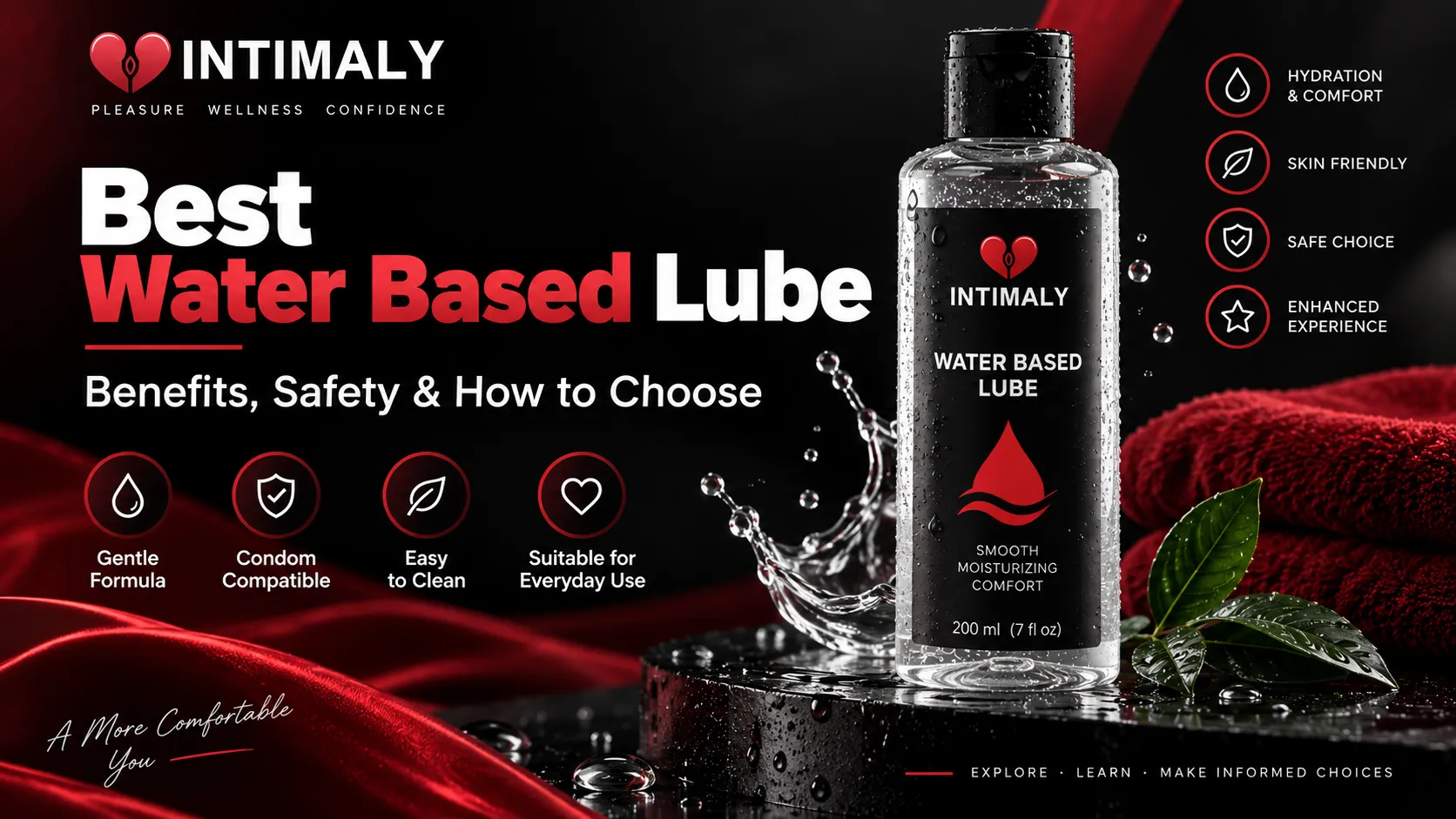

When looking for the best water based lube, many people ask whether water-based lubricant is safe, how it compares with silicone or oil-based options, and what ingredients should be considered. Water-based lubricants are widely used because they are generally easy to clean and compatible with many condoms and personal wellness products. But is every water-based lube the same? Not necessarily. Factors such as ingredients, skin sensitivity, intended use, compatibility, texture, and how long the lubricant lasts can all influence which option is appropriate.

What Is Water-Based Lubricant?
What exactly is a water-based lubricant?
Water-based lubricant is a personal lubricant formulated primarily around water. It is designed to reduce friction and improve comfort during intimate activity. Because water-based formulas are generally easy to wash away, they are commonly chosen for everyday personal use.
How does it differ from other types of lubricant?
The three broad categories of personal lubricant are water-based, silicone-based, and oil-based lubricants. Each has different characteristics. Water-based formulas are typically easier to clean but may dry more quickly than silicone-based products. Silicone lubricants generally last longer, while oil-based products have important compatibility limitations with latex condoms.
The right choice therefore depends on your intended use rather than simply choosing a product based on a "best" label.
Why Do People Use Water-Based Lube?
Why would someone need personal lubricant?
Lubricant can help reduce friction and make intimate activity more comfortable. It can also be useful when natural lubrication is insufficient or when additional lubrication is preferred.
Is using lubricant only about comfort?
No. Lubrication can also be relevant to safer-sex practices. Planned Parenthood explains that using adequate lubricant can help reduce friction associated with condom breakage.
However, lubricant is not a contraceptive or an STI-prevention method by itself. Condoms and other appropriate protection remain important when preventing pregnancy or sexually transmitted infections.
What Makes the Best Water Based Lube?
So, what should you look for when choosing a water-based lubricant?
There is no single formulation that is ideal for every person. Instead, consider several factors.
1. What Ingredients Does It Contain?
Should you check the ingredient list before buying lubricant?
Yes. Ingredients can matter, particularly for people with sensitive skin or a history of irritation.
Some water-based lubricants contain ingredients such as glycerin or aloe vera. Cleveland Clinic recommends considering a relatively simple formulation and avoiding unnecessary fragrance, coloring, and warming or tingling ingredients if sensitivity is a concern.
Does "natural" automatically mean better?
Not necessarily. The important question is whether the formulation is suitable for your body and intended use. Checking the complete ingredient list is more useful than relying only on marketing terms.
Is Water-Based Lube Safe With Condoms?
Can you use water-based lubricant with latex condoms?
Yes. Water-based and silicone-based lubricants are generally considered compatible with latex condoms. Planned Parenthood specifically recommends water-based or silicone lubricant with latex condoms and advises against oil-based products because oils can damage latex.
Why does lubricant compatibility matter?
Oil can weaken latex and increase the possibility of tearing. This means products such as petroleum jelly, certain lotions, massage oils, and cooking oils should not be substituted for an appropriate lubricant when using latex condoms.
What about non-latex condoms?
Compatibility depends on the condom material. For example, Planned Parenthood notes that water-based and silicone lubricants can be used with plastic/non-latex condoms. When uncertain, check the condom manufacturer's instructions.
Is Water-Based Lubricant Good for Sensitive Skin?
Can water-based lubricant cause irritation?
Yes, even though water-based formulas are often considered a practical option, individual reactions can vary.
People with sensitive skin may want to consider fragrance-free and color-free formulations and avoid unnecessary warming, cooling, or tingling ingredients. Cleveland Clinic provides similar guidance for people concerned about irritation.
What should you do if irritation occurs?
Stop using the product. If symptoms such as persistent burning, itching, swelling, or discomfort continue, consider speaking with a healthcare professional.
How Does Water-Based Lube Compare With Silicone Lube?
Which is better: water-based or silicone-based lubricant?
Neither is universally better. Each has different characteristics.
Water-based lubricant:
- Usually easy to wash away
- Commonly compatible with condoms
- Often suitable for use with many personal wellness products
- Can dry more quickly
- Available in many formulations
Silicone-based lubricant:
- Generally provides longer-lasting lubrication
- Can be useful when extended lubrication is desired
- Usually compatible with latex condoms
- Can be more difficult to wash away
- May not be appropriate with certain silicone products
Cleveland Clinic notes that silicone-based lubricants generally last longer than water-based options, while water-based products can be easier to clean.
So, which should you choose?
Ask what matters most to you: easy cleanup, longevity, product compatibility, ingredients, or personal comfort.
Can Water-Based Lube Be Used With Personal Wellness Products?
Can water-based lubricant be used with personal wellness products?
In many cases, yes. Water-based lubricant is commonly used with a range of personal wellness products, but compatibility should always be checked against the manufacturer's instructions.
Why does the product material matter?
Different materials can respond differently to certain lubricant formulations. This is especially relevant when using products made from silicone or other specialized materials.
The safest approach is to check the product's care instructions before applying lubricant. If the manufacturer recommends a particular lubricant type, follow those instructions.
Does Water-Based Lube Dry Quickly?
Why does water-based lubricant sometimes seem to disappear?
Because water is a major component of the formulation, some water-based products can dry or absorb more quickly than silicone-based alternatives. Cleveland Clinic identifies this as one of the main differences between water-based and silicone-based lubricants.
Does that mean you should avoid water-based lubricant?
Not at all. Easy cleanup and broad compatibility can make water-based lubricant useful for many people. If additional lubrication is needed, reapplication may be appropriate according to the product's instructions.
How Should You Apply Personal Lubricant?
How much lubricant should you use?
There is no universal amount. Start with a small amount and add more as necessary. The goal is to provide enough lubrication to reduce uncomfortable friction.
Can you apply lubricant to a condom?
Yes. With an external condom, lubricant can generally be applied to the outside after the condom is correctly put on. Planned Parenthood states that water-based and silicone lubricants are safe with condoms and that there is no fixed "correct" amount of lubricant.
Should you reapply lubricant?
If the lubricant dries and friction increases, additional application may be useful. This is particularly relevant with water-based formulas because they can dry faster than silicone-based alternatives.
What Should You Avoid Using as Lubricant?
Can household products replace personal lubricant?
It is better not to assume that household products are suitable. Products such as petroleum jelly, body lotion, massage oil, or cooking oils may not be designed for intimate use and can cause irritation or create compatibility problems.
Why is this particularly important with condoms?
Oil-based substances can weaken latex. Healthcare and sexual-health organizations recommend using water-based or silicone-based lubricant with latex condoms instead.
Therefore, choosing a lubricant specifically formulated for intimate use is generally a more appropriate approach than experimenting with household substitutes.
What Does Intimaly's Water-Based Lube Offer?
What information does the product page provide?
The Intimaly product page describes its lubricant as a water-based formula and lists a 200 ml (7 fl oz) size. The page also describes it as fragrance-free and colorless and states that it is intended to provide a smooth, moisturizing glide.
Should these product claims replace independent research?
No. Product descriptions can help you understand the manufacturer's specifications, but consumers should still review the complete ingredient information, usage instructions, and compatibility guidance before use.
Frequently Asked Questions
Is water-based lubricant safe with latex condoms?
Generally, yes. Water-based lubricants are recommended for use with latex condoms because they do not have the same latex-degrading effect associated with oil-based lubricants.
Is water-based lubricant better than silicone lubricant?
Not necessarily. Water-based lubricant is generally easier to clean, while silicone lubricant typically lasts longer. The appropriate choice depends on personal needs and intended use.
Can water-based lube be used with sex toys?
It can be compatible with many personal wellness products, but always check the manufacturer's material and care instructions before use.
What is the best water based lube for sensitive skin?
There is no universal answer. People with sensitive skin may prefer a simple, fragrance-free and color-free formulation and should check the ingredient list carefully.
Does water-based lubricant stain?
Water-based formulas are generally easier to clean than oil-based lubricants. However, individual formulations can behave differently, so follow the product's cleaning instructions.
How often should you reapply water-based lubricant?
There is no fixed schedule. Reapply when the lubricant has dried or additional lubrication is needed, while following the product's instructions.
Final Thoughts
What should you remember when choosing the best water based lube?
Focus on ingredients, intended use, skin sensitivity, condom compatibility, product-material compatibility, texture, and ease of cleaning. Water-based lubricant can be a practical choice for people who want a versatile, easy-to-clean option, but individual preferences and sensitivities still matter.
Rather than choosing solely based on the word "best," compare the formulation and instructions with your specific needs. A product designed for intimate use, used according to its instructions, can help reduce friction and improve comfort.























Sign in to leave a comment.