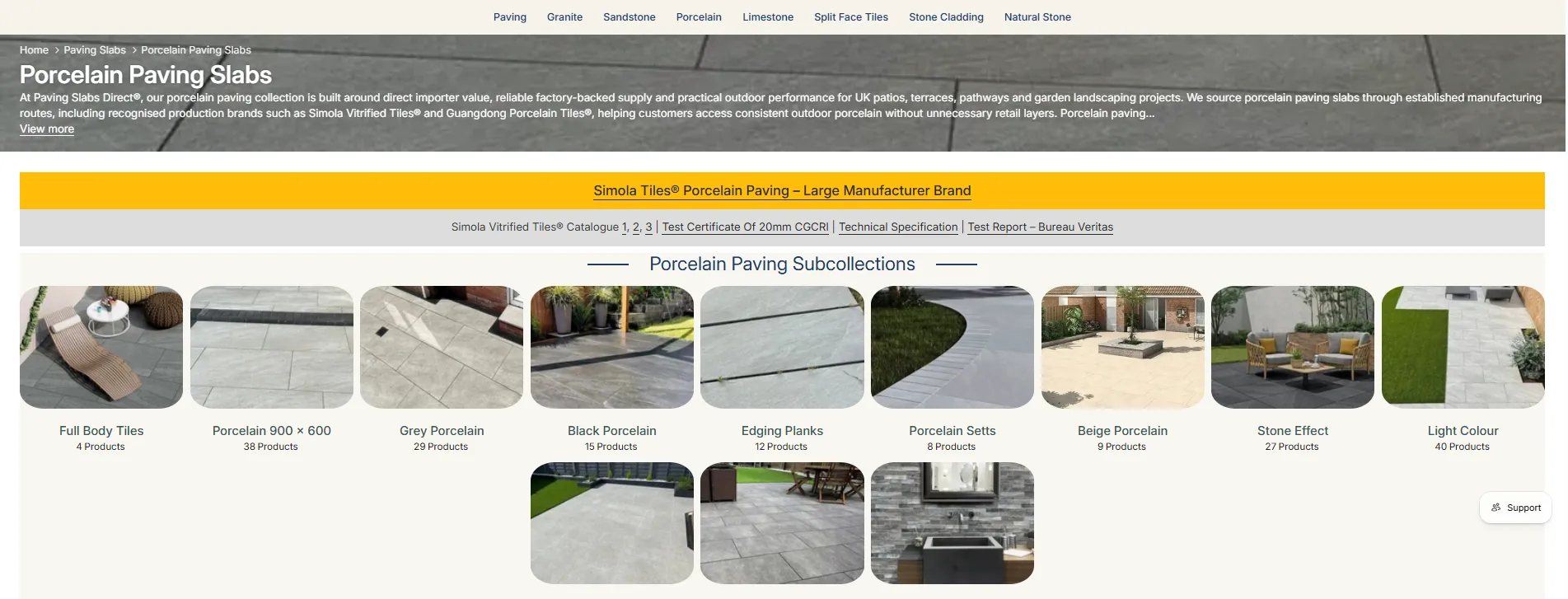

What Is the Cost of Laying Porcelain Paving in the UK?
Porcelain paving has become one of the fastest‑growing trends in UK landscaping, and it’s easy to see why. Combining durability, low maintenance, and sleek modern style, porcelain slabs are now a top choice for patios, garden paths, and driveways. Once considered a luxury product, advances in manufacturing and wider distribution have made porcelain paving more affordable, allowing it to compete directly with traditional natural stone options such as sandstone, limestone, and granite.
If you’re planning a garden renovation or patio installation, understanding the true cost of laying porcelain paving in the UK is essential. From material prices to labor charges, site preparation, and finishing details, several factors influence the final bill. Knowing these costs upfront helps homeowners budget effectively and ensures contractors can deliver projects that meet both design goals and financial expectations.
Average Cost of Porcelain Paving Installation
- Porcelain paving slabs: £25–£50 per m² depending on quality, finish, and supplier.
- Labour and installation: £70–£100 per m² for professional fitting, including groundwork and laying.
- Total installed cost: £100–£150 per m² on average across the UK.
This means:
- A small patio (10–15 m²) may cost £1,500–£2,250.
- A medium patio (20–30 m²) may cost £2,500–£4,500.
- A large patio (40+ m²) can exceed £5,000 depending on design complexity and site conditions.
Factors That Influence the Cost
- Site Preparation Removing old paving, levelling ground, or adding drainage can increase labour costs.
- Design Complexity Borders, patterns, or mixed materials require more time and skill, raising installation charges.
- Access to Site Difficult access for machinery or materials can add to the overall cost.
- Location in the UK Labour rates vary — London and the South East tend to be higher than other regions.
- Finishing Details Steps, edging, sealing, or decorative features add to the final bill.
Why Porcelain Paving Is Worth the Investment
Even though porcelain paving may cost more upfront than concrete or sandstone, its benefits make it a smart long‑term investment:
- Durability: Resistant to frost, stains, and fading.
- Low Maintenance: Requires minimal cleaning compared to porous stones.
- Aesthetic Appeal: Wide range of colours and finishes to suit modern or traditional designs.
- Safety: Slip‑resistant finishes available, ideal for wet areas like pool surrounds.
Long‑Term Value: Higher resale appeal for properties with premium paving.
Cost Comparison: Porcelain vs Other Materials
| Material | Average Installed Cost per m² | Maintenance Needs | Lifespan |
|---|---|---|---|
| Porcelain paving | £100–£150 | Low | 20+ years |
| Indian sandstone | £80–£120 | High | 10–15 years |
| Concrete paving | £60–£100 | Medium | 10–20 years |
| Granite paving | £120–£180 | Low | 25+ years |
Final Thoughts: Balancing Cost and Value
When considering the cost of laying porcelain paving in the UK, it’s important to look beyond the initial price tag and evaluate the overall value it delivers. At first glance, porcelain paving may seem more expensive than alternatives such as concrete or sandstone, with installation costs averaging between £100 and £150 per square metre. However, this upfront investment is offset by the long‑term savings and benefits that porcelain provides.
Porcelain is engineered to be exceptionally durable, resisting frost, stains, scratches, and fading. Unlike softer stones that require regular sealing, cleaning, and repair, porcelain paving maintains its appearance with minimal upkeep. This means homeowners spend less time and money on maintenance, while enjoying outdoor spaces that look pristine year after year. Over a 20‑year lifespan, the reduced need for repairs and replacements makes porcelain more cost‑effective than cheaper alternatives that deteriorate faster.
From a design perspective, porcelain offers unmatched versatility. With a wide range of colours, textures, and finishes, it can replicate the look of natural stone, wood, or concrete while delivering superior performance. This flexibility allows homeowners to achieve their desired aesthetic without compromising on practicality. For developers and contractors, porcelain’s consistency in size and thickness makes installation smoother, reducing labor time and ensuring a professional finish.
Another factor that adds value is property appeal. Homes with premium paving materials like porcelain often enjoy higher resale value and stronger curb appeal. Buyers recognize the quality and prestige associated with porcelain, making it a feature that can set a property apart in a competitive market. For commercial projects, porcelain paving enhances the professional image of outdoor spaces, creating a lasting impression on clients and visitors.
Ultimately, the decision to invest in porcelain paving is about balancing short‑term cost with long‑term value. While the initial outlay may be higher, the durability, low maintenance, aesthetic appeal, and property enhancement make porcelain a smart choice for anyone seeking a reliable and stylish paving solution. For homeowners, it means peace of mind knowing their patio or garden will remain beautiful for decades. For contractors and suppliers, it means offering clients a product that delivers satisfaction and reduces the risk of costly callbacks.













Sign in to leave a comment.