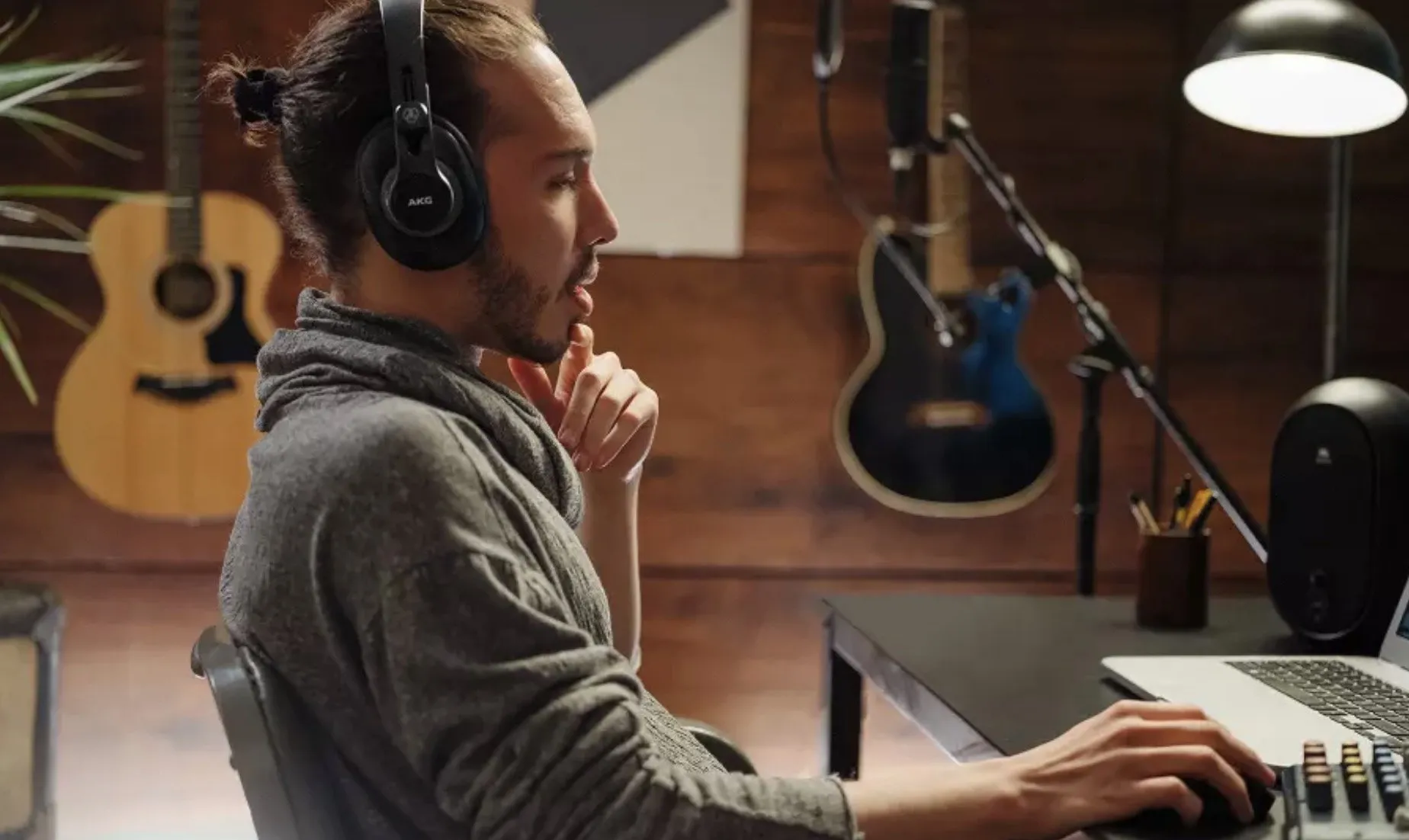

DJ headphones and studio headphones may look similar, but they are designed for different listening and production needs. While both can deliver detailed sound, their tuning, construction, comfort and practical features vary significantly.
DJ headphones are built for live performance, cueing tracks, beat matching and monitoring music in noisy environments. Studio headphones, on the other hand, are designed primarily for recording, mixing, mastering and critical listening, where an accurate and balanced representation of the audio is essential.
Understanding these differences can help DJs, music producers, audio engineers and music enthusiasts choose the right headphones for their needs.
What Are DJ Headphones?
DJ headphones are specifically designed for DJs who need to monitor music while performing. A DJ may need to listen to the track playing through the speakers while simultaneously previewing the next track through their headphones.
For this reason, DJ headphones typically prioritise:
- Strong bass response
- High volume capability
- Noise isolation
- Durable construction
- Swivel or rotating earcups
- Comfortable fit during long performances
- Easy cueing and one-ear monitoring
DJ headphones often have a more energetic sound signature than studio headphones. Enhanced bass can make kick drums and basslines easier to identify when beat matching tracks in a loud club environment.
What Are Studio Headphones?
Studio headphones are designed for professional and critical audio work. Producers, musicians and engineers use them to hear recordings as accurately as possible.
Unlike headphones designed primarily for entertainment, studio headphones generally aim for a relatively neutral frequency response. This helps users identify problems with vocals, instruments, bass, treble, distortion, and other elements of a recording.
Studio headphones are commonly used for:
- Music production
- Recording vocals and instruments
- Audio mixing
- Mastering
- Podcast production
- Video editing
- Sound design
- Critical music listening
Some studio headphones have a closed-back design, while others are open-back.
DJ vs Studio Headphones: Key Differences
The biggest difference between DJ and studio headphones is their intended purpose.
| Feature | DJ Headphones | Studio Headphones |
|---|---|---|
| Primary use | DJing and live performance | Recording, mixing and production |
| Sound signature | Often bass-forward and energetic | Generally neutral and balanced |
| Noise isolation | Usually important | Depends on design |
| Durability | Designed for frequent handling | Designed for studio use |
| Ear cup movement | Often swivel or foldable | Usually fixed |
| Loud environments | Well suited | Varies |
| Accuracy | Good for monitoring | Prioritises critical accuracy |
| Portability | Often highly portable | Depends on model |
| Best for | DJs and live performers | Producers and audio engineers |
These are general characteristics rather than strict rules. Some modern headphones can work effectively for both applications.
Sound Signature: DJ Headphones vs Studio Headphones
Sound tuning is one of the most important differences.
DJ headphones commonly emphasise bass and sometimes treble to create an engaging sound. This can help DJs distinguish beats and musical elements while performing in environments where external sound levels are high.
Studio headphones are generally designed to provide a more balanced presentation. A neutral sound can help producers make better mixing decisions because excessive bass or treble is less likely to disguise problems in the recording.
For example, if headphones significantly boost bass, a producer might reduce bass unnecessarily during mixing. The resulting track could then sound too thin on other playback systems.
This is why studio headphones for mixing typically focus on accuracy rather than an exaggerated or exciting sound.
Closed-Back vs Open-Back Headphones
The design of the headphones also matters.
Closed-back headphones have sealed earcups that reduce sound leakage and provide better isolation. They are particularly useful for DJs and recording musicians because external sounds are reduced and audio is less likely to leak into a microphone.
Open-back headphones have ventilated earcups that allow some sound to move through the earcup. They generally provide a more spacious and natural listening experience, making them popular for mixing and critical listening.
However, open-back headphones are not usually ideal for noisy environments or live DJ performances because they provide limited isolation.
Which Headphones Are Better for DJing?
For DJing, dedicated DJ headphones are usually the better choice.
A good pair should provide sufficient volume, strong isolation and a secure fit. Swivelling earcups can also be useful because DJs often monitor the master output with one ear while cueing the next track with the other.
Durability is another important consideration. DJ headphones are frequently removed, repositioned and transported between venues, so flexible hinges and robust construction can be valuable.
Which Headphones Are Better for Studio Work?
For recording and mixing, studio headphones are generally more suitable.
If you're recording vocals, closed-back studio headphones can help prevent the backing track from bleeding into the microphone.
For mixing and critical listening in a relatively quiet environment, open-back studio headphones can offer a wider and more natural presentation.
However, headphones should not be treated as a complete replacement for properly positioned studio monitors. Room acoustics, speaker response and listening environment can all affect mixing decisions.
Can You Use Studio Headphones for DJing?
Yes, but their suitability depends on the model and environment.
Studio headphones can work for casual DJing or practice sessions, particularly if they provide good isolation and sufficient volume. However, they may not have features that make DJing easier, such as rotating earcups or a robust design intended for frequent live use.
Their neutral tuning may also make the experience feel less energetic than DJ-focused headphones.
Can You Use DJ Headphones for Studio Mixing?
You can, but there is an important limitation: sound coloration.
If DJ headphones have a pronounced bass boost, they may make low frequencies sound louder than they actually are. This can make accurate mixing more difficult.
That does not mean DJ headphones are incapable of producing detailed audio. Rather, their tuning is optimised for a different purpose.
If accurate mixing and mastering are your priorities, headphones designed for studio monitoring are generally the safer choice.
Are DJ or Studio Headphones Better for Everyday Listening?
For everyday listening, the choice comes down to personal preference.
If you enjoy powerful bass, energetic sound and strong isolation, DJ headphones may be appealing.
If you prefer hearing music with a more balanced presentation and greater attention to detail, studio headphones may be a better option.
Comfort should also be considered, particularly if you listen for several hours at a time.
How to Choose Between DJ and Studio Headphones
Before buying headphones, consider how you will actually use them.
Choose DJ headphones if you:
- Perform or practise DJing
- Need strong noise isolation
- Frequently beat match or cue tracks
- Prefer an energetic sound
- Need rotating or foldable earcups
- Require durable headphones for live use
Choose studio headphones if you:
- Produce music
- Record vocals or instruments
- Mix or master audio
- Need a more neutral sound
- Perform detailed audio editing
- Want headphones for critical listening
Final Thoughts
The difference between DJ and studio headphones mainly comes down to purpose, sound tuning and design. DJ headphones are built around performance, cueing, isolation and durability, while studio headphones prioritise accuracy and detailed monitoring.
Neither type is universally better. The right choice depends on whether you need headphones for DJing, music production, recording, mixing or everyday listening.
For DJs, features such as isolation, swivel earcups, comfort and durability can make a major difference. For producers and audio engineers, accurate sound reproduction and the appropriate open-back or closed-back design are often more important.
Ultimately, choosing headphones based on your specific application will help you get better performance and a more satisfying listening experience.


























Sign in to leave a comment.